Bruce Springsteen's Nebraska: The 1982 Demo That Became a Classic
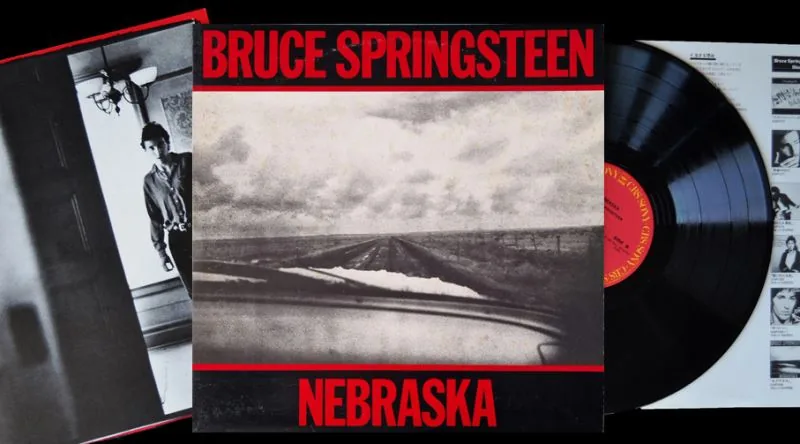
Bruce Springsteen recorded the Nebraska album alone in 1982 at a rented home in Colts Neck, New Jersey, laying down stark acoustic songs on a four-track Tascam cassette recorder. He had meant them as demos for the E Street Band. Instead, the rough tapes became the finished record. The songs were so haunted and so complete that the band's polished versions could not touch them.
In 1982, Bruce Springsteen recorded a set of acoustic songs by himself on a four-track cassette machine at his rented home in Colts Neck, New Jersey. He intended them as demos for the E Street Band, but the raw solo recordings were released as the Nebraska album in 1982.
- Springsteen recorded the Nebraska material in early 1982 at a rented home in Colts Neck, New Jersey.
- He used a Tascam 144 four-track cassette recorder, working alone with just acoustic guitar, harmonica, and voice.
- The title track draws on the killing spree of Charles Starkweather and his teenage companion Caril Ann Fugate.
- The E Street Band attempted full-band versions of the songs, but Springsteen decided the solo demos were stronger.
- Nebraska was released in September 1982 and later inspired the 2025 film Deliver Me From Nowhere, starring Jeremy Allen White.
The Album That Wasn't Supposed to Be an Album
On September 30, 1982, Columbia Records released Nebraska, the sixth studio album by Bruce Springsteen. What almost nobody outside his circle knew at the time was that they were not hearing a studio record at all. They were hearing a demo tape, cut alone in a rented house in Colts Neck, New Jersey, on a four-track Tascam 144 cassette machine that Springsteen had asked his guitar tech, Mike Batlan, to go out and buy.
The story starts with The River, released in 1980. Springsteen kept writing for the follow-up, but the songs refused to behave. They would not sit inside the E Street Band's signature sound, that wall of saxophone and organ built for arenas. The characters in his head wanted something else: the unemployed, the desperate, the people pushed into crime because they see no other way out. This was the rot underneath the bright surface of Reagan-era America, and Springsteen was also deep into folk music and the short stories of Flannery O'Connor, whose Southern Gothic voice pushed his writing further toward what became Nebraska.
So he stayed home. Over a few days in early January 1982, he recorded nearly all of Nebraska by himself, singing and playing guitar into the Tascam, hanging blankets on the walls of his bedroom to deaden the sound. The vocals and guitars went down fast, in just a handful of takes, and the exact number is hard to pin down. The plan was simple: these were demos, reference recordings he could play for the band before they cut the real versions together.
Then the band went into the studio and recorded the songs full-force, and something vanished. The rawness, the loneliness, the emptiness that made the material feel true simply disappeared under the arrangement. Springsteen listened back and decided the demo tape was already the album. He released the cassette versions as they were.
Almost every song on Nebraska is a miniature American tragedy with its own atmosphere and tension. The title track, which gives the album its name, is based on the killing spree of Charles Starkweather and his girlfriend Caril Ann Fugate, in which 11 people died, and Springsteen tells it from Starkweather's own point of view. Alongside it sit "Atlantic City," "Highway Patrolman" and "State Trooper." The album never came close to the commercial scale of Born in the U.S.A., which arrived two years later in 1984, but for many listeners it remains his most personal work.
In 2025, that bedroom story reached the screen: Deliver Me From Nowhere, starring Jeremy Allen White as Springsteen, centers on the making of Nebraska. A demo cassette, carried around and nearly lost, ended up outlasting almost everything built to be bigger than it.
A Guitar Tech, a Tascam 144, and a Blanket-Draped Bedroom
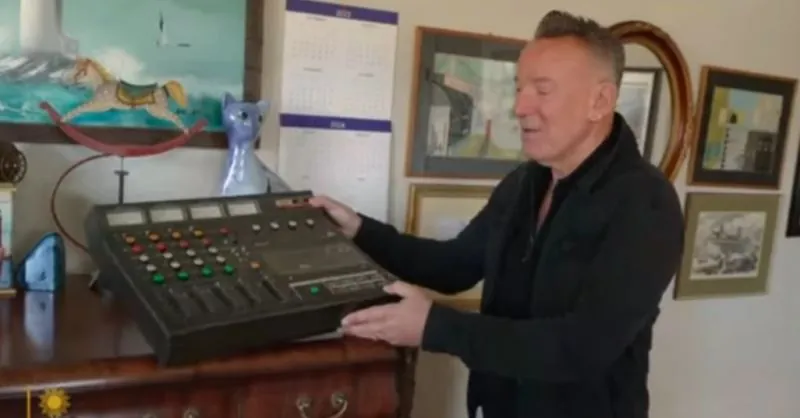
The whole album began with a simple errand. One day in early January 1982, while holed up at his rented home in Colts Neck, New Jersey, Springsteen handed his guitar technician, Mike Batlan, a mission: go find a machine that can capture this feeling better. Batlan came back with a Japanese four-track cassette recorder, a Tascam 144, the Teac Tascam Series 144 Portastudio. They carried it upstairs and set it up in the bedroom.
That bedroom became a studio. Springsteen hung blankets over the walls to soften the room, and the makeshift space did the rest. In his own account of those days, the setup let him sing, play guitar, and use the other two channels for a backing vocal and an extra guitar or a tambourine. Four tracks, one man, no band.
He sat down at the machine and, over a few days, recorded nearly all of Nebraska. The vocals and guitars went down in just a handful of takes, though that figure is reported rather than confirmed. The songs were meant as demos, sketches he could play for the E Street Band before cutting the real album.
The machine that made the album possible
The Tascam 144 is a four-track cassette recorder. Without it, there is no Nebraska as we know it. A guitar tech's shopping trip and a blanket-draped bedroom did what a full studio later could not.
The Twist: Why the Full-Band Versions Were Scrapped
Springsteen took the songs into the studio with the E Street Band and cut them full-band, and the moment they played them back, something had gone wrong. The rawness, the loneliness, the emptiness, all of it had vanished. Nebraska works because it sounds like a man alone in a room at night. A full band fills that room up.
Think about what the record actually is. Nebraska is a loneliness album, one man realizing the American Dream is a lie, a quiet collapse rather than a dramatic one. The narrator of "Atlantic City" is broke and desperate, and the man in "Highway Patrolman" is watching his own brother slip away. Give those stories a drum kit and a wall of guitars and you get a rock song about sadness. Take the band away and you get the sadness itself. Springsteen heard the difference, and he chose the version that hurt.
So he concluded the demo recording was the right album. The acoustic songs he had tracked on a four-track Tascam 144 cassette recorder at his home in Colts Neck, New Jersey, became the finished record, released by Columbia Records on September 30, 1982. The demos were never meant to leave the house. They were reference tapes, rough sketches he could play for the band so they would understand where the songs were headed.
Getting those sketches onto vinyl turned out to be its own ordeal. The cassette technology made the transfer technically difficult, and multiple engineers and studios were involved in the process before the album could be properly mastered. What you hear on Nebraska today is a bedroom tape that survived a trip through the professional recording industry.
One detail you will see repeated everywhere: that Springsteen carried the master cassette in his wallet, as if losing it would have erased the album from history. It is a great image. It is also a widely repeated anecdote rather than a verified fact, so treat it as legend attached to the record rather than documented history.
What is not legend is how strange the decision looked at the time. Here was a man who had just spent years building the biggest live band in America, and he answered with a whisper. No stadium, no all-star lineup, no production. Just an acoustic guitar, a four-track machine, and a portrait of an America with the lights off.
The True Story Behind the Song "Nebraska"
The album takes its name from its opening track, and that opening track is a murder ballad. "Nebraska" is built on the real killing spree of Charles Starkweather and his girlfriend Caril Ann Fugate, a rampage across Nebraska and Wyoming in which 11 people were killed. Springsteen does not stand outside the story and judge it. He climbs inside Starkweather's skull and sings as him.
That choice was bold in 1982, and it still lands hard. A rock star with a stadium following, a man who could have written another anthem, instead wrote a first-person confession in a flat, unbothered voice. The song asks you to ride along with a killer, to hear the plains and the cold and the casual cruelty through his eyes. It does not offer you a clean place to stand. That discomfort is the point.
The rest of the record works the same territory at a smaller scale. "Atlantic City," "Highway Patrolman" and "State Trooper" are miniature American tragedies, each one with its own characters, its own weather, its own tightening tension. A brother who looks the other way. A highway at night. A man in a uniform deciding what he can live with. None of them are songs about heroes.
Part of what shaped that writing was Flannery O'Connor. Springsteen was deep in her Southern Gothic short stories while these songs were coming together, and the connection shows. O'Connor wrote about grace arriving in ugly places, about people whose violence and faith sit in the same body. Springsteen borrowed that gaze and pointed it at the American roadside.
So the title track is not decoration on the album. It is the album's thesis, stated in the first four minutes: a killer's voice, a real crime, 11 dead, and no easy verdict offered to the listener.
Almost a Whisper: Why Nebraska Still Echoes
Put the needle down on the record and the first thing you notice is what is missing. No reverb, no wall of sound, no band. Just a voice, an acoustic guitar and a harmonica in a room that sounds like a room. The record is echo-free, minimal and lo-fi, and more than one critic has reached for the same image to describe it: almost a whisper.
That whisper turned out to be a blueprint. Listeners and writers now treat Nebraska as a forerunner of what we call indie folk, the plain-spoken, home-recorded tradition that came after it. Its spirit sits somewhere between two older American moods. It is angry the way punk is angry, and sorrowful the way the blues are sorrowful, and it manages both without ever raising its voice.
The change did not happen overnight. With The River, released in 1980, Springsteen had already found his folk direction. On Nebraska he stops being a rock star and becomes a storyteller, watching his characters from a respectful distance and refusing to hand down grand pronouncements about them. That restraint is the whole point. He observes, he does not preach.
The man on the highway at night
Look at the cover and you get the interior voice of the record in a single frame: a man driving alone on a highway late at night, headlights and dark fields and nobody else around. That is the narrator of these songs. Not a hero, not a symbol. A guy in a car, thinking.
Which is why so many listeners call Nebraska the most personal and intimate thing Springsteen ever released. It is not his biggest, and it was never going to be. Nebraska's sales never came close to the level of Born in the U.S.A., the 1984 record that became a multi-platinum phenomenon and put him in football stadiums. Nebraska stayed small on purpose, and the people who love it tend to love it for exactly that reason.
So the album keeps echoing, decades later, not because it shouts but because it refuses to. A whisper carries further than you would think.
Frequently asked questions
How did Bruce Springsteen record the Nebraska album?
Springsteen recorded nearly all of Nebraska alone at his rented home in Colts Neck, New Jersey, over a few days in early January 1982. He used a four-track Tascam 144 cassette recorder, hanging blankets around the room to build a makeshift studio, and laid down vocals and guitar himself.
What equipment did Springsteen use to record Nebraska?
He used a Tascam 144, formally the Teac Tascam Series 144 Portastudio, a four-track cassette recorder his guitar tech Mike Batlan bought for him. It let Springsteen sing, play guitar, and still stack a backing vocal or a second guitar on the open channels.
Why did Springsteen release his Nebraska demos instead of the E Street Band versions?
When Springsteen and the E Street Band cut the songs in the studio, the rawness, loneliness, and emptiness drained out of them. He decided the raw cassette versions were the real album, so the demos themselves became the record released in 1982.
What is the true story behind the song "Nebraska"?
The title track draws on the killing spree of Charles Starkweather and his girlfriend Caril Ann Fugate, in which 11 people were killed. Springsteen sings it from Starkweather's own point of view, an unusual choice that asks the listener to sit inside a killer's perspective.
Who were Charles Starkweather and Caril Ann Fugate?
They were a young couple whose 1957 to 1958 killing spree across Nebraska and Wyoming left 11 people dead. Starkweather was executed for the crimes, and Fugate was convicted as an accomplice. Their case became one of the era's most notorious American crime stories.
Why is Nebraska considered one of Springsteen's most personal albums?
It is a solo, intimate, lo-fi record about unemployment, crime, and poverty, made alone in a bedroom without the E Street Band. The album is named after its opening track, "Nebraska," and includes songs like "Atlantic City," "Highway Patrolman," and "State Trooper."
How does Nebraska differ from Born in the U.S.A.?
Nebraska is a stripped-down solo acoustic album that sold far less. Born in the U.S.A., released in 1984, was a multi-platinum, full-band rock phenomenon. The two records share a songwriter and an era but almost nothing else in sound or scale.
What is the 2025 film Deliver Me From Nowhere about?
Deliver Me From Nowhere stars Jeremy Allen White as Bruce Springsteen and centers on the making of Nebraska. The film brought the album's quiet origin story back into public conversation when it arrived in 2025. Editorial note: Details that remain unconfirmed are presented as such, and no unverified specifics have been added.
Got a take on this? Add your voice to the conversation below →
No comments yet. Be the first.