Orhan Pamuk: The Six Novels Turkey Can't Surpass
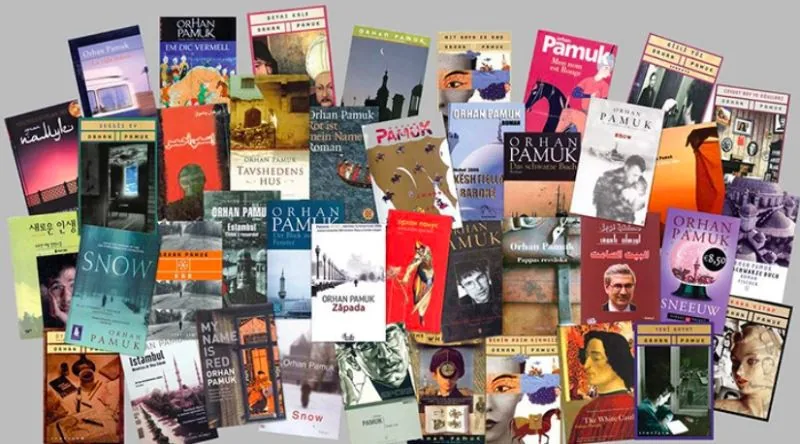
Orhan Pamuk published six novels between 1982 and 1998, from Cevdet Bey and His Sons to My Name Is Red, and that run remains the high-water mark of modern Turkish fiction. Readers who came to him through the Nobel Prize in 2006 often start with the later, quieter books and never find their way back. That is a shame, because the early Pamuk is a different animal: playful, encyclopedic, and willing to gamble. The case below is a reader's case, not a verdict, but it is a case worth making.
Orhan Pamuk's first six novels, written between 1982 and 1998, are widely argued to be the strongest sustained run in modern Turkish literature. They mix detective plots, Sufi mysticism, and Ottoman history in ways later Pamuk books rarely attempt. Critics who dislike his politics often concede the early work.
- Orhan Pamuk published his debut novel, Cevdet Bey and His Sons, in 1982, a family saga spanning three generations of an Istanbul merchant family.
- The Black Book, published in 1990, is a labyrinthine Istanbul mystery that many readers and critics consider his most formally daring work.
- My Name Is Red, published in 1998, is a murder mystery set among Ottoman miniature painters in sixteenth-century Istanbul.
- Pamuk was awarded the Nobel Prize in Literature in 2006, the first Turkish citizen to receive it.
- His early novels draw heavily on postmodern techniques, including multiple narrators, nested stories, and direct addresses to the reader.
The Novelist Turkey Keeps Arguing About
Orhan Pamuk won the Nobel Prize in Literature in 2006, and he has been a public figure in Turkey for more than thirty years, ever since his first novel appeared in 1982. Set aside the personality, the interviews, the political headlines. What is left is a writer whose craft deepened as the sources he drew on grew richer.
That is the argument worth taking seriously, and it is also where the trouble starts. In a country where the novel arrived late, criticism outside academic and artistic circles tends to form around a writer's character and worldview rather than around the books themselves. Everyone has an opinion. Fewer have read the pages. So a novelist who is famous, who wins big prizes, and who shares his views openly, especially his political ones, ends up with a body of criticism that rarely climbs above the gossip level. Pamuk is the clearest case of this in modern Turkish letters: he belongs neither here nor there in the eyes of his own country, and the literary side of his work keeps getting pushed to the background.
Here is the blunt version, the one the original account of his career puts on the table. Popularity dulled the work, no question about it. And still, he is a Nobel-winning author Turkey will not surpass for a very long time.
The reason is structural, not sentimental. In an art form with a tradition as old as literature, one that carries both an oral and a written inheritance, the culture of criticism has settled into place almost everywhere else. Turkey is the exception. Because the novel came so late, readers here learned to judge the person first and the prose second, and a writer can be dismissed before anyone opens the cover.
So the fight around Orhan Pamuk is not really about Orhan Pamuk. It is about how a country talks about books when it never built the habit.
Why "Plagiarism" Is the Wrong Word for What Orhan Pamuk Does
Orhan Pamuk builds his novels the way postmodern fiction has always been built: by carrying traces of earlier books inside them. Some writers annotate the old work, some blend it, some re-adapt or reinterpret what came before. That is the tradition he works in, and calling it theft misses what the tradition actually is.
Here is the odd double standard the original account points to. When a filmmaker quotes an earlier film, or a painter nods to a canvas from two centuries back, or a sculptor echoes a classical form, critics treat the reference as craft. They praise it. They call it sophisticated once they catch it. Do the same thing in literature, a form with a far older written and oral lineage, and some circles react with open hostility. Allusion, influence, adaptation: in prose these get read as cheating. That is where the charge comes from, the flat accusation that there is plagiarism, that there is theft. The original account calls that criticism baseless, and it is worth saying plainly why.
None of this means postmodernism itself is beyond critique. It can be argued against, and seriously. The trouble is that most criticism in Turkey never climbs to that level. It stops at gut reaction, and gut reaction has no literary value. So the debate circles a writer's personality and worldview instead of his pages.
The clearest case is My Name Is Red, Pamuk's sixth novel, published in 1998. The original account frames it as an adaptation of Umberto Eco's Il nome della rosa, and that framing is contested. The novel is generally read as an original work set in Ottoman Istanbul, and the thematic parallels with Eco are real without amounting to adaptation.
That distinction matters because it shows how fast a comparison hardens into a verdict. A shared shape becomes a borrowed plot. A shared mood becomes a stolen one. Meanwhile the same reader who shrugs at a cinematic homage will sharpen a pencil for a novelist. The asymmetry is the whole story.
Cevdet Bey ve Oğulları (1982): A First Novel That Shouldn't Be This Mature
Orhan Pamuk published Cevdet Bey ve Oğulları in 1982, and it is his first novel. Read that again with the year in mind. A debut arriving with this much control, this much patience across three generations of one Istanbul family, is the kind of thing that makes readers flip back to the copyright page to check they haven't picked up someone's fifth book by mistake.
The original account calls the book a bildungsroman, a novel of generations and formation. Treat that label as one critic's frame rather than settled consensus, because classifying a sprawling family saga that way is genuinely debatable. The same account traces the book's foundations to Buddenbrooks and to Üç İstanbul, and here too the comparison is a reading rather than anything Pamuk confirmed. What is not in doubt is the admiration running underneath it: Pamuk is a strong, repeatedly stated admirer of Ahmet Hamdi Tanpınar, and his traces run through these pages.
Then comes the observation that gives this novel its weight. Turkish literature is crowded with books about the Tanzimat era and the first years of the Republic, about the squeeze between a Western self and an Eastern one. Most of those books came from writers who lived through the change, who stood inside it while it happened. Pamuk arrived long after. He wrote about those decades from a distance, and the point is that he still caught each era's spirit, its particular air, in a way that announces a different kind of writer.
That catching is the trick, and it is also where the account sees postmodernism already working. To summon a period's atmosphere from outside it, you borrow from that period's own sources, its texts, its documents, its habits of speech. A young novelist doing that in 1982, holding three generations steady and real and inside their own moment, is doing something genuinely large. Whether you call the result a bildungsroman, a family chronicle, or something the categories hadn't caught up with yet, the maturity is the headline. The label is just the argument that follows it.
Sessiz Ev (1983) and Beyaz Kale (1985): The Postmodern Turn
If you want to watch Orhan Pamuk stop writing a family chronicle and start writing something stranger, you read his second novel, Sessiz Ev, published in 1983. Where his 1982 debut Cevdet Bey ve Oğulları had stretched across three generations, this one pulls the camera in tight: a single family, a short stretch of time, and the political tension of Turkey's coup years humming quietly in the background.
The technique is where it gets interesting. Pamuk hands the story to several narrators in turn, drops odd and jarring characters into a serious setting, runs parallel storylines alongside each other, and leaves the ending deliberately unresolved. He also fills the book with nods to other writers and their work. The result is a novel that is plain enough for any reader to find a foothold in, yet rich in the postmodern machinery underneath. And here is the thing worth singling out: Pamuk only brushes against the political atmosphere at the edges this time. He builds the main story around that tension without forcing a clean conclusion, and that restraint makes this a far more successful piece of social scene-setting than the overtly political books he would write later.
Then came Beyaz Kale in 1985, Pamuk's third novel, and by the account that tracks his career it is the moment he shifts into postmodernism at full throttle. The Nabokov-flavored metaphors and construction he had already leaned on in Sessiz Ev carry over, deepened and reworked. Beyaz Kale arrived ten years before Puslu Kıtalar Atlası in 1995, and there is something ironic in the reception: Puslu Kıtalar Atlası is widely praised, while Beyaz Kale gets tagged with plagiarism accusations. What the novel actually does is braid historical realism with deliberately anachronistic material, and it does it well. For anyone who loves history, or who simply wants a doorway into postmodern fiction, it is a fine place to start.
Kara Kitap (1990): The Threshold Turkish Literature Never Cleared
By the time Orhan Pamuk published Kara Kitap in 1990, he had already written three novels. This was his fourth, and readers who had followed him from Cevdet Bey ve Oğulları through Sessiz Ev and Beyaz Kale knew something had been building. What arrived in 1990 was not just another book. It was the one that split Turkish literature into before and after.
The reading offered by the original account is blunt: this is the mastery work, and it drove a threshold into the middle of Turkish literature that will never be surpassed. That is a heavy claim, and it rests on what Pamuk actually did inside the novel.
Here is the move. Pamuk looked at the literary culture that Western works draw on, the deep well of shared references and inherited forms that makes a certain kind of European novel possible, and he was, in the account's word, envious. His response was not to borrow from that well. It was to put our own literary culture forward instead. The result is an East-West hybrid, sui generis, something no one else could have written. A book that shows the world the richness of this land's literary culture.
The machinery underneath is postmodern, and it runs on two borrowed engines. The dominant form of postmodernism is the detective story, and Kara Kitap uses it. The dominant theme is the search, and it uses that too. But it feeds both engines with sources from here and from outside at the same time. That doubled fuel is what makes the novel multicultural in the deepest sense, a book that talks about a great many different things at once.
Then there is the layer that rewards a certain kind of reader. Open and hidden allusions run through the text, some pointing back at Pamuk's own earlier work and some pointing at other writers entirely. This is what satisfies the curious, research-minded reader, the one who keeps a pencil nearby and looks things up.
Should you expect an easy first pass? No. The original account warns plainly that Kara Kitap is hard and knotty on a first read. But it adds the part that matters: for readers who stay with it, this becomes a bedside book. Not a trophy on the shelf. A book you keep returning to.
The Peak Years: Yeni Hayat (1994) and Benim Adım Kırmızı (1998)
Orhan Pamuk's fifth novel, Yeni Hayat, arrived in 1994, and it is the book where the postmodern machinery stops being a technique and becomes the whole weather system. The Sufi foundations that hummed under the surface of Kara Kitap step forward here and take over the stage. Parallel structures, an overflow of comic touches, texts talking to other texts, allusions sitting in plain sight and others buried deep: the toolkit is fully open on the table.
Plenty of readers bounced off it. That reaction is real and worth naming. Yet the same book tends to flip once you understand what it is standing on. It is the kind of novel you either cannot love at all or end up calling your favorite, with very little room in between. That gap, between the reader who shrugs and the reader who surrenders, is itself part of the design.
Four years later came Benim Adım Kırmızı, his sixth novel, published in 1998. Here Pamuk gathers the themes and subjects he had been circling for years and braids them into one strand. The original account frames the book as a reworking of Umberto Eco's Il nome della rosa for a Turkish readership, and that comparison has traveled far. It is worth being precise about it: Benim Adım Kırmızı is generally read as an original work set in Ottoman Istanbul, not an adaptation of Eco's novel. Thematic parallels exist, and they are genuine, but the book stands on its own ground.
What it does with that ground is the interesting part. A detective story gets lifted onto a historical plane, and the investigation runs through painting, through miniature art, through the world of the nakkaş, the Ottoman court miniaturists. Even a reader who finds nothing else to admire in it walks away having met Il nome della rosa through its pages, and that alone, as the original account puts it, is worth a great deal.
Two novels, then, and two very different kinds of peak. One pushes a style to its limit and dares you to keep up. The other takes everything learned along the way and builds something a wider audience can enter, without ever going soft.
After the Peak: Kar (2002) and Masumiyet Müzesi (2008)
There is a cliff in Orhan Pamuk's shelf, and it starts right after the sixth novel. The first six books, from Cevdet Bey ve Oğulları in 1982 through Benim Adım Kırmızı in 1998, read like a writer climbing. What follows, with one clear exception, reads like a writer stepping down. The question the original account keeps circling back to is simple and a little unkind: did he start writing simpler books because he wanted a bigger audience, or because he genuinely wanted to write that way? The piece never answers it. It just notices the drop.
Kar, published in 2002, is Pamuk's seventh novel. By the account's own reckoning it had everything it needed to be good. The city he picks works. The construction works. Some of the characters carry real originality, and the postmodern touches are still there, still humming. Then politics walks in and the whole thing sags. Pamuk tries to talk about political life and cannot make it stick; the material sits on top of the story instead of inside it. What sinks the book, in the end, is character: terrible, unbelievable people, handed to us in a way that never feels real, plus examinations so tilted by the author's own vantage point that they read as biased rather than observed. This is, by the account's verdict, his first mediocre novel. Not a bad idea. A bad execution of a good one.
Then came 2006, and the Nobel Prize in Literature. Then came Masumiyet Müzesi, his eighth novel, published in 2008. The timing matters here. The memoir İstanbul had already appeared in 2003, the Nobel landed in 2006, and the novel arrived two years after that, sitting inside a stretch when Pamuk was being read, photographed and discussed as a laureate rather than simply as a novelist. The original account calls it a book that came out a bit late, and calls it a Yeşilçam-flavored love story, plain and straight, the kind of thing average readers adored and literary readers found thin. Its real event was not on the page at all. The book was carried into actual life as an actual museum, which is postmodernism doing its oldest trick one more time, and which gives the whole project an originality the prose alone never earns.
So the pattern the account draws is this: a peak across six novels, then a sharp slide, with Veba Geceleri standing alone as the exception that proves the rule. What it never resolves is motive. A writer who has spent decades inside metafiction and intertextual games does not accidentally start writing books that ordinary readers can finish on a commute. Either he chose it, or something in him changed, and the account is honest enough to admit it cannot tell which.
The Simple Years: Kafamda Bir Tuhaflık (2014) and Kırmızı Saçlı Kadın (2016)
By 2014, Orhan Pamuk had already given the world Masumiyet Müzesi, his eighth novel, and the pattern that began there now hardened into something new. His ninth novel, Kafamda Bir Tuhaflık, arrived that year, and it tells a whole period of Turkey through the life of a single man. The ambition is clear. The execution, according to the original account, is not.
The critique lands hard: Pamuk tries to write sociologically here, but keeps the literary side weak, and then uses those sociological conditions only as a rough backdrop. The depth of the earlier books is missing. And yet the novel still pulls readers in. Nostalgia does much of the work, along with the changing eras it walks through and a love story at its center. This is where the simple novels that started with Masumiyet Müzesi reach their peak, giving average readers books that ask very little effort of them.
Two years later came Kırmızı Saçlı Kadın, Pamuk's tenth novel, published in 2016. The account calls it a short novel experiment, one that now and then signals his old days, a flicker of the writer who once built Kara Kitap. There is a little mythology in it, a little literary grounding, enough to suggest the earlier Pamuk is still somewhere in the room. But it also finds the book a bit slapdash, and it is not for readers wanting something more demanding.
What it is, by the account's own reckoning, is one of his most-read books, embraced by average readers. That is the shape of these years: a Nobel laureate writing shorter, easier, more accessible novels, and a large readership meeting him exactly there.
Veba Geceleri (2021): The Exception That Proves the Rule
In 2021, Orhan Pamuk published his eleventh novel, Veba Geceleri, and for many readers who had followed his late-career slide, it landed like a signal from an earlier decade. By the account that traces his whole shelf, this one is quite good compared to the novels that came just before it.
That should not have surprised anyone. The book had been conceived over many years, and you can feel that long gestation in its historical fiction, in the sources it leans on, and in the plain realism of its construction. Those are exactly the qualities that marked his early work. Then the pandemic arrived, and by this account Pamuk revised large parts of the manuscript while COVID-19 was reshaping daily life around him. A novel about plague nights, rewritten during a real outbreak.
What he produced, by the account's reckoning, is a pure historical novel. That label cuts both ways. The genre has as many detractors as fans, so this is a book people tend to love or hate rather than meet in the middle.
And then comes the closing judgment, the one that reframes everything before it. However mediocre he becomes, the account argues, the books he wrote up to the Kar era are enough to make Orhan Pamuk a writer whose level will not be reached in Turkey for a very long time.
Frequently asked questions
What is Orhan Pamuk best known for?
Orhan Pamuk is best known as Turkey's Nobel Prize-winning novelist. He won the Nobel Prize in Literature in 2006, and he has stayed in the public eye for more than thirty years, ever since his debut novel, Cevdet Bey ve Oğulları, appeared in 1982.
How did Pamuk use postmodern techniques in his early novels?
In Sessiz Ev, published in 1983, Pamuk splits the narration among multiple voices and leaves the ending deliberately ambiguous. In Kara Kitap, from 1990, he builds the plot on the detective story and on the theme of the search, drawing on sources from both Turkish and outside literature.
What is the difference between his early and later novels?
Pamuk's first six novels, spanning 1982 to 1998, mark the peak of his work. From Kar in 2002 onward, the books grow simpler and better suited to everyday consumption, with Veba Geceleri in 2021 standing as the exception.
Which novel should a first-time reader start with?
Beyaz Kale, from 1985, is a good entry point for history lovers and for anyone wanting to step into postmodernism. Kara Kitap, published in 1990, rewards readers who are willing to persevere.
Was Pamuk accused of plagiarism, and is that fair?
Accusations of plagiarism and of weak Turkish tend to come from people unfamiliar with modern literature. My Name Is Red, from 1998, is generally read as an original work set in Ottoman Istanbul, not an adaptation of Umberto Eco's Il nome della rosa, despite the thematic parallels critics like to draw.
Why do Turkish critics judge him by politics rather than his books?
Because the novel arrived late in Turkey, criticism outside academic and artistic circles tends to form around personality and worldview. Pamuk's openness about his political views keeps much of that criticism at the gossip level rather than the literary one. Editorial note: Details that remain unconfirmed, including the extent of individual critical reception and any contested claims about influence or originality, are presented here as hedged rather than settled.
Got a take on this? Add your voice to the conversation below →
No comments yet. Be the first.