Bridgerton Season 2 Review: Anthony & Kate's Complex Romance
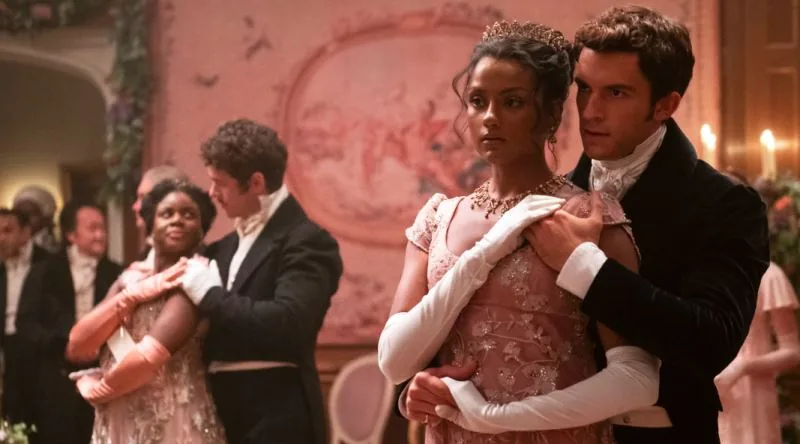
This Bridgerton season 2 review finds Shondaland’s hit Netflix series deepening its romantic stakes in 1814 London, trading the Duke of Hastings’ passion for the slow-burn friction between Viscount Anthony Bridgerton and Kate Sharma. The result is a more mature, emotionally resonant chapter that leans into family duty, fiery arguments, and the ache of denied desire. It pulls you in because it finally lets its characters breathe, offering a love story that feels earned rather than rushed.
In Bridgerton season 2, Anthony Bridgerton courts Edwina Sharma while clashing with her protective elder sister Kate in 1814 London. Their mutual antagonism grows into a complex, forbidden attraction that upends the season’s marriage plot. The season airs on Netflix and focuses on emotional intimacy over scandal.
- Season 2 of Bridgerton premiered on Netflix in March 2022, centering on Anthony Bridgerton’s search for a viscountess.
- Kate Sharma, played by Simone Ashley, arrives in London from India with her younger sister Edwina, whom Anthony intends to marry.
- The central romance develops through verbal sparring and shared vulnerability between Anthony and Kate, rather than physical intimacy.
- The season expands on female perspectives, giving Eloise Bridgerton and Penelope Featherington more layered storylines alongside the main couple.
- The show’s color-conscious casting and anachronistic pop covers continue, reinforcing its stylized, modern take on Regency England.
Bridgerton Season 2 Review: A More Complex, Less Fairy-Tale Return
Bridgerton arrived on Netflix on December 25, 2020, and immediately split audiences down the middle. Some fell hard for its candy-colored, fairy-tale version of Regency London. Others bristled at the historical liberties, and honestly, the criticism was fair. The London of the 1810s looked nothing like the one on screen. But the producers never claimed otherwise. As they kept insisting, this is not a documentary. It is a fantasy built from Julia Quinn's beloved book series about eight Bridgerton siblings, filtered through a thoroughly modern lens.
Season 1 told the story of Daphne, the first Bridgerton to marry, and her fake courtship with the Duke of Hastings. It was charming, yes, but also steeped in clichés. The beautiful, wealthy girl being crowned the season's diamond. The pretend romance that inevitably turns real. The plot leaned hard into familiar fairy-tale beats, even with a mixed-race Black lead at its center.
Season 2 takes a different path. It shifts focus to Anthony Bridgerton, the second sibling to marry, adapting Quinn's novel The Viscount Who Loved Me. And here, the show finally grows up. The new season trades the first's glossy predictability for something messier, more logical, and far less clichéd. Anthony's story is thornier, his romance with Kate Sharma built on stubbornness, duty, and mutual resistance rather than simple attraction. The result is a Bridgerton season 2 review that feels less like a bedtime story and more like an actual examination of what love costs, especially for people who have spent their whole lives putting family first.
The show's core premise remains its boldest move. It asks a provocative question: what if the 1800s British aristocracy had never been racially segregated? What would that world look like? The answer is a reimagined high society where a Tamil woman like Kate Sharma can hold her own against the viscount, and where Queen Charlotte, played with relish, presides over a court that never existed in history books. It is pure alternate history, inspired by contemporary ideas rather than period accuracy. And that is precisely the point.
Anthony and Kate: A Romance Built on Duty and Sacrifice
Kate Sharma walks into the Bridgerton ballroom in 1814 and immediately changes what this show can be. She is a Tamil woman, the first Indian lead in the series, and a direct continuation of the color-conscious casting that brought a mixed-race Black actor, Regé-Jean Page, into the spotlight in Season 1. But Kate is not here to be a decoration. She rides, she hunts, she challenges men to their faces, and she would prefer not to marry at all.
That last part makes her radically different from Daphne Bridgerton, the sweet debutante who anchored the first season. Daphne knew how to dress, speak, embroider, and play piano, and she did all of it beautifully. She was the perfect society woman, the kind who never stepped out of line. Kate, by contrast, is the kind of woman who would rather take a horse out at dawn than sit through another tea party. She has no interest in being presented to the queen as a diamond of the first water. She wants to go home to India.
What makes Kate so compelling is not just her independence, but the price she pays for it. She has spent years raising her younger sister Edwina, preparing her for a brilliant match, and she has done so at the cost of her own future. Every choice Kate makes is filtered through what is best for Edwina. Anthony Bridgerton, the eldest son who became head of his family after his father's death, operates the same way. He has spent his entire adult life carrying the weight of the Bridgerton name, and he has convinced himself that love is a luxury he cannot afford. He wants a wife who is suitable, sensible, and safe. He does not want to feel anything.
And then he meets Kate, and feeling becomes unavoidable.
The romance between Anthony and Kate is built on mutual sacrifice and duty, which is what sets it apart from the first season's love story. Simon and Daphne never quite clicked as a couple; they seemed to be playing different games in the same room. Anthony and Kate, from their very first argument, understand each other perfectly. They are both stubborn. They both put their families first. They both suppress their own desires because they believe that is what duty demands. Even when they are pushed to the edge of a cliff, standing at the altar on Edwina's wedding day, they do not back down from their obligations. It takes the blindfold falling from Edwina's eyes for the truth to finally come out.
Some critics have compared Kate and Edwina to Elinor and Marianne from Jane Austen's Sense and Sensibility, and on the surface, the comparison fits. Kate is the sensible elder sister who thinks before she acts. Edwina is the excited younger one who dreams of marrying a viscount. But the comparison only goes so far. Kate is far more rebellious and passionate than Elinor, who was practically a walking book of proper behavior. And Edwina is far more mature than Marianne. She does not throw a tantrum when she learns the truth about Anthony and Kate. She sees what is happening, accepts it with grace, and steps aside. She is not a fool, and the show does not treat her like one.
Of course, not every cliché was left behind. Kate still takes a nasty fall from a horse and spends days unconscious, which is about as classic a plot device as they come. Anthony still ends up proposing to Kate out of a sense of obligation rather than genuine feeling. But these moments do not dominate the season the way they did in Season 1. The writers have learned to let the characters breathe, and the result is a love story that feels earned rather than manufactured.
This is what makes the second season of Bridgerton work so well. It is not just a romance. It is a study of two people who have spent their whole lives putting everyone else first, and who finally have to confront the cost of that choice. Kate and Anthony do not fall in love easily. They fight it every step of the way. But when they finally stop fighting, the payoff is worth the wait.
Bridgerton's Historical Inaccuracies: Queen Charlotte, King George, and the 'Angel of the House'
Bridgerton's second season brings real historical figures into its fictional world, and the results are a fascinating mix of fact and invention. King George III and Queen Charlotte genuinely ruled Britain in the 1810s, and yes, they really did have 15 children together. But the show's portrayal of Queen Charlotte as a Black woman is pure fiction, a deliberate reimagining rather than historical record.
The real George III and Charlotte had their marriage arranged, as royal unions typically were. The show suggests the couple first laid eyes on each other at the wedding ceremony, but historical sources tell a different story. Records indicate they actually met before the wedding day, even if the match itself was orchestrated by others. What remains undisputed is the king's remarkable fidelity. George III stands out among British monarchs as one of the rare few who never kept a mistress, a fact that made his devotion to Charlotte something of a legend in royal circles.
The king's later years were shadowed by recurring mental illness, a reality the show touches on. By his final decade, George III was confined at Windsor Castle, kept behind closed doors as his condition deteriorated. The show's romanticized version of their love story and the "trials they overcame" should be taken with a grain of salt. The historical record supports the large family and the king's faithfulness, but the fairy-tale gloss is very much a Bridgerton invention.
One small detail the costume and props departments got right: Queen Charlotte's snuff. The show depicts her inhaling the powdered tobacco through her nose, a habit that was genuinely widespread in Regency-era Britain. It's the kind of period-specific touch that rewards close watching.
Beyond the royal couple, the second season wades into murkier historical waters with its portrayal of women's roles. The show presents 19th-century English society as sorting women into three categories: the angel of the house, the governess, and the prostitute. This framework has become popular in modern discussions of the era, but it was not a classification people at the time actually used. It's a scholarly shorthand developed much later, a convenient lens for understanding social hierarchies rather than a documented contemporary system.
The angel of the house concept does capture something real about the period's expectations. Women in this idealized category devoted themselves entirely to marriage and motherhood, with no purpose beyond raising children and managing a household. This is the world Jane Austen wrote about, a society where everything revolved around courtship and matrimony. Austen wasn't obsessed with marriage because she had a limited imagination; she was documenting what she saw around her every single day.
Governesses occupied a trickier social position. They were educated enough to teach wealthy families' daughters, typically receiving schooling up to a certain level, though nowhere near what men received. The specific claim that their education reached "high school level" is anachronistic, a modern comparison that doesn't map neatly onto 19th-century schooling. What is clear is that governesses were tolerated but not truly accepted, women who hadn't married but had preserved their "honor" by working respectably. For a woman seeking independence without falling into prostitution, governess work represented about the highest station she could reach.
The third category, prostitutes, were openly condemned and shunned by respectable society. These were women who lacked the education, skills, or connections to secure a place in the other two groups, and they paid the social price for it.
Kate Sharma's storyline in the second season makes sense within this framework. She doesn't want to marry, but she can't simply stay home doing nothing either. Choosing governess work gives her a legitimate path forward, a way to exist in society without conforming to its marriage imperative. The writers deserve credit for weaving this historical nuance into her character's motivations, even if the three-part classification itself is a modern invention.
Eloise, Penelope, and Portia: Women Navigating a Restrictive Society
Eloise Bridgerton spends her second season actively dismantling the cage her family keeps building for her, refusing every attempt to mold her into a "second Daphne." She pushes back harder on the expectations of Regency-era London, raising her voice on women's rights and digging into the mystery of Lady Whistledown's identity. Along the way, she starts to figure out who she actually is, not just who society wants her to be.
The show gives her a potential partner in Theo, a printer's apprentice who works outside the aristocratic bubble entirely. As the story goes, many viewers hope the series will pair Eloise with Theo rather than follow the books, where her designated spouse is Sir Phillip Crane. Some fans have described him as "very bad," but the source material actually paints a different picture: he is a kind but emotionally distant widower, not the monster some make him out to be.
Penelope Featherington, better known to the ton as Lady Whistledown, gets a deeper look this season, and the picture that emerges is deliberately complicated. She is not purely good or purely bad, but a "grey" character shaped by loneliness and social disadvantage. She is not physically striking, her family holds little title, and her economic standing trails most of the other families. She is not even the firstborn daughter. All of it makes her easy to overlook, and that invisibility becomes her weapon. She draws power from gossip and uses it shrewdly, transforming from a wallflower into someone who quietly controls the narrative.
Portia Featherington's storyline lands the hardest because it exposes the brutal mechanics of inheritance law. In 19th-century England, if a widow had no son, her late husband's property went to his nearest male relative, leaving the woman and her daughters at his mercy. Portia spends the season looking calculating and conniving, but underneath that is a cornered, desperate woman. The proof of her desperation comes in the final episode, when she chooses to stay in London and scheme one last time for her daughters' sake rather than walk away.
These three women, each in her own way, illustrate the razor-thin options available to them. Eloise rebels, Penelope manipulates, and Portia claws. None of them gets to simply exist on her own terms, and that is exactly the point the show is making about women navigating a restrictive society.
Bollywood Influences and the Missing Duke: Season 2's Production Choices
Season 2 of Bridgerton, which premiered on Netflix in 2022, traded some of its fairy-tale gloss for a bolder visual language, and the shift is unmistakable from the opening episodes. The production team borrowed techniques that feel far closer to Mumbai than to Mayfair, and the result gives Anthony and Kate's love story a pulsing, restless energy.
The most noticeable change arrives in the sound design. Background heartbeats now thrum beneath key scenes, a rhythmic reminder of the desire these characters refuse to voice aloud. The camera, too, has learned new tricks. In several moments it swings in a full 360-degree spin, circling the couple as their worlds collide, pulling the viewer into the dizzying whirl of a courtship neither of them wants to admit is real. And then there are the sleepless nights. Anthony and Kate, lying apart in their own beds, stare at the ceiling while the audience watches them toss and turn, each one haunted by the other. It is a classic Bollywood device, the sleepless-lover montage, and it works beautifully here, making the longing feel physical and immediate.
These choices are not Hollywood conventions. They are distinctly Indian cinematic flourishes, and their presence makes sense given that Kate Sharma, played by Simone Ashley, is a Tamil woman. The show leaned into her heritage not just in casting but in the very grammar of its storytelling. The heartbeats, the spins, the shared insomnia, all of it echoes the romantic epics of Indian cinema. It is a clever, unexpected layer that deepens the season's emotional pull.
But for all the new techniques, the absence that lingers most is not a stylistic one. Simon Basset, the Duke of Hastings and the male lead of Season 1, is nowhere to be found. His wife Daphne returns to the ton, attending events and appearing at family gatherings, but she arrives alone every single time. The gap becomes impossible to ignore at Anthony's wedding, where the absence of the Duke is frankly conspicuous. A brother-in-law missing from such a milestone feels less like a scheduling conflict and more like a hole in the fabric of the story.
It is a shame, because the show could have arranged for the actor to appear in even a handful of scenes. A brief appearance at the wedding, a quiet moment with Daphne, even a passing glance across a ballroom would have smoothed over the awkwardness. Instead, the season asks viewers to accept that a devoted husband would skip his wife's brother's nuptials without explanation. The omission does not ruin the season, but it does pull at a loose thread every time Daphne walks into a room by herself.
When the final credits roll, the verdict is a mixed one. The script this season is stronger, more grounded, and less reliant on the tired tropes that weighed down the first outing. Anthony and Kate are better matched than Simon and Daphne ever were, two stubborn souls who put family duty above their own happiness until they simply cannot anymore. The character work is sharper, the conflicts more believable. Yet many viewers will likely still prefer Season 1. That first season had a fairy-tale quality, a shimmering, almost dreamlike atmosphere that made it feel like a romance novel come to life. Season 2 is messier, more complicated, and ultimately more human, but it lacks that initial spark of pure enchantment. It is a worthy sequel, just not the same kind of magic.
Frequently asked questions
What are the main differences between Bridgerton season 1 and season 2?
Season 2 trades the fairy-tale clichés of the first season for a more complex, logical plot centered on Anthony Bridgerton. The storytelling feels tighter, with fewer predictable tropes and a stronger female lead in Kate Sharma, who challenges Anthony at every turn rather than simply falling into his arms. The first season, which premiered on Netflix on December 25, 2020, leaned heavily on familiar romance conventions: the diamond of the season, the fake courtship that turns real, the beautiful wealthy girl. Season 2, adapted from Julia Quinn's novel The Viscount Who Loved Me , strips away much of that predictability. Anthony and Kate's relationship builds through genuine conflict, stubbornness, and mutual respect rather than convenient plot devices. The result is a season that feels more grounded in character motivation, even within the show's deliberately fantastical version of Regency London.
Who are Kate and Edwina Sharma in Bridgerton season 2?
Kate and Edwina Sharma are sisters from India who arrive in London for the marriage market. Kate, a Tamil woman, is the independent, strong-willed protagonist who rides horses, challenges men openly, and would rather remain unmarried than surrender her freedom. Edwina is the conventional debutante, charming and proper, seeking a titled husband. The contrast between the sisters drives much of the season's tension. Kate, the elder, acts as Edwina's chaperone and protector, pushing her own desires aside for her sister's sake. Edwina, while seemingly the perfect society maiden, proves sharper than she first appears. When the truth about Anthony's feelings emerges, she steps back with a maturity that surprises everyone. Their dynamic echoes the push-and-pull of duty versus passion, but Kate's fiery, rebellious nature sets her apart from the typical sensible-sister archetype.
Why is Bridgerton considered historically inaccurate?
Bridgerton deliberately reimagines 1810s London as a racially diverse aristocracy, answering a fascinating question: what would the British upper class look like if racism had never existed? The show's creators have stated plainly that this is not a documentary, but a fantasy inspired by Julia Quinn's novels and contemporary perspectives. The series openly rejects the traditional approach of viewing history through its own era's lens. Instead, it brings modern sensibilities to the Regency period, creating an alternative world where Black and South Asian families hold titles and power alongside white aristocrats. Queen Charlotte, played by Golda Rosheuvel, is depicted as a Black woman, and the Sharma sisters enter high society without the barriers they would have faced in actual 1810s England. The result is less a historical reenactment and more a thought experiment about class, race, and romance, wrapped in ball gowns and orchestral covers of pop songs.
How does Bridgerton portray Queen Charlotte and King George III?
The show fictionalizes the real monarchs who ruled England during the Regency era. Queen Charlotte appears as a sharp, entertaining figure who dominates every scene she enters, while King George III is shown suffering from mental illness in his later years, kept behind closed doors. Some details are historically accurate: the couple did have 15 children, and George was famously one of the few British kings without a mistress. However, the romance between them is largely invented. Historical records indicate their marriage was arranged, as royal marriages typically were, and the couple reportedly met before their wedding rather than at the ceremony itself. The show's version of their love story, with its trials and devotion, owes more to dramatic imagination than documented fact. What is true is that George III's recurring mental illness was real, and he spent his final decade confined at Windsor Castle. The show weaves these genuine elements into its fictional tapestry, making the monarchs feel both fantastical and rooted in actual history.
What is the significance of the 'angel of the house' concept in Bridgerton?
The "angel of the house" was a 19th-century ideal that defined the only respectable role for women: marriage and motherhood, with no purpose beyond domestic devotion. Bridgerton critiques this limited vision through Kate Sharma, who refuses to fit that mold, and through Eloise Bridgerton, who actively rebels against it. In the social hierarchy of the era, women supposedly had three paths: the angel of the house, the governess, or the prostitute. This classification, while a modern scholarly simplification rather than a formal contemporary system, captures the brutal constraints women faced. Kate's choice to become a governess rather than marry reflects this reality, as does Portia Featherington's desperate situation as a widow. When a woman's husband died without a son, his property passed to his nearest male relative, leaving the widow and daughters at that man's mercy. The show uses these historical pressures to give its female characters real stakes, making their defiance feel meaningful rather than merely decorative.
How does Eloise Bridgerton's character develop in season 2?
Eloise Bridgerton becomes far more rebellious in season 2, rejecting her family's attempts to mold her into a second Daphne. She refuses every responsibility and identity they try to impose, instead pursuing two obsessions: uncovering Lady Whistledown's identity and finding her own sense of self. Her voice grows louder on women's rights, and she begins actively challenging society's rules rather than merely grumbling about them. The season plants seeds for a potential romance with Theo, a printer's apprentice, which would be a fitting match for someone so determined to break aristocratic conventions. Eloise's journey from curious observer to vocal critic of her world marks one of the season's most satisfying character arcs, even as her investigation into Lady Whistledown draws her into dangerous territory.
What role does Penelope Featherington play as Lady Whistledown?
Penelope Featherington, the quiet youngest daughter of a struggling family, is Lady Whistledown, the anonymous gossip columnist whose words shape London society. She uses her secret identity as a source of power, transforming from an overlooked wallflower into someone who controls narratives and influences fortunes. Penelope is neither hero nor villain, but a morally grey figure whose circumstances explain, if not excuse, her choices. She is physically unremarkable by society's standards, her family's status is low, and she is neither the eldest nor an only child, making her easy to ignore. Her loneliness deepens in season 2 as she watches her friend Eloise investigate her own secret. The gossip column becomes her weapon against invisibility, and she wields it with increasing cunning. Her complexity makes her one of the show's most compelling characters, a young woman who found the only tool available to her and learned to use it masterfully.
Why did some viewers miss Simon Basset in season 2?
Simon Basset, the Duke of Hastings and season 1's male lead played by Regé-Jean Page, is noticeably absent from season 2. His disappearance is most glaring at key family moments, particularly Anthony's wedding, where his presence would have been expected given his friendship with the Bridgertons. Daphne appears throughout the season alone, which feels strange after the passionate romance of the first season. Simon's storyline from season 1, including his complicated relationship with his father and his reconciliation with Daphne, receives no continuation. The show moves forward with Anthony's story, but the gap left by Simon's absence is felt by viewers who wanted to see how the couple fared after their happy ending. While the season succeeds on its own terms, the missing duke remains a notable absence that many fans continue to discuss.
Got a take on this? Add your voice to the conversation below →
No comments yet. Be the first.