Hemingway in Istanbul: 1922 Dispatches on Turks
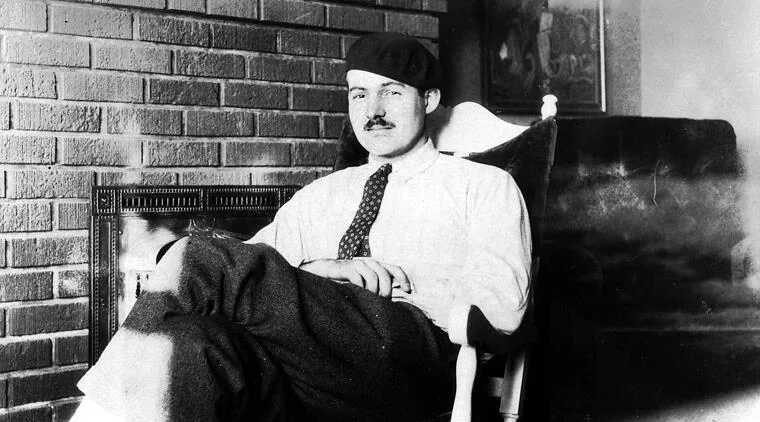
In 1922, a young Ernest Hemingway arrived in Istanbul as a correspondent for the Toronto Star, filing vivid dispatches that captured a tense, cosmopolitan city on the eve of Ataturk's entry. His Istanbul reporting mixed gritty war coverage with sharp portraits of Turkish life, nightlife, and food, offering a unique window into the end of the occupation era. What he found was a city exhausted by war yet electric with possibility, a place where the smell of fish and coffee mingled with the crackle of gunfire and the murmur of spies.
In late 1922, American journalist Ernest Hemingway reported from Istanbul for the Toronto Star during the Turkish War of Independence's final phase. His dispatches described a tense, polyglot city under Allied occupation, awaiting Mustafa Kemal's forces. He interviewed Turkish leaders, observed refugee flows, and captured the atmosphere of a capital about to change hands forever.
- Hemingway arrived in Istanbul in late September 1922 as a foreign correspondent for the Toronto Star, during the final months of the Allied occupation.
- His dispatches described the city's tense calm as Turkish nationalist forces under Mustafa Kemal prepared to enter the city, ending centuries of Ottoman rule in the capital.
- He interviewed Turkish military figures, including a notable meeting with Ismet Pasha, and reported on the chaotic refugee situation following the Greco-Turkish conflict.
- Beyond war coverage, Hemingway wrote atmospheric pieces about Istanbul's nightlife, food stalls, and the everyday resilience of its residents during the occupation era.
- His Istanbul reporting, published in early 1923 alongside the Lausanne Conference coverage, marked a formative period in his development as a journalist and storyteller.
Hemingway in Istanbul: A Dispatcher's View of a City on the Brink
In late 1922, the Toronto Star sent a young reporter named Ernest Hemingway to Turkey to witness the closing chapter of the Turkish War of Independence. He arrived in Istanbul expecting the exotic city of films and paintings, only to find something far stranger and more alive. What he filed back to Canada was not a dry political summary, but a dispatcher's raw, sensory portrait of a metropolis holding its breath.
The city he stepped into refused to match its postcards. From the window of an approaching train, Istanbul unfolded as sun-scorched, treeless stretches dotted with wooden shanties, a ramshackle universe sprawling toward the sea. Brown Asia sat just across the water. It was, he wrote, a dimensional picture woven from makeshift structures between great walls, a chaos that felt more real than any photograph could capture.
Yet the magic he had been promised was there too, if you knew where to look. Waking to see the minarets raising their thin, clean heads above the fog settled on the Golden Horn, hearing the muezzin's plaintive call that reminded him of an aria from a Russian opera, he felt himself dissolving into the spell of the East. The flies that had feasted on him overnight left their marks on his face, and in that itchy, half-awake moment, he knew he was truly somewhere else. He found a happy middle ground between the East of Pierre Loti's stories and the East of daily life, though he insisted only someone with half-closed eyelids, indifferent to what they ate and resistant to fly bites, could manage it.
This was the Istanbul that greeted Hemingway, a city of roughly 1.5 million people according to contemporary estimates, though no proper census had ever been conducted. It was a place where the old world was crumbling and a new one had not yet announced its shape, and Hemingway was there to watch it happen.
Food, Drink, and Daily Life: Hemingway's Istanbul Observations
Hemingway's Istanbul was a city that never stopped moving, and the food he found there left a mark on him. He learned that Turkey's national dish was turkey, and the birds he encountered were nearly horse-sized, fattened on meaty locusts across the Anatolian steppes. One steak he ordered was so tough it paralyzed his jaw, but the fish dishes earned his wholehearted praise.
The rhythms of daily life fascinated him. Locals told him about the abundant official holidays in the city, with Muslims choosing Friday, Jews Saturday, and Christians Sunday as their weekly day of rest. Young Istanbulites, he was told, aimed for state offices or banks to take advantage of these holidays, and no one sat down to dinner before 9 PM. Nightclubs stayed open until morning, street-corner meatball sellers worked through the night, and potato fry stands dotted the sidewalks. Turks gathered in coffeehouses along narrow roads, puffing nargiles and sipping raki so strong it demanded meze alongside.
The Tense Atmosphere Before Ataturk's Entry: Fear and Rumors in Pera
Nobody in Istanbul could tell you exactly how many people called the city home. Hemingway reported that an estimated 1.5 million people lived there in 1922, but no proper census had ever been conducted to confirm it. The uncertainty itself seemed to feed the unease that gripped every neighborhood.
Pera, the city's European quarter with its cobblestone streets, had become a pressure cooker. The Romanian and Armenian consulates stood among the official buildings, and outside their doors, long queues of people waited desperately for visas. Armenians, Jews, and Romanians were packing whatever they could carry, preparing to flee. The rumor that Mustafa Kemal's armies were drawing close to the city spread everywhere, a whispered dread that no one could escape.
At the London Hotel, where Hemingway was the only guest, the Greek owner spoke with fatalistic eyes. "My death will come from here," he said, staring straight at the young journalist. "We are armed from head to toe, all Christians ready for war." He blamed France for deciding to give Istanbul to Mustafa Kemal, and he seethed at the thought: Greeks and Romans had always fought alongside the Allies, and now their reward was abandonment.
Russian refugees added another layer of tension. Many had fled Lenin's revolution and now wandered the streets in Tsarist uniforms, sentenced to death in absentia by the communists. They waited for Mustafa Kemal's arrival with deep anxiety, unsure what his victory would mean for them. Hemingway captured the fragile mood precisely: one Turk celebrating Mustafa Kemal too loudly could trigger a bloodbath that would drown the entire city.
At the Lausanne Conference: Meeting Ismet Pasha
Ernest Hemingway left Istanbul in December 1922, heading to Switzerland to cover the Lausanne Conference, the peace negotiations that would formally end the war he had been reporting on. The conference convened at the Chateau de Ouchy, a venue Hemingway bluntly called perhaps the ugliest building in Lausanne. Inside those walls, the world's press gathered around one figure above all others: Ismet Pasha, Mustafa Kemal's right-hand man and the chief negotiator for the Turkish delegation.
The general defied his own photographs. In person, Ismet Pasha was small, quiet, and unpretentious, with a warm face that his official portraits never captured. Dozens of journalists tracked his every move through the conference halls. Hemingway managed to approach him after one meeting, threading through the crowd of reporters. As the Turkish commander pushed past, he told the young correspondent, "Make an appointment, we'll talk plenty," then smiled and disappeared into an elevator.
That appointment came, and the two men sat down together. Neither spoke the other's language well. Hemingway's French was shaky; Ismet Pasha's was no better, a point the general humbly emphasized more than once. Yet they managed to communicate without much difficulty, two men finding common ground in broken sentences and patient repetition. The interview went well enough that Hemingway remembered it vividly.
Later, the journalist spotted Ismet Pasha again, this time in Montreux, a resort town along Lake Geneva not far from Lausanne. The general was at a dance, watching performers move to jazz music, a moment of leisure after the grueling negotiations. For Hemingway, it was a fitting coda to his time in Turkey: the war had ended, the peace was being negotiated, and the men who shaped history could finally enjoy an evening of music and spectacle.
Frequently asked questions
What did Hemingway write about Istanbul in 1922?
Ernest Hemingway, writing for the Toronto Star, captured Istanbul in 1922 as a city of striking contrasts: turkeys nearly the size of horses, steaks tough enough to paralyze the jaw, and dinners that never started before nine in the evening. He also documented the tense atmosphere before Mustafa Kemal Ataturk's entry, describing minority communities gripped by fear and preparing to flee.
Why was Hemingway in Turkey in 1922?
The Toronto Star dispatched Hemingway to Turkey in late 1922 to cover the Turkish War of Independence, the conflict that would reshape the region. His assignment placed him in Istanbul during one of its most pivotal moments, as the old order crumbled and a new nation prepared to emerge.
How did Hemingway describe the atmosphere before Ataturk entered Istanbul?
Hemingway reported that fear gripped the city as rumors spread of approaching armies. In Pera, Istanbul's European quarter, he observed long queues outside the Romanian and Armenian consulates, with Armenians, Jews, and Romanians preparing to flee. The Greek owner of his hotel, the London Hotel, told Hemingway, "My death will come from here," adding that all Christians were armed and ready for war.
Who was Ismet Pasha and how did Hemingway describe him?
Ismet Pasha was Mustafa Kemal's right-hand man and a distinguished general. At the Lausanne Conference in 1922-1923, Hemingway found him small, quiet, unpretentious, and warm-faced, contrary to his photographs. They had a friendly interview despite both struggling with French, and Hemingway later spotted the pasha at a dance in Montreux enjoying jazz music.
What did Hemingway say about food and daily life in Istanbul?
Hemingway marveled at the national dish of turkey, noting the birds were fed on fat locusts from the Anatolian steppes. He praised the fish but suffered through tough steaks. He observed Turks smoking nargiles in roadside cafes, drinking raki so strong it seemed impossible without meze, and noted the city's vibrant nightlife with clubs open until morning.
Did Hemingway meet Mustafa Kemal Ataturk?
No, Hemingway never met Ataturk. His only direct encounter with Turkish leadership was with Ismet Pasha at the Lausanne Conference, where he managed to secure an interview after a brief exchange near an elevator. According to the original account, these Turkish dispatches were later published in Turkey under two book titles, though records of these publications remain uncertain.
What was the Lausanne Conference and why was it significant?
The Lausanne Conference was a peace conference held in 1922-1923 at the Chateau de Ouchy in Lausanne, Switzerland, to settle the conflict between Turkey and the Allied powers. Hemingway covered it as the "beginning of the end," describing it as the moment when the war's conclusion finally took shape. Everyone wanted to see Ismet Pasha there.
How did Hemingway's Istanbul articles influence his later writing?
His journalism from Turkey is widely regarded as formative for his literary style, though this remains more of a general observation than a direct claim from his dispatches. The concrete details, the ear for dialogue, and the unflinching eye for human fear that marked his Istanbul reporting would echo through his later fiction.
Got a take on this? Add your voice to the conversation below →
No comments yet. Be the first.