Brian May: Queen Guitarist and Astrophysicist
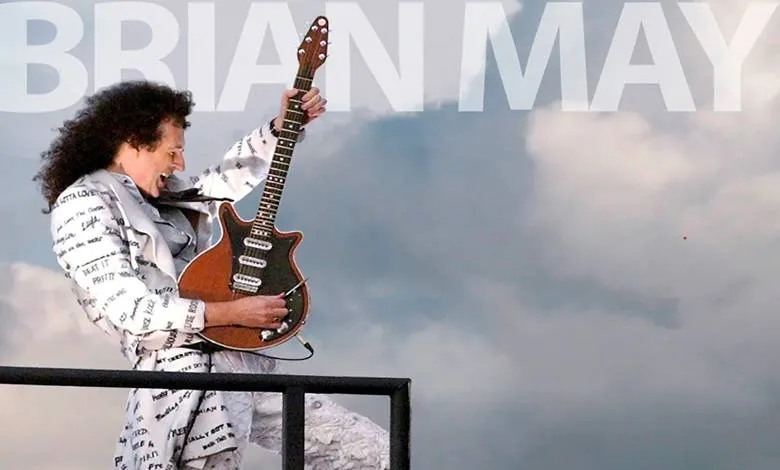
Brian May, the guitarist of Queen, is also an astrophysicist who earned his PhD in 2007, more than 30 years after he first started that research at Imperial College London. Most fans know him for the riffs of "Bohemian Rhapsody," yet the boy who grew up in a house full of circuits and folk songs never stopped looking up. The same curiosity that built his famous guitar also pulled him back to the stars. His story shows that a passion set aside is not a passion lost.
Brian May is Queen's lead guitarist and a doctor of astrophysics. He began doctoral research at Imperial College London, paused it when Queen took off, and completed it in 2007. He later worked with NASA's New Horizons mission and served as chancellor of Liverpool John Moores University.
- Brian May earned a BSc in physics at Imperial College London and went on to begin doctoral research in astrophysics.
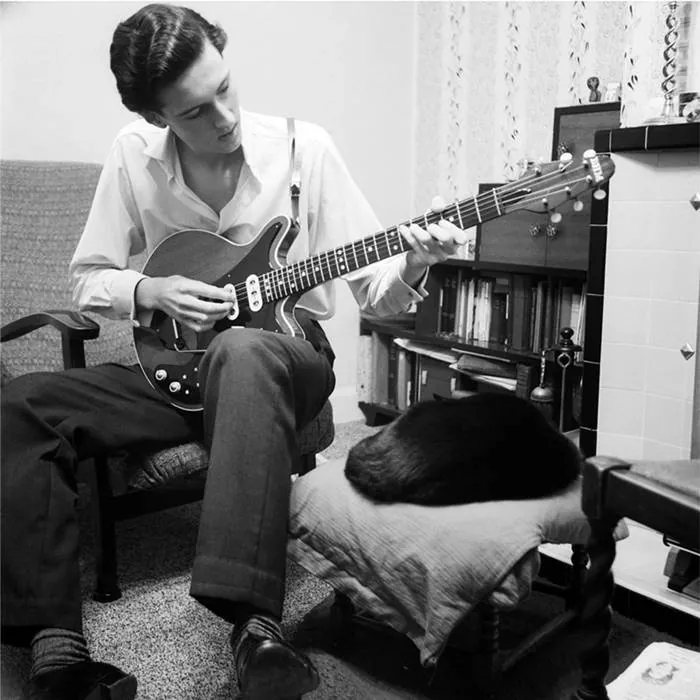
- He built the Red Special guitar with his father, Harold, using household materials when he was a teenager.
- May set aside his studies as Queen's touring and recording schedule grew.
- He returned to Imperial College and completed his PhD thesis on zodiacal dust in 2007.
- May contributed to NASA's New Horizons mission through stereoscopic imaging of Pluto and the Kuiper Belt object Arrokoth.
The Guitarist Who Also Studies the Sky
Brian May is the founding member and lead guitarist of Queen, the man who wrote "We Will Rock You," and the player behind the soaring solos on "Bohemian Rhapsody." He also holds a PhD in astrophysics from Imperial College London. A rock star who spent years of his life studying dust drifting between the planets, that is the short version of Brian May.
Born on 19 July 1947 in England, he arrived as the only child of Harold May, an electrical engineer. That detail matters more than it first seems. A house full of circuits, a father who could fix and build, a boy who wanted to know how things worked. Music ran alongside the wiring: Harold played piano and banjo, loved folk songs, and young Brian grew up hearing them around the house.
Then came the guitar that would outlast almost everything else. Brian and his father built it together, a red-brown instrument he named the Red Special, and he still plays it today. The build is often reported at roughly a year and a half, though accounts of the exact timeline vary. What is not in doubt is the result: one of the most recognizable guitars in rock.
At Imperial College London he earned a BSc in physics and then began doctoral research in astrophysics. This is the part that tends to surprise people. The same hands that shaped Queen's sound were trained to read the sky, and the two sides of his life never fully parted ways. So how does a man hold both at once? That question runs through everything that follows.
A Boy, an Engineer Father, and the Red Special
On 19 July 1947, in Hampton, England, an electrical engineer named Harold May and his wife welcomed their only child. They called him Brian. Nobody in that house could have guessed that the boy would one day be known to millions as the guitarist of Queen, but the ingredients for it were already sitting in the room: a father who understood circuits, and a son who couldn't stop asking how things worked.
Harold May wasn't just an engineer. He played piano and banjo, and he loved folk music. So the house had two currents running through it at once, wires and strings, and young Brian grew up soaking in both. He listened to the folk songs his father loved, and he showed an early, obvious gift for physics. Most kids get one of those inheritances. Brian May got both.
Then came the guitar that would outlast nearly everything else in his life. Brian and his father designed and built it together, and Brian named it the Red Special after the red-brown tone of its finish. Sources differ on the timeline, putting the project at roughly eighteen months to two years. Either way, a teenager and his dad building an electric guitar from scratch is no small feat. Harold brought the engineering experience. Brian brought the methodical, mathematical mind that treated the whole thing like a physics problem with strings.
Here's the part that still raises eyebrows: he never put it down. Brian May still plays the Red Special today, decades after that father-son project, which makes it less a piece of gear and more the thread running through his entire life.
Imperial College, Jodrell Bank, and a Band Called Smile
Brian May earned his BSc in physics, with mathematics, at Imperial College London, and that London campus is where the two halves of his life first collided. The city gave him a lab bench and a music scene within walking distance of each other. For a young guitarist who also loved astronomy, that geography would decide everything.
Word of his promise is said to have reached Sir Bernard Lovell, the astronomer who ran Jodrell Bank Observatory, and the account has Lovell inviting May to begin postgraduate research there. That personal-invitation detail is hard to confirm, but the offer on the table pointed to a telescope in the countryside, not a stage in the city.
Jodrell Bank sits well outside London, surrounded by fields and far from the clubs and rehearsal rooms where bands were forming. May weighed the two futures and stayed at Imperial. He kept his research going in the city he knew, and he kept his guitar close.
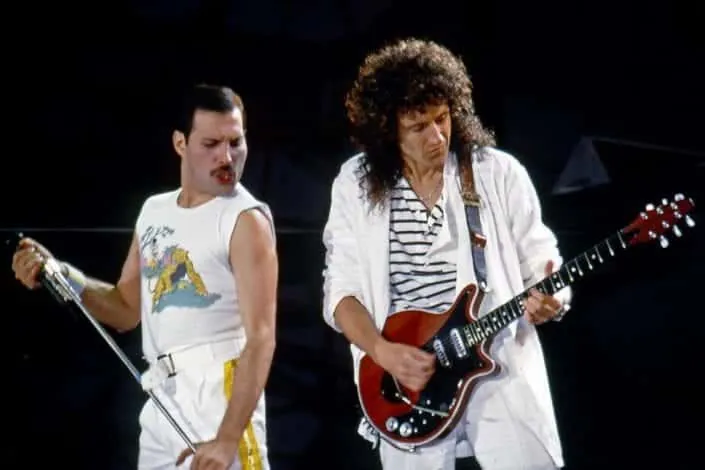
Around that time he started his first real band, Smile, with friends from university. The drummer was Roger Taylor. Some tellings have May meeting Taylor only after Smile was already rolling, but the record is less clear than that, since Taylor came aboard as the band's drummer rather than drifting in later. What is not murky is the next arrival: a young singer named Freddie Bulsara, who would soon change his name to Freddie Mercury.
The pieces did not click overnight. May was still splitting his hours between astrophysics and rock and roll, and Smile was still finding its footing. Then, in 1970, Smile broke up. Out of that ending came a new band, built by May, Taylor and Mercury together: Queen.
The Pause: 1974 and the Cost of Fame
Brian May had a decision to make, and it was the kind that doesn't come with a clean answer. Queen was climbing. His astrophysics research was sitting half-finished. In 1970, Smile had broken up and he, Roger Taylor and Freddie Mercury had formed a new band, and from there the schedule filled up fast. Something had to give.
The break is usually dated to 1974, when he reluctantly set his doctoral work aside to throw everything into rock stardom. That exact year is reported rather than confirmed, but the shape of the choice is not in doubt: the telescope and the notebooks went quiet while the amplifiers got loud.
And Queen ran with it. For more than a decade the band pushed charts around the world, album after album, tour after tour. Then came the pause nobody chose. Freddie Mercury died on 24 November 1991 of bronchopneumonia resulting from AIDS, and the loss became a turning point for May. The music career that had swallowed the science suddenly had a hole in it, and the questions he had shelved in his twenties were still there, waiting.
The Zodiacal Dust: How Brian May Finally Finished His PhD in 2007
Brian May picked his astrophysics doctorate back up in 2006 and completed it in 2007 at Imperial College London. His thesis carried the title "A Survey of Radial Velocities in the Zodiacal Dust Cloud," and it dealt with the faint glow of zodiacal light and the radial velocities of dust drifting through the solar system. The rock star who once walked away from the observatory walked back in, this time with a finished dissertation.
Picture the subject itself for a second. Zodiacal light is the soft, pearly wedge you can catch in a dark sky just after sunset or before dawn, sunlight scattering off fine dust that lingers in the plane of the planets. Measuring the radial velocities of that dust is patient, unglamorous work, far from the roar of a stadium. May did it anyway, decades after he first started.
He did not pack up his lab coat once the degree was in hand. May stayed on at Imperial College London as a visiting researcher, keeping a foot in the department even while touring and recording.
The Chancellor Years
He also took on a university role. May became chancellor of Liverpool John Moores University around 2007, with the formal installation ceremony reportedly held in 2008, and he is said to have served in that post until 2013. The chancellorship is well documented in broad strokes, though the precise dates are harder to pin down with full confidence.
From Dust Clouds to the Kuiper Belt
The scientist identity reached all the way to the outer solar system. May contributed to stereoscopic 3D imaging of Pluto and of the Kuiper Belt object Arrokoth for NASA's New Horizons mission. The same eye that once studied dust near the Sun was now helping turn distant, frozen worlds into images you could view in depth.
Two careers, one person. The guitarist who wrote "We Will Rock You" also signed off on a thesis about the solar system's dust, and the two never really separated.
Frequently asked questions
What did Brian May study at Imperial College London?
At Imperial College London, Brian May earned a BSc in physics and then began PhD research in astrophysics. Imperial confirms both steps. His doctoral work centered on the zodiacal dust cloud, the faint band of dust in the solar system, and on measuring the radial velocities of particles within it.
How did Brian May build the Red Special guitar?
Brian May built the Red Special with his father, Harold May, an electrical engineer. Brian brought his physics knowledge; Harold brought the engineering skill. The build is often reported at roughly 18 months, though accounts vary between about 18 months and two years, so treat the exact figure as approximate. May still plays the guitar.
When did Brian May complete his PhD?
Brian May completed his PhD at Imperial College London in 2007, after resuming his studies in 2006. The thesis was titled "A Survey of Radial Velocities in the Zodiacal Dust Cloud." He had set the work aside years earlier when Queen's career took off, and returned to it in the 2000s.
Why did he pause his PhD?
Brian May paused his doctoral studies because Queen's rising fame demanded his time. The specific year 1974 is often cited, but it is reported rather than confirmed; the pause came in the early 1970s as the band's career accelerated. He finished the degree in 2007, more than three decades later.
What was his role in NASA's New Horizons mission?
Brian May contributed to NASA's New Horizons mission through stereoscopic 3D imaging of Pluto and the Kuiper Belt object Arrokoth. NASA's mission materials confirm his collaboration. The work turned the spacecraft's images into paired views that create a sense of depth, a natural fit for a guitarist who has long been fascinated by stereo vision.
Was he chancellor of Liverpool John Moores University?
Brian May served as chancellor of Liverpool John Moores University. The chancellorship is reported for 2007 to 2013, with an official installation ceremony in 2008, though the exact dates are not fully confirmed. He has also continued as a visiting researcher at Imperial College London.
What is the title of his PhD thesis?
His 2007 PhD thesis is titled "A Survey of Radial Velocities in the Zodiacal Dust Cloud." The Imperial College thesis record confirms the exact title. The research examined radial velocities in the zodiacal dust cloud, tying back to the astronomy that pulled him in long before Queen topped the charts. Editorial note: Details that remain unconfirmed are presented as such, and readers should treat any hedged claim accordingly.
Got a take on this? Add your voice to the conversation below →
No comments yet. Be the first.