Republic of Lakotah: The 2007 Black Hills Breakaway
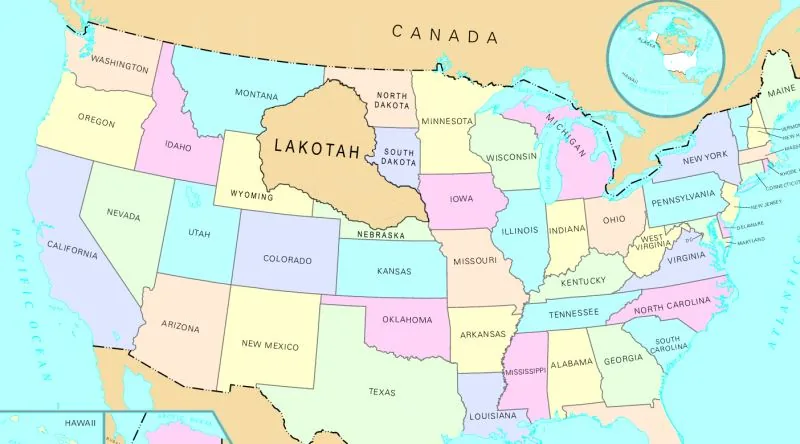
The Republic of Lakotah was declared in December 2007, when activist Russell Means and a group of Lakota supporters announced they were withdrawing from treaties with the United States and reclaiming sovereignty over the Black Hills and surrounding lands. The announcement landed like a thunderclap in Indian country and beyond, even though no government recognized it and its practical effect was close to zero. What gave the declaration its weight was memory: a century and a half of broken promises, from the Fort Laramie Treaty to the massacre at Wounded Knee. Whether or not the republic ever becomes a legal reality, it forced a public conversation about what the United States actually owes the Lakota people.
In December 2007, Russell Means and Lakota supporters declared the Republic of Lakotah, renouncing treaties with the United States and claiming sovereignty over the Black Hills and nearby territory. The declaration was not recognized by any government and did not change the legal status of Lakota lands, but it drew attention to long-standing treaty grievances.
- The Republic of Lakotah was declared in December 2007 by activist Russell Means and a group of Lakota supporters.
- The declaration renounced treaties with the United States and asserted sovereignty over the Black Hills and surrounding lands.
- The Fort Laramie Treaty of 1868 guaranteed the Lakota ownership of the Black Hills, a promise later undercut by the gold rush and federal seizure of the land.
- The 1980 Supreme Court decision in United States v. Sioux Nation awarded more than $100 million in compensation for the Black Hills, money the Lakota have largely refused to accept.
- No government has recognized the Republic of Lakotah, and Lakota tribes remain classified under federal law as domestic dependent nations.
America's Heartland, Reimagined as a Country
In December 2007, a group of Lakota activists did something that no one in Washington was prepared for: they declared independence. Citing a long list of violated 19th-century treaties with the United States, they announced the Republic of Lakotah, a proposed country carved out of the near center of the United States. The declaration was led by Russell Means, the activist and actor who had spent decades fighting for Native rights.
They leaned on the 1969 Vienna Convention on the Law of Treaties. The logic sounds simple: break a treaty, lose your claim. The people making this argument are the Lakota, the northern division of the Sioux you've probably seen in Western films. Many of them would rather you drop the word "Sioux" altogether and just say Lakota.
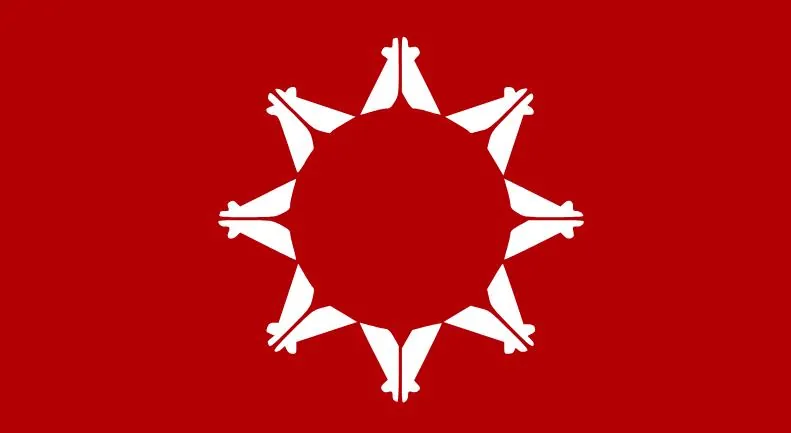
What makes the Republic of Lakotah so strange is that it isn't a fantasy cooked up in a dorm room. It has a flag. It claims to move in the spirit of the 1776 Declaration of Independence. And it promised passports and driver's licenses to anyone living on its territory who renounces U.S. citizenship. There were even reports that a Turkish lawyer wanted to become the new country's ambassador to Ankara, though those reports have never been reliably verified.
To understand why anyone would try this, you have to go back to the treaties themselves. That's where the real story starts, and it's a lot messier than a flag and a declaration.
Fort Laramie 1851: A Passage Treaty and a Broken Promise
In September 1851, U.S. commissioners sat down at Fort Laramie, a fur-trading post in what is now Wyoming, with the Cheyenne, Arapaho, Crow, and Lakota peoples. The gold rush of the late 1840s had pushed wagon trains of settlers straight through the heart of Indian country, and the government wanted safe passage. What came out of those talks was less a peace than a permission slip.
The 1851 treaty acknowledged that all the lands it covered belonged to the tribes. That sounds generous until you see the trade: the government promised $50,000 a year, money meant to help the tribes supply passing migrants, and in return it won the right to build military posts along the migration routes. Some retellings stretch those payments across fifty years, but the record points to a shorter term. Either way, the whole arrangement was a passage-rights agreement dressed up as friendship.
What makes the Lakota story unusual is how quietly it began. Once they met the horse, the Lakota became formidable buffalo hunters, and their early encounters with European settlers were relatively peaceful and bloodless compared with what happened in other regions. That calm did not survive the traffic. The settlers kept coming, the game thinned, and the treaty's ink had barely dried before the ground beneath it started to shift.
Fort Laramie 1868: The Black Hills Belong to the Lakota
In 1868, after a string of clashes between the U.S. Army and the Plains tribes, the second Fort Laramie Treaty was signed. Under it, the Black Hills were officially Lakota territory, and white settlers were supposed to stay out. It also set aside additional territory for Indians across parts of South Dakota, Wyoming, and Nebraska. The whole document was handwritten, and the chiefs who could not read English signed it by marking an X beside their names.
Think about what it was like at the fort that year. The 1851 treaty had already promised that the covered lands were Indian country, but the gold rush and the surge of settlers had turned that promise into paper. The Crow and the Lakota fell out over territory, and the end of the Civil War only pushed more wagons west. The 1868 treaty was the government's attempt to buy quiet: no attacks on the railroads, no attacks on the settlers, and in return a defined homeland.
| Provision | What it did |
|---|---|
| Black Hills | Recognized as belonging to the Lakota; settlers barred |
| Additional lands | Allocated in parts of South Dakota, Wyoming, and Nebraska |
| Article I, the "Bad Men Clause" | Obligated the U.S. government to punish white offenders |
| Hunting clause | Guaranteed Lakota hunting rights in the Black Hills |
That first article still has teeth in the hands of a good lawyer. The Bad Men Clause binds the federal government to punish white men who commit crimes against Indians, and it has been cited in later court cases, including a 2012 matter reported as Richard v. United States, though the exact citation is disputed.
Then there is the hunting clause, the one that reads like poetry. It granted the tribes the right to hunt in the Black Hills for as long as the buffalo may range there in such numbers as to justify the chase. Some writers point out that the Lakota read that line as a promise without an end date. They could not picture a plains without buffalo, so the guarantee felt permanent. The wording itself, though, was conditional, and history would test the condition.
The Treaty That Lasted Six Years
The ink on the 1868 Fort Laramie Treaty was barely dry before it started to mean nothing. That agreement had recognized the Black Hills as Lakota land and barred white settlers from entering. Six years later, in 1874, prospectors found gold in those same hills, and the government stopped pretending the paper mattered. Forced removal began, and the Lakota were pushed off ground they had been promised forever.
The fighting that followed was brutal. Under Sitting Bull and Crazy Horse, the Lakota and allied tribes won the Battle of the Little Bighorn in June 1876, one of the bloodiest clashes in the whole conflict. That victory did not hold the line. The U.S. kept coming, and the war ground on.
Years later, the story of that defeat got an odd second life. A painting called Custer's Last Fight turned up on the walls of Wild West saloons across the country, hung there as an advertisement for a famous beer brand, Anheuser-Busch. A battle that had once been a Lakota triumph became decor for men drinking Budweiser.
The thirty-six-year struggle finally broke on December 29, 1890, at the Wounded Knee Massacre. The Lakota resistance was shattered, and whatever treaties remained were no longer honored. The Republic of Lakotah, when it came, would be built on the memory of that broken promise.
Wounded Knee 1973: The Occupation and the $106 Million Refusal
On February 27, 1973, supporters of the American Indian Movement drove into Wounded Knee, South Dakota, and took over the little town on the Pine Ridge Reservation. The trigger was local: the Oglala Lakota had no legal route to remove their tribal president, Richard Wilson, whom they accused of corruption. With no lawful exit, they chose a physical one. The occupation held for 71 days.
Picture the place for a second. Wounded Knee is where the 1890 massacre broke the back of Lakota resistance. To camp there in 1973, armed and refusing to leave, was to stand on ground already soaked in memory. Lakota fighters with Kalashnikovs guarded the perimeter, and the occupiers took white hostages. Ten weeks of paramilitary operations and negotiations followed before U.S. Marshals raised the American flag and the standoff ended. Accounts of the death toll vary, and the often repeated figure of five on each side is not reliable.
Then came the courtroom turn, and it is the strangest twist in the whole story. In 1980, in United States v. Sioux Nation of Indians, the Supreme Court ruled that the Black Hills had been seized illegally and awarded $106 million in compensation with interest. The Lakota said no.
So why did they refuse? Two reasons, and they still hold up. The sum does not come close to what the land is worth to them. And taking the check, they believe, would legally close their claim to the Black Hills for good. So the money sat. It is said to now exceed $1 billion, parked in a fund held by the Bureau of Indian Affairs, waiting for a signature that has never come.
A payout designed to settle the account became, instead, the clearest proof that the account was never settled.
That refusal is the hinge the later Republic of Lakotah turns on. A people who would not cash a billion dollars to surrender the Black Hills had made their position unmistakable, and the next move would have to come from somewhere other than a courtroom.
A Flag, Passports, and a Turkish Ambassador?
In 2007, a group of Lakota activists declared the United States treaties broken and announced the Republic of Lakotah, a proposed independent nation inside North America. The declaration pointed to violated 19th-century agreements and cited the 1969 Vienna Convention on the Law of Treaties as its legal footing. The Republic of Lakotah has its own flag and says it acts in the spirit of the 1776 Declaration of Independence.
As the story goes, the declaration was framed as coming from descendants of Sitting Bull, though formal participation by his descendants could not be confirmed. What is documented is that the movement offered passports and driver's licenses to anyone living on its claimed territory who renounces U.S. citizenship. Those documents were symbolic: no government recognized them, and they carried no legal weight.
There were also reports that a Turkish lawyer wanted to serve as the new country's ambassador to Ankara. The claim is colorful, and it fits the movement's habit of acting like a state before any state existed, but it could not be reliably verified.
The legal ground underneath the project was thin. The 1789 Constitution replaced the Articles of Confederation, and under the Supreme Court's later reading in Texas v. White, secession is not permitted. The Vienna Convention, meanwhile, applies only to sovereign states, and the Lakota don't qualify. Since the Indian Citizenship Act of 1924, Lakota people, like Cherokee and Navajo people, have been U.S. citizens. Tribes can govern themselves internally and pass their own laws, but they cannot deal with foreign governments and remain under federal authority as "domestic dependent nations."
None of that erases the grievance the declaration was built on. It simply shows how hard it is to turn a moral claim into a legal border. The Republic of Lakotah remains a flag, a promise, and an argument, waiting for the world to decide who gets to say when a treaty is truly broken.
Why the Republic of Lakotah Faces Legal Hurdles
The Republic of Lakotah runs into a wall because the legal tools it leans on were never built for a nation that isn't a state. The 1789 U.S. Constitution replaced the old confederation and, in doing so, left no room for a member to walk out under a "right of resistance." And the 1969 Vienna Convention on the Law of Treaties, the very document the declaration cites, applies only to states. The Lakota are not one.
That second point is the quiet killer. A treaty between sovereign states is a very different animal from a treaty between a government and a people it governs. When the Lakota invoked the Vienna Convention in 2007, they were reaching for a framework that simply doesn't recognize them as a party to it. You can't sue under a contract you were never eligible to sign.
There's a citizenship wrinkle too. The Lakota, like the Cherokee and the Navajo, are U.S. citizens. That status has been settled since the Indian Citizenship Act of 1924, and it sits awkwardly alongside any claim to be a separate country whose people would need to renounce the old one to get new papers.
| Legal reality | What it means for the Republic of Lakotah |
|---|---|
| Tribes hold limited autonomy over internal affairs | They can pass their own tribal laws, but that authority stops at the reservation line |
| Tribes cannot conduct international relations | No embassies, no treaties, no seat at the table of nations |
| Status as "domestic dependent nations" | Full federal administration sits above them, per the long-standing court doctrine |
That phrase, "domestic dependent nations," isn't a modern invention. It comes from early Supreme Court rulings that drew the line the movement keeps bumping into: sovereignty inside, subordination outside. A tribe can govern its own internal life. It cannot open an embassy or sign a binding international agreement.
So the Republic of Lakotah's flag, its passports, its driver's licenses, its declared embassy ambitions, all of it floats above a foundation the law doesn't recognize. The grievance behind it is real and old. The legal architecture, though, was never designed to let that grievance become a country.
Frequently asked questions
What is the Republic of Lakotah?
The Republic of Lakotah is a proposed independent nation that a group of Lakota activists declared unilaterally in December 2007, citing violated 19th-century treaties with the United States. The movement adopted its own flag and said it acted in the spirit of the 1776 Declaration of Independence. It has no recognized legal standing.
Why did the Lakota refuse the $106 million from the Supreme Court?
In 1980, in United States v. Sioux Nation of Indians, the Supreme Court ruled that the Black Hills had been illegally seized and awarded roughly $106 million with interest. The Lakota refused it, both because the sum did not match the land's worth and because accepting would legally end their claim to the Black Hills.
What happened at Wounded Knee in 1890 and 1973?
The Wounded Knee Massacre of December 29, 1890 broke the Lakota resistance and effectively ended the treaty era. On February 27, 1973, supporters of the American Indian Movement occupied the same South Dakota town, protesting the corruption of tribal president Richard Wilson. The standoff ended after about ten weeks.
How did the Fort Laramie Treaties affect the Lakota?
The 1851 Fort Laramie Treaty recognized covered territories as Indian land and promised $50,000 a year, with the government building military posts along migration routes. The 1868 treaty that followed recognized the Black Hills as Lakota land and barred white settlers from entering.
Who are the Lakota and what is their connection to the Black Hills?
The Lakota are the northern Sioux known from Western films, and many prefer "Lakota" to the older "Sioux." The 1868 Fort Laramie Treaty recognized the Black Hills as belonging to them. When gold was found there in 1874, the government ignored the treaty and forced them off the land.
Was the Republic of Lakotah declaration legal?
No. The 1969 Vienna Convention on the Law of Treaties binds only states, and the Lakota are not a state. The 1789 U.S. Constitution replaced the confederation and does not permit secession. Tribes hold limited internal autonomy as "domestic dependent nations" but cannot conduct international relations.
What is the Bad Men Clause in the Fort Laramie Treaty?
Article I of the 1868 Fort Laramie Treaty committed the U.S. government to punish white offenders who committed crimes against the tribes. The provision is still cited in court cases today. The specific claim that it anchored Richard v. United States (2012) is harder to confirm, so treat that citation with caution.
How much is the Black Hills compensation fund worth today?
The $106 million award from 1980 has sat untouched in a fund held by the Bureau of Indian Affairs, and it is reported to have grown past $1 billion with interest. The Lakota still refuse to collect it, insisting the Black Hills were never for sale. Editorial note: Details that remain unconfirmed or disputed, including the exact scope of the claimed territory and the level of support among Lakota communities, are presented here as such.
Got a take on this? Add your voice to the conversation below →
No comments yet. Be the first.