Bohemond of Taranto: The Norman Who Terrorized Byzantium
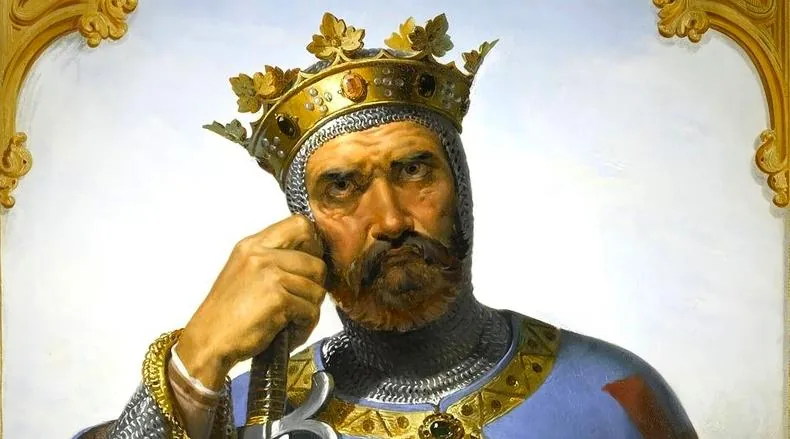
Bohemond of Taranto was the Norman warlord who became one of the most feared leaders of the First Crusade, capturing Antioch in 1098 and carving out a principality that would outlast him. He was born into the ruthless world of Norman southern Italy, the son of Robert Guiscard, and learned war as a weapon against the Byzantine Empire itself. By the time he reached the walls of Antioch, he had already crossed into legend. His story is one of ambition, siegecraft, and a lifelong duel with the empire he could never quite defeat.
Bohemond of Taranto was a Norman knight from southern Italy who helped lead the First Crusade. He captured Antioch in 1098 and founded the Principality of Antioch. He fought the Byzantine Empire under Alexios I Komnenos for decades, was captured by the Danishmend Turks, and was forced to accept the Treaty of Devol in 1108.
- Bohemond was the son of Robert Guiscard, the Norman conqueror who dominated southern Italy in the eleventh century.
- He took a leading role in the First Crusade and secured the capture of Antioch in 1098.
- He founded the Principality of Antioch, one of the crusader states in the Levant.
- He was captured by the Danishmend Turks and later ransomed, an episode that shaped his later campaigns.
- In 1108 he was compelled to accept the Treaty of Devol, which curtailed his ambitions against Byzantium.
Bohemond of Taranto: The Norman Who Terrorized Byzantium
Bohemond of Taranto captured Antioch in June 1098 and became the first ruler of the Principality of Antioch, one of the great warlords of the First Crusade. He was the eldest son of Robert Guiscard, the Norman adventurer who dominated southern Italy in the eleventh century. Born around the mid-1050s, he spent his life turning a thin inheritance into a legend that reached from Calabria to the walls of Constantinople.
The best portrait of him comes from an unusual pen. Anna Komnene, daughter of the Byzantine Emperor Alexios I Komnenos and author of the Alexiad, admitted that writing about Bohemond stirred fear in her alongside a grudging admiration. To her he was a man whose appearance drew stares and whose name spread dread, a "miracle worth seeing." His sheer bulk and his proud, cunning manner made him, in many ways, the anti-hero of her book and the exact opposite of her father. Think about that. A Byzantine princess writing about her father's enemies cannot stop talking about this Norman, and that tells you plenty. Across Alexios's 37-year reign, nobody troubled him as persistently as this man.
Robert Guiscard, his father, was ambitious and relentless enough to imagine the Hauteville family one day seated on the throne of the Eastern Roman Empire. After finishing his conquest of southern Italy, Guiscard set his sights across the Adriatic on the Byzantine provinces of Greece and Illyria. He judged that the empire, reeling from its crushing defeat by the Seljuk Turks at Manzikert in 1071, was easy pickings, a prize waiting to be taken. The key figure in the campaigns to come would be his first son, born to his first wife, Alberada.
His birth name, as the story goes, was Mark, taken from San Marco Argentano in Calabria, Guiscard's first base in the south. The name itself is Greek-Italian rather than Norman, and his parents seem to have aimed the newborn's future beyond Italy, toward Byzantine lands. The name he is remembered by has its own origin tale: at a banquet Guiscard heard stories of a giant called Bohemond, and struck by the resemblance to his own giant of a son, he began calling the young prince by that name. Mark apparently adapted without complaint.
By nearly every measure, Bohemond stood above his contemporaries. Anna Komnene describes him as exceptionally tall, and later tradition claims he stood a cubit, roughly 44 centimeters, above the tallest men, though the exact measurement is uncertain. His pale skin and light hair, a mark of Scandinavian ancestry, made him impossible to overlook in any room. His first taste of war came in the ranks sent against Jordan of Capua and Geoffrey of Conversano, rebels against his father. In 1081 Guiscard handed him a fleet and the task of striking Corfu, then seizing bases on the mainland if he could. The campaign dragged on for four years. The Normans won partial successes, but logistics, supplies and manpower ran short, and they could not hold Greece or the Balkans for long. Then, on 17 July 1085, Robert Guiscard died of malaria or plague, and the army had to withdraw. Alexios may have won the first round, but Robert's dream of the Eastern Empire lived on in his son.
The First Crusade, arguably the defining event of the Middle Ages, left a legacy still visible today, and one of its most overlooked dimensions is the Norman one. Most of the crusaders came from Normandy and southern Italy, and the enterprise itself fed on earlier Norman exploits. The successes of William the Conqueror and Robert Guiscard had shown the aristocracy of Western Europe, for the first time, what risky ventures in foreign lands could achieve. A direct line runs from those early Norman gains to the First Crusade, and one of its leading figures was Bohemond of Taranto. A restless Norman with no inheritance to speak of in Italy or the Adriatic, he would try his luck in the East in search of fame and fortune.
An anonymous writer close to Bohemond, composing the Gesta Francorum, reports that the Norman prince first heard of the expedition in early 1096 while besieging Amalfi alongside his half-brother Roger Borsa, the lord he then served. Fired by the news, Bohemond pledged at once to join, and with a theatrical flourish he cut his cloak into crosses for the crowds rushing to enlist. Yet the Holy Land was probably not all he had in mind. The failed Balkan campaigns of the 1080s had left him with an unsettled score against Alexios, and the historian Geoffroi records that Bohemond joined the march with great zeal, eager to realize his long-held designs on the Eastern Empire. Entering imperial service might seem to cut against his interests, but this son of the eleventh century knew that in this game, predators could play the victim when it suited them.
He took his time preparing. His position let him travel a shorter road than his northern counterparts, and he knew the route cold. He is said to have left Brindisi in late 1096 and landed on the Illyrian coast, possibly near Valona, retracing ground the Normans had fought over a decade before. By splitting from the crusader groups crossing Italy, he fed suspicions that he meant to attack the Byzantine emperor. Whatever his intentions at the outset, he chose in the end to stay loyal to Pope Urban II's plan. To calm the fears around him, he left his men under his nephew Tancred de Hauteville and crossed to Constantinople to meet the emperor. Alexios, with deft diplomacy, convinced him that cooperation served them both, and Bohemond swore to uphold the Byzantine cause. The precise framing of that oath, and how it compared with the pledges of Godfrey and Raymond of Saint-Gilles, is simplified in the retelling, but the bargain held for a time.
In 1097 the crusader army crossed into the Anatolian plateau and met fierce resistance from Kilij Arslan, sultan of the Sultanate of Rum, before pushing on toward Jerusalem, worn down along the way. Supply shortages, losses and the handover of recovered territory to Byzantine rule bred deep resentment. The first crack came from Baldwin, who founded the first crusader state in the Middle East at Edessa in 1098, a model for anyone looking to break ranks and protect his own gains. It was exactly the signal Bohemond had been waiting for. Tatikios, the emperor's representative, withdrew from the army during the siege of Antioch in early 1098, though the exact date is debated, and the tension peaked. Bohemond blamed Alexios for the army's plight, branded him a traitor, and argued that the crusaders no longer owed their oaths to a man who had failed to keep his side of the bargain. His target was now plain for all to see: Antioch.
After a long and brutal siege, Bohemond struck a deal with Firuz, an Armenian commander of part of the walls. On the night of 2/3 June 1098, part of the crusader force slipped into the city and opened the gates to the rest. Victory brought division. Bohemond insisted Antioch be handed to him, as promised before the final assault, and Raymond of Saint-Gilles led the opposition. Bohemond refused to budge, and Raymond eventually accepted the inevitable and marched on with the army toward Jerusalem.
His career hardly ended at Antioch. Two years of consolidating his position came to a sudden halt in August 1100, when the Danishmend Turks defeated and captured him. He spent three years in captivity while Tancred held Antioch with skill. Back in 1103, he had made little headway in expanding his lands, and in 1104 he was beaten again by the Turks, though the exact timing within the year is imprecise. He changed tack and sailed to France to raise men. When he was ready in 1107, he chased his old ambitions instead of returning to Antioch, attacking Alexios through Greece. The emperor had learned from past mistakes, and after a long, grinding campaign Bohemond had to sue for peace. Under the Treaty of Devol in 1108, he accepted Byzantine suzerainty over Antioch on paper and gave up most of the disputed Cilician territories. For a proud Hauteville it was a humiliation. Rather than return to a city slipping into Byzantine hands, he headed to southern Italy, where he died three years later, in 1111. The treaty's terms were never enforced in his absence. Tancred ruled Antioch until 1112, and after him Bohemond's son, Bohemond II, took the reins, keeping the Hauteville family a major force in the region.
Editorial note: Details that remain unconfirmed by the surviving evidence are presented here as such and should be read with appropriate caution.
Got a take on this? Add your voice to the conversation below →
No comments yet. Be the first.