Billy Joel's We Didn't Start the Fire: 1989 History
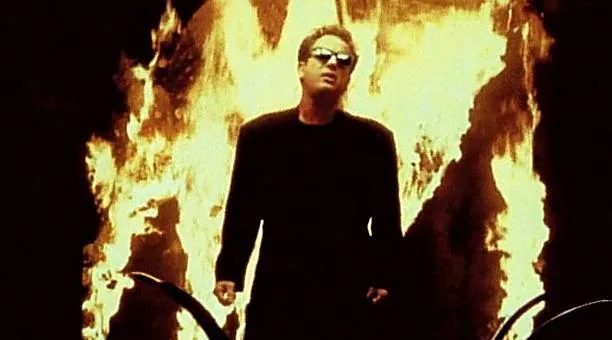
Billy Joel released "We Didn't Start the Fire" in 1989, a rapid-fire history lesson set to music that name-checks dozens of events from 1949 to the same year. The song grew out of a conversation with a young friend in his early twenties who insisted the past had been dull and the present was a mess. Joel turned that complaint into a hit, and decades later the song keeps getting rewritten for each new decade.
Billy Joel released "We Didn't Start the Fire" in 1989. The song lists dozens of historical events and figures from 1949 through 1989, framed around the idea that each generation inherits turmoil it did not create. It became a major hit and remains a pop-culture touchstone.
- "We Didn't Start the Fire" was released in 1989 as part of Billy Joel's album Storm Front.
- The song's lyrics move chronologically through events from 1949 to 1989.
- Joel wrote the song after a conversation with a young friend who complained his generation was blamed for problems it did not cause.
- The song reached number one on the US music charts.
- The music video follows a couple in a kitchen who age through the decades, with historical footage woven in.
A 40th Birthday Argument and a Song Nobody Asked For
Billy Joel was born on May 9, 1949, in the Bronx, New York. That date matters more than it might seem, because four decades later it would become the first line of a song that thousands of people can still recite from memory: Harry Truman, Doris Day, Red China, Johnnie Ray. The song is "We Didn't Start the Fire," and the strange thing is that it began not in a recording studio but in an argument.
Picture Joel in the late 1980s, staring down his fortieth birthday. He gets talking with a young friend, a guy in his early twenties. The kid is gloomy. The world is a mess, he says, and nothing is ever going to get better. Joel nods along and tells him he felt exactly the same way at that age. Then the young man delivers the line that lit the fuse: you grew up in the 1950s, he says, and nothing interesting happened back then.
Joel did not let that one slide. He pushed back hard, rattling off the Korean War, the Suez Crisis, the Hungarian uprising. Quiet years? Not even close. And somewhere in that back-and-forth, the idea clicked: if a young man thinks the past was dull, maybe someone should spell out the whole thing, year by year, and prove otherwise.
Joel was already the right man for the job. He has always been a history buff, and by some accounts he even imagined a life in front of a classroom if the piano hadn't worked out, though that particular quote is hard to pin down. What is certain is the result. He wrote both the words and the music himself, and "We Didn't Start the Fire" landed on his 1989 album Storm Front. The lyrics march straight through the decades, from his own birth year of 1949 up to 1989, the year he wrote it, stacking headlines and famous names one after another until the whole half-century feels like a crowded kitchen table.
The Song That Counts the World From 1949 to 1989
Billy Joel's "We Didn't Start the Fire" is a pop song with a stopwatch. The lyrics march in strict chronological order, starting in 1949, the year Joel was born, and ending in 1989, the year he wrote it. Forty years of headlines, compressed into a few breathless minutes of verse.
He wrote both the words and the music himself, and the track landed on his 1989 album Storm Front. The chorus is the part everyone remembers: the fire was always burning since the world's been turning, nobody lit it, but people kept trying to fight it. Between those refrains, Joel stacks up name after name. Harry Truman and Doris Day. Joe McCarthy and Marilyn Monroe. Sputnik, Castro, the Bay of Pigs, Watergate, punk rock. Each line is a year or two of history, and the song never slows down long enough to explain any of it.
The reception was immediate. The song climbed to number one on the US music charts, giving Joel one of the biggest hits of the late 1980s. It also earned a Grammy Award nomination. It has since been covered many times and borrowed for countless parodies, which makes sense for a song that works like a template. Swap the names, keep the beat, and suddenly you have a new decade in three verses.
There is one piece of the story that floats around without solid footing. Joel is often described as a history buff, and the tale goes that he once said he would have become a history teacher if music hadn't worked out. It sounds right for a man who wrote this song, but that specific quote has never been reliably confirmed. Treat it as lore, not record.
What is on the record is the shape of the thing. The song opens in the year of Joel's birth and closes in the year of its own making, so the whole track doubles as a personal timeline and a public one. Listen closely and you can hear the 1950s, the Cold War, the space race and the cultural explosions of the 1960s and 70s roll past in order, one reference at a time.
A Kitchen, a Marriage, and Forty Years of American Life
Chris Blum directed the music video for Billy Joel's "We Didn't Start the Fire," and it doesn't chase headlines or concert stages. It stays home. A couple who married in the 1940s walks into their kitchen, and the camera simply refuses to leave.
That is the whole trick. As the years roll forward, the room itself ages around them: the cabinets, the wallpaper, the refrigerator, the clothes on their backs all shift with the fashions of each passing era. A young bride in a 1940s apron becomes a woman in a 1950s housedress, then something boxier and brighter, then something looser. The kitchen keeps pace. What was new and gleaming goes dated, then retro, then dated again.
Woven through these quiet domestic scenes is historical footage. Real presidents, real crowds, real disasters flicker past between the coffee pots and the kitchen tables. The effect is deliberate: private life and public history running on the same clock, one couple's marriage measured against four decades of American noise.
The source account reads the whole thing as a picture of a typical American dream, and that framing fits. Two people, one house, a kitchen that outlasts every trend that passes through it. The song lists the fire; the video shows the people who lived beside it.
Not everyone was sold on the approach. The writer behind the original piece wonders, out loud, whether the video would have landed harder if it had shown each named figure one by one, and cut to the people fighting the fire during the chorus. It is a fair question, and an honest one. The kitchen is warm and clever. But the song's power lives in its names, and the video keeps most of them off screen.
What the Original Lyrics Actually Name
Billy Joel opens "We Didn't Start the Fire" with Harry Truman, Doris Day, Red China, Johnnie Ray, South Pacific, Walter Winchell and Joe DiMaggio. That first verse alone is a whole decade of American life crammed into a single breath, and it only speeds up from there.
Notice how he never lingers. Joe McCarthy and Richard Nixon share a line with Studebaker and television. North Korea and South Korea sit right next to Marilyn Monroe. Then come the Rosenbergs, the H-bomb, Sugar Ray, Panmunjom, Brando, The King and I and The Catcher in the Rye. The rhyme scheme does the heavy lifting, turning a history syllabus into something you can actually hum.
From Stalin to the Suez
The second verse shifts to the wider world: Joseph Stalin, Malenkov, Nasser and Prokofiev, then Rockefeller, Campanella and the communist bloc. Roy Cohn, Juan Peron, Toscanini and Dacron follow, with Dien Bien Phu falling and "Rock Around the Clock" ringing out. Einstein, James Dean and Brooklyn's winning team lead into Davy Crockett, Peter Pan, Elvis Presley and Disneyland. Bardot, Budapest, Alabama and Khrushchev close it out, alongside Princess Grace, Peyton Place and trouble in the Suez.
Little Rock, Sputnik and the Space Monkey
Then it's Little Rock, Pasternak, Mickey Mantle and Kerouac. Sputnik, Chou En-lai and The Bridge on the River Kwai give way to Lebanon, Charles de Gaulle and California baseball, then Starkweather, homicide and the children of thalidomide. Buddy Holly, Ben-Hur, the space monkey and the mafia tumble into hula hoops, Castro and the Edsel that was a no-go. U-2, Syngman Rhee, payola and Kennedy, then Chubby Checker, Psycho and the Belgians in the Congo.
Hemingway, Eichmann and "J.F.K. Blown Away"
The fourth verse names Hemingway, Eichmann, Stranger in a Strange Land, Dylan, Berlin and the Bay of Pigs invasion. Lawrence of Arabia and British Beatlemania sit beside Ole Miss, John Glenn and Liston beating Patterson. Pope Paul, Malcolm X and British politician sex lead straight into the line Joel delivers with a shrug: "J.F.K. blown away, what else do I have to say?"
The Final Verse: Birth Control to Martial Law
The last stretch runs fast and dark. Birth control, Ho Chi Minh and Richard Nixon back again, then the moonshot, Woodstock, Watergate and punk rock. Begin, Reagan, Palestine and terror on the airline, the Ayatollah in Iran and Russians in Afghanistan. Wheel of Fortune, Sally Ride, heavy metal and suicide, foreign debts, homeless vets, AIDS, crack and Bernie Goetz. Hypodermics on the shores and China under martial law, and Joel ends on rock and roller cola wars with "I can't take it anymore."
The Chorus, and the Years It Spans
Against all that noise, the chorus stays almost calm: "We didn't start the fire / It was always burning / Since the world's been turning." Then the second half lands the point. "No we didn't light it, but we tried to fight it." The lyrics move chronologically from 1949, the year Joel was born, through 1989, the year the song came out on the album Storm Front.
We didn't start the fire. It was always burning since the world's been turning.
Then Someone Asked ChatGPT to Write the 1990s to the 2020s
One writer decided to find out what happens when you hand "We Didn't Start the Fire" to a machine. According to the original account, the writer asked ChatGPT for a version of the song that picks up in the 1990s and runs to the present day, and the result was presented as a "90s, 2000s, 2010s, and 2020s version." The tool behind the lyrics and the exact decade coverage are both reported as the writer's own experiment, not independently verified.
The first pass sounds like a nostalgia playlist with a body count. Harry Potter, Pokémon, Friends, and Seinfeld arrive in a single line; Clinton and Lewinsky share space with O.J. Simpson; grunge, Nirvana, Tupac, and Biggie sit beside Princess Di and Amazon. The chorus comes back almost exactly as Billy Joel left it, with one small tweak: instead of "but we tried to fight it," the machine writes "but we're trying to fight it."
ThenA couple of decades get their own verse, and the pacing turns frantic:
Y2K, Columbine, Google's rise, Windows 9 / Dot-com crash, Napster's clash, Titanic sinks, that's a smash / Bush and Gore, hanging chads, Myspace, Eminem raps / 9/11, war on terror, al Qaeda, fear's forever
The final stretch is where the list really starts to buckle. The Arab Spring, WikiLeaks, and Gangnam Style land in the same breath as Hurricane Sandy, Snowden, and the NSA. Brexit and Trump follow, then #MeToo, Syria, and climate change. The last lines pile on the pandemic, George Floyd, vaccines, Zoom calls, bitcoin, SpaceX, GameStop, and Reddit, closing with "global warming, oceans rise, protests, voices cry."
Read straight through, the AI version keeps the song's skeleton intact: a steady drumbeat of proper nouns, the same rising chorus, the same sense that history is something happening to you. What it loses is Billy Joel's ear for rhythm inside the list. He could make "Hula hoops, Castro, Edsel is a no-go" bounce. The machine mostly just stacks. Still, as a party trick, it works, and it raises a fair question: would the man who wrote the original recognize his own fire in there somewhere?
Frequently asked questions
What inspired Billy Joel to write "We Didn't Start the Fire"?
A conversation with a young friend in his early twenties got the song started. As Billy Joel approached his 40th birthday, the young man insisted the 1950s had produced nothing interesting. Joel pushed back with the Korean War, the Suez Crisis and the Hungarian uprising, then turned the whole argument into lyrics.
What years does "We Didn't Start the Fire" cover?
The song runs chronologically from 1949, the year Billy Joel was born, through 1989, the year he wrote and released it on the album Storm Front . Each verse stacks real events and famous names in order, so the track doubles as a rapid-fire timeline of four decades of world history and pop culture.
How many historical references are in "We Didn't Start the Fire"?
The original account never gives a total count. It simply lists the references verse by verse, from Harry Truman and Doris Day through the Rosenbergs and Marilyn Monroe, then on to the Bay of Pigs, Watergate and the Ayatollah in Iran. If you want a number, you would have to tally the names yourself.
What is the story behind the "We Didn't Start the Fire" music video?
Chris Blum directed the video, and it stays in one room: a kitchen. A couple who married in the 1940s step into that kitchen, and as the decades pass the cabinets, the appliances and their clothes all shift with the fashions of the time. History rolls on while ordinary life keeps cooking.
Did Billy Joel want to be a history teacher?
That detail circulates widely, and it is often said Joel was such a history buff that he would have taught the subject if music had not claimed him. Treat it with care: this specific claim could not be reliably confirmed, so it belongs in the "as the story goes" pile rather than the record books.
How did ChatGPT update "We Didn't Start the Fire" for the 2020s?
A writer asked ChatGPT to draft a version running from the 1990s into the 2020s, and the result opens with Harry Potter, Pokémon, Friends and Seinfeld before moving through Clinton, Lewinsky and O.J. Simpson. Later verses reportedly reach 9/11, the Arab Spring, Brexit, Trump and #MeToo, all wrapped around the original chorus.
Was "We Didn't Start the Fire" nominated for a Grammy?
Yes. The song earned a Grammy Award nomination, capping a run that had already taken it to number one on the US music charts. Not bad for a history lesson set to a beat. Editorial note: Details that remain unconfirmed are presented as such, and no figures or dates have been invented.
Got a take on this? Add your voice to the conversation below →
No comments yet. Be the first.