Nazi Salute: From Mussolini to Berlin 1936
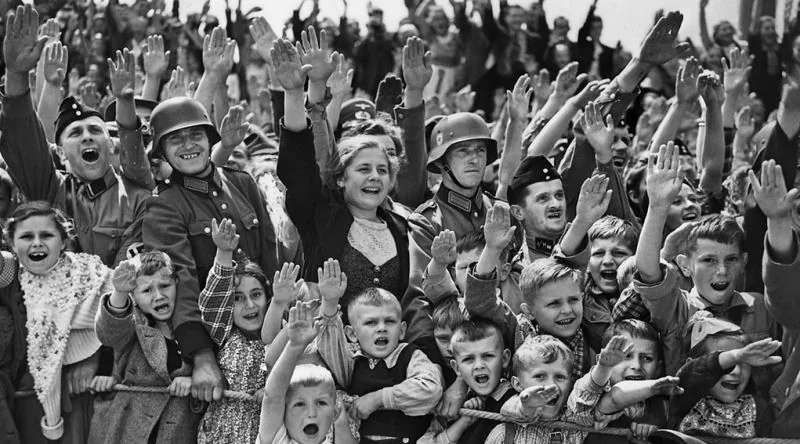
The Nazi salute reportedly became a required ritual in Germany in the mid-1920s, and by 1936 it had followed the country's athletes all the way to the Berlin Olympics. What began as a small party gesture grew into a daily test of loyalty, with real consequences for anyone who refused. Its origins are often traced to Italy, though that link is debated, and its echoes still surface today in courtrooms, stadiums, and headlines about footballers.
Germany reportedly made the Nazi salute compulsory in the 1920s, and refusal could bring serious punishment. Its origins are often traced to Italian fascism under Mussolini, though historians debate that. At the 1936 Berlin Olympics, several delegations reportedly raised it, and modern Germany bans the salute under criminal law.
- The salute reportedly became a required greeting for Nazi Party members and many public officials in Germany during the 1920s, with the practice tightening after Hitler took power in 1933.
- Refusing the salute could cost a person their job, their standing in the community, or their safety, because it was treated as a sign of disloyalty to the regime.
- The gesture is widely linked to Italian fascism under Benito Mussolini, whose followers used a raised-arm salute before the Nazis adopted their own version, though the direct borrowing is debated.
- At the 1936 Berlin Olympics, foreign athletes and visitors faced social and political pressure around the salute, and some teams handled it differently.
- Modern Germany treats the salute as a criminal offense in most contexts, and recent football controversies have shown how quickly the gesture draws public condemnation.
The Arm That Meant Everything
It looks almost like nothing at first. The right arm swings forward and up, palm flat, and that's the whole gesture. But the Nazi salute, also called the Hitler salute or simply "Heil Hitler!", carried far more than motion. It was a declaration of loyalty to Adolf Hitler and to the regime he built, and it stood for unconditional obedience to the Führer himself.
During Hitler's years in power, that raised arm was everywhere in Germany. People used it as a sign of allegiance, and the gesture almost never came alone. It arrived with words: "Heil Hitler" or "Sieg Heil," which means "victory is ours." The words were the final touch, the polish on the act. The real target of Nazi propaganda was something more personal. The regime wanted every citizen to show devotion not just to the Nazi Party as a machine, but straight to Hitler as a man.
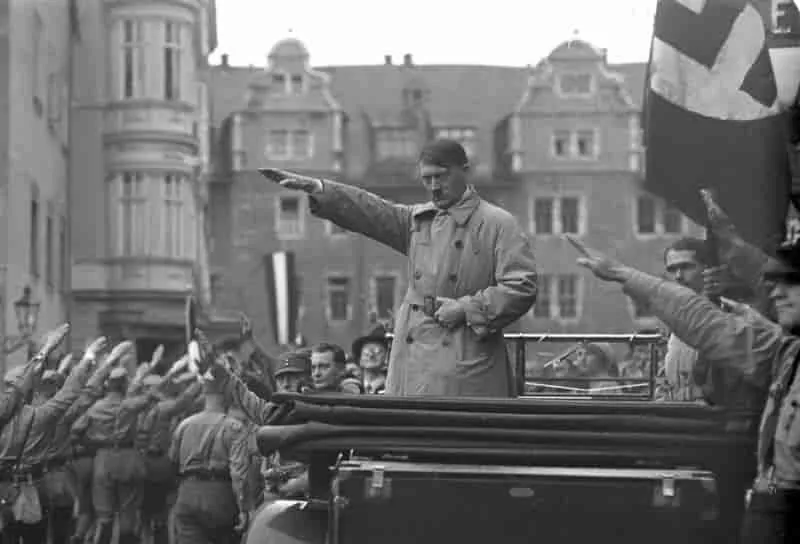
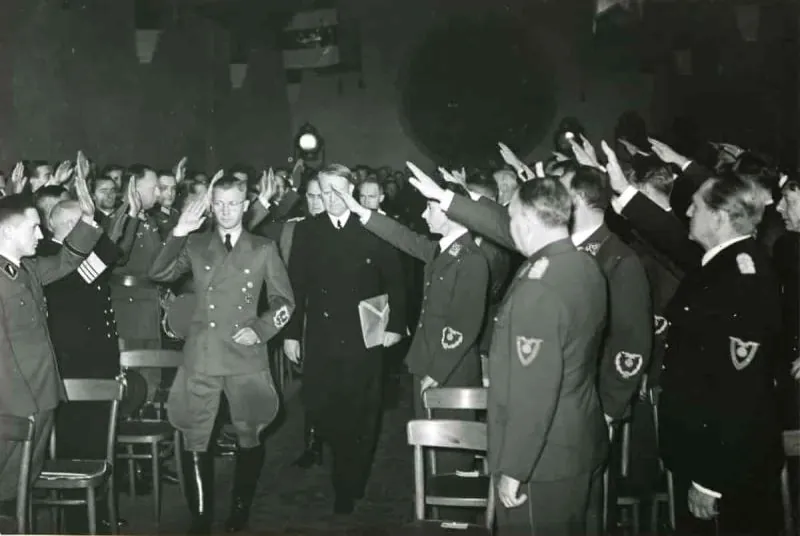
And here is the part that gives the story its weight. In Nazi Germany, refusing the salute was not a quiet choice. A civil servant or an ordinary citizen who held back could lose a job, get reported by a neighbor, or find themselves pulled into an interrogation. Many people raised the arm without feeling a thing behind it, because the alternative was too costly. The gesture was woven into everyday greetings, and forgetting it could leave you with a far less friendly goodbye.
So the arm was never just an arm. It was obedience made visible, a public pledge of allegiance to Hitler and the Nazi movement that people were genuinely compelled to perform.
Borrowed from Mussolini? The Contested Origin Story
The most repeated origin story about the Nazi salute goes like this: Adolf Hitler saw the raised-arm greeting in Benito Mussolini's Italy, liked what he saw, and folded it into his own movement. It is a tidy story, and it travels well. It is also debated. Historians have never firmly nailed down that direct borrowing, so treat the Mussolini link as a popular account rather than settled fact.
What makes the tale so sticky is how neatly it seems to explain the timeline. According to the original account, the salute started appearing here and there in 1923, given sporadically and without much ceremony, before becoming fully compulsory in 1926. Those dates are worth holding loosely. The exact year of its first scattered use, and the year it hardened into an obligation, are not reliably confirmed, so the neat 1923-to-1926 arc is reported rather than proven.
Picture the scene in those early years: a hall of raised arms, a gesture still finding its shape, not yet the everyday reflex it would later become. The shift from occasional to mandatory is exactly the part of the story that records leave blurry.
So the origins stay murky. The Italian inspiration is a claim people repeat, the 1923 and 1926 markers are claims people repeat, and neither comes with the clean paper trail you would want. What is not murky is what the gesture was designed to say. The Nazi salute, also called the Hitler salute or "Heil Hitler!", stood for unconditional obedience to Hitler and loyalty to the Nazi Party. Whatever its true parentage, its purpose was never in doubt.
What Happened If You Didn't Raise Your Arm
Refusing the Nazi salute in Hitler's Germany was not a quiet act of conscience. It was a risk. A public official or an ordinary citizen who kept the arm down could lose a job, be reported by a neighbor, and end up sitting across from an interrogator. The gesture was compulsory in practice, and the cost of skipping it was real.
That is why so many people raised the arm without meaning a thing by it. They did not believe in it, but they could not afford to skip it. Think about what that admits. The arm went up, the mouth said the words, and the heart stayed somewhere else, carefully hidden.
In Nazi-era Germany the salute was as ordinary as saying "good morning." You passed a colleague in a hallway, you raised your right arm. You entered a shop, you raised it again. It was the texture of the day, not a special ceremony. And that is exactly what made forgetting it so dangerous. Skip the greeting and you might hear "goodbye" instead, and not the friendly kind.
Underneath the routine sat the real purpose. The salute was a symbol of unconditional obedience to Adolf Hitler and of allegiance to Nazi ideology, and people were genuinely compelled to give it. A raised arm told the room where your loyalty stood, whether or not you believed it. The regime did not need your conviction. It needed your arm.
The 1936 Berlin Olympics: Who Raised Their Arm?
Picture the Berlin track in August 1936, the stands packed, the cameras rolling, and Adolf Hitler seated in his box. As the teams filed past, some delegations reportedly raised the Nazi salute. Accounts name Turkey, Bermuda, Bulgaria, Bolivia, France, Greece, Iceland, Italy, and Afghanistan among those whose representatives were said to have offered the gesture while passing the Führer.
That list is repeated a lot, and it's worth handling with care. Some national teams did give the salute, but the full roll call of nine countries can't be reliably confirmed. Treat it as the story the record carries, not a settled roster.
Reported to have saluted
Turkey, Bermuda, Bulgaria, Bolivia, France, Greece, Iceland, Italy, Afghanistan. The names in this list are reported, not independently nailed down.
The French question
Some say French athletes did not give the salute. It's a contested point: the team is widely reported to have raised the arm, so the denial stays disputed rather than resolved.
What makes the stadium scene so striking is the context. In Nazi Germany the salute was everywhere, as ordinary as saying "good morning." Refusing it could cost a person their job, or bring a denunciation and an interrogation. So the arm going up in Berlin was never just a greeting; it was a symbol of unconditional obedience to Hitler and loyalty to the Nazi Party, and plenty of people raised it without meaning a word of it.
Which is exactly why the tidy Olympic list deserves a second look. A gesture made under that kind of pressure tells you something about the moment, less about the heart behind it.
Is the Nazi Salute Illegal in Germany Today?
Yes. Giving the Nazi salute in Germany today is a criminal offense, and it falls under the country's laws against banned symbols of unconstitutional organizations. It is not a gray area or a matter of bad taste. Raise that arm in public and you are breaking the law. That legal line has held for decades, and it sits alongside something less visible: a deep public discomfort. Most Germans do not want to be associated with that gesture at all, not in a joke, not in a photo, not in a football stadium.
That discomfort is exactly why modern controversies around the salute tend to explode so fast. When a public figure makes an arm movement that could be read as a Nazi salute, the reaction in Germany is immediate, and the explanations that follow are usually just as quick. A gesture that might look harmless somewhere else lands here with the full weight of the 1930s behind it, which is why the stakes feel so high even when the person insists it was nothing.
What about the viral clips that name Merkel and Putin?
Careful here. A widely shared clip pairs Angela Merkel with Vladimir Putin and invites viewers to read something into it, and the original account even suggests Putin "gets" something in the footage. That is a specific video whose meaning cannot be verified without the clip itself, so treat any interpretation of it as unconfirmed. And be clear on the bigger point: the insinuation that Merkel is somehow tied to people who enjoy giving the salute or gesturing back at the past is false. There is no factual basis for linking her to Nazi sympathies.
What about the Bellingham and Kroos moment?
Football has produced its own version of this story. Jude Bellingham reportedly made an arm gesture that some viewers felt could be perceived as a Nazi salute, and a related clip is said to show German-born Toni Kroos reacting to it. Both elements are contested and unverified, so the honest way to hold them is as reported controversy rather than settled fact. What is settled is the law, and the raw sensitivity behind it. In today's Germany, that gesture is not nostalgia and it is not a stunt. It is a crime, and the country knows it.
Frequently asked questions
What was the Nazi salute and why was it used?
The Nazi salute, also called the Hitler salute or "Heil Hitler!," was performed by raising the right arm forward. It functioned as a public declaration of unconditional obedience to Adolf Hitler and loyalty to the Nazi Party. During Hitler's years in power, it became a near-compulsory greeting across Germany, as common as saying good morning.
When did the Nazi salute become mandatory in Germany?
The dates are not firmly established. According to the original account, the gesture began appearing sporadically around 1923 and was reported as fully compulsory by 1926. Historians have not reliably confirmed either date, so treat the timeline as contested rather than settled.
What happened if you refused to give the Nazi salute?
Refusing carried real risk. A public official or ordinary citizen who skipped the salute could be marked as disloyal, and the consequences ranged from losing a job to being denounced and interrogated. Many people gave the salute without believing in it, simply to avoid drawing attention.
Did athletes give the Nazi salute at the 1936 Berlin Olympics?
Some did. At the 1936 Berlin Olympics, representatives of several nations reportedly gave the salute while passing Adolf Hitler. The full list of countries often circulated, including Turkey, Bermuda, Bulgaria, Bolivia, France, Greece, Iceland, Italy and Afghanistan, cannot be reliably confirmed. The claim that French athletes withheld the salute is likewise disputed.
Is the Nazi salute illegal in Germany today?
Yes. Giving the Hitler salute is a criminal offense in modern Germany under the country's laws against banned symbols. Most Germans are uncomfortable being associated with the gesture at all, and it remains a live legal line rather than a matter of etiquette.
Was the Nazi salute inspired by Mussolini's Italy?
That is the popular telling, but it is debated. The idea that Hitler saw the gesture in Mussolini's Italy and adapted it into his own system is widely repeated, yet it has not been firmly established. The Roman-style raised arm was already circulating in European political ritual before the Nazis adopted it. Editorial note: Details that remain unconfirmed or disputed are presented as such, and no figures or claims have been added beyond what is reliably documented.
Got a take on this? Add your voice to the conversation below →
No comments yet. Be the first.