1923 Population Exchange: 1.6 Million Forced Migrations
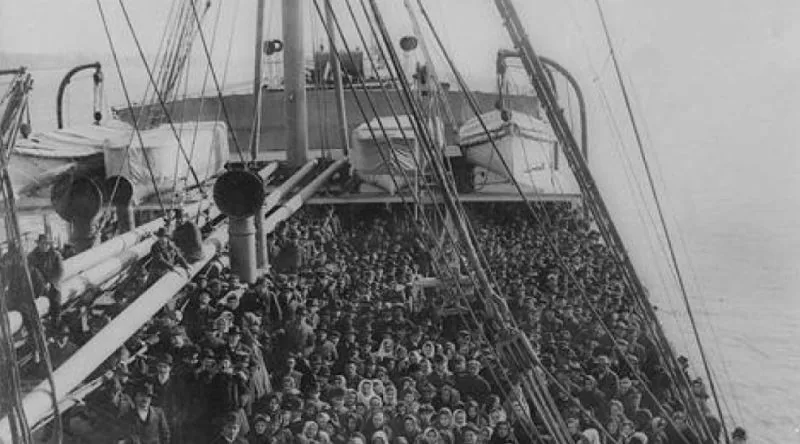
The 1923 Greco-Turkish population exchange forced roughly 1.6 million people to leave their homes based on religion alone. It was one of the largest state-organized transfers of people in modern history, agreed at Lausanne and carried out under international supervision. Families who had lived for generations in Anatolia and Greece suddenly found themselves classified as outsiders. In many cases they spoke the local language and knew no other life. The exchange reshaped the map of the Aegean and left a legacy that still echoes today.
The 1923 Greco-Turkish population exchange was a forced migration agreed at Lausanne that moved roughly 1.6 million people between Turkey and Greece based on religion. Orthodox Christians in Anatolia were sent to Greece, and Muslims in Greece were sent to Turkey. A Mixed Commission supervised the process.
- The exchange was agreed in 1923 at the Lausanne Conference, which followed the collapse of the Ottoman Empire and the Greco-Turkish War.
- Roughly 1.6 million people were uprooted, with Orthodox Christians leaving Anatolia for Greece and Muslims leaving Greece for Turkey.
- Religion, not language or ethnicity, determined who would be relocated.
- Certain groups were exempted, including the Greek Orthodox residents of Istanbul and the Muslim residents of Western Thrace.
- A Mixed Commission oversaw the transfer, handling property claims and resettlement logistics.
When Religion Decided Where 1.6 Million People Would Live
On January 30, 1923, in the middle of the Lausanne peace talks, Turkey and Greece signed a protocol that turned faith into a moving order. Orthodox Christians living in Turkey were to be sent to Greece. Muslims living in Greece were to be sent to Turkey. Not a word about language, ethnicity, or how long your family had worked that particular field.
Picture the arithmetic. Roughly 1.2 million Greek Orthodox packed up and left Anatolia for Greece. Around 500,000 Muslims went the other way, from Greek soil into Turkey. That is the 1923 Greco-Turkish population exchange, and it stands as one of the largest organized migrations ever carried out on paper, then carried out for real.
Here is the part that gets people. Nobody asked. This was not a wave of volunteers chasing a better life across the water. It was forced migration, and the logic was almost brutally simple: you're Orthodox, go to Greece; you're Muslim, go to Turkey. Your passport did not matter. Your mother tongue did not matter. The only question on the form was which house of worship you belonged to.
Families who had never spoken a word of Greek found themselves labeled as Greeks. Families who had never spoken a word of Turkish were counted as Turks. A single signature in Lausanne decided which country a million-plus people would call home, and the ships started moving almost immediately.
Before Lausanne: How the Ground Was Prepared
The 1923 Greco-Turkish population exchange did not fall out of a clear sky at the Lausanne table. It was the end of a decade-long pressure cooker. When the Ottoman Empire lost almost all of Rumelia after the 1912 Balkan Wars, hundreds of thousands of Muslims suddenly woke up as minorities inside brand-new states, and the labels on their doors changed overnight.
Greece looked at the Muslims of Epirus, the countryside around Thessaloniki, and the Twelve Islands and saw something else: potential threats. Pressure followed. So did violence. In some places, according to the original account, it went as far as outright massacres. For roughly ten years these pressures kept building in varying doses, a slow squeeze rather than one clean rupture.
Then came 1914. Some accounts say Greece pushed Muslim Turks toward migration in a way that ran against the Athens Treaty, though that framing is contested. On the Anatolian side, a mirror image was forming. With the Balkans gone, the question in some circles became how to make Anatolia more Turkish, and reportedly Celal Bayar put that idea into practice by driving roughly 20,000 Greeks off the Aegean coast. That figure and the attribution are both disputed.
By 1919 the migration question had become an open crisis. Some accounts say the Ottoman ambassador in Athens, Galib Kemali Bey, floated a mutual exchange: you take yours, we take ours, and everyone stops bleeding. The story goes that Venizelos did not strongly object, but he stalled. His eye was on the Megali Idea, and a Greek presence in Anatolia was leverage for a future claim on those lands. This too is not firmly established.
World War I shoved the whole matter aside. The real break came in 1922, when the Greek army pulled out of Anatolia in defeat and left behind hundreds of thousands of Greeks fearing for their lives and property. Nearly 1 million poured into Greece. No houses. No land. No room. The newcomers began eyeing the homes of the Muslims still living there, and a cold logic took hold in Athens: if those Muslims leave, we have somewhere to put the arrivals.
Turkey had its own restless minorities, its own anxieties. Both sides were exhausted, suspicious, and out of patience. That is the room in which the 1923 Greco-Turkish population exchange was signed on January 30, 1923, just as the Lausanne peace talks were getting under way. The deal was new. The groundwork had been laid for years.
The 1923 Convention Actually Said: Nineteen Articles That Moved a Million People
On January 30, 1923, while the Lausanne talks were still grinding on, Turkish and Greek delegates signed a separate convention on the exchange of populations. It ran to 19 articles, and it was the 1923 Greco-Turkish population exchange's real rulebook. The text drew its line by faith, not by blood: Greek Orthodox Christians in Turkey would go to Greece, Muslims in Greece would come to Turkey. Language and ethnicity counted for nothing. A Turkish-speaking Orthodox villager from Karaman was out. A Muslim Albanian or Pomak was in.
Some accounts say the whole machinery was meant to switch on by May 1, 1923, though that date could not be confirmed. Whether it held in practice is another story, but it tells you how fast the drafters expected this to move.
The Clauses That Did the Work
Article 1 is the one that still stings. Once you were exchanged, you could not go back to your old home without official permission from both governments. No quiet return visits, no "I just want to see the house one more time." Article 3 then widened the net dramatically: anyone who had emigrated since October 18, 1912, the year the Balkan Wars broke out, was folded into the same category. A decade of earlier departures suddenly became part of this settlement.
One account claims Article 4 ordered that the first group sent to Greece would be physically healthy men, the reasoning being that the state wanted the "useful" workers on the ground first, with their families following. That provision could not be verified. Articles 5 through 8 handled the mechanics of leaving with some dignity: property was to be protected from damage, both states promised to ease the journey, citizenship would switch over automatically, and whatever belongings a family could carry traveled tax free.
Then came the harder half. Article 9 placed everything left behind under the authority of the Mixed Commission, and Article 14 promised an equivalent property in return for what was abandoned. On paper that reads like fairness. In practice it meant a family's house in Drama or Kavala was valued, logged, and matched against a claim somewhere in Anatolia, a process that stretched on for years.
Who Got to Stay
Not everyone was swept up. The convention carved out exceptions that still shape the map today: Greek Orthodox residents of Istanbul, plus the islands of Gökçeada (Imbros) and Bozcaada (Tenedos), were exempt, and Muslims of Western Thrace stayed put on the Greek side. Those four pockets are why you can still find Greek-speaking communities in Istanbul and Turkish-speaking ones in Thrace more than a century later.
A single clause decided whether a family packed its life into crates or kept its front door. Religion was the only criterion, and it did not care what language you dreamed in.
The exchange was not a riot or a rampage. It was paperwork, numbered paragraphs and signatures, and it relocated more people than almost any forced migration before it.
The Mixed Commission: Who Ran the Exchange
Eleven people held the whole thing together: four Turkish representatives, four Greek representatives, and three members from neutral countries chosen by the League of Nations in Geneva. That was the Mixed Commission, the body created under Article 11 of the January 30, 1923 convention to turn a vast, forced movement of people into something that could actually be administered. Two sides who had just fought a war, plus a handful of outsiders to break the tie.
Their job was never just logistics. The commission oversaw the crossings, but it also had to settle the far messier question of property. When roughly a million people walked away from homes, orchards, shops and fields, someone had to decide what those things were worth and who got compensated for them. Article 9 handed the liquidation of abandoned property to the commission, and Article 14 held out the promise of equivalent property on the other side. So the same eleven people who counted boatloads of migrants also sat over ledgers of abandoned houses, trying to put numbers on lives that had been packed into a few suitcases.
The paperwork followed the people. Some accounts say the commission's first office opened in Athens in October 1923 and later moved to Istanbul in June 1924, though those exact dates could not be verified. The shape of the story still makes sense: the machinery trailed the migration, planting itself wherever the crowds were landing.
Think about what that room must have felt like. Four Turks and four Greeks, fresh from the aftermath of 1922, sitting across from three neutrals who had no dog in the fight. Every file was a small argument about a life. This house in Drama for that plot near Izmir. This olive grove for that shop in Salonica. The commission did not just manage the 1923 Greco-Turkish population exchange on paper; it refereed the aftermath, one claim at a time, for years.
The Numbers: Who Went Where
Some sources report that between 1923 and 1926, the Mixed Commission's official convoys carried 355,635 migrants into Turkey, though the figure could not be independently confirmed. It counts only the people who traveled in organized parties. It leaves out everyone who packed a bag alone and simply showed up, and there were plenty of those. The ledger of the 1923 Greco-Turkish population exchange is full of gaps like this, which is part of what makes it so fascinating to read.
Widen the lens and the totals climb. According to the original account, Turkey settled 463,534 migrants in all between 1921 and 1928, a total that could not be independently verified. Add an earlier wave of roughly 125,000 who arrived in 1912 to 1914 in the wake of the Balkan Wars, and the picture turns into a decade-long flood rather than a single event. The heaviest concentration of arrivals fell in 1923 and 1924, with smaller movements trickling on until the 1930 İnönü-Venizelos agreement finally closed the books on the remaining cases.
Where the newcomers put down roots
Look at a map of western Anatolia and Thrace and you can almost trace the settlement pattern by city. Adana, Edirne, Balıkesir, Istanbul, Bursa, Tekirdağ, İzmir, Manisa, Mersin and Samsun all absorbed large numbers of mübadil households. The Aegean and Thrace corridors swelled the most, filling neighborhoods that still carry the label today. In Greece, the 1928 census reportedly recorded around 1.2 million immigrants in the country overall, with a little over 1.1 million of them arriving directly from Turkey. Exact figures could not be confirmed, but the staggering share of a small nation's population explains why the housing scramble on the Greek side grew so desperate.
| Figure | Reported count |
|---|---|
| Arrivals via official convoys, 1923-1926 | 355,635 |
| Total migrants settled in Turkey, 1921-1928 | 463,534 |
| Post-Balkan Wars arrivals, 1912-1914 | 125,000 |
| Immigrant population in Greece, 1928 census | 1,221,849 |
| Of those, arrived from Turkey | 1,104,216 |
Numbers this large stop being abstract once you picture the kitchens and courtyards behind them. A family from Crete or Salonika stepped off a boat into a town where the previous occupants had just left, sometimes with the tea still warm. Whatever the exact totals, the scale of the 1923 Greco-Turkish population exchange reshaped the demographics of two countries in the space of a few years.
Who Was Left Out, and Why That Matters
The label on the shipping crate said "Rum," but the people inside it were not all Greek speakers. Among the roughly 1.2 million Orthodox Christians sent from Anatolia to Greece under the 1923 Greco-Turkish population exchange were Karamanli Orthodox Christians who spoke only Turkish, plus Gagauz communities. Religion was the sorting hat; language and ancestry never entered the paperwork.
The same confusion ran in the other direction. The "Muslims" arriving from Greece to Turkey, some 500,000 people, included Pomaks, Vlachs, Albanians and Patriyots. Plenty of them had never spoken a word of Turkish. A family could be bundled onto a boat toward a country whose language they did not know, simply because a clerk wrote "Muslim" beside their name.
Who went where, and on what basis
| Group | Sent to | Why |
|---|---|---|
| Karamanli Orthodox (Turkish-speaking) | Greece | Orthodox faith |
| Gagauz | Greece | Orthodox faith |
| Pomaks, Vlachs, Albanians, Patriyots | Turkey | Muslim faith |
| Catholic and Protestant Greeks | Stayed put (reportedly) | Outside the Orthodox category |
And then there is the strangest wrinkle of all. According to the original account, Catholic and Protestant Greeks were reportedly allowed to stay where they were, though this is not firmly established. Read that again: a Greek-speaking Christian family could keep its house and its neighbors, while a Turkish-speaking Christian family down the road lost everything. The deciding question was never who you were. It was which church you belonged to. That is the Ottoman millet system, the old imperial habit of governing people by religious community, still running the show years after the empire itself had collapsed.
The deciding question was never what language you spoke. It was which church you belonged to.
Critics of the 1923 Greco-Turkish population exchange make two sharp arguments. First, the compulsory nature of it trampled basic rights, including the right to live where you were born and the right to travel freely. People were not consulted; a treaty signature decided their future. Second, early-republican nation-building used religion as a stand-in for Turkishness, treating Muslim identity as a smoother path to a unified national citizenry. That is why scholars argue the exchange was less a mutual favor between two states than a demographic engineering project carried out in the language of diplomacy.
For the families involved, the paperwork never captured the reality. A Karamanli grandmother in Greece and a Pomak farmer in Turkey might share the same bewilderment: same sky, same habits, wrong country. The bureaucrats got their numbers. The people got the aftermath.
The Wounds That Outlived the Treaty
When the ships pulled out of Thessaloniki and Crete and Kavala, they carried people who had left behind more than houses. The 1923 Greco-Turkish population exchange emptied villages and filled new ones, and the pain of that rupture did not fade with the paperwork. In Anatolia and the Balkans, the sense of being suddenly rootless settled into collective memory and stayed there for generations.
The economic bill was brutal too. Fields stood untended, workshops went quiet, and the newcomers needed time to learn the land and the markets. The original account describes both Turkey and Greece "writhing" economically for roughly 20 years, though that two-decade figure is a loose characterization rather than a precise measurement. What is not in doubt is the shock: production collapsed where people departed, and it took years to rebuild where they arrived.
Artists later gave the grief a shape. In 2011, director Çağan Irmak released Dedemin İnsanları, a film that traces the severed family ties and abandoned lives left in the exchange's wake. It does not lecture. It lets the audience feel the absence.
And then there is the song. Bir Fırtına Tuttu Bizi, a folk lament that came out of Thessaloniki, became one of the most affecting expressions of the migrants' inner world. A storm took hold of us, the title says, and anyone whose grandparents were uprooted in that exchange understands exactly what it means without further explanation.
For many of the people who boarded those ships, the journey was not a homecoming. It was exile dressed up as diplomacy.
That is the part the treaty text never captures. The 1923 Greco-Turkish population exchange was signed, sealed and administered, but its emotional afterlife ran on for decades, in kitchens and lullabies and half-remembered place names whispered at family tables.
Frequently asked questions
What was the 1923 Greco-Turkish population exchange?
The 1923 Greco-Turkish population exchange was a compulsory swap of Orthodox Christians living in Turkey and Muslims living in Greece, agreed at Lausanne on January 30, 1923, as part of the wider peace settlement. It was one of the largest organized migrations in history, and nobody involved was asked whether they wanted to go.
How many people were forced to migrate?
Roughly 1.2 million Greek Orthodox were sent from Anatolia to Greece, and about 500,000 Muslims were sent from Greece to Turkey. The bulk of the movement happened between 1923 and 1924, with smaller waves trickling on until the 1930 İnönü-Venizelos agreement finally settled the loose ends.
Why was the exchange based on religion?
The convention defined people by religious affiliation, not ethnicity or language. So Turkish-speaking Orthodox, known as Karamanlis, were shipped to Greece, while Pomaks, Vlachs, Albanians and other non-Turkish Muslims were brought into Turkey. Catholic and Protestant Greeks, by contrast, reportedly stayed put.
What were the exceptions to the exchange?
Greek Orthodox residents of Istanbul, Gökçeada and Bozcaada were exempt, and so were the Muslims of Western Thrace. Everyone outside those zones was uprooted wholesale, which is why so many families in cities from Balıkesir to Mersin still call themselves "mübadil," the Turkish word for exchanged.
How did the Mixed Commission oversee the process?
The commission had four Turkish members, four Greek members, and three neutral members chosen through the League of Nations. It managed both the movement of people and the liquidation of the property they left behind. Some accounts place its first office in Athens in October 1923, before operations shifted to Istanbul the following June.
What was the economic impact?
Both countries took a serious hit. Production collapsed where people left, and absorbing the arrivals took years. The often-repeated claim that the disruption lasted "about 20 years" is a loose characterization rather than a precisely verifiable figure, though the hardship itself is well documented.
How did the exchange affect families and culture?
It split families permanently and left a collective scar that shows up in art as much as in memory. Çağan Irmak's 2011 film Dedemin İnsanları centers on the exchange and the family ties it severed, while the anonymous folk song Bir Fırtına Tuttu Bizi , carried out of Thessaloniki, became one of the most piercing laments for the people who left. Editorial note: Details that remain unconfirmed are presented as such, and figures reflect the best available estimates.
Got a take on this? Add your voice to the conversation below →
No comments yet. Be the first.