Blue Valentine: A Brutally Realistic Look at Love's Decay
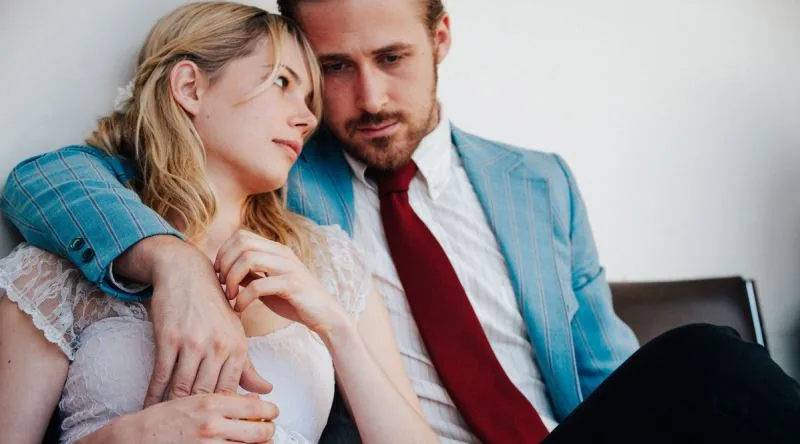
The 2010 film "Blue Valentine," directed by Derek Cianfrance and starring Ryan Gosling and Michelle Williams, offers a brutally honest look at how love decays inside a failing marriage. It tells the story of Dean and Cindy, a young couple whose romance slowly crumbles under the weight of unmet expectations and quiet resentment. This Blue Valentine movie analysis pulls you into their world, where the same passion that once felt electric now feels exhausting and hollow.
"Blue Valentine" follows Dean and Cindy, a married couple in Pennsylvania, as their relationship collapses. The film intercuts their hopeful early courtship with the painful reality of their present-day marriage, showing how small choices and unresolved wounds lead to a devastating breakup. It is a raw, unflinching portrait of love turning to indifference.
- The film was released in 2010 and directed by Derek Cianfrance, his first major feature.
- Ryan Gosling and Michelle Williams play Dean and Cindy, a couple whose marriage is shown in two timelines.
- The story is set in a working-class area of Pennsylvania, where the couple struggles with financial and emotional strain.
- The film is known for its unvarnished portrayal of intimacy, including a sex scene that sparked an NC-17 rating controversy before being appealed.
- The ending leaves Dean and Cindy separated, with Dean walking away from their daughter, a moment that lingers long after the credits.
Two Loves, One Heartbreak: The Story Behind Blue Valentine
Some movies leave you with a clear villain and a neat moral. Blue Valentine movie analysis starts with a much harder question: when a marriage crumbles, whose fault is it really? Derek Cianfrance's 2010 film refuses to give an easy answer, and that is exactly why it stays with you long after the credits roll.
The film follows Dean and Cindy, played by Ryan Gosling and Michelle Williams, through a relationship that is already over before we even meet them properly. Cianfrance jumps between two timelines without warning. One moment we watch a young couple falling in love, giddy and full of possibility. The next, we are dropped into a kitchen where the same two people can barely look at each other. The effect is dizzying, almost cruel. You watch their first meeting knowing exactly where it leads, and every sweet gesture carries a shadow.
What makes the experience so uncomfortable is that neither version of Dean and Cindy feels like a caricature. The young Dean is passionate, devoted, a little aimless. The older Dean is still those things, but the passion has curdled into stubbornness. Cindy in the early days is bright and searching, making choices she cannot fully explain. Years later, those choices have hardened into resentment. Cianfrance never tilts the scales. Just when you decide Dean is the problem, you remember how he gave up everything to be with her. Just when you blame Cindy, you recall the weight she carried alone.
The film includes a monologue where Dean argues that men are more romantic than women, claiming that men commit fully to one person while women keep searching for a better option. The exact wording is hard to pin down, and different viewers remember it differently. What is not in dispute is the raw honesty of the performances. Gosling and Williams disappear into their roles so completely that you forget you are watching actors. Their fights feel like real fights, the kind that happen in kitchens and bedrooms across the world, where both people are right and both people are wrong.
The film leaves you with no verdict, only a lingering ache. That is the point. Love does not always fail because someone did something terrible. Sometimes it just runs out of room to grow.
Dean: The Romantic Who Can't Let Go
Ryan Gosling's Dean Pereira is the kind of man who loves with his whole chest, and that is exactly the problem. He grew up without a mother, holds no steady job, and carries himself with a lazy charm that masks something deeper: a passionate, overly conscientious soul who has decided that Cindy is his entire universe. In any Blue Valentine movie analysis, Dean emerges as the cautionary tale of what happens when devotion curdles into something heavier.
From the very first scenes, Dean makes his biggest mistake without ever realizing it. He places Cindy at the absolute center of his existence, and then he starts making decisions for her. Not out of malice, never with a raised voice or a controlling hand. He simply believes he knows what is best for her, and he acts on that belief constantly. He decides where they should live, he decides what she needs, he decides that his love should be enough to fix whatever is broken in her life.
The tragedy is that Dean genuinely believes he is being romantic. He is not a villain, not even close. He is a man who never had a mother's guidance, so he invented his own version of what love should look like. That version involves total devotion, absolute certainty, and a steady stream of choices made on Cindy's behalf. He cannot see that his certainty is suffocating her, that his love has become a cage with bars made of good intentions.
What makes Dean so uncomfortable to watch is how recognizable he is. We have all known someone like him, or maybe we have been him. The guy who shows up with grand gestures but never asks what the other person actually wants. The romantic who mistakes possession for passion. Dean's flaw is not that he loves too much; it is that he loves in a way that leaves no room for Cindy to breathe, to choose, or to be her own person.
Director Derek Cianfrance, who helmed this 2010 film, uses Dean to ask a painful question: at what point does devotion become control? Dean never raises a hand, never issues a demand. He just quietly, persistently, makes every important decision for the woman he claims to adore. And that, the film suggests, is its own kind of violence. A slow, loving erosion of someone else's autonomy, done with a smile and a full heart.
Cindy: The Woman Who Doesn't Know What She Wants
Michelle Williams plays Cindy Heller in Blue Valentine, the 2010 film directed by Derek Cianfrance, and she is the character audiences love to blame. She grew up in a problematic family, she is professionally successful, and yet she has no idea what she actually wants from her life or her relationships. Viewers get angry at Cindy for getting pregnant by a "punk" and then mistreating the sweet man who accepts her, but the film quietly argues that Dean and Cindy are simply wrong for each other.
The frustration with Cindy is understandable. She makes choices that seem self-sabotaging, especially when you watch her push away Dean, played by Ryan Gosling, who takes her in with all her flaws. But the deeper truth is that Cindy carries damage from a childhood she never asked for. That damage shows up in a history of flawed, emotionless relationships, and it clouds her judgment at every critical turn. She is not cruel for the sake of being cruel; she is lost.
What makes this Blue Valentine movie analysis so uncomfortable is that both characters are at fault in their own ways. Dean makes decisions for Cindy without asking her, believing his love gives him that right. Cindy, meanwhile, stays in a relationship she is not fully invested in, and her emotional distance reads as coldness. They are two people who want different things, and neither is willing to say it out loud.
The film refuses to pick a side. Every time you think you have figured out who to blame, the story shifts and shows you the other person's pain. That is the point. Sometimes love is not enough, and sometimes two good people are just bad for each other. Cindy is not the villain of this story; she is just a woman who never learned what she deserved.
The Famous Dialogue: Men Are More Romantic?
One scene in Blue Valentine has taken on a life of its own, passed around in screenshots and quoted in countless conversations about love and marriage. The lines, attributed to Dean in the 2010 film, cut straight to a raw nerve about how men and women approach commitment. Whether the exact wording survives in the finished movie, though, is another question entirely.
As the story goes, the character delivers a monologue that flips conventional wisdom on its head. Men, he argues, are the true romantics. When a man marries, he commits to one woman unconditionally, no fine print, no backup plan. He meets someone wonderful, and if he does not marry her, he figures he must be an idiot. Women, in his telling, play a different game entirely. They weigh their options, holding out for the best possible match. They spend their lives waiting for a white knight to ride in, then go and marry the guy with the steady paycheck.
It is a provocative little speech, the kind that sparks arguments at dinner parties. And it fits perfectly with the film's DNA, a movie that refuses to let anyone off the hook. Dean, played by Ryan Gosling, is a man who built his entire world around Cindy, played by Michelle Williams, often without asking what she actually wanted. So the monologue lands with a bitter irony. It sounds like something his character would say, a man convinced his own devotion is pure while her hesitations are calculated.
Here is the catch. The quote has been repeated so often that it has become part of the film's lore, but the exact wording remains unverified. The original account attributes these lines to the movie, yet no official transcript or reliable source confirms them word for word. That has not stopped the passage from circulating widely online, often presented as gospel straight from the script. In all likelihood, something very close to this sentiment appears in the film, but the precise phrasing may have shifted through years of retelling and translation.
What makes the dialogue stick, verified or not, is how neatly it captures the central tension of Blue Valentine movie analysis. Dean sees himself as the devoted romantic, the man who gave everything for love. Cindy sees a man who made decisions for her, who mistook possession for passion. The debate over who loved more, who gave more, who ruined what, sits at the very heart of the film. That single contested quote manages to hold the whole argument in one breath.
What Blue Valentine Really Says About Love and Choice
Blue Valentine, the 2010 drama directed by Derek Cianfrance, refuses to give you a clean answer about who is at fault, and that is exactly why it stays with you long after the credits roll. The film starring Ryan Gosling as Dean and Michelle Williams as Cindy is not a simple story of good versus bad. It is a story about two people who love each other and still cannot make it work, and that tension is what makes the ending so devastating.
The movie weaves back and forth between the hopeful early days of Dean and Cindy's relationship and its painful unraveling years later. That structure forces you to hold two versions of the same couple in your head at once. You watch them fall in love, and you watch them fall apart, and you never quite know where to point your finger.
Dean grew up without a mother, works an unsteady job, and loves Cindy with a consuming intensity that borders on control. He keeps making decisions for her, even when he thinks he is being supportive. Cindy, meanwhile, carries the weight of a troubled family and a history of careless relationships. She is successful but restless, and she does not really know what she wants.
Here is where the film gets uncomfortable. Cindy becomes pregnant by a reckless man she barely knows, and then Dean, the sweet and earnest guy she meets around the same time, accepts her and her situation without hesitation. You want to root for him. But the movie refuses to let you settle into that easy judgment. Dean is not right for Cindy, and Cindy is not right for Dean. They are simply wrong together, and neither one is the villain.
The film delivers sharp observations about masculinity, sexuality, and the mistakes we inherit from our families. Consider the way two different men make love to Cindy. The first is careless and impulsive, a physical act with no tenderness behind it. The second, Dean, is gentle and devoted. The contrast is deliberate, and it speaks to the choice Cindy faces between recklessness and real affection.
Yet even when Cindy seems to make the right choice, the movie shows that choosing well is not the same as choosing happily. Not all love turns into lasting affection, and not all affection turns into love. That is the uncomfortable truth at the center of this Blue Valentine movie analysis. The relationship ends in heartbreak, but the heartbreak feels earned, grounded in the small failures and quiet misunderstandings that pile up over time.
There is no single person to blame. Everyone is a little right and a little wrong, and the film trusts you to sit with that ambiguity. One of the most quoted lines from the movie has Dean explaining why he thinks men are more romantic than women, claiming that men commit fully to one person while women weigh their options. The exact dialogue is hard to verify from available sources, but the spirit of it captures Dean's worldview, his belief that his love should be enough, even when it is not what Cindy needs.
That is the real message of Blue Valentine. Love is not a magic fix. It does not erase incompatibility, and it does not protect you from the choices you make along the way. The film leaves you with no easy answers, only the uncomfortable recognition that sometimes two good people can still be wrong for each other.

Frequently asked questions
What is Blue Valentine about?
Blue Valentine is a 2010 film directed by Derek Cianfrance that traces the rise and fall of Dean and Cindy's marriage through a non-linear narrative. The story jumps between their hopeful early courtship and their strained present, letting viewers witness both the spark that brought them together and the slow erosion that pulls them apart. It is a raw, intimate portrait of how love changes over time.
Who are the main characters?
The two central figures are Dean, played by Ryan Gosling, and Cindy, played by Michelle Williams. Dean is a passionate, somewhat aimless man who grew up without a mother, while Cindy is a capable woman from a troubled family who seems unsure of what she truly wants. Their contrasting backgrounds and emotional needs fuel much of the tension in their relationship.
Why is it considered realistic?
The film earns its reputation for realism because it depicts the slow decay of a relationship without offering a clear villain to blame. Neither Dean nor Cindy is entirely right or entirely wrong in their conflicts. Instead, the movie shows how small misunderstandings, unmet needs, and accumulated resentments can quietly dismantle a marriage, leaving both partners hurt and confused about where things went wrong.
How does it show family influence?
Both characters carry the weight of their childhoods into their adult relationship. Dean grew up without a mother, which shapes his intense need for connection and his tendency to put Cindy at the center of his world. Cindy, on the other hand, comes from a problematic family environment that leaves her with complicated feelings about intimacy and commitment. These family imprints drive many of their choices, often without them realizing it.
Did Dean and Cindy love each other?
Yes, they genuinely loved each other, and the film makes that clear through their early scenes together. Their courtship is warm, playful, and full of genuine affection. However, the movie argues that love alone is not enough to sustain a relationship. Compatibility, timing, and emotional maturity all matter just as much, and Dean and Cindy simply lack enough of those elements to make their love last.
What are the main themes?
The film explores masculinity, sexuality, family mistakes, and the consequences of wrong choices. It examines how men and women approach romance differently, how childhood wounds resurface in adult relationships, and how a single impulsive decision can redirect an entire life. The movie also touches on class differences and how financial instability adds pressure to an already fragile marriage. One memorable line of dialogue in the film offers a provocative take on gender and romance. As the story goes, a character suggests that men are more romantic than women because they commit fully to one person, while women supposedly weigh their options and choose the partner with the best prospects. Whether you agree or disagree with that sentiment, it captures the kind of uncomfortable honesty that makes Blue Valentine movie analysis so compelling.
Got a take on this? Add your voice to the conversation below →
No comments yet. Be the first.