Blue Eye Samurai: Netflix's 2023 Animated Masterpiece

Blue Eye Samurai is a 2023 animated series on Netflix, following Mizu, a mixed-race swordfighter who sets out on a journey of revenge and self-discovery. The show arrived on November 3, 2023 and then refused to leave viewers alone. Its fight choreography is gorgeous, but the real astonishment is how patiently it lets every major character change. Nobody in this story becomes someone new overnight, and that patience is exactly why the transformations land.
Blue Eye Samurai is a 2023 Netflix animated series. It follows Mizu, a mixed-race warrior on a revenge quest, alongside Ringo, Taigen, and Akemi. Across season one, each of these characters shifts gradually rather than suddenly, and that earned pacing is the show's defining strength.
- Blue Eye Samurai premiered on Netflix on November 3, 2023.
- The story centers on Mizu, a mixed-race swordfighter pursuing revenge, and on the people who travel alongside her.
- Mizu's journey is shared with Ringo, a cheerful and persistent companion, and Taigen, a proud swordsman tied to her past.
- Akemi, the daughter of a wealthy, powerful lord, pursues her own path of self-determination across the season.
- Viewers responded with near-universal praise for its visual style and character writing.
Blue Eye Samurai: A Netflix Series That Earns Every Transformation
Blue Eye Samurai arrived on Netflix on November 3, 2023, and it is an animated series, not live action. That last detail matters, because the show does something animation rarely gets credit for: it takes familiar genre furniture and rebuilds it with a visual style you have not quite seen before.
Here is the honest part. The plan was to bail. "I'll get bored fifteen minutes in, or at the very latest by episode two, and I'll shut it off." That was the whole commitment going in. Two days later the entire season was gone, scraped to the bottom of the bowl.
What pulled the hook in was not the swordplay, though the swordplay is excellent. It was the fact that Blue Eye Samurai refuses to dump the whole story on one back. Mizu, the mixed-race swordmaster at the center, carries the revenge plot. Ringo, Taigen and Akemi carry just as much weight, and every one of them gets a real arc instead of a decorative one.
Mizu starts with a rage hot enough to blind. Each obstacle shaves a little off it. The anger never disappears, it just changes shape, from a wildfire into something controlled. Along the way Mizu stumbles into friendship, and into something like love, without ever noticing it happening. The show keeps reminding you that this is a person with fractures, not a superhero with a sword.
Ringo walks away from a small tavern and a life that was neither good nor terrible, chasing the idea of being the best at something. By the end, the thing he is best at turns out to be friendship. He cooked, he sewed, he fought, he protected. He also told his friend when his friend was wrong. He never once complained about his own situation.
Taigen had an easy exit waiting: marry Akemi, get rich, stay comfortable. He chose the unknown instead, mostly to repair a bruised ego. Somewhere along the road that motive evaporated, because he discovered there are bigger things in a life than pride. The arrogant man from the first episode and the man in the last one barely resemble each other.
Akemi takes the hardest road of all. She is the daughter of a wealthy, powerful lord, and she walks away from that without a backward glance. Love starts as her engine, then loses its grip on her. She moves from recklessness to something colder and smarter, and she discovers she can hold power in her own hands and point it where she wants.
None of these transformations land in a single flash of insight. They accumulate, episode by episode, and the payoff shows up somewhere far from where the seed was planted.
Mizu: A Revenge Story Where Anger Learns to Wait
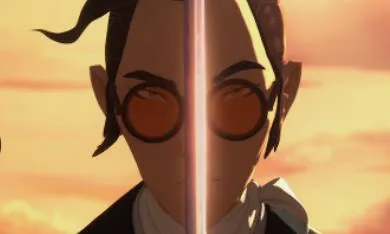
Mizu, the swordmaster at the center of Blue Eye Samurai, begins her journey with a rage so hot it has blinded her. She is chasing revenge, and she is not subtle about it. Every step she takes is aimed at a single target, and she treats anyone who gets in her way as an obstacle to cut down. That intensity is what makes her magnetic from the first episode. You cannot look away from someone who wants something that badly.
But here is the turn that makes Blue Eye Samurai more than a revenge thriller. That blinding anger never disappears. It cools. It settles. It becomes a controlled force, something she can aim instead of something that aims her. By the time the season reaches its later episodes, Mizu is still furious, still driven, but she is no longer ruled by the fire. She has learned to hold it. That shift is the backbone of her entire transformation.
What she does not notice happening along the way is quieter and more human. She discovers friendship. She discovers love. She does it without realizing it, the way most of us do. A shared meal, a stitched wound, a small act of loyalty from someone who had no reason to give it. Mizu does not sit down and reflect on these moments. She just keeps moving, and the people around her keep showing up, and somewhere in that rhythm she gains something she never asked for: dignity.
She also stays vulnerable. Blue Eye Samurai never lets the audience forget that Mizu is flawed, breakable, and capable of bad decisions. She is not a superhero with a sword. She bleeds. She misreads people. She pushes away the ones who care about her. That is exactly why she works. A character who can be hurt is a character you can love.
Alongside her, Akemi walks one of the hardest paths in the series. The two of them face the most brutal obstacles the story has to offer, and each obstacle leaves them stronger than the last. Neither of them gets an easy chapter. Both of them earn every inch of ground they gain. Watching them grow side by side is the real reward of the season.
Ringo: The Best Friend Who Never Complains
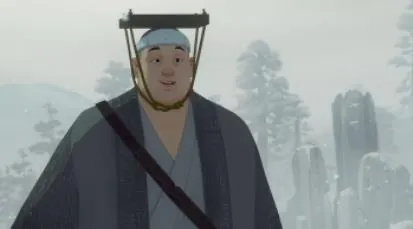
Ringo could have stayed put. He had a small tavern, a life that was neither good nor terrible, and a steady reason to keep pouring drinks for the rest of his days. Instead he walked away from all of it to follow Mizu, the mixed-race swordmaster at the center of Blue Eye Samurai, the animated Netflix series that premiered on November 3, 2023. His reason was simple and a little heartbreaking: he wanted to be the best in the world at something.
Watch him long enough and you start to suspect he already is, just not at the thing he imagined. Ringo cooks. He sews. He fights when it counts, guards the people beside him, and steps in exactly when he is needed and steps back when he is not. The moment that seals it comes when he refuses to nod along with Mizu. He tells her she is wrong, to her face, and he does it because he cares about her more than he cares about her approval. That is friendship in its hardest form, and Ringo makes it look easy.
There is one detail worth correcting, because a lot of viewers get it backwards. Ringo does not have hands, and contrary to the popular version of his story, the show presents this as the result of his hands being cut off rather than a condition he was born with. What matters more is what he does with that. He does not sulk in a corner or fold himself into a smaller life. He throws himself straight into the adventure and never once complains about the hand he was dealt, literally or otherwise.
He is a supporting character, and the series treats him like one, which is exactly why he works. The transformations of the main cast are not finished yet, and Ringo's clearly is not either. There is more coming from him, and the show has quietly promised us we will get to see it.
Taigen: From Ego to Something Bigger
When Taigen first appears in Blue Eye Samurai, which premiered on Netflix on November 3, 2023, he is a proud swordsman with a sharp tongue and a short fuse. Then Mizu, the series' mixed-race swordmaster protagonist, humiliates him in a duel. That moment could have been the end of his story. He still had a path to a comfortable life: marry Akemi, the daughter of a wealthy and powerful lord, and settle into money, status and ease.
He walked away from all of it. Instead of the soft life waiting for him, Taigen followed Mizu into the unknown, chasing a rematch to patch up his wounded pride.
What makes his arc worth watching is what happens to that motive. Somewhere along the road, the rematch stops mattering. The desire for revenge fades because Taigen discovers that there are things in life more important than a man's ego. He does not announce this with a speech. It happens quietly, the way real change usually does, one hard choice at a time.
By the final episode, the selfish, arrogant Taigen of the first episode is almost unrecognizable. The man who once measured himself only against other swords has learned to measure himself against something larger. His journey is not a single flash of insight. It is a slow accumulation, and that is exactly why it lands.
Akemi: From a Lord's Daughter to a Woman Who Wields Power
Akemi is the daughter of a wealthy, powerful lord, and she is the character who starts her journey with the least certainty and the hardest conditions of anyone in Blue Eye Samurai. She had a marriage waiting for her, a life of comfort where she could have anything she wanted. She ignored all of it and walked straight into nothing.
At first, love is the engine. It drives her choices, pushes her past fear, makes the reckless decisions look almost reasonable. But somewhere near the end of the story, that motivation quietly loses its meaning. It does not vanish in a single scene. It just stops being enough.
What makes Akemi fascinating is the texture of her change. She goes from a desperation so complete that she would work in a brothel without blinking, to something far more measured. The shift happens so gradually you barely notice it. One episode she is a rich father's ornamental daughter, a gift to be handed to a lord. The next, she has discovered she can take power into her own hands and direct it. She chooses that path.
She stands alongside Mizu as one of the smartest characters in the series. Her growth and her journey are, like Mizu's, among the hardest in the whole story. The difference is that Akemi's transformation is not a single cathartic moment. It is an accumulation, a slow gathering of events and thoughts that finally tips into change.
Contrary to the popular version, Ringo was not born without hands. The series presents his hands as having been cut off or removed, not missing from birth. That correction matters because it changes what his endurance means. He still never complained once, still followed Mizu into the unknown, still cooked, sewed, fought, protected, and stood up to his friend when his friend was wrong. Akemi's arc carries a similar weight of quiet resolve.
Why the Transformations Feel Earned, Not Sudden
In Blue Eye Samurai, which premiered on Netflix on November 3, 2023, nobody wakes up enlightened. That is the whole trick of the thing. The show refuses the catharsis moment, and if you want to know what that term even means here, it helps to know that catharsis is an Ancient Greek idea, described in one review as a kind of spiritual transformation or purification from evil, an instant flash of enlightenment rather than a slow grind.
Blue Eye Samurai does the opposite. Each episode builds on the one before it, so the first season feels less like a run of separate stories and more like one long accumulation. Nothing happens in a single moment of awareness. Events pile up, thoughts pile up, and the change is simply the sum of that pile. A transformation planted early may not surface until much later, and when it does, you recognize it because you watched it being built.
This is also why the characters never feel shallow. Mizu, Ringo, Taigen, and Akemi all carry real depth, and the show keeps a deliberate distance from parts of their pasts. We see enough to understand why they behave the way they do, and we are left to guess at what we cannot see. That gap is not laziness. It is the space where the audience does its own work.
So the transformations land because they were never really sudden. They were earned in small, unglamorous increments, and the show trusts you to be paying attention the whole time.
Final Thoughts: A Standout Netflix Production
Every so often Netflix lets something genuinely great slip through, and Blue Eye Samurai, which premiered on November 3, 2023, is exactly that kind of arrival. The reviewer put it plainly: sometimes the platform's head takes a knock and out falls a gem like this one. While it is sitting there, available, do not walk past it.
What makes the series land is not one showy moment but the accumulation. Episode by episode the story builds on what came before, so nothing happens through a sudden flash of awareness. Events and feelings pile up, and the change that follows is the product of that pile. The transformations of Mizu, Ringo, Taigen, and Akemi are not delivered in a single instant of insight; they arrive slowly, the way real people change.
That patience is the whole point. A story about finding yourself lives or dies on whether the characters actually turn into someone new, and Blue Eye Samurai lets nearly every one of them do it in a way that feels earned and satisfying. The reviewer's advice is simple. Watch it while it is there.

Frequently asked questions
What is Blue Eye Samurai about?
Blue Eye Samurai is an animated Netflix series that premiered on November 3, 2023. It follows Mizu, a mixed-race swordmaster, on a revenge-driven journey of self-discovery. The story blends brutal action with deep character transformation, and its first season earned widespread praise from critics and viewers alike.
Who are the main characters in Blue Eye Samurai?
The protagonist is Mizu, a mixed-race swordmaster driven by revenge. Other key characters include Ringo, a loyal and resilient companion; Taigen, a proud swordsman tied to her past; and Akemi, the daughter of a wealthy, powerful lord. Each character undergoes a meaningful arc across the first season.
Why is Blue Eye Samurai considered a standout Netflix series?
Blue Eye Samurai stands out because it combines striking, unique visuals with genuine depth across its entire cast. Rather than resting the whole story on Mizu alone, the series gives nearly every character a satisfying transformation. Its first season, released on November 3, 2023, drew consistently strong reviews from a wide range of viewers.
How does Blue Eye Samurai handle character transformation?
Blue Eye Samurai builds transformation gradually rather than through sudden revelation. Events and realizations accumulate episode by episode, so a shift planted in one episode surfaces much later in another. Mizu's blinding rage never vanishes; it simply becomes a controlled force. Characters stay layered with vulnerability rather than becoming invincible.
Did Blue Eye Samurai receive positive reviews from critics?
Yes. The animated series, which premiered on Netflix on November 3, 2023, earned enthusiastic reviews from a broad range of viewers and critics. Its blend of distinctive animation, complex characters, and emotional depth made it one of the year's most talked-about animated releases, and its first season was widely praised. Editorial note: Details that remain unconfirmed, including specifics of future seasons, are presented here as reported rather than settled fact.
Got a take on this? Add your voice to the conversation below →
No comments yet. Be the first.