Gerçek Kesit: Turkey's Strangest Cult TV Show
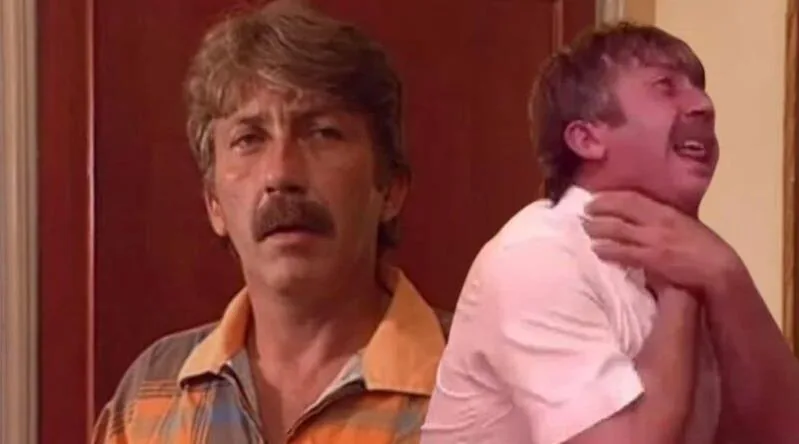
Gerçek Kesit was a Turkish true-crime reenactment series that reportedly ran on Flash TV between 1993 and 2006, dramatizing real events with a cast of mostly non-professional actors. It became one of the strangest and most beloved pieces of Turkish television. Week after week, viewers watched ordinary people reenact stabbings, family feuds, and neighborhood tragedies with a sincerity that no polished drama could match. The show turned its limitations into a language of its own, and decades later people still quote it, remix it, and argue about their favorite episode.
Gerçek Kesit was a Turkish true-crime reenactment show that reportedly aired on Flash TV between 1993 and 2006. It used amateur actors, minimal budgets, and real reported events. Its cast became famous under nicknames, and a humble çekyat sofa bed turned into the show's most recognizable prop and running joke.
- Gerçek Kesit reportedly aired on Flash TV, a small Istanbul-based station, from 1993 until 2006.
- The series dramatized real crimes and accidents, often with people who had no formal acting training.
- Cahit Kaşıkçılar was reportedly known as Sarı Bıyık, one of the show's most quoted performers.
- Mehmet Vanlıoğlu was reportedly nicknamed Beyaz Çorap and Beyaz Öfke by viewers.
- The çekyat, a folding sofa bed common in Turkish homes, appeared so often it became the show's unofficial symbol.
The Show That Made Poverty Look Like Theatre
Gerçek Kesit is one of the strangest things Turkish television ever put on air, and it is also one of its most cult productions. According to the show's fan records, it ran on Flash TV from 1993 until around 2006. Those dates are contested, but the reputation is not: this is the series people still argue about in comment threads two decades later.
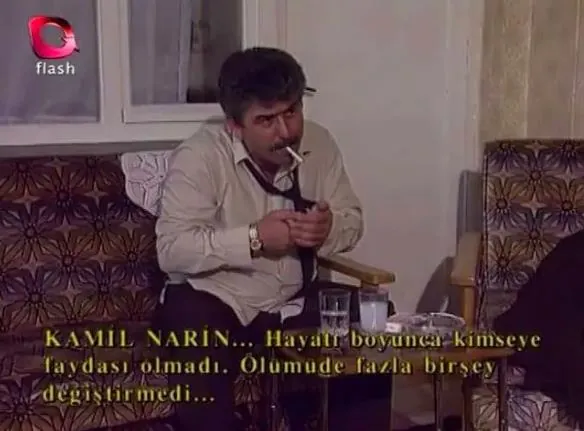
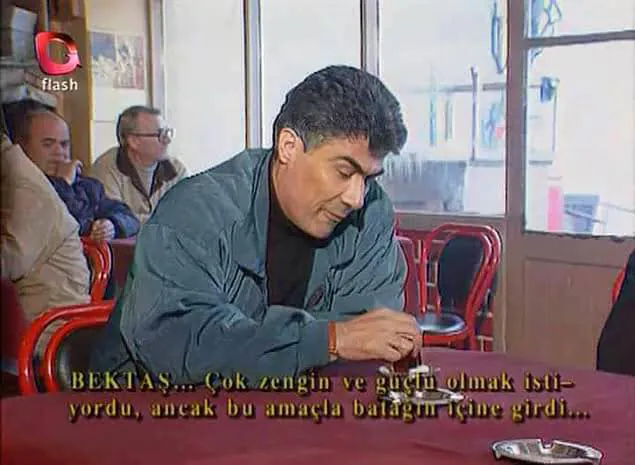
What makes it so hard to shake is the texture. Episodes were reportedly shot after only two or three script readings and sent straight to editing, which is exactly why the finished product feels so raw and unpolished. There are no polished sets here, no careful lighting. There are brown sofas, pink curtains next to green walls, glasses of tea and bottles of beer left half finished on the table. If you want to know how Turkey's low and middle income households actually lived through the 1990s, you could do worse than pull up a random episode and just watch the rooms.
I will admit my bias up front. I cannot claim to be an expert at the job I have done for fifteen years, but on the subject of Gerçek Kesit I am the real thing. It is closer to an obsession than a hobby. I have traveled to Bursa more than once just to meet the actors and drink a few beers with them. I have walked the streets where they shot. I bought CDs of episodes that could not be found anywhere online a decade or so ago, straight from the man fans call Beyaz Çorap Beyaz Öfke.
That is the part outsiders never quite get. The people who made this show are not distant celebrities. They are men and women with nicknames, and the nicknames are half the legend. There is Sarı Bıyık, the Yellow Mustache. There is Kaleci Saçlı Adam, the goalkeeper-haired man, named for a mullet. There is Azgın Semih, whose episode ranks among the most watched and most shared of the entire run. Fans trade these names the way other people trade cast lists.
The episode count is where the story gets slippery. You will see a figure of 453 episodes floating around online, and I do not believe it. As far as I know there are somewhere in the 270s of the genuine Gerçek Kesit, a number I heard from Sarı Bıyık himself and one that cannot be independently verified. The episodes shot after 2000, things like "Hata Kimde" and "Sekreter," were reportedly written by Mehmet Vanlıoğlu, and plenty of fans file them under fake Gerçek Kesit. They have nothing to do with the 1990s version.
Then there is the way the show handled money, or the absence of it. It never bothered to show you the decor, the location, the costumes. It told you instead. A young woman straightens the cover on the divan, fluffs the cushions, and complains out loud that she is sick of being poor and wants a rich husband. Later she gets one, sits down in her new home and announces how comfortable she is, while the camera stays on an eighty square meter apartment with a stove for heat, one cheap three-seat couch and a small television. Her parents come to visit and praise the place anyway, admiring the stove and the couch. We were told it was a rich house, so we accept it. The original account compares that trick to Dogville, a reading that belongs to the writer rather than to any settled critical verdict.
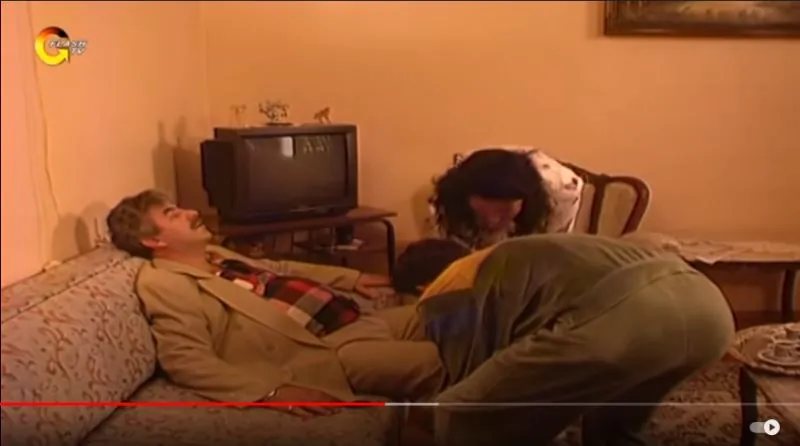
And underneath all of it, the çekyat. The sofa bed. Every episode carries some tension unfolding on or around one, and those are the moments that make Gerçek Kesit what it is. A single sin, an excess, a paroxysm of emptiness and meaninglessness, all of it staged on a fold-out couch. A line attributed to Bukowski says that being human was a disgrace, that there were so many things happening, though it cannot be traced to a specific verified work. This furniture is an unexaggerated actor in that disgraceful world.
453 Episodes, or 270-Something? The Number Nobody Can Agree On
Type "Gerçek Kesit kaç bölüm" into any search bar and you will get a confident answer: 453 episodes. Ask someone who actually sat through the broadcasts, and you get a shrug. The truth is that neither number can be verified, and the 453 figure floating around online is widely disputed.
Here is where the smaller number comes from. According to the original account, the creator Cahit Kaşıkçılar, the man fans know as "Sarı Bıyık," told the writer there are around 270-something real Gerçek Kesit episodes. That is a claim passed along by one person, not a catalogued archive, so treat it as the story goes rather than gospel. What makes it more persuasive than the internet's tidy 453 is the second half of the argument: not everything filmed under the Gerçek Kesit banner belongs to the same show.
The Episodes Fans Refuse to Count
After 2000, installments like "Hata Kimde" and "Sekreter" were reportedly written by Mehmet Vanlıoğlu. Fans who grew up on the 1990s run reportedly call these "fake Gerçek Kesit," and they insist the later material has nothing to do with the version they love. Whether that verdict is fair is another question, but it explains the gap. If you lop off the post-2000 output, the count shrinks fast, and a number in the 270s starts to look plausible.
The Two Competing Counts
| Figure | Where It Comes From | Status |
|---|---|---|
| 453 episodes | Circulated online | Unverified |
| 270-something | Attributed to Sarı Bıyık | Reportedly |
So which one do you believe? Neither, strictly speaking. What you can say is that the low number has a named source and a reason behind it, while the high number has neither. For a series this beloved and this badly documented, that is about as close to an answer as anyone gets.
Sarı Bıyık, Beyaz Çorap Beyaz Öfke ve Yapışıp Kalan Lakaplar
Gerçek Kesit'in oyuncu kadrosu, dizinin kendisi kadar tuhaf bir isimler galerisidir. Fanlar oyuncuları gerçek adlarıyla değil, lakap ve replikleriyle hatırlar. Bu yüzden dizinin kültürel hafızası, bir oyuncu listesinden çok bir takma adlar sözlüğüne benzer.
Serinin yaratıcısı olarak anlatılan isim Cahit Kaşıkçılar'dır ve ona "Sarı Bıyık" denir. Anlatıya göre lakabı, seriyi yaratmış olmasından değil, doğrudan bıyığının renginden gelir. Dizinin kaç bölümü olduğu sorusunun cevabını da yine ona atfederler; internette dolaşan 453 rakamına inanmayan fanlar, gerçek sayının 270 küsur olduğunu söylerken "Sarı Bıyık söylemişti" diye ekler.
Mehmet Vanlıoğlu ise "Beyaz Çorap Beyaz Öfke" olarak bilinir. İki ayrıntı onu ele verir: konuşurken "y" yerine "ğ" kullanması ("yapmağa gidiyorum", "içmeğe gidiyorum" gibi) ve neredeyse her bölümde beyaz çorap giymesi. Yazar, yıllar önce internette bulunmayan bölümlerin CD'lerini bizzat ondan satın aldığını anlatır. Kiralık Katil bölümünde bu beyaz çorapları bolca görmek mümkündür.
Cevat Dinçer'e "Kaleci Saçlı Adam" derler. Döneme özgü mullet modeli saçı ve abartılı vurgulamalarıyla tanınır. Saçıyla değil oyunculuğuyla öne çıktığı Korkunç Emir bölümü, onu izleyicinin gönlüne yerleştirmiştir.
Nevzat Çiftçi'nin lakabı "Çakma Mükremin". Tipi ve konuşmalarıyla Mükremin'e benzediği için bu adı almış. Anlatıldığına göre bu lakabı hiç sevmiyor.
Murat Kayabaş, "Azgın Semih" olarak anılır ve belki de dizinin en ünlü yüzüdür; en çok izlenen ve paylaşılan bölümlerden birinin payı ona aittir. Kendi beyanına göre okul harçlığını çıkarmak için oynamıştır. Lakabı efsane Denge bölümünden gelir.
Erdal Parmaksızoğlu ise "Cesi" adıyla dillerde dolaşır. "Benim adım Cesi, keserim ötmeyen sesi" repliği ona atfedilir. Lakabı, pezevenklik yaptığı Baltalı İnfaz bölümünden gelmektedir.
Bu isimlerin hepsi, bir diziyi değil bir mahalleyi hatırlar gibi anılır. Gerçek Kesit'in hafızası da tam olarak burada yaşar: repliklerde, lakaplarda ve o beyaz çoraplarda.
The Rest of the Roster: Playboy Ercan, Doğu Alman Güllecisi, and a Real Hababam Sınıfı Cameo
Once you fall into Gerçek Kesit, the nicknames start to feel like old friends. Fans of the cult series have handed out monikers to almost every face that wandered across its low-budget sets, and the cast list reads like a neighborhood roll call. Ufuk Durmaz, remembered by many as the İsmet who kept inviting his buddy out to drink in "Ümitler Tükenirse," carries the tag "Playboy Ercan," a name that reportedly traces back to "Ölesiye Sevgi," where his character juggled several girls at once.
Çiğdem Alço reportedly earned "Doğu Alman Güllecisi" for her turn in the rich-girl-poor-boy story "Hasretim," a nickname said to come from her blonde hair and sturdy build. Emel Iyisöyler is "Safinaz," remembered from "Töre," where she unwittingly sets a trap for the mullet-haired man. Ahmet Karakman reportedly became "Führer Cevat" through his role as a mayoral candidate in "Tutku." Ayça Öztürk, who reportedly played the Hacer responsible for her husband's death in "Bedel," is known as "Hacer'in Gazabı."
Çetin Azer Aras holds one of the strangest titles of all: "The Duygusal Manifaturacı," from "Kaderin Cilvesi," where his character falls for a woman at first sight, talks her into becoming a second wife, and tells his own spouse to sell herself. Fans also call him "iğrenç bir koca," which, honestly, fits better. Şermin Salgıncı Çağlayan rounds out the group as "Şeytan/Pirana Bayan" for her standout nastiness in "Şeytan."
Then there is Mesut Hakyemez, "Matkap Rıza," who reportedly won the nickname in "Ormanda İnfaz." As the story goes, he also turned up in the Hababam Sınıfı film series. According to the original account, the man in the eagle-collar shirt reportedly visible in the final scene of "Hababam Sınıfı Sınıfta Kaldı," at the 3:39 mark, is Hakyemez himself.
The Çekyat Is the Real Star of Gerçek Kesit
Watch enough Gerçek Kesit and you stop noticing the actors. You start watching the furniture. The çekyat, the fold-out sofa bed that turns a living room into a bedroom every night, shows up in nearly every episode, and it is almost always where the worst things happen. A confession, a slap, a slow collapse into tears: the sofa bed is the stage.
What makes this so strange is that the show never actually builds a world for you. It tells you about one. The drama works through telkin, through suggestion, so a character can announce she has finally married rich, sink into a chair, and sigh about how comfortable she is, while the camera sits in an 80-square-meter flat with a soba stove for heat, a single three-seat couch, and a 55cm television in the corner. Her parents arrive to admire the place and praise the very same iron stove and the very same couch. Nobody breaks character. The suggestion does all the work.
The Brown Couches, the Pink Curtains, the Green Walls
You cannot separate the çekyat from everything standing around it. Brown couches. Pink curtains hanging beside them. Green paint on the walls. Half-finished glasses of tea and half-drunk beers left on whatever flat surface is closest. A poverty the show never explains, only radiates. And in the middle of it, the sofa bed, unfolding into the emotional center of the room.
That is where the show's most intense moments land, and they land hard. A single sin, an excess, a spasmodic jolt of feeling, and above all a heavy, almost theatrical emphasis on emptiness and meaninglessness. The çekyat becomes the decor for that whole spectacle. It shows us a world where good and evil sit apart from each other, where every extension of goodness pushes back some share of the bad. Or so the original account frames it, borrowing a line attributed to Giorgio Agamben about how the only thing we seek in others is the excitement left misunderstood in ourselves. That quotation does not match any reliably known Agamben passage, so treat it as flavor rather than citation.
Still, the image holds. The sofa bed is the lead actor. Everything else in the frame is there to support it, and a life that looks a lot like being human starts unfolding on top of it.
Amateur Actors, Black-and-White Morality, and 1990s Turkish Life
The performances in Gerçek Kesit are amateur, and according to the original account that was the whole point. Scripts were reportedly handed to the cast on the day of shooting, with two or three readings at most before the cameras rolled and the tape went off to editing. Nobody was trained, nobody had time to build a character. What that produced instead was a kind of raw naturalness you cannot fake.
The writing matched the acting: black and white, no grey. There is no manipulative middleman in these stories, no charming villain who makes you sympathize. Good is good. Evil is hardcore evil, and it gets what it deserves. The show never bothers to build a rich house. It just tells you this is one, and you believe it. In that sense the original account compares it to Dogville, though the origin of that comparison cannot be confirmed.
What it really documents is 1990s lower- and middle-income Turkish life, and it does so almost by accident. CRT monitors with physical screen savers clipped to the glass. Brown armchairs standing next to pink curtains and green walls. Half-finished glasses of tea and beer left on every table. Poverty that is not a plot point but a permanent condition. And neighbours who keep wandering into the middle of scenes, framed in shadow like witnesses, because the show would rather suggest a room than build one.
The author now opens random episodes purely for nostalgia, and is watching "Kaybolan Gençliğim" right now, stuck on the fact that the exact physical screen saver on the office monitor is one he used to own. He loves the show, brown couches and all.
"Being human was a disgrace; there were so many things happening."
One more literary flourish gets attached to the çekyat, the pull-out sofa that appears in nearly every episode. It is credited to Immanuel Kant, that knowledge arises from the mind's effect on things, which actually inverts Kant's epistemology, since he held that knowledge comes from the mind's synthesis of sensory intuitions. Treat it as the author's mood, not as a citation.
Frequently asked questions
Gerçek Kesit neydi ve neden kült bir Türk dizisi sayılıyor?
Gerçek Kesit, 1990'larda Türk televizyonlarında yayınlanan, düşük bütçeli ama tuhaf biçimde unutulmaz bir dram dizisiydi. Yayınlandığı kanal ve bitiş tarihi kesin olarak doğrulanamıyor, ancak anlatılanlara göre 1993 ile 2006 arasında Flash TV'de yayınlandı. Onu kült yapan şey, fakirliği ve gerilimi dekor yerine telkinle hissettiren kendine özgü anlatımıydı.
Gerçek Kesit'i kim yarattı ve başlıca oyuncuları kimlerdi?
Anlatılanlara göre diziyi Cahit Kaşıkçılar yarattı ve "Sarı Bıyık" lakabıyla anıldı. Kadroda Mehmet Vanlıoğlu, Cevat Dinçer, Nevzat Çiftçi, Murat Kayabaş, Erdal Parmaksızoğlu ve Mesut Hakyemez gibi isimler vardı. Bu oyuncuların çoğu, gerçek adlarından çok takma lakaplarıyla hatırlanır.
Gerçek Kesit'te çekyat neden bu kadar önemliydi?
Çekyat, dizinin duygusal merkeziydi. Neredeyse her bölümde bir çekyat üzerinde gerilim, kavga ya da çöküş sahnesi yaşanırdı. Bu mobilya, karakterlerin yoksulluğunu, sıkışmışlığını ve bastırılmış öfkesini tek bir nesnede topluyordu. Bu yüzden çekyat, dizinin en tanınan simgesi hâline geldi.
Gerçek Kesit gerçekten amatör oyunculuk ve düşük bütçeyle mi çekildi?
Anlatılanlara göre oyuncular amatördü ve metinler çekim günü ellerine veriliyordu. En fazla iki üç okumadan sonra sahne çekilip montaja gönderiliyordu. Bu aceleci yöntem, yapıma o ham ve doğal dokusunu kazandırdı. Bütçenin düşüklüğü de mekânlardaki sade eşyalardan açıkça belli oluyordu.
Gerçek Kesit oyuncuları başka ünlü Türk filmlerinde göründü mü?
Anlatılanlara göre Mesut Hakyemez, Hababam Sınıfı serisinde de rol aldı. Hababam Sınıfı Sınıfta Kaldı filminin sonundaki müsamere sahnesinde görülen kartal yakalı kişinin o olduğu söyleniyor. Bu ayrıntı kesin olarak doğrulanamıyor, ancak dizinin hayranları arasında sıkça anlatılıyor.
Gerçek Kesit'i bugün nasıl izleyebilirim?
Gerçek Kesit'in YouTube kanalı bugün hâlâ aktif ve 49.8K aboneye sahip. "Öfke" ve "Kiralık Katil" gibi bölümler bu kanalda izlenebiliyor. 1990'lar nostaljisi yaşamak isteyenler için dizinin bölümlerine ulaşmanın en kolay yolu bu kanal. Editorial note: Details that could not be independently confirmed, including some broadcast dates and nickname origins, are presented here as reported rather than as settled fact.
Got a take on this? Add your voice to the conversation below →
No comments yet. Be the first.