Bird Egg Shape Formula: The Math Behind the Point
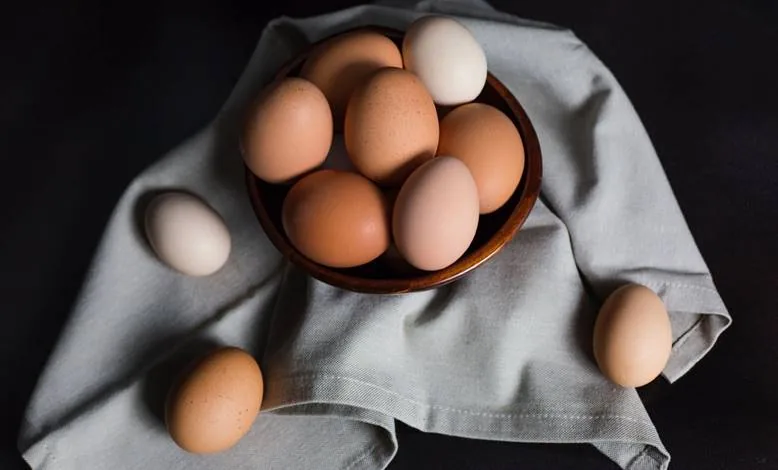
The bird egg shape formula finally arrived when a team of researchers published an equation that describes the outline of any bird egg with just four numbers. For centuries, scientists could describe a chicken egg or a hummingbird egg, but they could not explain why one came out pointy and the other nearly round. The answer, it turns out, has less to do with the shell than with the muscles that pushed it through the oviduct. That single insight ties together evolution, anatomy, and a surprisingly elegant piece of geometry.
Researchers published a universal formula that captures any bird egg's shape using four parameters. The team argued that the pointy end forms because of how the egg rotates and presses against the oviduct muscles during its journey, not because of the shell itself. This helps explain why bird eggs vary so widely while reptile eggs stay rounder.
- The formula was published by a team of mathematicians and biologists studying egg geometry.
- It uses four parameters to describe the outline of any bird egg, from a hummingbird's to an ostrich's.
- The researchers proposed that the egg's pointy end results from pressure and rotation inside the oviduct, where muscles shape the soft shell before it hardens.
- Reptile eggs, which are often rounder, develop without the same muscular shaping process, offering a contrast that supports the theory.
- The work has potential applications in agriculture and in studying how egg shape might relate to embryo development.
The Egg That Refused to Be a Circle
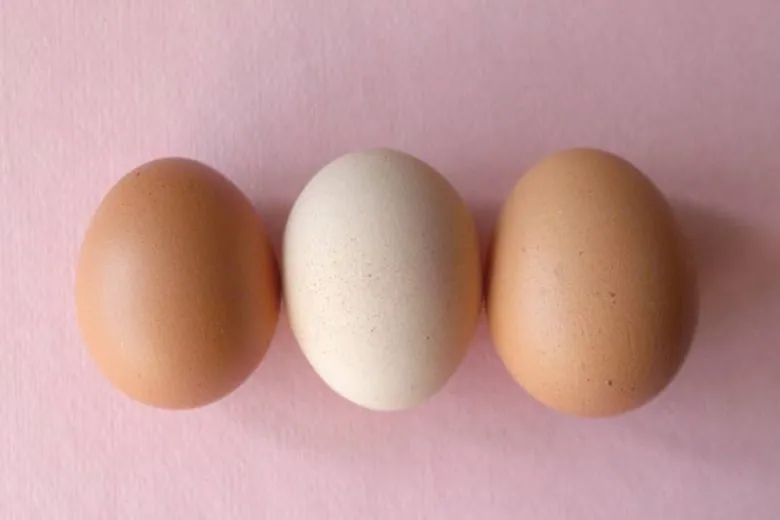
Pick up a chicken's egg and hold it sideways. Most people will call it an oval, and a few will say ellipse. Both answers are wrong. A bird egg is piriform, which is the formal word for pear-shaped. The narrow end and the fat end are not mirror images, and that lopsidedness is not a flaw. It is the entire design.
Start with the scale of the thing. Earth carries roughly 10,000 bird species, and every one of them lays an egg shaped to pass out of a body. That is a tight constraint. The shell has to be strong enough to carry the weight of what is inside it, and it also has to be small enough to fit through the oviduct on the way out. Those two demands pull in opposite directions, and the piriform shape is where they meet.
Then there is the nest. A bird egg shape formula is not something the bird calculates, but the geometry does quiet work. The pointed end tucks in beside the rounded end of its neighbor, so a clutch settles into a tight cluster with very little dead air between the shells. The proposed advantage, and it is a hypothesis rather than established fact, is that this packing cuts heat loss and squeezes the most out of limited nest space. Efficiency, solved without anyone thinking about it.
Which raises the obvious question. Why not a sphere? A sphere stacks beautifully, so the packing argument alone does not explain the pear.
The second advantage does. Give an egg a nudge across a flat table and it will not run off in a straight line. It tips onto its narrow side, traces a curved path, and loops back to a point close to where it started. A perfectly round egg would roll away and be gone, lost under the furniture or down a slope. The piriform egg physically cannot do that. It walks itself home.
So the shape is doing at least two jobs at once. It keeps the clutch together, and it keeps any escapee from escaping. Roughly 10,000 species, one silhouette, and a curve that refuses to travel straight.
How Muscles Carve an Egg Inside the Oviduct
Here is the part most people get backwards. The popular assumption is that a hen lays an egg pointed end first, sliding out like a little torpedo. The account this story draws on says the opposite: the rounder, wider end comes out ahead of the narrow one. That detail matters, because it sits awkwardly against what reliable descriptions of egg-laying actually report, which is that the pointed end emerges first. So take the round-end-first version as one telling, not as settled biology.
What the same account does get right is that the egg's two mismatched ends are not an accident of genetics. They are pressed into the shell by the muscles lining the exit path, the muscular tube the egg travels through on its way out of the bird's body.
The Squeeze That Makes a Point
According to that account, the egg starts its journey as a near-perfect sphere the moment it enters the oviduct. Then the circular muscles along that tube go to work in sequence. The muscle ahead of the egg stays relaxed while the muscle behind it contracts, and the passage narrows as the egg moves through. Each squeeze pushes the egg forward and, in the telling, gradually reshapes a round ball into a cone. The shell hardens somewhere along this trip, so the egg arrives outside already set in its final form.
That mechanism is worth flagging as one description rather than textbook fact. The specific spherical-then-conical transformation driven by muscle contraction is not a standard, well-established account of how egg shape forms.
The same passage draws a comparison with reptiles, which reportedly lack this shaping machinery, and so tend to lay eggs that stay closer to spherical. That is a tidy contrast, and it is also an oversimplification: reptile eggs do often run rounder, but the claim that they simply lack the mechanism is not firmly established.
Notice what this leaves open. If shape is sculpted by muscle, then shape is something the body does to the egg, not something the egg carries in from the start. Which raises the question the mathematicians could not let go of: can you write that shape down as an equation, the same way you would for a circle or an ellipse? That is where the bird egg shape formula comes in.
Four Shapes, One Missing Formula
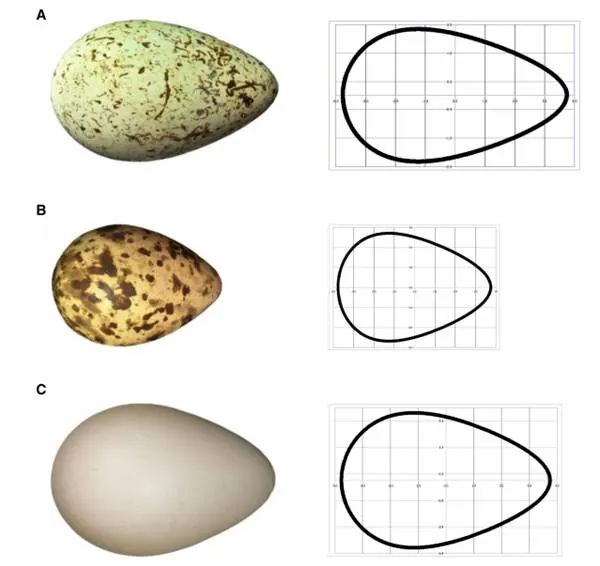
Every egg shape in nature can be sorted into just four geometric families: the sphere, the ellipsoid, the oval, and the piriform, the pear or cone shape that looks like a teardrop standing on its fat end. Three of those four had clean mathematical definitions, and each one was built by extending the formula before it. The fourth, the piriform, had no formula at all. That was the hole in the map.
Think about why the gap mattered. A sphere is the simplest solid you can write down. Stretch it along one axis and you get an ellipsoid. Loosen the symmetry so one end grows rounder than the other and you have an oval. Then there is the piriform, where one end tapers to a genuine point. For years, mathematicians, engineers and biologists kept trying to pin that last shape to an equation, and the attempts kept failing. The shape was right there in every nest, and the algebra to describe it was not.
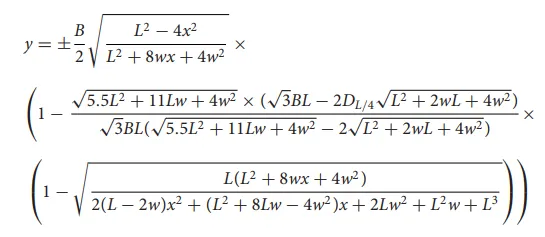
What finally cracked it was a change of perspective rather than a brand new tool. Researchers went back to the oval formula and reinterpreted it, bending its terms to allow the asymmetry that defines a piriform egg. The result is what we now call the universal bird egg shape formula, and it rests on four measurable parameters: the egg's length, its maximum width, the vertical axis shift, and the diameter taken at one-quarter of the egg's length. Four numbers, and the curve falls out.
The Four Parameters
- Egg length
- Maximum width
- Vertical axis shift
- Diameter at one-quarter of the egg's length
The team behind the work was led by Darren Griffin, a Professor of Genetics, and the group reported that the equation can theoretically describe any bird egg found in nature. That is a strong claim, and it is worth sitting with. Roughly 10,000 bird species exist on Earth, and each one lays an egg with its own proportions. A single expression with four inputs is said to cover all of them.
Contrary to the popular version of this story, the formula did not come out of a Ukrainian institute. It was developed by researchers at the University of Kent. The egg-shape paper appeared in the Annals of the New York Academy of Sciences around 2017.
There is a quieter payoff here too. Once a shape has a formula, you can measure it, compare it, and predict it without cracking anything open. The bird egg shape formula turned a shape everyone recognized into a shape anyone could calculate.
Who Actually Solved It, and What the Formula Is For
Ask most people who cracked the bird egg shape formula and you may hear about a research institute in Ukraine. That attribution does not hold up. The universal equation for bird egg shape came out of the University of Kent, and the team was led by Darren Griffin, a Professor of Genetics there. The four-parameter equation, built on egg length, maximum width, vertical axis shift, and the diameter at a quarter of the egg's length, is the work attached to Kent, not to any Ukrainian biological sciences institute.
One more date needs correcting. You will sometimes see the paper placed in the Annals of the New York Academy of Sciences in December 2021. The egg-shape study actually appeared in that journal around 2017, and the later date simply does not match the record.
What Griffin Said the Formula Is For
Griffin framed the result as more than a geometry puzzle. In his words, biological and evolutionary processes like egg formation should be studied through mathematical description, because that is the foundation of evolutionary biology research. He also pointed to practical reach: the formula could apply across disciplines, especially the food and poultry industries, and could serve as a push for further egg-inspired research.
One account holds that the equation took shape while the team was studying differences between eggs holding male and female embryos. That same account suggests the formula might one day help determine a bird embryo's sex without damaging the egg. Treat that as a hoped-for application rather than an established method. No validated, non-destructive sexing technique rests on this equation yet.
What Comes Next
The researchers' stated next goals are concrete. They want a formula for egg volume and surface area, and they want to map how eggs of different species relate to shell thickness. Mathematical descriptions of egg shapes are already in use across food research, mechanical engineering, agriculture, biological sciences, architecture, and aviation, so a universal equation tightens work that was previously done piece by piece.
Frequently asked questions
Why are bird eggs pointed at one end and round at the other?
Bird eggs are piriform, meaning pear-shaped: one end is blunt and the other tapers to a point. That asymmetry makes an egg roll in a curve rather than a straight line, so it tends to circle back toward where it started instead of tumbling out of the nest.
What four parameters define the universal egg shape equation?
The bird egg shape formula rests on four measurements: the egg's length, its maximum width, the shift of its vertical axis, and the diameter taken at one quarter of the egg's length. Together these four numbers let the equation describe, in theory, the outline of any bird egg.
Why are reptile eggs rounder than bird eggs?
One account holds that reptiles lack the muscle mechanism that presses bird eggs into a conical form, which is why their eggs stay closer to a sphere. Treat that as a proposed explanation rather than settled science, since it is a simplification of a much messier biological picture.
How does an egg get its cone-like shape inside the oviduct?
As one account tells it, the egg enters the oviduct roughly spherical, then muscles along the exit path contract behind it while relaxing ahead of it, pushing the egg forward and molding it into a cone. The shell hardens before laying. This mechanism is reported, not firmly established.
What happens when a pointed egg rolls on a flat surface?
It traces a curved, circular path instead of a straight one, and it stops close to where it began. That piriform geometry is what keeps an egg from simply rolling away across a flat surface, a small physical quirk with real consequences for a nest sitting on a ledge.
Could egg shape math help determine an embryo's sex without cracking the egg?
One account says the formula grew out of research into differences between eggs holding male and female embryos, and that sexing a chick without damaging the shell is a hoped-for application. It is not a validated method, so treat it as a research direction rather than a working technique.
Who led the research team behind the formula?
Darren Griffin, Professor of Genetics, led the team that developed the universal equation. Note that some retellings attribute the work to a Ukrainian institute, but the well-known bird egg shape formula comes from researchers at the University of Kent, and it was published in the Annals of the New York Academy of Sciences in 2017. Editorial note: Details that remain unconfirmed by the research team are presented here as open questions rather than settled facts.
Got a take on this? Add your voice to the conversation below →
No comments yet. Be the first.