Why Did Van Gogh Cut Off His Ear? The Real Story
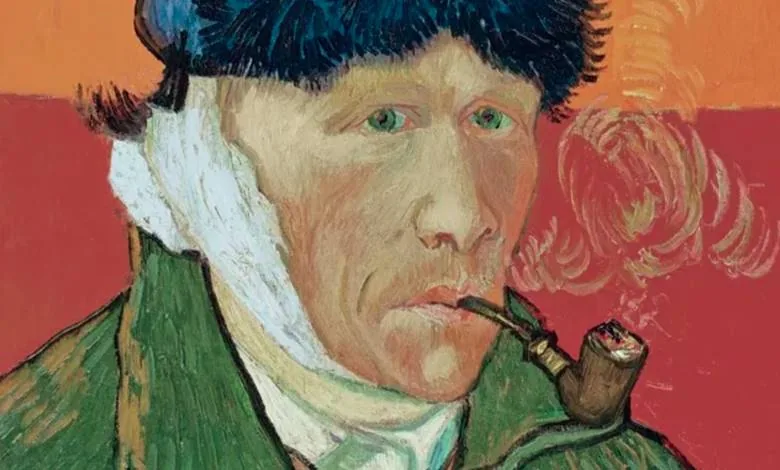
Why did Van Gogh cut off his ear? On December 23, 1888, in the southern French town of Arles, Vincent van Gogh severed part of his left ear after a violent quarrel with Paul Gauguin and a severe mental breakdown. He was 35 years old, and the episode would define how the world remembered him for more than a century. He had hoped to build a shared studio for artists in the south of France, and for a while it seemed that Gauguin's visit might make that dream real. Instead, the friendship collapsed in a single night of rage and despair that left him bleeding and hospitalized.
In December 1888, Vincent van Gogh cut off part of his left ear in Arles, France, after a heated quarrel with Paul Gauguin and a mental collapse. He was hospitalized, later entered the Saint-Paul-de-Mausole asylum, and continued painting until his death in 1890.
- Van Gogh moved to Arles in February 1888, hoping to establish a shared studio for artists in the south of France.
- Paul Gauguin arrived in Arles in October 1888, and the two painters worked together for about nine turbulent weeks.
- On the night of December 23, 1888, after a fierce argument, Van Gogh cut off part of his left ear and was taken to the Hôtel-Dieu hospital in Arles that same night.
- Gauguin left Arles shortly afterward and never saw Van Gogh again.
- In May 1889, Van Gogh voluntarily entered the Saint-Paul-de-Mausole asylum at Saint-Remy-de-Provence, where he painted some of his most celebrated works.
The Night Vincent van Gogh Cut Off His Ear
On the night of December 23, 1888, in the southern French town of Arles, Vincent van Gogh was 35 years old and in the middle of a severe mental breakdown. He picked up a razor and cut into his own left ear. He wrapped the severed piece in paper, carried it to a brothel in Arles, and handed it to a cleaning woman there, asking her to keep it carefully. That is the story you will find in most biographies, and even now the details shift depending on who is telling it.
Start with the part nobody disputes: the razor, the left ear, the age. According to the account pieced together in Steven Naifeh and Gregory White Smith's 2011 biography Van Gogh: The Life, the exact portion he removed is debated, with some versions describing the lower half and others something less than that. The same uncertainty hangs over the brothel. The recipient is usually described as a cleaning woman, though other retellings name a prostitute or a woman called Gabrielle.
What followed was just as strange. He walked home, collapsed from blood loss, and was taken to the Hôtel-Dieu, the town hospital in Arles, that same night. He did not wait until morning, contrary to a popular version of the story that has him waking up and seeking help the next day. Why the ear was never reattached is not firmly documented. The usual explanation is simply that too much time had passed, but no source pins that down with confidence.
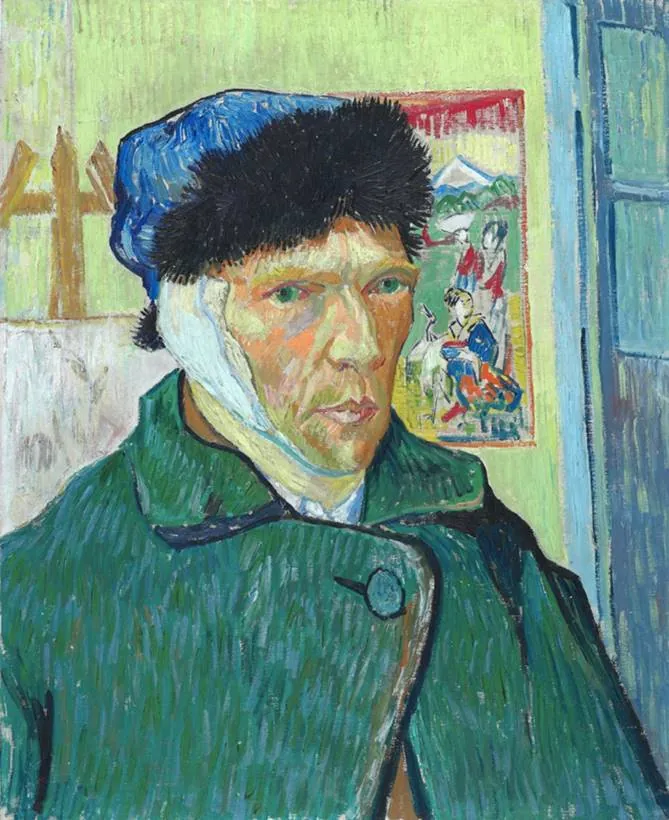
Two paintings came out of those weeks. He made Self-Portrait with Bandaged Ear and Pipe and Self-Portrait with Bandaged Ear in January 1889, after he left the hospital in early January. Both show him with the bandage wrapped around his head, and both are held today by the Van Gogh Museum in Amsterdam. A man who had just mutilated himself sat down and painted the wound with steady hands.
And yet he never wrote plainly about what happened that night. The letters he wrote afterward suggest a mind that had lost its grip on what it had done and said. So we are left with a razor, a paper parcel, a hospital bed, and two self-portraits, which is not much of an answer to the question of why did Van Gogh cut off his ear.
What Happened After Van Gogh Cut His Ear
Contrary to the popular version, Vincent van Gogh was not taken to the hospital the next morning. He was brought to the Hôtel-Dieu hospital in Arles the same night, December 23, 1888, after collapsing from blood loss at home. The severed piece of his ear traveled with him. The usual explanation for why doctors did not try to reattach it is that too much time had passed, though no source pins that down with confidence.
What followed was not a quick recovery. Van Gogh battled infection for a long stretch afterward, and his letters from those weeks show a man deeply confused about his own actions. He wrote that he was unsure what he had done or said during the breakdown. The fog did not lift quickly.
But by May 1889, he had made a decision that would shape the rest of his short life. He voluntarily admitted himself to the Saint-Paul-de-Mausole psychiatric hospital in Saint-Rémy-de-Provence, a former monastery turned asylum in the south of France. He stayed roughly one year, from May 1889 to May 1890, and the period became one of the most productive of his entire career. Roughly 150 paintings came out of that single year behind those walls.
In May 1890, he left Saint-Rémy and settled in Auvers-sur-Oise, a small town north of Paris, partly to be closer to his brother Theo and under the care of Dr. Gachet. He lived there only about nine more weeks. On July 27, 1890, he shot himself in the chest. Two days later, on July 29, 1890, he died from his wounds. He was 37 years old.
Why Did Van Gogh Cut Off His Ear? Theo's Engagement, Gauguin's Quarrel
The most widely accepted account places the ear-cutting on December 23, 1888, in Arles, in the aftermath of a violent quarrel with Paul Gauguin. Gauguin and Van Gogh had been sharing living quarters in the southern French town since October of that year, and the arrangement had soured steadily. Tension between the two painters mounted through the autumn, and by December Van Gogh's mental state had grown dangerously unstable. On that December night, according to the traditional account, he severed his ear in a moment of rage and breakdown.
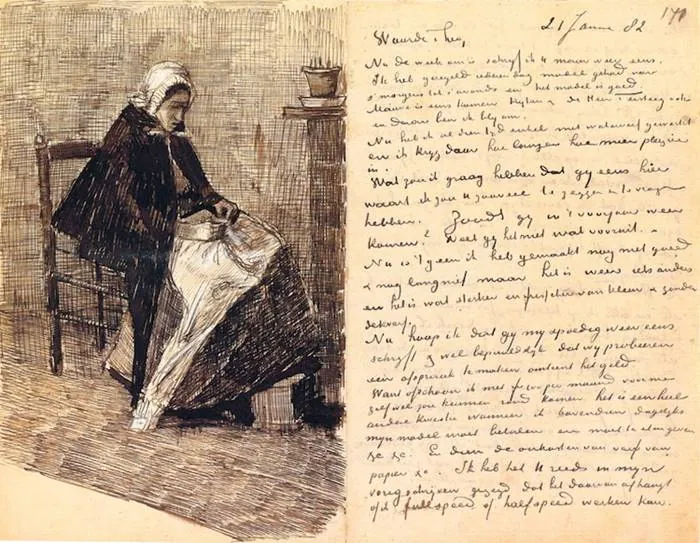
That is not the only explanation on the table, though. A second theory points across the Channel to Paris, and to a letter. Vincent and his brother Theo wrote to each other for roughly eighteen years, from 1872 until Vincent's death, and somewhere between 650 and 700 of those letters survive today. They are the reason we know so much about Vincent's inner life at all. Theo supported his brother through every financial crisis and every collapse, staying close through constant correspondence even when the two were far apart. One theory holds that a letter from Paris, reportedly dated December 23, 1888, carried the news that Theo had decided to marry a young Dutch woman named Jo Bonger, and that learning of the engagement helped push Vincent over the edge. The exact date and content of that letter are not firmly established, so treat this as one proposed thread rather than settled cause.
A third hypothesis is stranger and far more speculative. According to this line of thinking, Van Gogh's turmoil came from jealousy of the Roulin family, the household of the postman he had painted in Arles, and specifically from envy of the attention the Roulin children received. This idea has limited support and cannot be confidently confirmed as a documented theory. What all three explanations share is the same underlying picture: a man whose psychological balance was already shattered, living in close quarters with a combative companion, absorbing news from a brother he depended on. No single trigger has ever been proven, and it is entirely possible the real cause was all of these pressures arriving at once.
Borderline Personality Disorder, Absinthe, and the Silence Around Van Gogh's Mental Illness
No doctor ever wrote a definitive diagnosis for Vincent van Gogh. Nobody signed a chart naming what he had, and the condition that drove him to Arles in 1888 remains genuinely unknown. What we do have is a long list of proposals, a family that preferred to talk about paintings, and historians who spent decades doing the same.
His heirs and the first generation of art historians made a deliberate choice: celebrate the work, stay quiet about the mind. The claim that his psychological condition went untouched by academic research until the 1950s is shaky, though. Some early interest existed well before mid-century, so the timeline is not as clean as it is sometimes told. It just was not the kind of interest that made it into the family-sanctioned biographies.
You will hear borderline personality disorder mentioned a lot. But be careful here. Some researchers have floated it, but "many experts agree" is too strong. There is no consensus, and no single label has been confirmed.
Absinthe gets blamed too, and it is a persistent idea. Van Gogh drank heavily, and the high-alcohol spirits he favored, especially absinthe, have been proposed as a factor that worsened his condition. Proposed, not proven. The link between his drinking and his breakdowns is suggestive at best, and the case for absinthe as a specific culprit is weaker than the popular telling suggests.
What is not in doubt is the volume of evidence he left behind. From 1872 until his death, across roughly 18 years, Vincent and his brother Theo exchanged hundreds of letters, and about 700 of them survive. They are the closest thing we have to a window into what was happening inside his head.
The Starry Night and Kolmogorov's Turbulence Equations
In June 1889, Vincent van Gogh stood at the barred window of his room at the Saint-Paul-de-Mausole asylum in Saint-Rémy-de-Provence and painted the sky he saw before sunrise. The result was The Starry Night, the canvas now held by the Museum of Modern Art in New York. What almost nobody suspected until recently is that the swirls above that painted village follow a mathematical rule.
Researchers who examined the painting's patterns found something striking: they resemble the equation Andrey Nikolaevich Kolmogorov developed for turbulent flow. Kolmogorov, the Russian mathematician whose name is attached to that work, proposed a relationship between the changes in a fluid's velocity and the rate at which its energy dissipates through friction. His work in the 1940s became the foundation of the turbulence models engineers still use today.
The match between canvas and equation was documented in a 2006 study published under the title "Turbulent luminance in impassioned van Gogh paintings." The authors found that the luminance patterns in the painting track Kolmogorov's turbulence scaling. In plain terms, the way light and dark ripple across The Starry Night behaves statistically like a fluid in turbulent motion.
Which raises the question the science cannot settle. Was it coincidence that Van Gogh painted turbulence so convincingly during his most turbulent psychological periods? Or did that mental state somehow sharpen his eye for it? This remains unknown. The equations describe the brushstrokes. They say nothing about the hand that held the brush, or the mind behind it.
Frequently asked questions
Why did Van Gogh cut off his ear?
The most widely accepted account places the ear-cutting on December 23, 1888, in Arles, France, after a violent quarrel with Paul Gauguin. Van Gogh was 35. He and Gauguin had shared a house in Arles from October to December 1888, and the tension between them had been building for weeks.
Was Paul Gauguin involved?
Yes, according to the traditional account. Vincent van Gogh and Paul Gauguin lived and painted together in Arles from October to December 1888, and their relationship grew increasingly strained. On the night of December 23, 1888, the two men argued violently, and Van Gogh is said to have cut off his ear shortly afterward in a moment of rage and breakdown.
What did Van Gogh do with his severed ear?
He reportedly wrapped the piece of ear in paper and carried it to a brothel in Arles, where he handed it to a cleaning woman and asked her to keep it carefully. The identity of the recipient is disputed. Some versions of the story name a prostitute; others mention a woman called Gabrielle.
How did Theo's engagement affect him?
One theory holds that news of his brother Theo's engagement to Jo Bonger, a young Dutch woman, contributed to Van Gogh's breakdown. The theory is debated and is not the most widely accepted explanation. The exact date and content of the letter announcing the engagement are not firmly established.
What mental illness did Van Gogh likely suffer from?
His exact condition is unknown and no consensus exists. Some experts have suggested borderline personality disorder, and absinthe abuse has been proposed as a contributing factor, but neither is firmly established. Researchers continue to debate the question, and no single diagnosis has been confirmed.
How long was Van Gogh in the Saint-Paul-de-Mausole asylum?
About one year. Van Gogh voluntarily admitted himself to the Saint-Paul-de-Mausole psychiatric hospital in Saint-Rémy-de-Provence in May 1889 and stayed until May 1890, producing roughly 150 paintings during that period. He then moved to Auvers-sur-Oise to be closer to Theo in Paris.
Did Starry Night patterns match Kolmogorov's turbulence equations?
Yes. A 2006 study examined the luminance patterns in "The Starry Night," which Van Gogh painted in June 1889, and found they match Kolmogorov turbulence scaling. The Russian mathematician Andrey Nikolaevich Kolmogorov had proposed in 1941 a relationship between velocity changes in a fluid and the rate of energy dissipation due to friction. Editorial note: Details surrounding the events of that night remain debated among historians, and any points that are not firmly confirmed are presented here as contested rather than settled fact.
Got a take on this? Add your voice to the conversation below →
No comments yet. Be the first.