Banshees of Inisherin: Existential Breakup on a 1923 Irish Isle
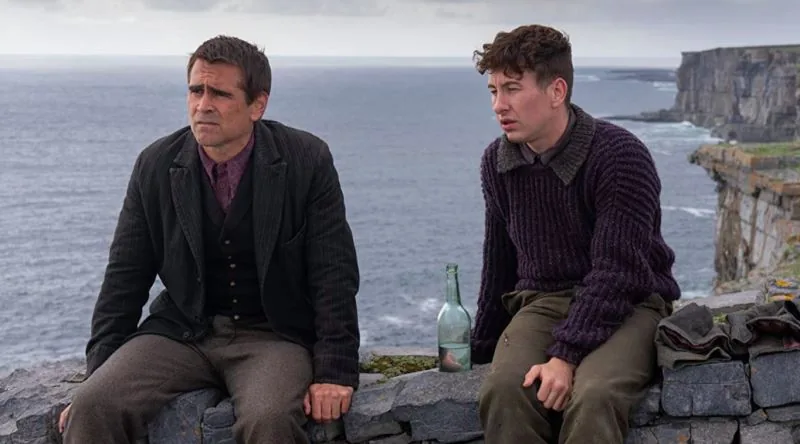
The Banshees of Inisherin analysis reveals a stark existential breakup between two lifelong friends on a fictional Irish island in 1923, a story told by Martin McDonagh that uses silence, art, and a severed finger to probe the meaning of existence. Set against the distant rumble of the Irish Civil War, the film turns a simple refusal to chat into a haunting meditation on legacy, loneliness, and the terrifying weight of a life lived without purpose. You watch Colm and Pádraic circle each other with growing dread, and it pulls you into their ache for meaning in a world that feels both too small and too vast.
In 1923 on the fictional island of Inisherin, Martin McDonagh's film follows Pádraic as his best friend Colm abruptly ends their friendship. Colm threatens to mutilate himself if Pádraic speaks to him, forcing a brutal standoff. The story uses this personal rupture to explore existential dread, artistic ambition, and the quiet violence of a changing Ireland.
- The film is set on the fictional island of Inisherin in 1923, during the final months of the Irish Civil War.
- Colm Doherty ends his friendship with Pádraic Súilleabháin because he finds Pádraic dull and wants to devote his remaining years to composing music.
- Colm vows to cut off his own fingers if Pádraic speaks to him, escalating their quarrel into physical self-harm.
- The story culminates in a devastating house fire and a final, unresolved confrontation between the two men.
- The film earned nine Academy Award nominations, including Best Picture, and widespread critical acclaim.
The Fog That Follows You Home
Some films sit with you. This one moved in. I watched The Banshees of Inisherin twice in four days, and the second viewing only deepened the fog that the first one left behind.
Martin McDonagh wrote and directed this 2022 film, and he clearly knew exactly what he was doing when he wrapped it in that smoky, misty atmosphere. The island practically breathes damp air through the screen. After my first viewing, I couldn't shake it. I went for long walks with the movie playing over and over in my head, turning it around, trying to figure out why such a small story had such a grip on me.
The plot itself is almost laughably simple on paper. Two friends on a tiny Irish island. One of them, Colm, decides he doesn't want to be friends with Pádraic anymore. That's it. No dramatic betrayal, no stolen money, no love triangle. Just a quiet, stubborn decision that ripples outward until it consumes everything in its path.
And yet that micro-scale conflict, that tiny local rupture between two ordinary men, hit me harder than any epic war film ever has. The film takes this minimal premise and holds it up to the light like a prism. What emerges is something vast and unsettling about why we cling to people, why we push them away, and what we're actually chasing when we think we're creating something meaningful.
The fog on screen matched the fog in my head. Days passed and my thoughts stayed tangled, wrapped around Colm and Pádraic and the strange, stubborn logic that drives them apart. This is what a great film does, isn't it? It doesn't just entertain you for two hours. It plants something that keeps growing long after the credits roll.
That obsessive pull is exactly what this piece wants to explore, because this is a film that rewards the kind of attention it demands.
An Epiphany With No Name: Why Colm Walks Away
The Banshees of Inisherin analysis often stumbles over the same question: why would a man suddenly cut off his best friend for no apparent reason? The answer, buried in the fog of 1923 Ireland, is that Colm Doherty (Brendan Gleeson) does not stop liking Pádraic Súilleabháin (Colin Farrell). He simply stops being able to live with himself.
Set against the distant rumble of the Irish Civil War, the film hands us a rupture that feels almost absurd in its smallness. Two men, one island, a pub, and a friendship that ends with the finality of a slammed door. But watch closer and you will see that nothing external broke. No betrayal, no cruel word, no stolen pint. The break happened somewhere inside Colm, in a place Pádraic cannot reach and Colm himself cannot fully name.
This is the engine of existentialist novels, the same mechanism that drives their heroes. The call does not arrive as a letter or a catastrophe. It arrives as a slow, persistent ache that refuses to be ignored. Colm hears it while sitting in his chair, while walking the cliffs, while the gramophone plays on. The realization that his life, as it stands, is not enough. That his legacy will be nothing. That every afternoon spent in idle chatter with Pádraic is another afternoon he will never get back.
The war across the water mirrors this perfectly. The Irish Civil War, raging through 1923, was a conflict born of a treaty, of factions, of men who once fought side by side now aiming rifles at each other. And for what? The film refuses to answer. The gunfire stays distant, the violence stays abstract, and the meaning stays stubbornly out of reach. Colm's friendship dies the same way. Not because of anything Pádraic did, but because Colm woke up one day and felt the senselessness of it all pressing against his chest.
There is a strange, almost unbearable honesty in this. Colm does not pretend to have a good reason. He does not explain himself in a way that satisfies anyone, least of all Pádraic. He simply knows that he cannot continue. The friendship, like the war, has lost whatever meaning it once held. And so he walks away, carrying the weight of an epiphany that has no name, leaving Pádraic to stare at the empty seat beside him and wonder what on earth just happened.
The Henry Miller Question: Art, Legacy, and the Burning House
What separates Colm from Pádraic is not age, not temperament, but the terror of disappearing without a trace. Colm wakes up one morning and realizes he has nothing to show for his life, no music that will outlast him, no mark on the world. That anxiety, that creative panic, is the engine that drives him to cut Pádraic off so brutally.
There is a quote that gets passed around when people try to explain Colm's crisis. Henry Miller, the American writer, is said to have spoken about the therapeutic nature of art, touching on meaning, purposelessness, and boundlessness. The exact source is murky, and no one has been able to pin down where Miller actually said those words. But the sentiment fits Colm perfectly, whether or not Miller ever uttered it. It captures the paradox at the heart of his breakdown: he is desperate to create something meaningful, yet he cannot articulate why the meaning matters so much.
Colm's crisis is not a simple midlife wobble. It is existential, therapeutic, a loss of focus that spreads into every corner of his existence. He looks at his life and sees only smallness, the pub, the gossip, the same conversations repeated until they lose all flavor. The music he plays on his fiddle is the only thing that feels real, the only thing that might survive him. When he decides to cut off Pádraic, he is not being cruel for cruelty's sake. He is trying to save something, even if he cannot say what.
The burning house becomes the film's most haunting image. Men sit inside their own homes as flames consume them, smoking cigarettes, staring into the distance, unable to get up and walk out. They have made their inner fire into a companion, something to live with rather than escape. The fire is the art, the obsession, the need to leave something behind. It is also the loneliness, the isolation, the refusal to bend. These men are burning alive and they will not even flinch.
McDonagh balances all of this with a melancholic humor that keeps the film from drowning in its own darkness. The absurdity of the situation, two grown men destroying their friendship over a fiddle tune, is never allowed to become pure tragedy. The laughter and the sorrow sit side by side, and that balance is what shakes the world's scales. The Banshees of Inisherin, released in 2022 and set in 1923 against the distant backdrop of the Irish Civil War, earned nine Academy Award nominations, including Best Picture. It is the kind of film that stays with you, not because it answers questions, but because it refuses to pretend the questions are easy.
The Island as a Microcosm: When a Donkey's Death Equals a Hanging
By the time the credits roll on Martin McDonagh's 2022 film, the line between a donkey's death and the hanging of a citizen has vanished completely. There is no qualitative difference left, and no quantitative one either. A beloved animal and an anonymous soul on the mainland both end the same way, and both mean the same nothing.
That leveling of meaning is no accident. It connects directly to a God who simply does not care about his spoiled servants, whether they commit good or evil. The people of the fictional island of Inisherin can dedicate their sins, their virtues, their visible and invisible pains to a creator who made everything and watches none of it with any interest. Every death opens onto the same truth. Every word, every accusation, every concept can shift meaning overnight, for no reason at all.
The men of the island feel this emptiness physically. They walk down to the shores and stare at the far coast, aching to reach other lands, other places, but they cannot leave. Their longing pins them in place. They sit in houses, in bars, in the middle of their own burning metaphors, smoking cigarettes and staring into the void while the flames consume what little they have. They have made burning part of living, yet they still cannot manage the living part.
Time itself seems stuck. Clocks always strike 2. A gramophone refuses to stop playing. The men sit in their chairs, eyes fixed on nothing, smoke curling upward, waiting for something that never arrives. They have driven away the good, intelligent, compassionate women who might have saved them. Instead, they summon death banshees with their cries, treating that summons as a cruel inherited legacy, something passed down like a family heirloom they never chose.
This is where the microcosm opens into the macro. The tiny feud between Colm and Pádraic, two men on a small island during the Irish Civil War of 1923, mirrors every larger conflict happening on the mainland and everywhere else. The same absurdity drives both. The same refusal to hear the other side. The same stubborn conviction that this particular fight, whatever it is, matters more than anything else in the world.
The film refuses to let anyone off the hook. It looks at meaning and meaninglessness, at emptiness and the abyss, with a steady gaze. It shelters in the friendship of horses, donkeys, and dogs while its human characters burn their own shelters down. It knows that otherness can force us to confront our own darkness, but its men never quite learn that lesson. They remain trapped, lonely, pitiful, yet somehow still convinced they are pursuing something great.
McDonagh holds melancholy and humor in perfect balance, and the scales of the whole world tremble with it. The result is a pure, savage masterpiece, one that burns with an ugly beauty from start to finish. For this Banshees of Inisherin analysis, the key insight is simple: the island is not a small story. It is every story, compressed into a few square miles of Irish rock and fog.
A Masterpiece Worth the Wait, but Don't Make Us Wait Again
After all the disappointment that often comes with high expectations, this is the best film of the year by a wide margin. That verdict comes from someone who watched it twice in four days, spent hours walking and turning the story over in their head, and still couldn't shake the fog it left behind. The film earned nine Academy Award nominations, including Best Picture, which feels like the industry finally catching up to what audiences already knew.
Martin McDonagh, the writer and director behind this 2022 triumph, has a habit of making us wait. When someone crafts stories this precise, this painful, this funny, the silence between their works becomes its own kind of ache.
There is a particular cruelty in knowing that Colm and Pádraic, those two men on that fictional Irish island in 1923, will never get a sequel. Their story is closed, complete, devastating in its finality. But McDonagh's voice is not. The plea here is simple and personal: please, don't make us wait so long again. Some of us are still walking those coastal roads in our heads, still listening for the church bells, still wondering what happens to men who burn their own houses down and call it freedom.
This is where the story that began in a foggy first viewing comes to rest. The film asked questions about friendship, legacy, and the terrible weight of existence. The answer, for this viewer, was clear. It was worth every minute of the wait. Just not another wait like it.
Frequently asked questions
What is the deeper meaning behind Colm cutting off his fingers?
Colm's self-mutilation is the physical manifestation of his existential and artistic crisis, a desperate act to force meaning and legacy into a life he suddenly finds hollow. In Martin McDonagh's 2022 film, the fingers are the tools of his violin, his chosen vehicle for creating something lasting, so sacrificing them is a brutal, self-destructive declaration that he would rather destroy his art than let it die quietly in meaningless small talk. The act is not random violence; it is a calculated scream against oblivion. Each finger he chops off and throws at Pádraic's door is a tangible piece of his own mortality, a way to make his internal rupture impossible to ignore. He is, in the most visceral way possible, trying to leave something real behind, even if that something is his own suffering.
How does the Irish Civil War backdrop mirror the friendship breakdown?
The Irish Civil War of 1923 is the distant, rumbling soundtrack to the island's drama, and McDonagh uses it to frame the central conflict as a similarly senseless affair. The war, fought between former comrades over an unclear treaty, is a conflict whose stated reasons do not hold up to scrutiny, and the friendship's end runs on exactly the same track, a "meaningless" rupture over loyalties that no one can quite articulate. The cannons boom across the water while Colm and Pádraic's feud escalates in the pub. Both are battles where the original cause has been lost, leaving only stubborn pride and the refusal to back down. The film suggests that all enmity, whether between nations or old friends, often boils down to the same tragic absurdity.
Why does Colm suddenly decide to end his friendship with Pádraic?
Colm's decision is not rooted in simple dislike but in a sudden, devastating existential epiphany. He wakes up one morning and realizes he can no longer tolerate the meaninglessness of his current life, a life spent in dull, repetitive conversation with a man he now sees as a hindrance to his artistic soul. This internal rupture, the kind of awakening that drives existentialist heroes, forces him to pursue something greater, even at a terrible personal cost. It is a crisis of mortality and legacy. Colm, played by Brendan Gleeson, looks at his remaining years and sees a void, and he blames Pádraic for filling them with nothingness. His choice to sever the friendship is a violent act of self-preservation, a desperate bid to reclaim his time and dedicate it to his music before it is too late, regardless of the collateral damage. Editorial note: Any details that remain unconfirmed, such as the precise fate of certain characters beyond the film's final scene, are presented as open questions rather than settled facts.
Got a take on this? Add your voice to the conversation below →
No comments yet. Be the first.