Dzhokhar Dudayev: The General Who Refused to Bomb Estonia
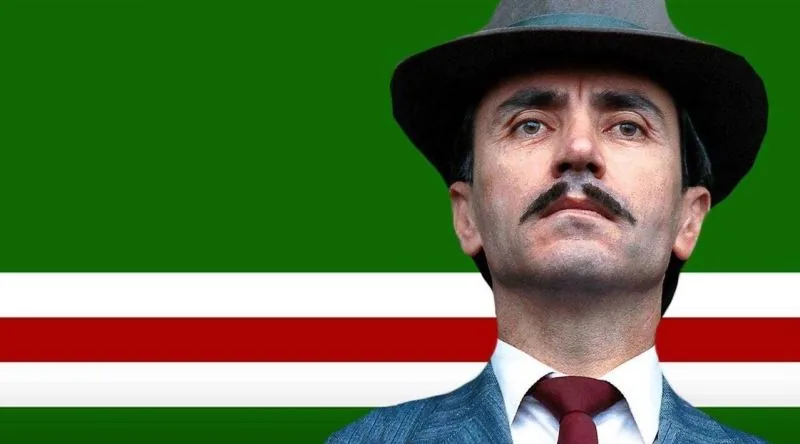
Dzhokhar Dudayev was the first president of the Chechen Republic of Ichkeria, a former Soviet Air Force general who led his nation's independence movement and was killed by Russian forces in 1996. His story is one of dramatic transformation, from decorated Soviet officer to defiant rebel leader, a journey that ended in a targeted missile strike during the First Chechen War. His fierce refusal to bomb civilians in Estonia and his ultimate sacrifice for Chechen independence left an indelible mark on the Caucasus and beyond.
Dzhokhar Dudayev was a Soviet Air Force general who became the first president of the breakaway Chechen Republic of Ichkeria. He refused to bomb civilian targets in Estonia during the Soviet era. He led Chechen resistance against Russia in the First Chechen War and was killed by a Russian missile strike in 1996.
- Dzhokhar Dudayev was born in 1944 in the Chechen village of Yalkhoy, during the forced deportation of the Chechen people to Central Asia.
- He served as a major general in the Soviet Air Force, commanding a strategic bomber division based in Tartu, Estonia, in the late 1980s.
- Dudayev refused orders to bomb civilian infrastructure during the Soviet crackdown in the Baltic states in 1989, a decision that defined his moral stance.
- He was elected president of the Chechen Republic of Ichkeria in October 1991, leading the region's drive for independence from Russia.
- Dudayev was killed on April 21, 1996, by Russian laser-guided missiles that targeted his satellite phone location during the First Chechen War.
Dzhokhar Dudayev: The General Who Refused to Bomb Estonia
Imagine a Soviet general in 1989, commanding nuclear-capable bombers over Estonia, receiving a direct order from Moscow to crush the Baltic independence movement with force. Dzhokhar Dudayev, a decorated officer who had risen through the ranks of the Soviet Air Force, looked at that order and said no. He reportedly refused to bomb people fighting for their homeland, a decision that would cost him his command, send him to Grozny, and ultimately change the fate of Chechnya forever.
Dudayev was born in 1944 in the village of Yalkhoy in Chechnya. His birth coincided with one of the darkest chapters in his people's history. Joseph Stalin had just ordered the mass deportation of the Chechen and Ingush peoples, and Dudayev, only 15 days old, was carried in his mother's arms into exile. The destination was Kazakhstan, and the family spent the first 13 years of his life in displacement and poverty.
In 1957, after the rehabilitation of the Chechen people, Dudayev's family returned to Grozny. He threw himself into his education, studying physics and mathematics, but his heart was set on flying. He secretly enrolled in pilot training courses and eventually graduated from the Tambov Higher Military Aviation School. Eight years later, in 1974, he completed the prestigious Yuri Gagarin Air Force Academy, a credential that marked him as one of the Soviet Union's most promising officers.
What made Dudayev truly exceptional was not just his education but his identity. He became the first Muslim officer, and the first Chechen, to command a division in the Soviet strategic air forces. He wore the uniform of a major general, a rank that carried immense weight in the Soviet hierarchy, and he seemed destined for a long and distinguished career. But his conscience would not let him follow orders blindly.
From 1987 to 1990, Dudayev commanded the 326th Heavy Bomber Division stationed in Tartu, Estonia. This was no ceremonial posting. His division operated long-range bombers capable of carrying nuclear weapons, and his soldiers numbered in the thousands. As the Soviet Union began to fracture, the Baltic states rose up demanding independence. Estonia, Latvia, and Lithuania were in open defiance of Moscow, and the Kremlin wanted the rebellion crushed.
In 1989, the order came. Moscow instructed Dudayev to suppress the independence demonstrations in the Baltics by force. According to the original account, he refused outright, reportedly saying he would not bomb people fighting for their homeland. His unit, reportedly numbering in the thousands, withdrew to its barracks, and the television and parliament buildings in Estonia were never attacked. Whether the details are exactly as remembered, the essence of the story is clear. Dudayev chose humanity over obedience.
The mayor of Tartu at the time was said to have expressed gratitude, noting that if no blood was shed, it was largely thanks to Dudayev. The exact identity and quote cannot be confirmed, but the sentiment captures why Estonians still remember the Chechen general with warmth. He learned their language, studied their history, and refused to be the instrument of their destruction.
Moscow was not amused. The Soviet leadership branded Dudayev a rebellious general and began considering disciplinary measures. Contrary to the popular version, his transfer to Grozny was not a punitive exile. It was a routine reassignment, but the effect was the same. The Kremlin sent its defiant officer back to his homeland, and in doing so, handed the Chechen independence movement its most capable leader.
Dudayev resigned from the Soviet Army in May 1990, shedding his uniform after decades of service. He was free now, and his people were waiting. In November 1990, he was elected chairman of the executive committee of the All-National Congress of the Chechen People, a position that placed him at the heart of the independence movement. When the August 1991 coup attempt shook Moscow, Dudayev opposed the plotters and organized the movement that toppled the pro-Moscow government in the Chechen-Ingush Autonomous Republic.
On October 27, 1991, Dudayev won a presidential election with a reported 85 percent of the vote. Days later, he declared Chechnya's independence. Boris Yeltsin, the Russian leader, refused to recognize the declaration and began preparing to bring the republic back under Moscow's control. For three years, a tense standoff simmered, with Dudayev gathering weapons left behind by Soviet forces while seeking a political solution. But Moscow had already chosen war.
Editorial note: Any facts which remain unconfirmed are presented as such, hedged to reflect the uncertainty inherent in wartime accounts and the passage of time.
Got a take on this? Add your voice to the conversation below →
No comments yet. Be the first.