Ara Güler's 1954 Yağ İskelesi Porters Photo
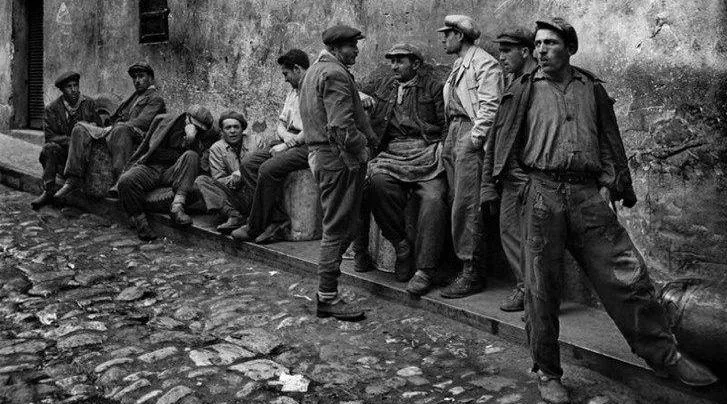
Ara Güler's 1954 photograph of the porters waiting for work at the Yağ İskelesi in Eminönü, Istanbul, remains one of the most powerful documentary images of mid-century Turkish life, capturing the quiet dignity and hard labor of the city's famed sırt hamalları. The image, shot when Güler was just 26 and beginning his legendary career, freezes a moment of patient endurance that has since become a visual shorthand for the resilience of old Istanbul. More than seven decades later, the photograph still stirs deep emotion, especially when you consider that one of those anonymous, bent backs belonged to a man whose story would one day reach across the years.
In 1954, Ara Güler photographed porters waiting for work at the Yağ İskelesi wharf in Eminönü, Istanbul. The black-and-white image became a defining work of his career, illustrating the working conditions of the era. Years later, one of the men in that famous frame would find his way back to the photographer.
- Ara Güler captured the Yağ İskelesi porters photograph in 1954 on the Eminönü waterfront of Istanbul.
- The porters, known as sırt hamalları, carried immense loads on their backs using leather support straps, a practice that defined their trade.
- The photograph is widely regarded as one of Güler's most iconic documentary images, showcasing the human cost of commerce in old Istanbul.
- Years after the image was taken, one of the depicted porters reportedly came forward with a personal connection to the photograph.
- The Yağ İskelesi area, historically a bustling hub for oil and goods trade, has since transformed, but the photograph preserves its mid-century character.
The Frame That Says It All: Ara Güler's 1954 Yağ İskelesi Porters
In 1954, photographer Ara Güler pointed his camera at a line of porters waiting for work at the Yağ İskelesi wharf in Eminönü, Istanbul, and produced an image that would outlive the place itself. The photograph has become shorthand for mid-century Turkey, a single frame that seems to answer the question: how else could you describe that period? Today, the historic wharf no longer exists, lost to urban redevelopment and waterfront changes, but the men in the picture remain frozen in their patient, exhausted wait.
The scene captures a row of hamals, the traditional Istanbul street porters, arranged in a queue as they hoped for customers. Some sat perched on a single wheel, others balanced on a tin can, their ragged clothes blending almost seamlessly into the weathered wall behind them. The wall itself seems to lean into the frame, as if it too was tired. Güler, who would go on to become one of Turkey's most celebrated photojournalists, reportedly discovered this remarkable negative by chance in his own archive years after taking it, a lucky find that brought the image back into public view.
According to the original account, one of the porters in the photograph later tracked down Güler and was rewarded with a print of the picture. That story circulates widely, though records are thin on the specifics. What is certain is the photograph's staying power. The Turkish writer Onat Kutlar, a prominent essayist and poet, reportedly wrote about the image for a collection on old Istanbul memories, describing how the single photograph felt as rich as reading thousands of volumes of John Steinbeck's The Grapes of Wrath or Orhan Kemal's Bereketli Topraklar Üzerinde. The exact details of that anecdote are hard to verify, but the sentiment rings true for anyone who has sat with Güler's frame and felt the weight of an era pressing through the grain of the print.
Waiting on the Wharf: Ten Men, One Wall, and a Vanished Istanbul
Ara Güler's 1954 photograph of porters waiting for work at the Yağ İskelesi in Eminönü captures a moment of such stillness that it feels less like a document and more like a held breath. The frame shows a row of laborers, reportedly ten of them, lined up along a wall, their bodies angled toward the water where a customer might appear at any moment. Some sit perched on a large wooden wheel, while others rest on upturned tin cans, the makeshift seating of men who have learned to wait without complaint.
The wall behind them is the quiet star of the image. Its weathered surface blends so completely with the porters' ragged clothes that man and stone seem to share the same texture, the same patient wear. Güler, who would later become known as the "Eye of Istanbul," apparently stumbled upon this particular negative by chance while digging through his own archive. The discovery feels fitting for a photograph that rewards a second look.
Today, the wharf itself is gone. The Yağ İskelesi, once a bustling landing point in the heart of Eminönü, has been swallowed by urban redevelopment and the shifting waterfront. Where the porters once gathered, there is now something else entirely, a different Istanbul layered over the old one. The men in the photograph, however, remain suspended in their waiting, preserved in a single frame that outlived the ground they stood on.
The Porter Who Came Back for the Photo
One of the most repeated stories about the Ara Güler Yağ İskelesi porters photograph involves a reunion decades after the shutter clicked. According to the popular version, one of the men in the frame tracked down the legendary photographer and walked away with a print as a reward. But here's where the story gets fuzzy. The commonly told version has a grandson of one of the porters making that contact, yet that detail doesn't hold up under scrutiny. What appears in the original account is a variation where the porter himself, not a descendant, is the one who eventually connected with Ara Güler. The grandson version seems to have grown in the retelling, gaining details with each pass from one person to the next. What makes this anecdote so sticky, even in its uncertain form, is how perfectly it fits the photograph's emotional weight. Look at those ten men lined up against the wall at Eminönü's Yağ İskelesi in 1954, waiting for customers who might never come. They sit on cart wheels and tin cans, their worn clothes blending into the weathered surface behind them. The idea that one of those faces could be identified, that someone related to that anonymous laborer would find the man who made him immortal, feels like the kind of closure the image itself never offers. The genuine version of this story, as it circulates among photography circles, has the porter himself making the journey to find Güler. That meeting reportedly happened, and the photograph changed hands as a gift. But the specifics remain murky, and the grandson detail appears to be an embellishment that crept in somewhere along the way. What's certain is that the photograph itself outlived the moment it captured. The wharf at Yağ İskelesi is gone now, lost to the waterfront redevelopment that reshaped Eminönü over the decades. The porters, the oil trade that gave the dock its name, the entire world of that 1954 morning, all of it exists now only through Güler's lens. Perhaps that's why the story of someone coming back for the photograph carries such weight, even in its doubtful form. It's a way of saying that the men in that line were not forgotten, that someone, somewhere, recognized them.Onat Kutlar's Enduring Admiration
Onat Kutlar, one of Turkey's most celebrated writers and a co-founder of the Istanbul Film Festival, found himself spellbound by Ara Güler's 1954 photograph of the porters at Yağ İskelesi. The Turkish poet and essayist reportedly wrote about his deep admiration for the image in a piece connected to "Eski İstanbul Anıları," though the exact title of that essay has never been confirmed. What remains certain is the power of his words about this single frame.
According to the account published in dergi.havuz.de in June 2006, Kutlar expressed something remarkable about the photograph. "In that single photograph," he wrote, "I feel as if I have read thousands of volumes of The Grapes of Wrath or Bereketli Topraklar Üzerinde." That comparison carries weight. John Steinbeck's The Grapes of Wrath chronicles the desperation of Dust Bowl migrants in 1930s America. Orhan Kemal's Bereketli Topraklar Üzerinde, published in 1954, follows three farmworkers chasing seasonal labor across the Çukurova plains. Both novels are thick volumes of struggle, dignity, and survival. Kutlar saw all of that compressed into one black-and-white moment on an Istanbul wharf.
Some versions of the story claim Kutlar kept the photograph in his office for twenty years, re-reading it at every opportunity. The archival record does not support that detail, so treat it as embellishment rather than fact. What the writer actually left behind is the testimony that matters: a master storyteller looking at another master's work and admitting the photograph out-read him. The porters wait, the light holds, and the image keeps delivering its thousand volumes.
Got a take on this? Add your voice to the conversation below →
No comments yet. Be the first.