Roger Bannister: The 1954 Four-Minute Mile Breakthrough
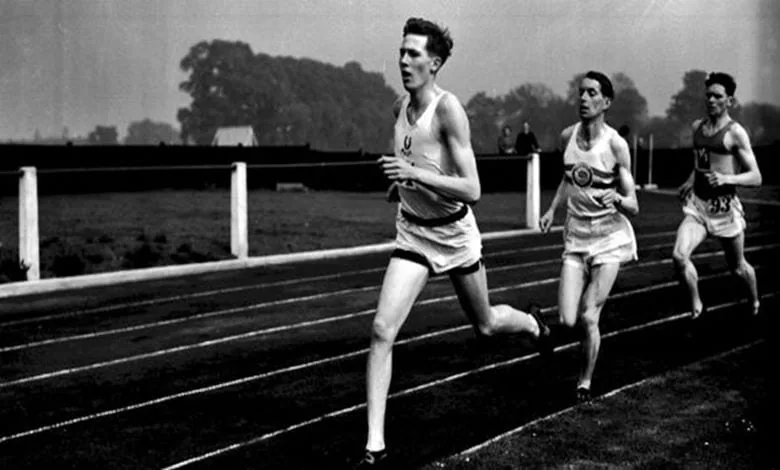
In 1954, Roger Bannister became the first person to break the four-minute mile, running 3:59.4 at Iffley Road track in Oxford, England, on May 6. The feat shattered a long-held physical and psychological barrier, instantly transforming a young medical student into a global icon. Yet the story of the Roger Bannister four minute mile is not just about a single race; it is a testament to methodical training, fierce rivalry, and the quiet determination of a man who prioritized medicine over fame.
Roger Bannister, a 25-year-old British medical student, ran the first sub-four-minute mile at Iffley Road, Oxford, on May 6, 1954, finishing in 3:59.4. His achievement broke a barrier many thought impossible. He later became a distinguished neurologist, and his rivalry with John Landy culminated in the dramatic "Miracle Mile" later that year.
- Roger Bannister ran the first sub-four-minute mile at Iffley Road track in Oxford, England, on May 6, 1954.
- His official time was 3 minutes and 59.4 seconds, a world record at the time.
- Bannister was a full-time medical student at St. Mary's Hospital Medical School in London, training only when his studies allowed.
- His rival John Landy of Australia broke Bannister's record just 46 days later with a time of 3:58.0.
- Bannister retired from competitive running in 1954 to focus on his career as a neurologist, a field in which he became a leading pioneer.
The Day the Impossible Got a Time
The wind was howling across Oxford's Iffley Road track on 6 May 1954, and the cold air had Roger Bannister and his pacesetters seriously wondering whether the whole attempt should be called off. The weather was so bad that the race was nearly cancelled. But they decided to go ahead anyway, and at 6:10 in the evening, Bannister took his mark. He crossed the finish line in 3 minutes 59.4 seconds, becoming the first human being to run a mile in under four minutes.
That time was exactly two seconds faster than the previous world record of 4:01.4, a barrier that had been chased for decades and had come to feel almost mythical. When the official timekeeper, Norris McWhirter, stepped to the microphone to announce the result, he barely got out the word "Three..." before the roar of the crowd swallowed everything else. McWhirter's announcement was lost entirely in the celebration. Bannister himself, exhausted and bent over at the finish line, didn't fully grasp what he had done until the next morning, when he sat down with the newspapers and saw his name in the headlines.
The press framed the achievement as being as difficult as climbing the impossible peaks of Everest. The comparison stuck, and for good reason: the four-minute mile had been talked about as a physical limit, something the human body might simply not be built to cross. Bannister, a 25-year-old medical student who trained for only about 30 minutes a day around his hospital shifts, had just proven otherwise.
His record, however, lasted only 46 days. On 21 June 1954, Australian runner John Landy ran 3:57.4 in Turku, Finland, breaking Bannister's mark and igniting one of the great rivalries in track history. The two would meet later that summer in Vancouver at the British Empire and Commonwealth Games in what became known as the "Miracle Mile," where Bannister would win the duel in 3:58.8. But that story belongs to another day. For now, it's enough to remember that cold Oxford evening when a young doctor-in-training gave the impossible a time, and the world heard it as a roar before it ever heard the numbers.
The Doctor Who Trained Himself to Break a Barrier
Roger Gilbert Bannister was born on 23 March 1929 in Harrow, Middlesex, and he would go on to become the first person ever to break the Roger Bannister four minute mile. But long before that historic day in 1954, he was simply a medical student with a complicated relationship with running. He studied medicine at Oxford University and later at St Mary's Hospital Medical School in London, and those studies shaped everything about how he approached the sport.
Here's the part that surprises most people: Bannister could only train about 30 minutes a day. His medical education consumed nearly all of his time, leaving him with just a sliver of daylight for athletics. So he did something unconventional. He used his medical knowledge to design his own training program, studying the mechanics of running the way he might study a patient's symptoms. He treated his own body as a scientific instrument, and the results came quickly.
After just three training sessions, he ran a mile in 4 minutes 24 seconds. That single performance put him in contention for the 1948 London Olympics team. Not bad for someone who treated running as a hobby squeezed between anatomy lectures and hospital rounds.
At the 1952 Helsinki Olympics, he finished fourth in the 1500 metres final, setting a new British record of 3:46.3. Fourth place frustrated him. He had gone to Helsinki expecting more, and he left with a burning sense of unfinished business. But that disappointment fed something deeper. He had read medical articles suggesting a runner trying to go under four minutes might be in mortal danger. The barrier, he realized, was partly mental. Doctors had essentially declared the four-minute mile a threat to human life, and that warning had lodged itself in the minds of every runner who chased it.
Bannister saw through it. He understood that the limit was as much psychological as physiological, and he approached breaking it the way he approached everything else: methodically, scientifically, and with complete confidence in what his own body could do. He once said he always knew he would give up athletics when his studies ended. Running was never his destination. It was simply the laboratory where he proved a point about human potential.
The Miracle Mile and the Look That Cost a Race
John Landy of Australia stole Roger Bannister's world record on 21 June 1954, clocking 3:57.4 in Turku, Finland, just 46 days after Bannister's historic run in Oxford. The two men then met head-to-head at the 1954 British Empire and Commonwealth Games in Vancouver, in a race that would become known as the "Miracle Mile."
Landy had been chasing the four-minute barrier himself, and when he finally broke it, he didn't just crack the mark, he shattered Bannister's record by nearly two full seconds. The Australian's time of 3:57.4 was a statement: the sub-four-minute mile was no longer a one-off miracle, it was a new standard. The rivalry was now a genuine two-man war.
On 7 August 1954, at Empire Stadium in Vancouver, the two men lined up for what would become one of the most famous races in athletics history. Landy took the lead early and held it through most of the race, pushing a punishing pace. Bannister stayed close, biding his time, waiting for the right moment to strike.
Then came the moment that would define the race and haunt Landy for the rest of his career. On the final bend, with Bannister closing in, Landy glanced back over his shoulder to check where his rival was. That split-second look was all Bannister needed. He surged past Landy on the outside and never looked back, crossing the finish line in 3:58.8.
Landy's backward glance became one of the most iconic images in track and field, later immortalized in a statue that captures the exact moment his head turned, the race slipping away. It was a small gesture, barely a fraction of a second, but in a race decided by such margins, it was everything.
The Miracle Mile was more than a victory for Bannister. It was proof that his record-breaking run in May was no fluke, and it cemented the Roger Bannister four minute mile as the defining achievement of an era. Bannister had beaten the clock, and then he had beaten the man who beat the clock after him.
The Neurologist Who Found Running Less Important
Roger Bannister hung up his racing spikes for good shortly after that historic 1954 season, and within ten years he had become a medical specialist doing pioneering work in neurology. The man who broke the four-minute barrier never saw running as his life's work, and he proved it by walking away from the sport at its peak. For Bannister, the white coat always mattered more than the track singlet.
His exit from recreational running came about in a surprisingly ordinary way. A traffic accident left him with a broken wrist, and that injury quietly ended the casual runs he still enjoyed. The crash didn't stop his medical career, though. By the mid-1960s, Bannister had established himself as a neurologist, studying the human nervous system with the same precision he once applied to pacing a mile.
Even after leaving competitive athletics, he never fully abandoned the sports world. In 1971, Bannister became the first chairman of the British Sports Council, a newly created government body. In that role, he pushed hard for something that was far from standard practice at the time: doping tests in athletics. His insistence helped lay the groundwork for the anti-doping culture that exists in sports today.
Honours followed his public service. In 1975, Queen Elizabeth II knighted him, making him Sir Roger Bannister. Then in 2017, he received the Order of the Companions of Honour, a distinction reserved for those who have made a major contribution to the arts, science, medicine, or government over a long period.
Throughout it all, Bannister remained clear about his priorities. When people asked him about the Roger Bannister four minute mile, he would often redirect the conversation to his neurological research. He considered his work as a physician far more significant than anything he accomplished on the track, a sentiment he expressed without hesitation throughout his later years.
Roger Bannister died on 3 March 2018, just twenty days before his 89th birthday. He was 88 years old. The obituaries that ran around the world celebrated the runner, but the man himself would have wanted the neurologist remembered first.
Frequently asked questions
Who was Roger Bannister?
Roger Bannister was a British neurologist and the first person in history to run a mile in under four minutes. He achieved this legendary feat on 6 May 1954 at the Iffley Road track in Oxford, England, crossing the finish line in 3 minutes 59.4 seconds and shattering what many had considered an impossible barrier.
What was Roger Bannister's time for the first four-minute mile?
Roger Bannister ran the first sub-four-minute mile in 3 minutes 59.4 seconds on 6 May 1954. The race took place at Iffley Road in Oxford, and his time improved the previous world record by exactly two seconds. The record stood for only 46 days before Australian John Landy broke it on 21 June 1954 with a time of 3:57.4 in Turku, Finland.
Did Roger Bannister beat John Landy in the Miracle Mile?
Yes, Roger Bannister defeated John Landy in the famous "Miracle Mile" at the 1954 British Empire and Commonwealth Games in Vancouver on 7 August 1954. Bannister won with a time of 3:58.8 after Landy glanced back over his shoulder on the final bend, a moment that has become one of athletics' most iconic images.
Was Roger Bannister a doctor?
Yes, Roger Bannister was a fully qualified doctor. He studied medicine at Oxford University and later completed his clinical training at St Mary's Hospital Medical School in London. After retiring from competitive running, he became a pioneering neurologist, and he often said his medical work mattered more to him than his athletic achievements.
How did Roger Bannister die?
Roger Bannister died on 3 March 2018 at the age of 88. Born on 23 March 1929 in Harrow, Middlesex, he lived a long life that spanned a medical career, sports administration, and his immortal place in athletics history. His death was widely reported in British and international media as the passing of a true sporting legend.
Got a take on this? Add your voice to the conversation below →
No comments yet. Be the first.