John Cassavetes: The Director Who Changed Cinema
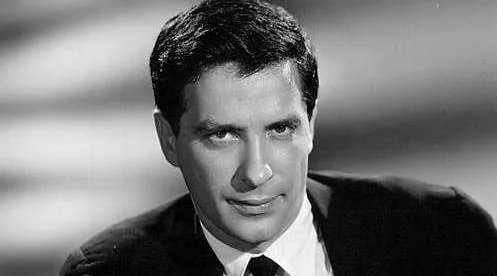
John Cassavetes influence on modern directors is the quiet earthquake beneath American independent cinema, a legacy forged in the 1960s and 1970s through raw, chaotic, low-budget films that rejected Hollywood polish. His name may not ring as loudly as Scorsese's, but without his fearless improvisation and emotional honesty, the careers of Martin Scorsese, Jim Jarmusch, and Richard Linklater would look radically different, and your favorite indie film might never have been made.
John Cassavetes, an actor turned filmmaker, worked outside the studio system in New York and Los Angeles during the 1960s and 1970s, funding his own movies and directing actors toward raw, unscripted emotional truth. This approach, captured most powerfully in A Woman Under the Influence, became the blueprint for American independent cinema and directly shaped the work of Scorsese, Jarmusch, and Linklater.
- Cassavetes made his directorial debut with Shadows in 1959, a film he financed with money earned from acting jobs.
- A Woman Under the Influence, released in 1974, earned his wife Gena Rowlands an Academy Award nomination for Best Actress.
- Martin Scorsese has repeatedly cited Cassavetes as a formative influence, particularly for his use of handheld cameras and naturalistic dialogue.
- Jim Jarmusch and Richard Linklater have both acknowledged the direct lineage between Cassavetes' low-budget independence and their own filmmaking methods.
- Cassavetes made nine feature films as a director, all of them outside the traditional Hollywood studio system.
The Invisible Hand Behind Your Favorite Directors
John Cassavetes (December 9, 1929 – February 3, 1989) is the hidden thread connecting some of the most beloved names in modern American cinema. Martin Scorsese, Jim Jarmusch, Richard Linklater, Sean Baker, and Paul Thomas Anderson all carry pieces of his influence in their work. You may love their films without ever knowing his name.
That is exactly how Cassavetes worked. His impact arrived sideways, through the directors he touched rather than through mass audiences. Consider the moment Martin Scorsese finished Boxcar Bertha in 1972 and rushed to show it to Cassavetes, eager for approval. Cassavetes hugged him and delivered a brutal verdict: "You spent a year of your life on a shitty film." Scorsese took it to heart, and that honesty helped redirect his entire career toward the director he would become.
Earlier still, Scorsese had watched Cassavetes' directorial debut Shadows (1959) and felt the ground shift beneath him. He later said he did not know such things could be done in cinema. That single film, made on a shoestring budget with improvised scenes and raw street-level energy, rewired how a generation of filmmakers thought about the medium.
The pattern repeats across the industry. Jarmusch's deadpan pacing, Linklater's talky naturalism, Baker's empathy for the overlooked, PTA's restless camera work. Each one owes something to the man who threw out the rulebook about clean lighting, perfect angles, and polished sound. Cassavetes let his scenes nearly fall apart on screen, with people talking over each other, arguments stretching past comfort, and close-ups so tight they feel claustrophobic. He did it because real life looks like that, messy and unscripted.
His methods were unconventional, but his results were undeniable. The proof lives in the performances he drew from actors, especially his wife Gena Rowlands, whom he married in 1954. In A Woman Under the Influence (1974) and Opening Night (1977), both directed by Cassavetes, Rowlands delivered work so raw and unguarded that it still feels like a revelation decades later. These are the films that made Scorsese wonder why no one had told him cinema could do such things.
So when you sit down to watch a Scorsese crime saga or a Linklater conversation piece, you are watching the echo of a man who refused to make cinema neat. Cassavetes influence runs through modern filmmaking like a current you only notice when you stop swimming and look around. That is his legacy, invisible but everywhere.
The Scorsese Story: A Brutal Honesty That Changed Everything
Martin Scorsese had just wrapped Boxcar Bertha in 1972 when he rushed the print to John Cassavetes, hungry for approval from a director he worshipped. Instead of praise, Cassavetes hugged him and delivered a verdict that stung for decades: "You spent a year of your life on a shitty film." That blunt honesty, painful as it was, reportedly became the push Scorsese needed to stop imitating and start becoming himself.
The moment makes sense only if you understand what Cassavetes meant to Scorsese before they ever met. Years earlier, Scorsese had watched Shadows, Cassavetes' 1959 directorial debut, and felt the ground shift beneath him. "I didn't know such things could be done in cinema," he said, and that single viewing rewired his entire vision of what film could hold.
So when Cassavetes hugged him after Boxcar Bertha, the embrace carried the weight of a mentor's disappointment. The message was clear: you can do better, and I expect better from you. Scorsese took the criticism to heart, and the films that followed, the ones that would define American cinema, were forged in that uncomfortable moment of truth.
These anecdotes appear across interviews and biographies, passed down like gospel among filmmakers. They capture the essence of the John Cassavetes influence on a generation of directors: he didn't hand out compliments to be kind. He told you the truth because he believed you could handle it, and because he cared enough to say it to your face.
Chaos as Method: Cassavetes' Anti-Hollywood Style
John Cassavetes (December 9, 1929–February 3, 1989) didn't just make films; he made a mess of them, on purpose. Where Hollywood chased perfection, right angles, precise lighting, grand scale, he spent small money and unleashed big chaos. His scenes feel like they might fall apart at any second, and that was the whole point.
Watch one of his films and you'll feel it immediately. People talk over each other, arguments stretch past comfort, emotions flip without warning. Someone laughs while another person seethes with rage. The air in the room changes mid-sentence, and nobody seems to be following a script that was ever meant to look clean.
Cassavetes pushed this further with his camera. He'd move in for extreme close-ups on faces, filling the frame so completely that no empty space remained. The pressure lands directly on you, the viewer. For most directors, a sequence like this would be a nightmare. For Cassavetes, it was just Tuesday. He shot these moments because he wanted to, because life itself runs this way, immeasurable, disorderly, rough, with very few people truly listening to one another.
This wasn't a flaw or an accident. It was a deliberate philosophy about what cinema could be. His naturalism wasn't the controlled, tidy version other filmmakers chased. It was wilder, less supervised, closer to how people actually behave when they forget they're being watched.
That approach shaped his actors too. He didn't want them to play scenes "well" in the traditional sense, no neat line delivery, no perfectly timed emotional beats. He went after the moments when an actor fumbled, gave the wrong reaction, even embarrassed themselves. Because that's what humans look like. When you talk to someone, you don't recite memorized sentences. You hesitate, forget your point, stumble over words. Cassavetes built his entire style around those stumbles, and the performances that emerged from them became unforgettable.
The Actor's Director: Celebrating Imperfection
John Cassavetes built his reputation on the opposite of polish. While Hollywood chased flawless takes, perfect angles, and carefully measured emotion, Cassavetes went straight for the moments other directors would cut: the stumble, the hesitation, the awkward pause, the look of genuine foolishness. He called the very idea of "clean" acting nonsense.
His logic was simple. Real people do not speak in perfectly rehearsed sentences. You forget your point mid-thought. You trail off, restart, say the wrong thing, laugh at the wrong moment. Cassavetes wanted all of that on screen, not despite its messiness but because of it. The chaos made performances more visible, not less. When an actor risks looking ridiculous, something honest surfaces, and audiences feel it.
Nowhere did this approach pay off more powerfully than with his wife, Gena Rowlands. The two married in 1954 and built a working partnership unlike any other in American cinema. Rowlands gave herself over completely to his method, and he in turn wrote roles that demanded she fall apart in public, reassemble herself, and do it all again. In Opening Night (1977), she plays an aging actress haunted by mortality on the eve of a Broadway premiere. In A Woman Under the Influence (1974), she plays Mabel, a housewife whose mental unraveling is documented in excruciating, tender detail. Both performances are often described as inimitable and unrepeatable in cinema history, and the description holds. Rowlands does not act so much as she becomes unmoored in front of the camera, and Cassavetes lets the camera linger on every uncomfortable second.
Other directors chase naturalism too, of course. But the John Cassavetes influence on acting is distinct because his naturalism is more uncontrolled than anyone else's. He did not want a controlled simulation of real life. He wanted the real thing, with all its ragged edges and sudden shifts of mood. Scenes feel like they might collapse at any moment. People talk over each other. Arguments stretch past the point of comfort. A laugh and a fury can occupy the same room at the same time. Close-ups crowd the frame until there is no breathing room left.
This is precisely why his films remain so alive decades later. A perfectly delivered line fades from memory, but watching Rowlands lose her grip on reality in A Woman Under the Influence stays with you. Cassavetes understood that the cracks in a performance are where the truth lives. He built his entire career on that conviction, and the performances he captured, especially from Rowlands, have never been duplicated.
A Personal Revelation: Why Cassavetes Still Matters
I remember the exact moment Opening Night rewired how I see movies. It was the final sequence, and I sat there feeling exactly what Martin Scorsese must have felt after watching Shadows back in the late 1950s: why didn't anyone tell me cinema could do this?
There they were, John Cassavetes and Gena Rowlands, his wife and frequent collaborator, laughing without any control. They'd pause mid-scene, break each other's rhythm openly, stumble over lines that weren't supposed to be stumbled over. Nothing felt polished. Everything felt alive. I wasn't watching actors perform; I was watching two people exist in front of a camera.
Now, plenty of filmmakers have tried to tear apart cinematic form. Jean-Luc Godard did it with tremendous energy, picking apart structure so aggressively that the pieces nearly stayed in his hands. But Godard exhausted me. His deconstruction felt like homework, like I needed to prove something by watching it.
Cassavetes never asks that of you. Even today, when I watch his films and mutter to myself that he should have cut those blurry images, I keep coming back. I keep finding new meaning in the mess. That's the John Cassavetes influence that endures: not a style you copy, but a permission you receive. Permission to let scenes breathe, to let actors stumble, to let life spill messily across the frame. He made cinema feel less like a machine and more like a conversation you never want to end.
Got a take on this? Add your voice to the conversation below →
No comments yet. Be the first.