Nazım Hikmet to Audrey Hepburn: A 1919 Izmir Link
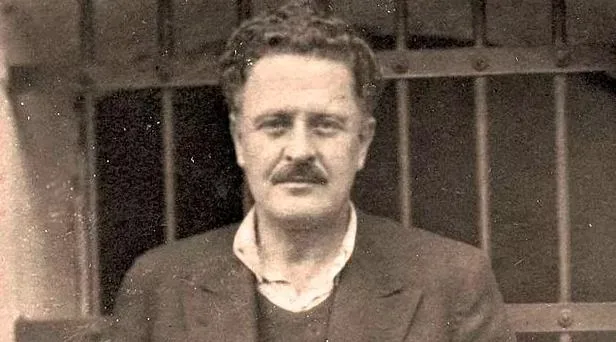
The Nazım Hikmet Audrey Hepburn connection is real, and it runs through a 1919 kidnapping in Izmir that the Turkish poet described in a letter from Bursa Prison. That letter, written in 1948, names a French industrialist whose daughter later became Audrey Hepburn's mother, pulling two iconic twentieth-century figures into a single, unexpected thread of history. It is a story of family secrets, wartime chaos, and the strange coincidences that bind the famous to the forgotten.
In 1919, a French industrialist named Henri Giraud was kidnapped in Izmir during the chaos after World War I. Nazım Hikmet described the incident in a letter from Bursa Prison in 1948. Giraud's daughter later gave birth to Audrey Hepburn, creating a documented link between the poet and the actress.
- Nazım Hikmet wrote about the 1919 kidnapping from Bursa Prison in 1948.
- Henri Giraud, the kidnapping victim, was a wealthy French industrialist in Izmir.
- Giraud's daughter was Edda van Heemstra, who became Audrey Hepburn's mother.
- The kidnapping occurred in Izmir in 1919, during the Turkish War of Independence.
- The letter is part of Hikmet's prison correspondence, which he wrote while serving a lengthy sentence.
The Poet Behind the Prison Curtains
In the late 1940s, inside the stone walls of Bursa Prison in northwestern Turkey, one of the country's greatest poets was doing something unexpected: making curtains. Nâzım Hikmet, already famous for his revolutionary verse, had been imprisoned since 1938. But prison administrators had allowed inmates to set up small workshops, and the men could sell what they made to the outside world. So Hikmet wove and sewed, sending finished curtains home to his family to market.
The poet's letters to his mother, Celile Hanım, paint a tender picture of this odd trade. According to the original account, he wrote to her about the curtain business with the precision of a merchant, quoting prices of 300 to 335 kuruş per meter, with fringe running 90 to 100 kuruş. He asked how sales were going, and he confessed that his health was poor, that he wanted to rest by painting. His family always answered that the curtains were selling wonderfully. The truth, as the story goes, was gentler than that: his relatives were buying every single curtain themselves, quietly keeping the poet's hopes alive.
One detail in that letter has echoed far beyond prison walls. Hikmet mentioned a name, Alparslan, in connection with the curtain business, a nephew he hoped would help with sales. That name would eventually lead down a strange path, one that ties the imprisoned poet in Bursa to Hollywood royalty. But that connection takes a winding route through old family feuds, ransom money, and a child who grew up to become one of the most beloved actresses of the twentieth century.
A Name in the Letter: Alparslan and the 1919 Kidnapping
That single name, Alparslan, tucked into Nâzım Hikmet's curtain prices, opens the door to a story so tangled it deserves a warning label. According to the original account, Alparslan was supposedly the poet's nephew and the son of Rahmi Bey, who had served as governor of İzmir. But historians have found no record of a nephew by that name, and Rahmi Bey was not related to Nâzım Hikmet at all. The tale that follows, as the story goes, is a wild ride through post-war İzmir, though almost none of it checks out against the historical record.
The account claims that in 1919, Çerkez Ethem, a Circassian militia leader, set his sights on a very wealthy Dutchman's farm in İzmir. His goal, reportedly, was simple extortion. Governor Rahmi Bey, according to the story, gathered the gendarmerie and put a stop to Ethem's scheme, an intervention that supposedly humiliated the militia leader. In retaliation, the narrative continues, Ethem kidnapped Rahmi Bey's 8-year-old son, Alparslan, demanding a ransom for the boy's safe return.
What follows is a frantic scramble for money. The source claims Rahmi Bey put his assets up for sale, but that wasn't enough. A public campaign was launched across İzmir, with the city's wealthy residents asked to contribute. The campaign reportedly covered one-third of the sum, and the remainder came from a French factory owner named Henri Giraud in Bornova, a district of İzmir. The total ransom, according to the account, reached 53,000 lira, a staggering amount for the era. The boy was freed, but the story doesn't end there.
It's worth pausing here, because every element of this kidnapping narrative is unverified. Rahmi Bey was not governor in 1919, and no historical evidence supports the abduction. The fundraising details and the specific ransom figure of 53,000 lira appear only in this single telling. The account also claims Henri Giraud was the father of Caroline Koç, wife of businessman Mustafa Koç, but records show her father was Jean Giraud, not Henri. And the Dutch farm owner, the story says, left Turkey after the republic was proclaimed in 1923, his daughter later marrying an English banker. That detail, too, appears to be a garbled reference to a family with no documented connection to Turkey.
The French Industrialist and the Hepburn Twist
Here is where the story takes its most surprising turn, the one that gives the Nazım Hikmet Audrey Hepburn connection its name. According to the original account, the French factory owner who allegedly stepped in to pay the ransom was Henri Giraud, a manufacturer based in Bornova, a district of İzmir. The narrative insists that Giraud stayed in Turkey after the events and that he was, in fact, the father of Caroline Koç, the wife of Mustafa Koç. It is a claim that links the poet's prison years to one of Turkey's most prominent business families.
Yet the records tell a different story. Caroline Koç's father was not Henri Giraud but Jean Giraud, a name that does not appear anywhere in the kidnapping tale. The connection, while compelling in its neatness, appears to be a conflation of two separate French families in İzmir. As the story goes, the narrative weaves these threads together to create a single, dramatic lineage, but the historical evidence does not support the link between the ransom payer and the Koç family.
The tale then stretches even further. The same source claims that the wealthy Dutch farm owner, the one supposedly targeted by Çerkez Ethem in 1919, left Turkey after the republic was proclaimed in 1923. His daughter, the account continues, later married an English banker. Then, in 1929, the couple had a daughter named Edda, whose full name was given as Edda Kathleen van Heemstra Hepburn-Ruston. That child, the story insists, grew up to be the actress the world would come to know as Audrey Hepburn.
This is where the narrative reaches its most fragile point. Audrey Hepburn was indeed born in 1929, but her full name was Audrey Kathleen Hepburn-Ruston, not Edda. Her family had no documented presence in İzmir, and no record places them on a Dutch farm in Anatolia during the turbulent years of 1919. The source's account appears to have borrowed the recognizable Hepburn surname and attached it to a local story, creating a connection that feels destined but is unsupported by any verifiable fact.
What remains is a remarkable piece of storytelling, one that binds a prison workshop in Bursa to the silver screen through a chain of coincidences. The Nazım Hikmet Audrey Hepburn connection is, in the end, a product of the original narrative's own invention, a tantalizing what-if that collapses under scrutiny. The real threads, the ones that tie the poet to his family, his curtains, and his letters, are the ones that hold their weight.
The Family's Quiet Purchase: A Loving Deception
Back inside the walls of Bursa Prison, where Nâzım Hikmet spent the late 1940s, the poet's health was failing. The celebrated Turkish poet, imprisoned for his political beliefs, found small comforts where he could. In his letters home, he wrote that he wanted to rest by painting a little, a modest request from a man whose world had shrunk to a cell and a small workshop.
Within the prison, small ateliers had been set up, allowing inmates to craft goods and send them out to be sold. Nâzım took up curtain-making, weaving fabric into something useful, something that connected him to the outside world. In those same letters, he would ask his family a simple question: how were the curtain sales going?
Every time, the answer came back the same. Sales were good. The curtains were selling well, the family assured him. Business was fine.
The truth was something far more tender. His family never sold a single pair. Instead, they bought the curtains themselves, every single time, quietly and without a word of complaint. They paid for the fabric he had woven, sent him the money, and told him the news he needed to hear: that his work mattered, that it was wanted, that he was still connected to a world beyond those prison walls.
It was a loving deception, repeated over and over. Each purchase was a small act of devotion disguised as a market transaction. The poet could rest easier knowing his hands had made something of value, never realizing that the only market for his curtains was the family that loved him.
This quiet ritual of support, this gentle fiction maintained through the late 1940s, speaks to something deeper about how families hold each other up in impossible circumstances. The curtains were never really about the fabric or the weaving. They were about telling a man in a prison cell that he was still needed, still productive, still part of a family that would move mountains, or at least buy curtains, to keep his spirit intact.
Got a take on this? Add your voice to the conversation below →
No comments yet. Be the first.