Amateur Mathematicians: 5 Outsiders Who Changed Math Forever
Amateur mathematicians have reshaped the field for centuries, and this story follows five outsiders, including a housewife, a lawyer, and a minister, whose discoveries in the 1600s through the 1970s still define modern math. These self-taught thinkers prove that passion, not credentials, can unlock truths that professionals missed, and their work continues to inspire anyone who has ever loved numbers.
Five amateur mathematicians, working outside academia between the 1600s and 1970s, made lasting contributions to number theory, probability, engineering, and geometry. They include a lawyer who tackled a centuries-old puzzle, a minister who studied prime numbers, a housewife who solved a tiling problem, and two others whose ideas now underpin modern technology and statistics.
- Pierre de Fermat, a 17th-century French lawyer, formulated Fermat's Last Theorem, a problem that remained unsolved until 1994.
- Marin Mersenne, a 17th-century French minister, identified a special class of prime numbers, now called Mersenne primes.
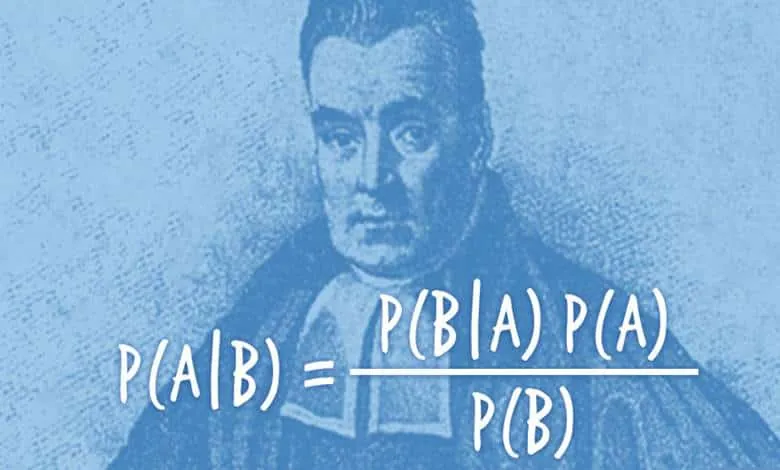
- Thomas Bayes, an 18th-century English minister, developed Bayes' theorem, a foundational concept in modern statistics.
- Oliver Heaviside, a 19th-century British self-taught engineer, created the Heaviside step function, which is essential in electrical engineering and signal processing.
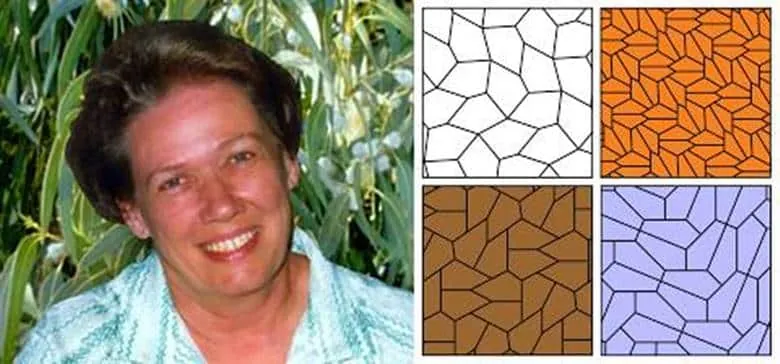
- Marjorie Rice, a 20th-century American housewife, discovered four new pentagon tilings in the years after 1975, solving a geometric puzzle that professionals had missed.
When Passion Beats a Diploma
Some of the most important discoveries in mathematics were made by people who never held a mathematics degree. The story of Marjorie Rice proves that point beautifully. In 1975, this San Diego housewife read a magazine article and decided to solve a problem that professional mathematicians had missed, going on to discover four new pentagon tilings that stunned the academic world.
Marjorie Rice was not a mathematician by any formal measure. She had no education beyond high school level mathematics, and she spent her days as a homemaker in San Diego. But in 1975, her son brought home a copy of Scientific American featuring an article by Martin Gardner. The piece stated that only eight distinct pentagon shapes were known to tile a plane completely, meaning they could cover a flat surface with no gaps and no overlaps.
Most readers would have found that fact interesting and moved on. Rice found it a challenge. She looked at the eight known pentagon shapes and thought, why only eight? What if there were more? So she began working with paper and pencil, experimenting with pentagon shapes the way someone might work on a puzzle.
Tilings are among the oldest forms of human creativity, nearly as old as civilization itself. They blend logic with artistry, and Rice clearly appreciated both sides. Within a few years, between 1975 and 1977, she discovered not one but four entirely new pentagon tilings. Her work was so impressive that it earned publication in Mathematics Magazine, an academic journal, in 1977.
Rice's story is a reminder that the ranks of amateur mathematicians have produced some of the field's most remarkable breakthroughs. These are people who pursued mathematics out of pure curiosity, often while working in completely different professions. They had no credentials to protect and no reputation to defend. They simply asked questions that professionals had overlooked, and their passion carried them to discoveries that reshaped the field.
Marjorie Rice: The Housewife Who Out-Tiled the Experts
In 1975, Marjorie Rice was living an ordinary life in San Diego when she picked up her son's copy of Scientific American and read something that changed everything. The magazine reported that mathematicians had found only eight distinct pentagon shapes capable of tiling a plane, covering a flat surface completely without gaps or overlaps. Rice had no formal mathematics education beyond high school, but she decided she could do better.
What makes her story remarkable is how completely unqualified she appeared to be. She was a housewife with a passion for geometry, someone who simply loved shapes and patterns. She began experimenting on her own, drawing pentagons and testing whether they could fit together perfectly. Within a few years, she discovered not just one but four entirely new pentagon tilings that professional mathematicians had missed. Her findings were published in an academic journal in 1977, a stunning achievement for someone working entirely outside the mathematical establishment.
Rice's story stands as one of the most compelling examples of what amateur mathematicians can accomplish when curiosity outruns credentials. She didn't need a PhD to see what trained eyes had overlooked for decades.
Pierre de Fermat: The Lawyer Who Taught Us to Dream in Numbers
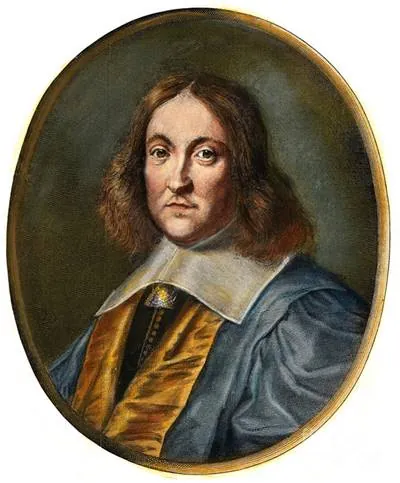
Pierre de Fermat, born in 1607 in Beaumont-de-Lomagne, France, stands as history's most famous amateur mathematician, a man who reshaped number theory while working full-time as a lawyer. He never held an academic post, and yet his name appears in textbooks centuries later. His story proves that the title of amateur mathematician carries no shame; it simply means the passion comes first and the credentials come second.
Fermat trained in law and spent his professional life in the courts of Toulouse. Mathematics was his private obsession, the hobby he returned to after a day of legal work. Instead of submitting papers to journals, he shared his discoveries in letters to colleagues scattered across Europe. Some of his most important results never even made it into those letters. He scribbled them in the margins of the books he was reading, as casual as a reader jotting down a thought in a novel.
His style was maddening to the mathematicians who followed him. Fermat would announce a striking result with confidence and then either skip the proof entirely or offer only a sketch of one. He is remembered for Fermat's Little Theorem, a deceptively simple statement about prime numbers. But his most famous claim, Fermat's Last Theorem, remained unsolved until 1994. He wrote in a margin that he had discovered a truly marvelous proof, but that the margin was too narrow to contain it. Mathematicians searched for that proof for generations. Andrew Wiles finally completed one in 1994, using mathematical tools that did not exist in Fermat's lifetime.
What makes Fermat so beloved among amateur mathematicians is precisely that he worked outside the system. He did not need a department's approval or a peer review board. He explored numbers because they fascinated him, and he shared his findings with friends who shared his curiosity. The fact that his unproven claims sent professional mathematicians scrambling for centuries is a testament to the power of a sharp mind working purely for the love of the subject.
Oliver Heaviside: The Self-Taught Engineer Who Rewired Physics
Oliver Heaviside never earned a university degree, yet he reshaped how physicists write the laws of electricity and magnetism. His formal schooling ended when he was just 16 years old, after family money troubles made further education impossible. What happened next reads like a quiet rebellion against circumstance.
Heaviside was a bright student in London, but the classroom could not hold him for long. With his family unable to pay for more schooling, he took a different path. His uncle, an inventor and businessman, gave him his support. Heaviside found work in the telegraph industry. There, surrounded by wires and signals, he found his real education. He devoured mathematics and physics on his own time, teaching himself while earning a living with his hands.
His early work was practical, focused on the experimental side of electricity. But in the 1870s, he picked up James Clerk Maxwell's writings on electricity and magnetism. Maxwell's ideas were brilliant but tangled, buried in complicated notation that made them hard to use. Heaviside took on the job of untangling them. He rewrote Maxwell's equations into the streamlined vector form that physics students still meet today. That simplification was not a small editorial task. It made Maxwell's theories usable, turning profound insight into working tools for engineers and scientists.
Recognition came slowly but it came. The University of Göttingen awarded him an honorary doctorate, and he was elected a Fellow of the Royal Society, Britain's most distinguished scientific body. For a man whose formal education stopped at 16, those honors carried real weight.
His fingerprints remain all over modern mathematics. The Heaviside Function, named in his honor, appears across engineering and physics as a way to describe sudden switches or jumps. Every time an engineer flips a signal on or off in a calculation, Heaviside's legacy is quietly doing the work. His story is a reminder that the drive to understand can outrun any classroom, and that some of the most important minds in science never needed a diploma to start thinking.
Thomas Bayes: The Minister Who Gave Us a Way to Think About Uncertainty
Thomas Bayes was a Presbyterian minister in eighteenth-century England who, almost as an afterthought to his religious calling, developed a mathematical framework that still shapes how scientists, economists, and even spam filters handle uncertainty. He was born in 1701 or 1702, as the exact year remains uncertain, and he spent his life walking two parallel paths: one devoted to theology, the other to mathematics. He studied logic and theology at university before taking up his role in the church, and for years his intellectual life seemed firmly anchored in matters of faith.
His first published work was theological in nature, a reflection of his primary vocation. But his second publication took a sharp turn into the mathematical debates of his day. Bayes wrote a defense of Isaac Newton's calculus against criticisms leveled by Bishop George Berkeley, who had questioned the logical foundations of the new mathematics. It was a bold move for a minister to wade into such a technical dispute, but Bayes handled it with clarity and precision.
The work that would make his name immortal, however, came later and almost accidentally. Bayes developed what we now call Bayes' Theorem, a result that lets you calculate the probability of one event happening given that another event has already occurred. The elegance of the idea is almost deceptive in its simplicity: it gives you a way to update your beliefs as new evidence arrives. This single insight became the foundation of Bayesian inference, an approach that uses probability to generate predictions and test hypotheses.
His contributions earned him election to the Royal Society, Britain's most prestigious scientific body. Today, the debate between Bayesian and frequentist schools of statistics continues to animate academic conferences and scientific journals alike, a living argument that traces directly back to the quiet minister's insight. For a man who spent most of his days in a pulpit, he left an outsized mark on how we think about the unknown.
Marin Mersenne: The Priest Who Connected Geniuses and Hunted Primes
Marin Mersenne entered the world in 1588 near Oizé, France, and he would grow up to become the great connector of seventeenth-century mathematics. He studied theology and Hebrew at a Jesuit college in La Flèche. The young man took holy orders and spent the 1610s teaching philosophy and theology.
His turn toward mathematics and music came later in life, when he settled at the Annunciation Monastery. Mersenne had a gift for gathering brilliant people around him. He met René Descartes and Gilles de Roberval, who worked on geometry, and Galileo Galilei and Christiaan Huygens, who worked on physics. In an age before journals and conferences, his letters served as the switchboard for European science.
In 1636, Mersenne published L'Harmonie Universelle, a sweeping work exploring the relationship between music and mathematics. Its lasting contribution became known as Mersenne's Laws, which connect the frequency of a vibrating string to its length, tension, and mass. A short string vibrates faster than a long one; a taut string sings higher than a slack one.
Yet his most enduring legacy lies in number theory. Mersenne studied numbers of the form 2p − 1, where p is prime. These now bear his name as Mersenne numbers, and he compiled a list of p values that produce prime results. His list contained errors. The method, however, proved durable. Today, the largest known prime number is a Mersenne number.
Mersenne was a priest who loved mathematics, and his willingness to share ideas across borders made him indispensable. For amateur mathematicians, his story offers a simple truth: you do not need credentials to change the field. You need curiosity, persistence, and maybe a good mailing list.
Frequently asked questions
Who was Marjorie Rice and what did she discover?
Marjorie Rice was a San Diego housewife with no math education beyond high school who, in 1975, read a Scientific American article stating that only eight distinct pentagon shapes were known to tile the plane. She decided to look for a ninth. Within a few years, she found not one but four entirely new pentagon tilings, and her work was published in an academic journal in 1977. Think about that for a second. She was not a professor, not a researcher, not even a college graduate in mathematics. She was someone who saw a statement in a magazine and thought, "I wonder if that's really true." So she got out her paper and pencils and started drawing. Her kitchen table became a laboratory, and her geometric intuition proved sharper than that of people who had spent their whole careers studying shapes.
Why is Pierre de Fermat considered an amateur mathematician?
Pierre de Fermat was a lawyer who practiced law professionally in 17th-century France, but he pursued mathematics purely as a hobby, sharing his results through letters to colleagues and margin notes in books. He was born in 1607 in Beaumont-de-Lomagne, France, and never held an academic position in mathematics. His day job was the law; his passion was numbers. Fermat had a habit that drove his correspondents crazy. He would announce a stunning result, then either give no proof at all or leave a proof so sketchy it barely counted. His most famous claim, Fermat's Last Theorem, sat in the margin of a copy of Arithmetica with a note saying he had a wonderful proof but the margin was too small to contain it. That offhand remark went unsolved until 1994, when Andrew Wiles finally closed the case more than three centuries later.
How did Oliver Heaviside simplify Maxwell's equations?
Oliver Heaviside, an English engineer whose formal education ended at age 16 due to family financial difficulties, read James Clerk Maxwell's works on electricity and magnetism in the 1870s and reformulated the complex equations into the modern vector form used today. Heaviside taught himself advanced mathematics and physics while working in the telegraph industry, and his simplification made Maxwell's ideas practical for engineers. His story is one of pure self-directed learning. No professors, no classrooms, no degrees. Just a young man with a telegraph job and an insatiable appetite for understanding how electricity actually worked. Heaviside's contributions earned him an honorary doctorate from the University of Göttingen and election as a Fellow of the Royal Society.
What is Thomas Bayes famous for in probability theory?
Thomas Bayes, a Presbyterian minister born in 1701 or 1702, developed Bayes' Theorem, which calculates the probability of an event given that another event has already occurred. This single idea forms the foundation of Bayesian inference, a statistical approach used today in everything from spam filters to medical diagnostics. Bayes lived a double life. By day he was a clergyman; by inclination he was a mathematician. His second published work defended Isaac Newton's calculus against criticisms by Bishop George Berkeley, showing he was willing to wade into intellectual fights. But his real legacy is that theorem, which gives us a way to update our beliefs when new evidence arrives.
Who was Marin Mersenne and what are Mersenne primes?
Marin Mersenne was a 17th-century French priest, born in 1588 near Oizé, who studied numbers of the form 2^p - 1, now called Mersenne numbers. He published a list of p values that he believed produced prime results, and while that list contained errors, the method proved so significant that these numbers still carry his name today. His work on vibrating strings also produced Mersenne's laws, relating frequency to length, tension, and mass. Mersenne was more than a number theorist. He was a connector, a man who met Descartes, Galileo, and Huygens, serving as a kind of hub for 17th-century science. His 1636 work L'Harmonie Universelle examined the relationship between music and mathematics. The man was a priest who never held a formal mathematics post, yet his name is attached to some of the most searched-for prime numbers in history. The largest known prime number today is a Mersenne prime. Editorial note: Any facts that remain unconfirmed are presented as such, with hedged language, so readers can distinguish verified history from ongoing scholarly debate.
Got a take on this? Add your voice to the conversation below →
No comments yet. Be the first.