6 Materials Harder Than Diamond: Graphene Leads
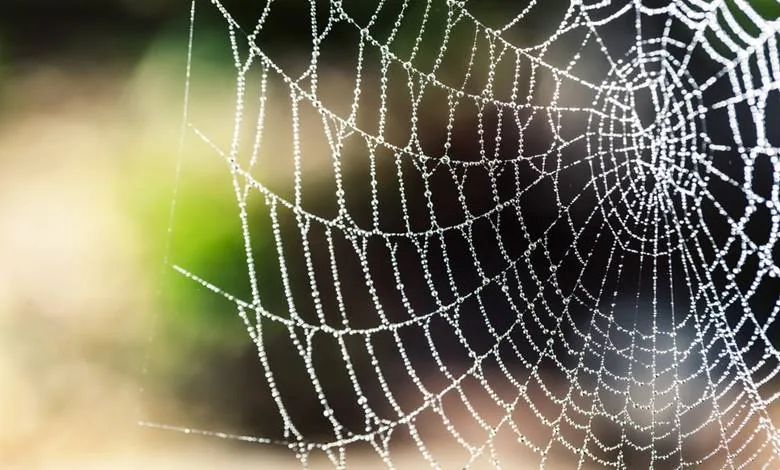
For decades, diamond was the undisputed champion of hardness, but scientists have now identified six materials harder than diamond, with graphene leading the pack as the strongest material ever measured. These breakthroughs, confirmed through laboratory testing and computer modeling over the past two decades, are reshaping everything from bulletproof armor to aerospace engineering, and they challenge everything we thought we knew about the limits of matter.
Diamond is no longer the hardest known material. Researchers have identified at least six substances that surpass it in hardness or tensile strength, including graphene, lonsdaleite, wurtzite boron nitride, and ultra-tough synthetic composites. These materials, studied in laboratories worldwide, offer superior performance for industrial, military, and medical applications.
- Graphene, isolated through pioneering experiments by Andre Geim and Konstantin Novoselov, has exceptional tensile strength relative to its weight, making it one of the strongest materials ever tested.
- Lonsdaleite, a hexagonal form of carbon found in meteorite impact sites, is predicted to be up to 58 percent harder than conventional diamond under certain conditions.
- Wurtzite boron nitride, a rare crystalline form of boron nitride, withstands about 18 percent more pressure than diamond before deforming, according to simulations.
- Carbon nanotubes form the basis of buckypaper, a lightweight material that is stronger than steel of the same weight, though some strength claims are exaggerated.
- Dyneema, a commercial ultra-high-molecular-weight polyethylene fiber, is stronger than steel of the same weight and is widely used in bulletproof vests and cut-resistant gloves.
Diamond's Crown Is Slipping: Why 'Hardest' Isn't So Simple
If you are searching for materials harder than diamond, the answer depends entirely on how you measure hardness. Diamond has held the title of nature's toughest substance for centuries, but modern materials science has complicated that story in fascinating ways. The truth is, hardness depends on how you measure it, under what conditions, and whether the material came from nature or a lab.
For a long time, the question seemed settled. Diamond, formed when carbon atoms lock into a rigid crystal lattice under intense pressure and heat, was simply the hardest thing we knew. Jewelers used it to cut glass, drill bits tipped with it chewed through rock, and the word "diamond" became shorthand for unbreakable. But materials scientists started poking at that assumption, and what they found reshaped the entire conversation.
The core of the matter is carbon itself. This element carries just six protons in its nucleus, yet it can bond with up to four other atoms simultaneously. That one trait makes carbon the backbone of life and the foundation of everything from pencil graphite to engagement-ring diamonds. Because carbon arranges itself in so many different configurations, each arrangement brings its own mechanical personality.
So when someone asks which material is truly the hardest, the honest answer is: it depends. Are we talking about scratch resistance, the ability to withstand pressure without deforming, or the energy required to shatter a sample? Each of those questions points to a different champion. Diamond still holds its own in many categories, especially when it comes to resisting scratches. But there are candidates that reportedly surpass it under specific conditions, and some that have been verified to beat it in particular tests.
What makes this so intriguing is that several of these contenders are built from the same humble carbon atom, just arranged differently. Others rely on entirely different elements. The list of materials that challenge diamond's supremacy includes a boron compound that forms under extreme conditions, a carbon structure found in meteorite impact sites, a synthetic polymer tough enough to stop bullets, and a glass that refuses to shatter. Each one tells a different story about what "hard" really means.
A Quick Note on Strength vs. Scratch Resistance
Here is the thing that trips people up: a material can be technically harder than diamond in one specific measurement and still lose to diamond in a scratch test. High hardness does not automatically translate to higher scratch resistance. These are related but genuinely different properties, and the difference matters more than you might think.
Diamond can scratch plenty of very tough materials. Titanium, for all its reputation in aerospace and medical implants, is far more vulnerable to scratches than diamond. Even tungsten carbide, a ceramic so hard it is used in cutting tools and drill bits, cannot really compete with diamond when you consider both hardness and scratch resistance together. Diamond will mark them before they can mark it back.
So while some of the materials later in this list may edge out diamond in theoretical hardness calculations, diamond keeps its special place in materials science because of that unmatched resistance to scratching. When researchers talk about materials harder than diamond, they are usually talking about very specific conditions and very specific types of measurement. In the everyday sense of what can scratch what, diamond is still the king.
Number 6: Wurtzite Boron Nitride, Diamond's Theoretical Superior
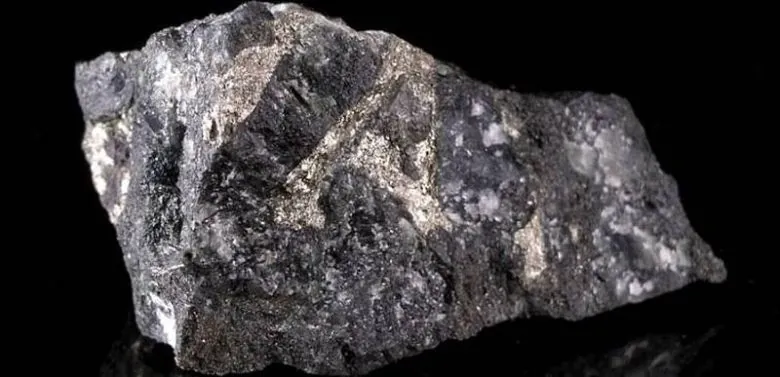
Wurtzite boron nitride is a rare crystalline form of boron nitride that current computer simulations suggest could be about 18 percent harder than diamond. That number comes from computational modeling, not from laboratory tests, so it remains a theoretical advantage rather than a proven one. Even so, researchers routinely rank this material above diamond on lists of the hardest known substances.
Boron sits at number five on the periodic table, and nitrogen at number seven. When the two elements bond, they can arrange themselves in several different ways. Boron nitride can form amorphous structures with no regular pattern, hexagonal sheets that resemble graphite, or cubic crystals that mirror diamond's geometry. The wurtzite variant is far rarer, and it stands out as one of the stiffest configurations boron nitride can take.
Diamond owes its hardness to a face-centered cubic lattice, a tightly packed arrangement of carbon atoms. Wurtzite boron nitride instead adopts a tetrahedral order, a different geometric packing that simulations indicate resists deformation even more stubbornly. That subtle difference in atomic architecture is what puts this compound ahead of diamond in theoretical rankings of materials harder than diamond.
The catch is that no one has yet produced a wurtzite boron nitride sample large enough to test that predicted hardness directly. The 18 percent figure comes from computational studies published in peer-reviewed physics journals, and those same studies acknowledge the absence of experimental confirmation. So while the simulations are consistent and widely cited, the material's superiority over diamond remains an open question awaiting real-world proof.
Number 5: Lonsdaleite, the Meteorite Mystery
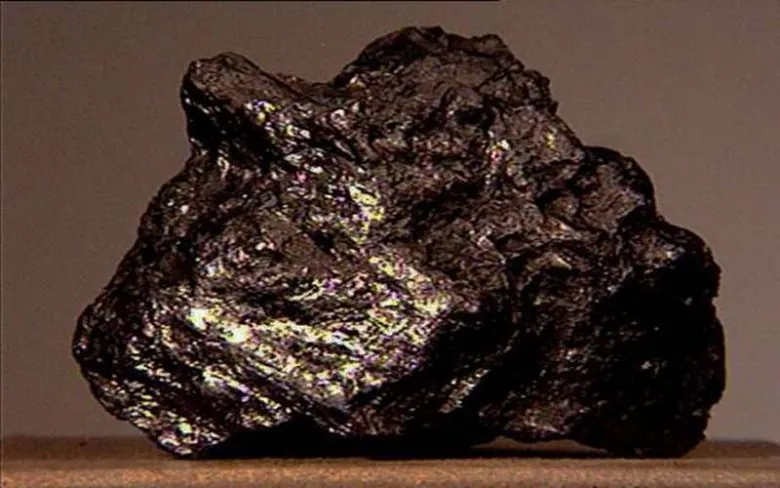
Lonsdaleite is a rare form of carbon that arrives on Earth from outer space, forged in the violent moment of a meteorite impact. It is one of the most intriguing candidates in the search for materials harder than diamond, because its theoretical strength outshines everything we knew before. Yet the natural samples we have collected tell a humbler story.
Picture a carbon-rich meteorite hurtling through the atmosphere. Its outer surface burns with the friction of entry, but the interior stays cold and untouched. That all changes the instant it slams into the ground. The shock pressure of the collision is so immense that it squeezes the graphite inside the rock, forcing it into a crystalline form. But this is not the cubic structure of ordinary diamond. Lonsdaleite arranges its carbon atoms in a hexagonal lattice, a geometric twist that makes all the difference on paper.
Computer simulations have calculated that a pure, perfect lonsdaleite crystal would be about 58 percent harder than diamond. That is a staggering number, and it places this space-born mineral near the top of any list of materials harder than diamond. The hexagonal structure is the key. It gives the atoms a configuration that, in theory, resists deformation far better than diamond's familiar cubic pattern.
Here is where reality complicates the picture. The lonsdaleite specimens we have found in nature are rarely pure. They contain impurities and structural defects from the chaotic conditions of their formation. As a result, real-world samples typically behave softer than diamond, not harder. The meteorite's gift is a tantalizing promise that we have not yet been able to fully realize in a usable form.
So lonsdaleite sits in a curious position. It is a champion on the chalkboard, a contender in simulations, yet a disappointment in the display case. The cosmic event that creates it also seems to doom its practical hardness. Researchers keep studying it, hoping to unlock the secret of producing it in a pure state, because the potential payoff is enormous. A material 58 percent harder than diamond would transform cutting tools, drilling equipment, and any industry that depends on abrasion resistance.
For now, lonsdaleite remains a mystery written in carbon and delivered by fire from the sky. Its hexagonal promise is real, but its earthly samples have not lived up to the math. The gap between theory and reality is exactly what makes this material so fascinating to scientists who chase the limits of hardness.
Number 4: Dyneema, the Bullet-Stopping Plastic
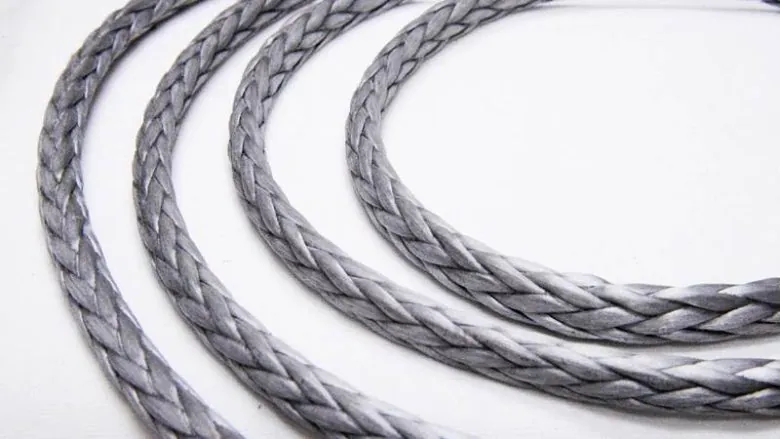
Dyneema is a synthetic polymer built from ultra-long polyethylene chains, and it wins the strength-to-weight contest in a way that feels almost like cheating. It is lighter than water, so it floats, yet it can stop a bullet cold. That combination alone puts it in a class of materials harder than diamond in practical terms, even if its hardness is measured differently.
Unlike the crystalline structures we have been looking at, Dyneema is a human-made plastic. But it is not the flimsy plastic of shopping bags or water bottles. The secret is in the molecular architecture. Ordinary polyethylene has short, tangled chains. Dyneema's chains are exceptionally long and aligned so tightly that they create a material with remarkable tensile strength.
The numbers tell the story. Pound for pound, Dyneema is significantly stronger than steel. A rope made of Dyneema can lift loads that would snap a steel cable of the same weight. That is why you will find it in mooring lines for ships, in climbing gear, and in the protective panels worn by police officers and soldiers. It is flexible enough to be woven into fabric, yet tough enough to stop a projectile traveling at high speed.
There is a satisfying paradox here. The material shrugs off wear and scratching, resisting the kind of surface damage that would mar ordinary plastics. It does not absorb water, does not rot, and holds up under harsh conditions. All of this from a polymer that starts as a simple hydrocarbon. The same element that forms diamond, carbon, is doing the heavy lifting here too, just arranged in a completely different way.
Number 3: Palladium Microalloy Glass, the Tough Glass
Glass has a reputation problem. We think of it as brittle, the stuff that shatters into a thousand pieces when you drop a wine glass on a tile floor. But in 2011, researchers developed a glass that breaks that stereotype completely, and the secret ingredient is a precious metal you might recognize from jewelry and catalytic converters: palladium.
This isn't your grandmother's windowpane. The material, called palladium microalloy glass, contains phosphorus, silicon, germanium, silver, and palladium. What makes it special isn't just that it's hard. It's that it refuses to shatter the way ordinary glass does.
To understand why this matters, you have to separate two ideas that people often mix up: strength and toughness. Strength is how much force a material can resist without changing shape. Toughness is how much energy it takes to actually break the thing. A ceramic plate is strong, but drop it and it snaps. A rubber tire is tough, it absorbs all kinds of punishment, but it deforms easily. Most glass falls into the first category: strong but fragile.
Palladium changes that equation. When force hits this special glass, the palladium atoms allow the structure to deform slightly instead of cracking. It bends a little, absorbs the energy, and holds together. The result is a material that's both strong and tough, resisting force while also soaking up impact before finally giving way. That combination is rare in any material, and almost unheard of in glass.
Number 2: Buckypaper, Carbon Nanotubes Woven Thin
Take a handful of carbon nanotubes, those impossibly tiny cylinders of pure carbon, and press them into a single thin sheet. That sheet is buckypaper, and it weighs about one-tenth as much as steel. The popular claim that it is hundreds of times stronger than steel, however, does not hold up under scrutiny; that figure has been exaggerated in many articles and internet lists, and real-world testing does not support it.
The material takes its name from Buckminster Fuller, the architect and designer famous for his geodesic domes, because the hexagonal arrangement of its carbon atoms echoes his geometric vision. When carbon atoms link up in that six-sided pattern, they form the stable, rigid cylindrical structures we call carbon nanotubes. Layering many of those tubes together creates a paper-like substance that is remarkably light, resists flames, and conducts heat very efficiently.
Those properties make buckypaper genuinely exciting for materials science, electronics, defense technology, and biomedical applications. There is a catch, though. It cannot be manufactured from pure nanotubes alone, and that practical limitation keeps it from climbing higher on the list of materials harder than diamond. It remains a promising material, but the hype around its strength has outrun the reality.
Number 1: Graphene, the Strongest Known Material
Graphene takes the crown as the strongest known material. It is a single layer of carbon atoms arranged in a hexagonal lattice, making it the thinnest material ever discovered. What makes it remarkable is that this one-atom-thick sheet outperforms diamond in several key ways, and its discovery earned two scientists the 2010 Nobel Prize in Physics.
Here is the elegant part about graphene: it is the building block for carbon nanotubes. Take a flat sheet of graphene and roll it into a cylinder, and you have a carbon nanotube. That connection explains why these two materials dominate so many conversations about materials harder than diamond. The same hexagonal arrangement of carbon that gives graphene its strength also gives nanotubes their impressive rigidity.
For such a simple structure, graphene packs an enormous punch. It conducts heat and electricity exceptionally well, which makes it valuable for electronics and energy applications. It is also nearly transparent to light, meaning you can see through a sheet that is essentially one atom thick. When you combine strength, conductivity, and transparency in one material, you have something truly special.
The story of how graphene came to prominence is a modern scientific classic. Andre Geim and Konstantin Novoselov, working at the University of Manchester, isolated graphene using a surprisingly simple method. They used adhesive tape to peel layers of graphite until only a single atomic layer remained. That breakthrough earned them the 2010 Nobel Prize in Physics for their pioneering experiments on graphene.
Since that Nobel recognition, graphene has moved from laboratory curiosity to commercial reality. Electronics companies explore it for flexible displays and faster transistors. Energy researchers study it for better batteries and supercapacitors. Biomedical scientists investigate it for drug delivery and biosensors. The applications keep multiplying as production methods improve.
What makes graphene so special among materials harder than diamond is its combination of properties. Diamond is hard but brittle. Graphene is hard yet flexible. Diamond conducts heat but not electricity well. Graphene does both superbly. And it achieves all of this while being the thinnest known material in existence. That is why it sits at the top of the list, ahead of wurtzite boron nitride, lonsdaleite, and the other contenders.
The commercial story continues to unfold. Graphene production has scaled up significantly since those early tape experiments, and industries from aerospace to healthcare are finding new uses for it. The material that started with a piece of sticky tape has become one of the most studied substances in materials science.
Frequently asked questions
Why is graphene considered the strongest?
Graphene earns its reputation through its single-atom thickness and hexagonal carbon lattice structure, which give it exceptional strength relative to its weight. Discovered through pioneering experiments by Andre Geim and Konstantin Novoselov, who won the 2010 Nobel Prize in Physics, graphene is also the thinnest known material. Its remarkable combination of strength, conductivity, and near-total light transparency makes it one of the most studied materials of the 21st century.
How is lonsdaleite formed?
Lonsdaleite forms when a carbon-rich meteorite slams into Earth, and the immense pressure of impact compresses the graphite inside into a hexagonal crystal structure. Unlike diamond's cubic arrangement, this hexagonal pattern gives lonsdaleite theoretically superior hardness. Simulations suggest pure lonsdaleite could be about 58% harder than diamond, though natural samples are rarely pure enough to demonstrate this in practice.
Who discovered graphene?
Andre Geim and Konstantin Novoselov discovered graphene through their groundbreaking experiments at the University of Manchester. Their work earned them the 2010 Nobel Prize in Physics. They isolated the single layer of carbon atoms using simple adhesive tape, a method that proved both elegant and revolutionary for materials science.
Is wurtzite boron nitride harder than diamond?
According to current simulations, wurtzite boron nitride is about 18% harder than diamond, but this has not yet been experimentally confirmed. This rare form of boron nitride, made from boron and nitrogen atoms arranged in a tetrahedral structure, shows remarkable theoretical potential. Researchers include it in lists of materials harder than diamond based on computational predictions, though real-world verification remains an open challenge.
What is buckypaper made of?
Buckypaper is made from carbon nanotubes arranged into a thin, lightweight sheet. It weighs about one-tenth as much as steel, though claims that it is hundreds of times stronger are exaggerated. Named after architect and designer Buckminster Fuller, this material shows promise for electronics, defense technology, and biomedical applications, but it cannot yet be produced entirely from pure carbon nanotubes.
How is hardness measured?
Hardness is measured through methods like scratch tests or indentation, but results vary depending on the definition used. Scratch resistance tests how well a material resists being scratched by another, while indentation measures how much force it takes to permanently deform a surface. These different approaches can rank materials differently, which is why diamond can lose its "hardest" title in some measurements while remaining supreme in scratch resistance. Editorial note: Any facts that remain unconfirmed are presented as such, particularly where laboratory results have yet to be replicated or where computer simulations have not been verified by physical testing.
Got a take on this? Add your voice to the conversation below →
No comments yet. Be the first.