Wired vs Bluetooth Headphones: Why Wired Wins for Audiophiles
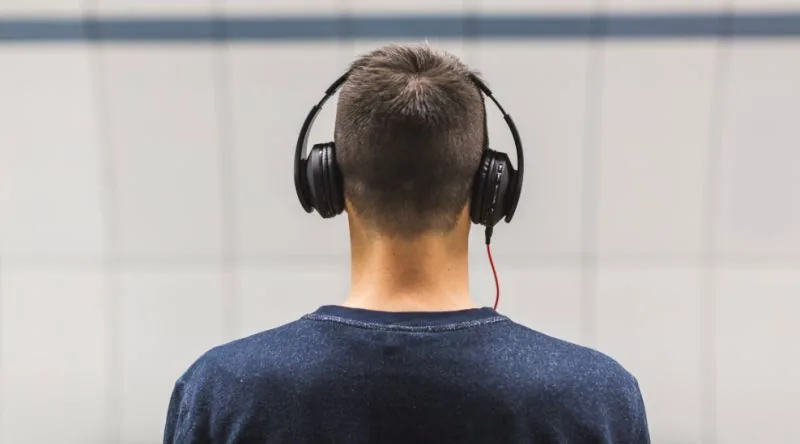
The wired vs Bluetooth headphones debate is settled for serious listeners: wired headphones deliver uncompressed, higher-fidelity audio with near-zero latency, making them the clear winner for audiophiles in 2025. While Bluetooth has improved dramatically, the physics of wireless transmission still forces a compromise that purists refuse to accept. If you have ever felt that your favorite song sounds slightly flat through wireless buds, you are not imagining things, and the technical reasons behind that feeling are more straightforward than you might think.
Wired headphones outperform Bluetooth models for audiophiles because they transmit a full, uncompressed audio signal directly from the source. Bluetooth relies on lossy compression to fit data through a wireless pipe, which strips away sonic detail. This results in reduced clarity, added latency, and a listening experience that falls short of what the artist intended.
- Wired headphones pass the complete digital audio file to the drivers without compression, preserving every bit of the original recording.
- Bluetooth audio uses lossy codecs like AAC and SBC that discard audio data to meet bandwidth limits, reducing overall sound quality.
- Latency in wireless headphones typically ranges from 40 to 200 milliseconds, which can cause noticeable audio lag during video playback or gaming.
- Wired headphones require no internal battery, meaning they never need charging and can last for decades with proper care.
- High-resolution audio formats such as FLAC and DSD play fully on wired headphones, while Bluetooth transmission caps the resolution of these files.
The Quiet Rebellion: Why Some Listeners Still Reach for a Cable
Bluetooth headphones have come a long way, yet a stubborn group of listeners keeps pulling wired headphones out of their pockets. It is not nostalgia. It is about signal processing and acoustic accuracy, where the humble cable still holds a technical edge that wireless technology struggles to match.
Music is not just background noise. It is a layered acoustic experience, a mix of deep basslines, delicate high notes, and everything in between. Faithful sound transmission sits at the center of that experience, and the way your headphones receive the signal changes what you actually hear.
Take the frequency response, for instance. Wired headphones typically cover the standard nominal human hearing range of 20 Hz to 20 kHz, which means you can catch the full weight of a kick drum and the sparkle of a cymbal crash. The analog connection carries the music signal without compressing it or converting it into a lossy format. That matters a lot when you are listening to high-resolution files like FLAC or DSD.
Wireless models, on the other hand, have to squeeze the audio through Bluetooth's limited bandwidth. The SBC codec's bitrate is configurable, not fixed, and while a common setting lands around 328 kbps, that figure only reaches about 23 percent of CD quality's 1.4 Mbps. More advanced codecs improve things, but they still face real-world limits. aptX HD is fixed at 576 kbps, while LDAC can reach up to 990 kbps under ideal conditions but often drops to lower bitrates to keep the connection stable. The result is a signal that has been compressed, reshaped, and stripped of some of its original detail before it ever reaches your ears.
That is the quiet rebellion in a nutshell. A small but devoted crowd would rather deal with tangles and a shorter leash than give up the purity of an uncompressed signal. They are not anti-technology. They are just pro-fidelity.
The Compression Problem: Why Bluetooth Throws Away Your Music
The moment a song leaves a Bluetooth transmitter, it gets squeezed. That squeeze is the single biggest technical gap between wired vs Bluetooth headphones, and it starts with something called a codec, the digital translator that shrinks your audio to fit through the air.
A wired connection never has this problem. Your headphones receive the full analog signal, untouched and uncompressed, which is exactly what makes them the gold standard for high-fidelity listening. If you're playing a lossless FLAC file or a DSD recording, formats that capture every breath of a vocalist and every brush of a snare drum, a wire delivers it all. Bluetooth, by contrast, has a tight bandwidth budget to respect, and it pays for that convenience by discarding data.
The most basic codec, SBC, is often quoted at 328 kbps, which works out to roughly 23% of the 1.4 Mbps that CD-quality audio demands. But that figure is a simplification. SBC's bitrate is configurable, not locked in stone, so the real-world number depends on the device. The story gets murkier with premium codecs like aptX HD and LDAC. The common claim is that they top out around 990 kbps before environmental interference drags them down. The truth is messier: aptX HD is fixed at 576 kbps, and while LDAC can reach 990 kbps under ideal conditions, it often drops to lower bitrates to preserve a stable link.
What you're left with is a frequency response of 20 Hz to 20 kHz on wired headphones, the standard range of human hearing. That means the deep thump of a kick drum and the delicate shimmer of cymbals come through intact. On Bluetooth, compression nibbles at those extremes, and the accuracy suffers, even if you don't notice it on the morning commute.
The Hidden Noise: How Distortion Creeps Into Wireless Audio
Ever noticed how a cymbal crash can sound like a splash of static, or how a cello's low notes lose their warmth and turn muddy? That is harmonic distortion, often shortened to THD. It happens when a headphone driver fails to reproduce a signal faithfully, and the effect is most noticeable with instrumental music, where the ear has fewer vocals to mask the imperfections.
Wired headphones keep THD remarkably low because energy travels directly from your phone or amplifier to the driver, with nothing in between to interfere. Wireless headphones, by contrast, are tiny computers strapped to your ears. They house a digital-to-analog converter, or DAC, and an amplifier inside the earcup itself, crammed into a space smaller than a coin. These miniature components generate noise and distortion at a higher rate than their full-sized counterparts, simply because of their size and the electrical interference they create in such close quarters.
This is the heart of the wired vs Bluetooth headphones debate. When you listen through a cable, the signal stays analog from source to ear. When you go wireless, that same signal must be converted, compressed, transmitted, and converted again, and each step leaves a little bit of sonic dirt behind. The result is a cleaner, more transparent sound from the wired pair, especially when you are listening to complex arrangements where every instrument needs its own space to breathe.
The Latency Lag: When Milliseconds Ruin the Groove
When you tap your foot to a beat, your brain expects the sound to arrive the instant your foot hits the floor. Wired headphones deliver that signal with practically no perceptible delay, which is why live recordings and fast electronic tracks feel so locked-in. Bluetooth, by contrast, adds a noticeable lag through compression, transmission, and decoding steps that simply don't exist on a wired path.
Here's the thing about that "zero latency" claim you often hear. The source material states that wired signal delay is in the order of nanoseconds, but the full picture is more nuanced. The cable itself does propagate electricity at near light speed, which is indeed nanoseconds. However, the digital-to-analog converter and amplifier circuitry in your device add microseconds to milliseconds of processing time. So while wired is dramatically faster than wireless, it's not literally instant. The practical takeaway stands though: for human perception, wired feels immediate, and that immediacy matters when you're listening to a drummer's ghost notes or a synth arpeggio at 140 BPM.
Bluetooth's delay compounds through three distinct stages. First, the audio codec compresses the signal to fit through a narrow wireless pipe. Second, that compressed data travels through the air. Third, your earbuds decode it back into sound. Each step eats milliseconds, and together they can push total latency past 100 milliseconds in some implementations.
According to the original account, the aptX codec can reduce this delay to around 40 milliseconds. That figure is contested, since aptX Low Latency is designed for about 40 ms but real-world performance varies with device quality and interference. Even if you hit that 40 ms target, it's still roughly ten times the delay of a wired connection. For a casual podcast listener, 40 ms is invisible. For someone checking a live recording against a metronome or dancing to a hard-hitting techno track, that gap between what you see and what you hear can pull you right out of the music.
The worst part is that this lag isn't constant. Bluetooth latency can fluctuate as your connection quality shifts, so the sync problem isn't just a fixed offset you could theoretically compensate for. It's a moving target that makes professional monitoring with wireless gear a frustrating guessing game, which is a big reason why studio engineers still reach for wired headphones when timing matters most.
Freedom From the Charger: The Practical Case for Wired
Plug in a pair of wired headphones and the battery question simply disappears. The power comes straight from your phone, laptop, or amplifier, so there is nothing to charge and nothing to drain. That single fact changes the entire listening experience in a way that anyone who has watched a wireless pair die mid-album will understand immediately.
Think about what that means for a long listening session. A wired connection keeps going for as many hours as you have the energy to sit there, whether that is a three-hour album marathon, a full day of podcasts while you work, or an overnight flight with noise-cancelling buds that never need to be topped up. The source device might eventually run low, but the headphones themselves will never be the reason you have to stop.
Wireless headphones, by contrast, carry a built-in timer. Every pair has a rated battery life, and every charge cycle brings you closer to the moment when the low-battery warning chimes in. Even the best Bluetooth models eventually need to be parked on a charging pad, and the more you use them, the more often that interruption arrives. It is a limitation baked into the design, not a flaw in a particular brand.
This is where the practical side of the wired vs Bluetooth headphones debate becomes crystal clear. The wireless convenience of moving around untethered comes with a hidden cost: you are always negotiating with a battery meter. Wired headphones simply remove that negotiation from the equation entirely, leaving you free to focus on the music itself. For anyone who treats listening as a long, immersive activity rather than a quick commute companion, that freedom is not a small perk. It is the whole point.
The Verdict: Wired Wins for Audiophiles, But Is It for Everyone?
After weighing the technical trade-offs, the source lands firmly on one side: wired headphones deliver superior sound through analog accuracy, a wider dynamic range, lower harmonic distortion, and near-zero latency. Wireless models win on portability, no question. But that convenience comes at a cost. Bandwidth limits, compression losses, and signal delay force compromises that matter most to people who treat music as more than background noise.
Think about what happens the moment a Bluetooth signal leaves your phone. The audio file gets squeezed to fit through a narrow wireless pipe, and some of the original detail never makes it back. Wired connections skip that entire process. The analog signal travels straight from source to driver, preserving the full frequency response of 20 Hz to 20 kHz that covers the standard range of human hearing. Deep bass lines and delicate high notes arrive intact, exactly as the artist intended.
The source is clear that this is a position, not a universal law. For someone commuting on a crowded bus or jogging without pockets, wireless freedom easily outweighs sonic purity. But for the listener who sits down with a favorite album and wants every layer of the mix revealed, the wired path remains the honest one. Uncompressed, unaltered sound transmission is why professionals and dedicated enthusiasts keep reaching for the cable.
Frequently asked questions
What makes wired headphones sound better than Bluetooth?
Wired headphones sound better primarily because the analog connection transmits the audio signal without any compression, preserving the full dynamic range and minimizing distortion. With a direct copper wire carrying the electrical signal, the music reaches your ears exactly as the artist intended. Bluetooth, by contrast, must squeeze the audio through a narrow wireless pipe, forcing it to discard data along the way.
How does Bluetooth compression affect audio quality?
Bluetooth's limited bandwidth forces the audio file to be compressed before transmission, and that compression loses detail compared to CD-quality or high-resolution files. The original account points to the SBC codec as a common example, though its data rate is configurable rather than fixed. What matters for listeners is that some sonic information gets sacrificed in the wireless conversion process, and the more complex the music, the more noticeable the loss becomes.
Why do audiophiles prefer wired headphones?
Audiophiles gravitate toward wired headphones because they deliver an uncompressed signal, lower harmonic distortion, and near-zero meaningful latency, all of which matter for critical listening. When you are analyzing a complex orchestral passage or a dense jazz improvisation, every detail counts. The wired connection lets you hear the recording with minimal coloration or electronic interference, which is why serious listeners often keep a pair of wired cans around even in the wireless age.
Is there a noticeable latency difference between wired and wireless headphones?
Yes, the difference is dramatic. Wired headphones transmit the signal almost instantaneously, with cable propagation measured in nanoseconds, a delay so small the human ear cannot perceive it. Bluetooth adds a processing delay that can throw fast music off sync, especially in the aptX codec where latency reportedly drops to around 40 ms but remains noticeable to trained ears. For live recordings or high-BPM electronic tracks, that tiny lag can feel like the rhythm is slightly behind the beat.
Do wired headphones have lower harmonic distortion than Bluetooth?
Yes, according to the original account, wired headphones generally produce lower harmonic distortion because the energy travels directly from the source to the driver. Wireless models pack a digital-to-analog converter and amplifier directly into the earcup, and those miniature components generate noise and distortion. The tighter space and lower power budget mean the signal degrades slightly before it ever reaches your ear, which can muddy instrumental details.
Are wired headphones worth it for casual listeners?
For casual listeners, the convenience of wireless often outweighs the sonic differences. The original account focuses on audiophiles and professionals who demand uncompressed sound, near-zero latency, and minimal distortion. If you are listening to podcasts while commuting or background music while cooking, Bluetooth's freedom from cables and its battery life are hard to beat. But if you find yourself turning up the volume to catch a subtle guitar detail, a wired pair might be worth the tangle. Editorial note: Any facts which remain unconfirmed are presented as such, with hedged language used where specific measurements or model performance may vary by manufacturer.
Got a take on this? Add your voice to the conversation below →
No comments yet. Be the first.