Victor Hugo: The Naked Novelist Who Wrote Les Misérables
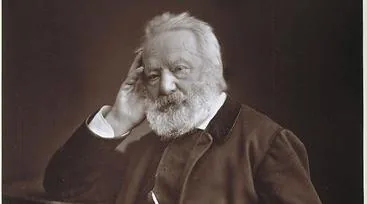
Victor Hugo, the French writer who gave the world Les Misérables and The Hunchback of Notre-Dame, lived from 1802 to 1885 and became a towering figure of French Romanticism. He wrote in the morning, often without a stitch of clothing, ordering his servants to hide his clothes so he could not leave the house. He loved passionately, grieved enormously, and spent years in exile for his political beliefs. When he died, the crowds who followed him were enormous.
Victor Hugo was a French novelist, poet, and playwright. He led the Romantic movement, wrote Les Misérables and Notre-Dame de Paris, and spent years in exile after opposing the regime of Napoleon III. He died in Paris in 1885 and was given a national funeral.
- Victor Hugo was born in France in 1802, the son of a military man who served under Napoleon.
- His 1830 play Hernani caused a great sensation in Paris, cementing his role as a leader of the French Romantic movement.
- Hugo went into exile in 1851 after opposing the regime and did not return permanently until 1870.
- He wrote Les Misérables during his exile, publishing it in 1862.
- When Hugo died in 1885, an enormous crowd joined his funeral procession in Paris.
Who Was Victor Hugo? The Man Behind Les Misérables
Victor Hugo was the author of Les Misérables and Notre-Dame de Paris, better known in English as The Hunchback of Notre-Dame, and he stands as one of the most respected representatives of the Romantic movement in France. But before the novels made him a legend, he was a teenage poet collecting prizes.
Picture Paris around 1819. Hugo is barely 17 years old, and he is already winning first prizes in poetry competitions, including recognition from the Académie française. That was his doorway into letters. Poetry came first, and it came early.
Then came the one-two punch that changed French literature. In 1827 he published the play Cromwell, and in 1830 came Hernani. Together they laid the foundation of French Romanticism. Hernani's premiere caused an outright sensation in Paris, with Hugo's romantic camp squaring off against defenders of the classical tradition. By the end of that night, the old guard had lost ground.
So who was this man? A poet who became a playwright, a playwright who became a novelist, and a novelist who spent roughly 17 years on a single book. As the story goes, he could compose an 800-word sentence inside it, though that specific figure is hard to pin down. What is certain is the scale of the ambition.
Hugo is buried in the Panthéon in Paris, where Alexandre Dumas and Émile Zola were also later interred. Contrary to the popular version, they do not share his tomb.
He was a man of contradictions: a royalist in his youth who became a republican, a man who married for love and then was endlessly unfaithful, a writer who knew grief intimately because he experienced the loss of children. And he was, above all, a voice France could not ignore.
The Private Victor Hugo: Juliette Drouet, Affairs, and a 50-Year Bond
Victor Hugo married for love, and then he betrayed that love, repeatedly, for most of his adult life. The women who passed through his days included married women and sex workers, and he made little effort to hide it. One relationship, though, refused to be just another affair. Hugo met Juliette Drouet, an actress, and she stayed in his life for roughly fifty years, until her death.
Living near each other did not stop them from writing. According to the account, the two exchanged around twenty thousand letters across those five decades, a correspondence that kept going even when they were only a short walk apart. When Hugo went into exile, Drouet followed, moving into a house nearby so she could remain close. She was no longer simply a mistress. She had become family, something closer to a permanent fixture of his life, the person who embodied his own line that the greatest happiness is to be loved as you are, or rather loved in spite of yourself.
Grief was not a stranger to Hugo. He experienced the loss of children, and those losses cut deep. Then came Juliette. She died at the age of 77, and after that, Hugo never wrote again. A few years later, in 1885, he followed her.
Lines were inscribed on her gravestone, words he had placed there for her:
When I am nothing but cold ash,
when my tired eyes have closed to daylight for good,
tell yourself, if any memory of me remains in your heart:
whatever the world may think, his love was mine.
That is the private Victor Hugo, the man behind the monumental novels and the political speeches. He was unfaithful, complicated, and often absent in the ways that mattered. But for fifty years, one woman stayed, and when she was gone, so was something in him.
The Speech That Made Him a Target, and the Exile That Made Him a Legend
In 1849, Victor Hugo stood in the National Assembly and aimed his voice straight at the men who wanted the church to run France's schools. The measure they were pushing, the Falloux Law, struck him as a deliberate blow against secular education, and his speech against it became something close to a manifesto of free thought. He turned to the right-wing deputies who backed the bill and asked them, in effect, what it was that disturbed them. The great light of freedom France had spread for three hundred years, he told them, was what troubled their sleep.
The Falloux Law passed anyway, in 1851. Hugo had made enemies, and he had made himself loud. He was already famous, already a powerful orator, and that combination of fame and defiance did not sit well with the new order. In 1851, after the regime came down on its opponents, Hugo fled. He did not sneak back a few months later to test the waters. He stayed out.
Then came the offer. Napoleon III declared an amnesty, and a pardon was the polite word for the door being held open. Hugo refused it. He chose principled exile instead, a decision that cost him comfort, proximity, and the daily texture of French life, and bought him something harder to measure. He kept writing.
What He Built While He Was Away
Exile turned out to be productive. Les Misérables was published in 1862, and it was written during those years away from France, alongside three collections of poetry and a series of satires aimed squarely at Napoleon III. The satires were banned in France. They were also widely heard, passed around and repeated in the way banned things always are. Hugo was not in the country, but he was very much in the conversation.
He wrote the preface to Les Misérables at Hauteville House on January 1, 1862, and in it he laid out the three problems he believed the century had to solve: the degradation of man through the exploitation of his labor, the degradation of woman through hunger, and the stunting of children through lack of education. As long as ignorance and poverty ruled the earth, he wrote, books like this one would still be useful. It reads less like a preface than a mission statement.
The Return
In 1870, with the Republic proclaimed, Hugo came home. He was greeted as a hero. Crowds, cheers, the whole apparatus of a nation welcoming back the man it had pushed out. Politics was now unavoidable for him, and he stepped into it.
He did not join the Paris Commune in 1871. He was in Brussels when it unfolded. But he supported the Communards, and when the repression came down on them, he spoke against it. Still, it was consistent. The man who had refused a pardon for himself was not about to celebrate the punishment of others.
The Death Penalty, Notre-Dame, and a Writer Who Fought for the Poor
Victor Hugo was a prominent opponent of the death penalty, and that conviction shaped his public life as much as his fiction did. He campaigned against capital punishment for decades, and his advocacy influenced the abolition of capital punishment in several nations. He also stepped in on behalf of individual prisoners, writing and lobbying to pull specific men back from the edge.
One of those interventions is the stuff of legend. According to the account, Hugo appealed to the British government on behalf of six Irishmen facing execution. The story credits his persuasion with saving them, though the details are hard to pin down and the claim is contested. What is certain is the pattern: Hugo kept inserting himself into cases where a life hung on a signature, and he did not always arrive in time.
He also wrote Notre-Dame de Paris, better known as The Hunchback of Notre-Dame, with the cathedral itself in mind. As the story goes, he wanted to draw attention to the crumbling Gothic landmark and spur its preservation, and the novel did help reignite public feeling for the building and its architecture. The popular version goes further, insisting the cathedral was literally slated for demolition; that is an oversimplification, since the real threat was neglect and heavy-handed restoration rather than a wrecking order.
Poverty was the other engine of his work. Hugo wrote constantly about hunger, about laborers crushed by their own labor, about the specific miseries of ship workers and the working poor. His writing conveys an intimate familiarity with deprivation, and it made his social criticism land with unusual force.
His politics traveled a long arc. As a young man he was a royalist; by midlife he had become a republican, and the shift was not a small adjustment of taste but a full reversal of allegiance.
The clearest statement of his moral program sits at the front of Les Misérables. The preface is dated Hauteville-House, 1 January 1862, and in it Hugo names three problems the book exists to confront: the degradation of the worker through exploitation of labor, the fall of woman through hunger, and the stunting of children through ignorance. As long as those three conditions persist, he writes, books like this one will still be useful.
Three problems, one novel, and a deadline he met from exile. That is the whole architecture of Les Misérables in a single paragraph.
The Secret Painter and the Naked Writing Habit
Most readers know Victor Hugo as the novelist of Les Misérables, published in 1862. Far fewer know that he was also a painter, and that he guarded this side of himself almost jealously. His drawings displayed a remarkable Gothic style and a visionary imagination, as though he were sketching places that did not quite exist yet.
What makes the paintings stranger still is how little color they carry. Here was a man whose public personality overflowed with drama and appetite, and yet his own hand reached again and again for darkness. He favored ink, and when he could not find any he resorted to charcoal dust and soot. Some accounts go further and claim he used his own blood, though that detail belongs to legend more than to any verifiable record.
And he did not want to be known for his painting. That reluctance is part of the surprise. The man who filled Paris with his plays and his speeches kept his drawings close, as if they were private conversations rather than public achievements.
His working habits were just as peculiar. The story goes that when writer's block settled in, Hugo would strip off every piece of clothing, hand the pile to his servant, lock himself inside a room, and write naked. It is a popular anecdote, often repeated, and the naked detail in particular cannot be confirmed. What the tale does capture, whether or not every part of it is true, is a man who treated writing as something close to physical compulsion, a thing that required him to remove every distraction, including his own clothes.
A novelist by daylight, a draftsman in the dark, and a man who would rather sit alone and unclothed than let a blank page win.
His Will, His Funeral, and the Words He Left Behind
Victor Hugo died in 1885, and by then he had already written down exactly how he wanted to leave. In his will he asked to be carried to the cemetery in the poor man's hearse, the plain cart reserved for those who could afford nothing else. He refused the burial rites of every church. And then, in the same breath, he asked for something stranger and larger: a prayer from all souls.
The wording matters. He did not ask people to pray for him. The text says âmes, souls, not men and women. He wrote it plainly: je crois en dieu. I believe in God. As the story goes, he also left 50,000 francs to the poor, though the exact figure in the will cannot be confirmed today. What is documented is the shape of the request: no incense, no clergy, no grand tombstone, just a cart, a prayer, and a God he never stopped arguing with.
He had spent his life insisting the body was only a mask. In Toilers of the Sea he wrote that the real person is what hides beneath the face, and that if we could see through the illusion of the flesh we would be astonished at what we found. He had said the same thing in Les Misérables: life is a long experience, an incomprehensible preparation for an unknown destiny. Whether those exact lines read today as they did then is hard to pin down, but the theme runs through everything he wrote.
What did the crowds look like?
Victor Hugo turned 80 in 1882, and Paris reportedly turned out in enormous numbers to celebrate him, a crowd described in some accounts as half a million people. That figure is contested and should be treated with caution. What is certain is that when he died in 1885, the funeral was even larger, and the city that had once exiled him now claimed him as its own.
Where is Victor Hugo buried?
Victor Hugo is buried in the Panthéon in Paris, the national mausoleum where France honors its great dead. Alexandre Dumas and Émile Zola were also later interred there. Contrary to a popular version of the story, they do not share his tomb; each rests in his own place within the same building.
So the man who asked for a poor man's cart ended up in the grandest building in France, surrounded by the writers he had once fought beside and against. He had wanted souls to pray for him, not crowds to cheer. He got both.
Frequently asked questions
Who was Victor Hugo and why is he famous?
Victor Hugo was a French poet, playwright, and novelist who became a leading figure of French Romanticism, and he is most famous for two novels: Notre-Dame de Paris , published in 1831, and Les Misérables , published in 1862. He was also a political figure who served in the National Assembly and spent years in exile for opposing the regime.
Why was Victor Hugo exiled from France in 1851?
After the 1851 coup, Hugo fled France because of his opposition to the new regime. He refused the amnesty Napoleon III declared, choosing to remain in voluntary exile on principle, and only returned in 1870 when the Republic was proclaimed, greeted as a hero.
What was Victor Hugo's relationship with Juliette Drouet?
Juliette Drouet was Hugo's mistress and companion for roughly 50 years, until her death. She followed him into exile and lived nearby. As the story goes, some sources say the two exchanged around 20,000 letters, though that figure cannot be precisely verified.
Did Victor Hugo really write naked when he had writer's block?
There is a known anecdote that Hugo had his clothes locked away to force himself to keep writing, with his servant holding the key. According to the account, he is said to have stripped and locked himself in a room to work. The naked detail is a popular embellishment.
What did Victor Hugo leave in his will?
Reportedly, Hugo's will included charitable bequests, a request to be carried to the cemetery in the poor man's hearse, a refusal of religious rites from any church, and a request for prayers from all souls. The exact phrasing and the specific sum of 50,000 francs cannot be confirmed.
How did Victor Hugo help save Notre-Dame Cathedral?
Hugo's novel Notre-Dame de Paris , published in 1831, drew wide attention to Gothic architecture and helped spur interest in cathedral preservation. According to the account, the claim that Notre-Dame was literally slated for demolition is an oversimplification of a more gradual decline in public interest.
What did Victor Hugo do to oppose the death penalty?
Hugo was a prominent abolitionist who spoke and wrote against capital punishment throughout his career and intervened in several individual cases. The specific claim that he persuaded the British government to spare six Irishmen cannot be reliably confirmed, though his broader opposition to the death penalty is well documented.
Was Victor Hugo a painter as well as a writer?
Yes. Hugo produced a substantial body of drawings and paintings using ink, charcoal, and sometimes soot, with a distinctive Gothic and visionary style that anticipated later artistic movements. Despite the quality of this work, he did not want to be known as a painter and kept much of it private. Editorial note: Details that remain unconfirmed are presented as such, and readers should treat any hedged claims with appropriate caution.
Got a take on this? Add your voice to the conversation below →
No comments yet. Be the first.