Tutunamayanlar Overrated? The 1970 TRT Prize Myth
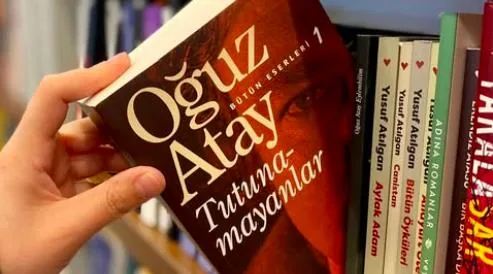
The question of whether Tutunamayanlar overrated has divided Turkish readers for decades, centering on Oğuz Atay's 1970 TRT Novel Award and its towering reputation in the country's literary canon. The novel, published in Turkey in 1971 after that prize, has become a cultural touchstone, yet its fiercely devoted following and the backlash against it reveal a story of ambition, isolation, and the strange mechanics of literary fame.
Oğuz Atay's Tutunamayanlar received the 1970 TRT Novel Award, was published in Turkey in 1971, and grew into a cult classic. Whether it is genuinely a masterpiece or an overhyped symbol of Turkish intellectual identity remains fiercely debated, with no consensus in sight.
- Oğuz Atay completed Tutunamayanlar in 1970, the year it received the TRT Novel Award in Turkey.
- The novel was first published in two volumes in 1971 and 1972.
- Tutunamayanlar is widely considered a foundational work of postmodern Turkish literature.
- Despite its domestic fame, the novel saw its first full English translation only in 2017, decades after its initial release.
- The book's reputation has grown into a cult following, with readers often treating it as a rite of passage.
The Book Everyone Claims to Love, and Half of Us Never Finished
There's a delicious irony hiding in plain sight on Ekşi Sözlük, Turkey's sprawling digital forum where millions go to argue about everything from politics to poetry. The entry for Tutunamayanlar spans 202 pages of comments. But right next to it sits another title: "Those Who Couldn't Finish Tutunamayanlar," and that one runs 111 pages. Nearly half the people who started talking about this book never made it to the end.
And here's where it gets stranger. Some of those very people who admitted to abandoning the novel still showed up in the main thread, quoting their favorite lines and singing its praises. They couldn't finish it, but they loved it anyway. Or at least, they loved the idea of it.
The situation got so absurd that Ekşi Şeyler, the platform's editorial arm, published a practical guide with a title that basically translates to "Things to Do to Not Leave Tutunamayanlar Half-Finished." A how-to manual for surviving a novel. That's not something you see for most books.
So what's going on here? Why does a 671-page postmodern doorstop, first published in two volumes in 1971 and 1972 by the Turkish author Oğuz Atay, hold such a grip on readers who can't seem to get through it? The answer has a lot to do with how we treat certain books less as reading material and more as status symbols, as mountains to climb, as proof that we belong to the club of serious literary people.
The guide itself makes sense, honestly. Tutunamayanlar is not a casual read. It's dense, playful, fragmented, and full of internal monologues that spiral into other internal monologues. Going in cold is a recipe for giving up around page 100. The Ekşi Şeyler piece acknowledged this openly, laying out the preparation readers should do before even opening the cover, so they can actually absorb what Atay was doing rather than drowning in it.
But the fact that such a guide needed to exist at all says something uncomfortable about the book's reputation versus its reality. People treat Tutunamayanlar like it's the key to some secret literary society, the one book you must have read to call yourself a serious Turkish reader. And so they buy it, they start it, they struggle, they set it aside, and then they still talk about it like it changed their lives.
This is the paradox at the heart of the Tutunamayanlar phenomenon: it's simultaneously one of the most celebrated and most abandoned novels in Turkish literature. The praise often comes from people who didn't finish it, and the criticism rarely comes at all, because admitting you didn't love it feels like admitting you didn't understand it. And nobody wants to be that person.
The Myth of the 1970 TRT Novel Award, and How It Actually Happened
Ask any Turkish reader why Tutunamayanlar matters and you will likely hear the same refrain: it won the 1970 TRT Novel Award, a stamp of official genius that launched the book into legend. That story is incomplete. The prize was shared among all finalists as a "success award" rather than given solely to Atay, and the novel still could not find a publisher afterward.
The truth comes from the publisher's own account, and it reads less like a triumph and more like a committee trying to avoid a fight. The jury, under Adnan Benk's proposal, read the manuscript and split into furious camps. Rather than crown a single champion, they renamed the contest a "success award" and divided the money evenly among all contenders. Atay's novel had only reached the jury through a quiet favor: his friend Cevat Çapan, a poet and translator, asked his contacts on the jury to give the thick manuscript a chance.
Here is where the popular version gets even shakier. Atay was not some overlooked prodigy facing down jealous mediocrities. The finalist list included established giants like Sevgi Soysal and Fakir Baykurt, writers with proven readerships and published careers. Atay, by contrast, had no track record and no publisher willing to touch his strange, sprawling manuscript. Every other finalist found a publisher after the award. Atay did not.
The novel finally appeared in print in 1971 and 1972, split into two volumes, and promptly sank. Few people bought it. Fewer talked about it. For roughly a decade, Tutunamayanlar existed as a rumor among a small circle of readers, a book that had caused a literary earthquake in miniature and then vanished into warehouse silence.
Yıldız Ecevit, the scholar who later wrote the definitive study of Atay's fiction, pieced together this fuller picture in her book Ben Buradayım. Her account corrects the sentimental version: Atay was not a martyr denied his rightful crown. He was an unknown author whose book divided a jury, split a prize, and then failed to find a single commercial champion. The award did not launch him. It barely helped him.
So when someone tells you that Tutunamayanlar won the 1970 TRT Novel Award outright, you can gently set the record straight. It received a shared success award, the prize was split among all finalists, and the novel still could not find a publisher afterward. The myth of the single great victory is just that, a myth, and the real story is far more interesting: a difficult book, an indecisive jury, and a writer who had to wait years for anyone to notice what he had done.
How a Cult Was Born: The Rediscovery of Oğuz Atay
Oğuz Atay died in 1977, leaving behind a novel that had quietly faded from public memory after its two-volume publication in 1971-1972. But death, it turns out, was just the beginning of the story. The real resurrection came when a lost diary surfaced in the pages of Milliyet newspaper, reportedly boosting circulation during its serialization.
Here's the twist that gets lost in the hagiography: that renewed interest wasn't about Tutunamayanlar at all. It was the diary that put Atay's name back in the air, roughly a decade after his big novel had sunk without much trace. The moment had finally arrived for the book to get a second shot.
That shot came in January 1984, when İletişim Yayınları republished the novel with prefaces by Ömer Madra and Enis Batur. The timing was perfect. The public was already curious about Atay, and suddenly here was his masterwork, freshly printed and framed by two respected voices. The wave of attention that followed was nothing short of extraordinary for a dense, postmodern text that most readers would struggle to finish.
What's strange about this whole revival is how it flipped the script on literary reputation. Before the diary and the 1984 republication, Tutunamayanlar was the kind of book that only a small circle of devoted readers knew existed. Afterward, it became a cultural touchstone, the sort of novel people felt they had to read, conquer, and praise. The cult of Atay didn't grow organically from his work alone. It was built, brick by brick, through a newspaper serialization, two well-placed prefaces, and a publishing house that saw an opportunity.
The irony is thick enough to cut. A novel about people who can't quite fit into the world became the exact thing that everyone felt pressured to fit into their reading lists. The "Tutunamayanlar culture" wasn't born from the book's initial reception. It was a second-act phenomenon, engineered by timing and circumstance as much as by literary merit. And once that engine started running, it never really stopped.
The Şavkar Altınel Backlash: Criticizing Atay Is Literary Heresy
When Şavkar Altınel, a Turkish poet and translator, published his critique of Tutunamayanlar, he called the novel "shallow and artificial" (sığ ve yapay) and argued that Oğuz Atay was not being himself. The reaction was swift and brutal: a social media lynching that revealed just how fragile Turkish literary discourse had become.
Altınel's essay went further than simply disliking the book. He claimed that Atay was "not himself" in the novel, describing Tutunamayanlar as "the story of a petty-bourgeois crisis, of being an engineer, of living in 'salon salamanje' circles." He contrasted Atay unfavorably with Tezer Özlü, another Turkish writer who explored similar existential crises, saying he found Özlü's work "authentic" while Atay struck him as contrived. For this, the Atay faithful came after him with everything they had.
The backlash was so intense that even writers who counted themselves among Atay's admirers felt compelled to step in. Novelist Hakan Bıçakçı, who called Atay "one of my favorite Turkish writers," admitted he had heard such criticisms from friends for years. "Every artist has the right not to be liked," he wrote. "We divide into two camps over everything, and this time we immediately split into those who love Atay and those who don't. People who haven't even properly read Atay still managed to pick a side. We claim everything the way we support football teams, with a fanaticism devoid of subtlety, empathy, and intelligence."
Writers Tolga Meriç, Mine Söğüt, and Altay Öktem also came to Altınel's defense, with Söğüt noting that those spewing fire at him were "giving clues to everyone about their own personalities." The irony was thick: a literary community that prided itself on intellectual sophistication had responded to a dissenting opinion with the grace of a mob. The whole episode became a case study in how Tutunamayanlar overrated as a cultural phenomenon, not because the book lacks merit, but because questioning its sanctity had become a punishable offense.
Where Is the World? Tutunamayanlar's Translation Troubles
Fifty years after Oğuz Atay's Tutunamayanlar first appeared on Turkish bookshelves in 1971, the novel that Turks call their greatest literary achievement remains nearly invisible to the rest of the world. The book that sells out printing after printing in Turkey, that fills entire shelves in Istanbul bookstores, has struggled to cross a single border. And that silence from abroad says something uncomfortable about the gap between domestic adoration and international reality.
Consider the numbers. James Joyce's Ulysses, that famously difficult modernist maze, has been translated into more than twenty languages. Atay's novel, which fans compare to Joyce's work, has managed translations into Dutch, Azerbaijani, and German, with French and Italian editions also existing. That is more than three languages, contrary to what some accounts claim, but still a strikingly thin footprint for a book hailed as Turkey's postmodern masterpiece.
The English edition tells the most telling story. In 2017, Turkish media announced with great fanfare that Atay was finally "opening up to the world." The novel was indeed translated into English, but according to the original account, only about 200 copies were printed. That figure has never been confirmed, but the scale of the release speaks for itself: a book that supposedly rivals Joyce produced barely a ripple in the English-speaking market.
The German translation, published by Binooki in 2016, initially seemed more promising. Binooki is a Berlin-based press founded by Turkish brothers, and the novel did attract some attention in Germany. Contrary to claims that it never saw a second printing, the German edition has actually been reprinted. Still, the novel remains a niche curiosity in Germany, known mostly to the Turkish diaspora rather than to the broader German reading public.
What makes this international failure so striking is the contrast with other Turkish authors. Orhan Pamuk's works have been translated into dozens of languages, particularly after his Nobel Prize in 2006. Ahmet Hamdi Tanpınar's The Time Regulation Institute has reportedly been translated into 22 languages, making it one of the most supported works under Turkey's TEDA project, which promotes Turkish literature abroad. Even Yusuf Atılgan's Aylak Adam, a novel that directly influenced Atay, has found readers in the Netherlands.
On Goodreads, the picture gets stranger. The Turkish edition of Tutunamayanlar shows a rating of 4.55, with reportedly 69% of 8,205 raters giving it five stars and only 1% giving it one star. Those figures shift constantly since Goodreads data is dynamic, but the pattern is clear: Turkish readers adore this book with an intensity that borders on devotion. Yet when you filter the reviews to English only, you find a handful of foreign readers plus Turks writing in English. The international community simply has not embraced the novel.
Some defenders argue that the book is simply too difficult to translate, that its wordplay and Turkish cultural references resist transplantation. But Joyce's Ulysses is arguably more complex, more rooted in Dublin street slang and classical allusion, and it has found translators in languages from Chinese to Hungarian. The claim that Tutunamayanlar cannot be translated rings hollow when harder books have crossed those same borders.
The truth may be more uncomfortable. A masterpiece, by definition, transcends its origins. It finds readers who share nothing with its author, no common language, no shared history, no cultural reference points. Tutunamayanlar has not done that. It remains a book that Turks read, Turks praise, and Turks argue about, while the rest of the world politely looks elsewhere. For a novel that has been called the greatest in Turkish literature, that silence is deafening.
The Rest of Turkish Literature Travels the World, So Why Not Atay?
Turkish literature has quietly become a global export, with the Ministry of Culture and Tourism's TEDA project reportedly supporting works read in dozens of countries and languages. The program, launched to promote Turkish books abroad, has helped authors like Orhan Pamuk, Sabahattin Ali, and Yusuf Atılgan find readers from Spain to the Netherlands. Meanwhile, Tutunamayanlar, the novel that Turkish readers treat as sacred scripture, has barely crossed a single border.
Take Ahmet Hamdi Tanpınar, whose 1961 novel Saatleri Ayarlama Enstitüsü (The Time Regulation Institute) has reportedly been translated into 22 languages, making it one of the most supported works under TEDA. Tanpınar's other famous novel, Huzur (A Mind at Peace), has found readers as far away as Ethiopia. Orhan Pamuk, after winning the Nobel Prize in Literature in 2006, saw his works translated into dozens of languages, with The Museum of Innocence alone reaching 13 languages and The Black Book reaching 11.
The list goes on. Reşat Nuri Güntekin's novels sit on shelves in Lithuanian bookshops. Halid Ziya Uşaklıgil's İzmir Hikayeleri (Izmir Stories) was translated into Bosnian. Sabahattin Ali's Kürk Mantolu Madonna (Madonna in a Fur Coat) reached Spanish readers. Yusuf Atılgan's Anayurt Oteli (The Hotel Motherland) found a Dutch audience. Even Leyla Erbil's Tuhaf Bir Kadın (A Strange Woman) made it to France, and Refik Halid Karay's Memleket Hikayeleri (Homeland Stories) crossed into Germany.
So what happened with Tutunamayanlar? The novel has been translated into several languages, including Dutch, German, Azerbaijani, French, and Italian. The German translation, published by the Turkish-founded Binooki press in 2016, has reportedly been reprinted. The English edition, when it finally appeared in 2017, was reportedly printed in only 200 copies, a figure that remains unconfirmed.
That 200-copy English print run tells you everything. A novel that Turkish readers call the greatest in their literature, that they quote in everyday conversation, that they treat as a rite of passage, and the English-speaking world received just two hundred copies. Compare that to James Joyce's Ulysses, a far more complex work, which has been translated into more than twenty languages. The comparison is uncomfortable, but it's also unavoidable.
The pattern is hard to ignore. Turkish literature has found genuine international demand, with authors like Orhan Kemal receiving 51 TEDA supports and Tanpınar's Saatleri Ayarlama Enstitüsü leading the pack as one of the most-supported single works. The world is reading Turkish books. They're just not reading this one, at least not in numbers that match its domestic worship. That gap between the novel's near-religious status at home and its quiet absence abroad raises a question that's difficult to ask out loud: if Tutunamayanlar is truly the masterpiece its devotees claim, why has the rest of the world been so slow to notice?
Frequently asked questions
What is Tutunamayanlar about?
Tutunamayanlar is a postmodern Turkish novel by Oğuz Atay, first published in two volumes in 1971 and 1972. The book follows Turgut Özben, an engineer who investigates the suicide of his friend Selim Işık, and through that investigation dives into questions about identity, alienation, and the absurdity of modern life in Turkey. It's a sprawling, experimental work that mixes stream of consciousness, footnotes, digressions, and even invented documents. The title translates roughly to "The Disconnected" or "Those Who Cannot Hold On."
Who is Oğuz Atay?
Oğuz Atay (1934-1977) was a Turkish novelist and engineer who is now considered one of the pioneers of postmodern literature in Turkey. He wrote only a handful of works before his death on December 13, 1977, including Tutunamayanlar, a collection of stories, and a play. During his lifetime, he remained largely unrecognized, and his major novel was out of print for years. His reputation grew enormously after his death, particularly after his works were republished in the 1980s, turning him into a literary icon.
Did Tutunamayanlar win the 1970 TRT Novel Award?
Tutunamayanlar did receive the 1970 TRT Novel Award, but the prize was shared among all finalists as a "success award" rather than given solely to Atay. The jury, chaired by Adnan Benk, decided to divide the prize equally among all contestants after heated debates divided the panel. Atay had submitted the manuscript through a friend's connections, and while the book impressed some jurors, others were unsure. In the end, every finalist received the same award and the competition was transformed from a single-winner format into a shared recognition.
Why is Tutunamayanlar considered a cult classic in Turkey?
Tutunamayanlar became a cult classic through a curious chain of events following Atay's death in 1977. The novel initially sank into obscurity after its 1971-1972 publication, but interest in Atay revived when his lost diary was serialized in Milliyet newspaper, reportedly boosting circulation. That renewed attention led Ömer Madra and Enis Batur to bring the manuscript to İletişim Yayınları, which republished the novel in January 1984 with their prefaces. From that point, the book gained a devoted following that grew into something resembling literary worship, with readers treating it as a rite of passage.
Has Tutunamayanlar been translated into English?
Yes, Tutunamayanlar has been translated into English, but the edition reportedly had a very limited print run. The English translation appeared around 2017, when headlines announced that "Oğuz Atay is opening up to the world," but the print run was reportedly only 200 copies. That minuscule number meant the book never reached a wide English-speaking audience. Beyond English, the novel has been translated into several other languages, including French and Italian, contrary to claims that it exists in only a handful of versions.
How does Tutunamayanlar compare to other translated Turkish novels?
Compared to other Turkish novels that have found international audiences, Tutunamayanlar has traveled much less widely. Turkish literature as a whole has reached readers in dozens of countries, with works by Orhan Pamuk, Ahmet Hamdi Tanpınar, and others appearing in numerous languages. Tanpınar's "Saatleri Ayarlama Enstitüsü" reportedly received support for translation into 22 languages under the TEDA project. In contrast, Tutunamayanlar's German translation, published by Binooki Yayınevi in 2016, has actually been reprinted, though the novel's global footprint remains modest compared to its towering domestic reputation.
Why do many readers struggle to finish Tutunamayanlar?
Many readers struggle to finish Tutunamayanlar because it is a dense, postmodern work that demands significant effort. On Ekşi Sözlük, the Turkish forum where the book has been discussed extensively, one thread titled "Those Who Couldn't Finish Tutunamayanlar" spans 111 pages of entries, while the main topic spans 202 pages. The novel's experimental structure, lengthy digressions, and intellectual references can feel overwhelming, especially for readers new to postmodern fiction. This difficulty has become part of the book's mystique, with some readers treating completion as a badge of honor rather than a pleasure.
What did Şavkar Altınel say about Oğuz Atay?
Şavkar Altınel, a Turkish poet and translator, publicly criticized Tutunamayanlar as "shallow and artificial" in an essay that sparked significant backlash. Altınel argued that the novel felt inauthentic, writing that he sensed no real "self" behind the protagonist, and that Atay seemed to have learned rather than lived the experiences he described. The criticism provoked fierce reactions from Atay's admirers, who attacked Altınel in forums and publications. The controversy grew so heated that even critics who respected Atay, including Hakan Bıçakçı and Mine Söğüt, stepped forward to defend Altınel's right to express his opinion.
Got a take on this? Add your voice to the conversation below →
No comments yet. Be the first.