Roman and Ottoman Empire Collapse: 5 Shared Causes
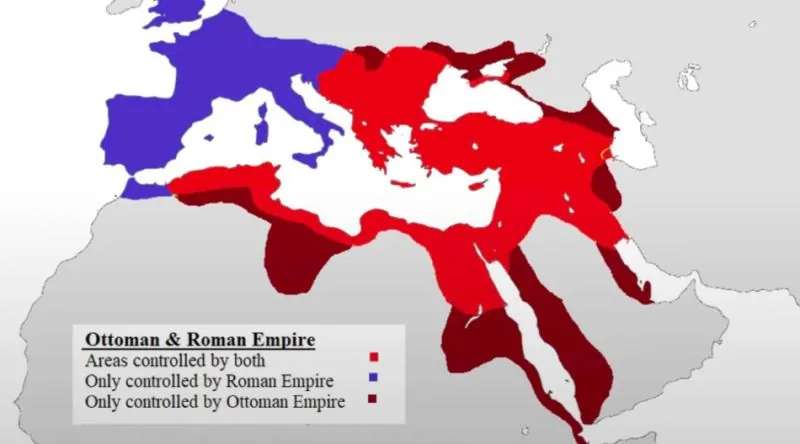
The Roman and Ottoman Empire collapse similarities run deeper than most history buffs realize, with both superpowers unraveling through the same five structural pressures: overextended borders, economic strain, political instability, external invasions, and internal fragmentation. Spanning centuries apart, Rome’s western half fell in 476 AD and the Ottoman state dissolved in 1922, these two giants of the Mediterranean world followed eerily parallel paths to ruin, reminding us that even the mightiest institutions can crumble when their foundations crack.
The Roman and Ottoman Empires both collapsed due to chronic economic troubles, political infighting, overstretched military commitments, and rising internal divisions. Rome’s western territories fell in the fifth century AD, while the Ottoman state ended after World War I. In both cases, the center could no longer hold the periphery.
- Rome’s western empire collapsed in 476 AD when the last emperor was deposed, while the Ottoman Empire formally ended in 1922 after the abolition of the sultanate.
- Both empires suffered from severe currency debasement and inflation, which eroded public trust and weakened their economies.
- Political instability plagued both states, with Rome enduring frequent emperor assassinations and the Ottomans facing succession crises and coup attempts.
- Overextended borders forced both empires to stretch their military thin, leaving frontiers vulnerable to external pressures.
- Internal fragmentation, whether through regional warlords in Rome or nationalist movements in the Ottoman Empire, ultimately tore both states apart from within.
Two Empires, One Slow-Motion Fall
Rome and the Ottomans never met on a battlefield, yet their stories end in remarkably similar ways. Both empires collapsed not from a single crushing blow, but from decades and centuries of structural decay that slowly ate away at their foundations. The Western Roman Empire formally ended in 476 AD, while the Ottoman dissolution accelerated through the 19th century and was sealed by defeat in the First World War.
Here is what connects these two distant worlds: political instability, economic fragility, military decline, and a fatal loss of adaptability. Each empire once claimed to embody a "universal order" for its era. Rome saw itself as the civilized center of the Mediterranean world. The Ottomans, at their height, ruled across three continents and presented themselves as the guardians of a divinely sanctioned realm. That grand claim became unsustainable in both cases.
Think about what happens when a system stops bending. Rome's problem was rigidity dressed as permanence. The empire had expanded so far that its administrative machinery creaked under the weight of its own geography. The Ottomans faced the same dilemma centuries later. Vast territories demanded constant attention, but the center could not hold everything together forever. The Visigoths sacking Rome in 410 AD was a shock, but it was also a symptom of a deeper sickness that had been building for generations.
The pattern is almost eerie. In Rome, political chaos erupted from the 3rd century onward as emperors rose and fell in rapid succession, with no clear rule of succession and armies deciding who wore the purple. In the Ottoman world, the center gradually lost its grip on provincial powers as local strongmen carved out their own domains. Both empires watched their currencies erode, their treasuries strain under military spending, and their borders become zones of endless vigilance rather than sources of strength.
What ultimately killed each empire was not any single enemy or event. It was the slow realization that the old ways no longer worked, combined with an inability to reinvent fast enough. Rome could not absorb the pressures of migration and internal division. The Ottomans could not modernize quickly enough to match the rising powers of Europe. The lesson from both is that empires do not fall when they are attacked. They fall when they can no longer adapt to a world that has moved past them.
Rome: When the Center Couldn't Hold
By the third century, Rome had a problem no amount of legions could fix: there was no clear rule for who got to be emperor. The result was a revolving door of usurpers, assassinations, and civil wars that turned the army into the real power behind the throne. When any general with enough loyal troops could claim the purple, the throne itself became a prize fought over rather than a seat of stable authority.
The economic machinery groaned under the weight of it all. Constant expansion meant constant military spending, and the treasury felt every coin. A slave-based economy capped what the empire could produce, while heavy taxation bred resentment across the provinces. Inflation gnawed at savings, and trade routes grew less safe as the central authority weakened. The system that had once fueled Roman greatness was now eating itself from the inside.
On the borders, Germanic tribes and other groups kept the legions permanently on edge. Frontier defense became the empire's most fragile point, a thin line that could break anywhere. When the Visigoths sacked Rome in 410 AD, the shock reverberated across the Mediterranean. The Western Roman Empire formally ended in 476 AD, when the last emperor was deposed. Two dates that mark the culmination of a long unraveling, not sudden collapses.
Christianity's rise to state religion added another layer of transformation. It gave Romans a new shared identity, but it also pulled them away from the traditional pagan values that had anchored the old order. The ideological foundations shifted beneath the empire's feet, and what had once seemed eternal began to feel provisional. The center could no longer hold, and the story of why echoes in the Roman and Ottoman Empire collapse similarities.
The Ottomans: A Superpower Loses Its Grip
By the 19th century, the Ottoman Empire was visibly coming apart, and the process had roots that reached back two hundred years earlier. The dissolution accelerated through the 1800s and the First World War delivered the final, decisive blow, ending a state that had once spanned three continents.
The trouble began in the provinces. Starting in the 17th century, the tımar system, the land-grant arrangement that had kept cavalry officers loyal to Istanbul and tied to the center, stopped functioning as intended. As it broke down, local power brokers known as ayan and derebey stepped into the vacuum. These provincial strongmen built their own followings, controlled tax collection, and answered to the sultan only when it suited them. The center's grip loosened, and the empire's vast territories began to operate as a patchwork of semi-independent fiefdoms.
Economics compounded the problem. As world trade routes shifted toward the Atlantic following the Age of Discovery, the Ottoman Empire's strategic position weakened, though historians debate just how decisive that shift really was. What is certain is that the Capitulations, the trade privileges granted to Western states from the 16th century onward, gave European merchants enormous advantages inside Ottoman markets. The empire's economy grew increasingly dependent on outsiders. Inflation ate away at purchasing power, fiscal crises became routine, and heavier tax burdens squeezed ordinary people, especially in the countryside.
The military, once the terror of Europe, fell behind. The Janissary corps, once the empire's elite infantry, lost its discipline over time and turned into a political pressure group, more interested in protecting its privileges and toppling viziers than in winning battles. An army that could not adapt was an army that could not protect the realm.
Nationalism delivered the harshest blow. In the 19th century, separatist movements beginning in the Balkans tore at the empire's multi-ethnic fabric. The European powers, operating under what they called the "Eastern Question," meddled constantly in Ottoman affairs, backing rebels or demanding reforms as it suited their interests. The label "Sick Man of Europe" is commonly attributed to the Russian Tsar Nicholas I, though records suggest it was not his verbatim coinage, but the perception stuck and shaped how Europe treated the empire.
Reform efforts came anyway. From the Tanzimat reforms of the mid-1800s through the Second Constitutional Era, the Second Meşrutiyet, Ottoman statesmen tried to modernize institutions, law, and administration. It was not enough. The reforms created new tensions even as they updated old structures, and the gap between the modernizing state and its traditional social base only widened. When the First World War ended in defeat, the empire's long unraveling reached its terminus, and the nation-state of Turkey rose from its ashes.
The Same Wounds, Different Bandages
Spread a map of the Mediterranean world in front of you and the parallels start to feel almost eerie. Rome and the Ottomans, ruling different centuries and different continents, both discovered that the very machinery which built their empires became the mechanism of their undoing.
The story begins with expansion itself. Both empires grew so vast that the center simply could not keep its grip on the edges. In Rome, provincial governors began ruling like mini-emperors, their loyalty to the throne growing thinner with each passing generation. The Ottomans watched the same thing happen: the tımar system, which had once bound provincial elites to Istanbul through land grants and military service, lost its function, and local power brokers stepped into the vacuum. The men who were supposed to be the empire's arms became its rivals.
The economic patterns mirror each other just as closely. Rome built its wealth on slave labor and the secure movement of goods across the Mediterranean, but as trade routes grew dangerous and production stagnated, the engine sputtered. The Ottomans, starting in the 16th century, handed Western states significant trade advantages through the Capitulations, and their economy became increasingly dependent on foreign powers. What fueled the rise became the weak point in decline, for both of them.
Militarily, the two empires share a sad symmetry. Rome spent its final centuries fending off barbarian pressure along its borders, always reacting, never truly solving the problem. The Ottomans faced modern European armies they could not match, and while historians debate the precise causes, the technological gap in firearms and disciplined infantry certainly played a role. Both empires tried reforms. Both failed to secure lasting superiority.
But here is where the stories diverge, and the difference matters. Rome's collapse was accelerated by a religious transformation: Christianity's adoption as the state religion redefined imperial identity, pulling it away from traditional pagan values and reshaping what it meant to be Roman. The Ottomans faced no such ideological shift. Their problem was the opposite, a traditional structure that could not bend to meet modernization and nationalism.
The final difference lies in where the pressure came from. Rome fell under the weight of external migration and invasion, the Visigoths sacking the city in 410 AD and the Western Roman Empire formally ending in 476 AD. The Ottomans, dissolving from the 19th century onward, were pulled apart from the inside, ethnic movements in the Balkans and beyond combining with European powers who saw advantage in the empire's weakness. The First World War delivered the final blow.
Same wounds, different bandages, and neither empire found one that could stop the bleeding.
What Falling Empires Teach Us Today
The real lesson from Rome and the Ottoman Empire isn't about a single lost battle or an outside enemy breaking through the gates. Collapse comes from something slower and more corrosive: the long-term loss of structural flexibility, the weakening of ties between the state and its own society, and the failure to adapt when the world shifts beneath your feet. That is the warning that still echoes today.
Look at how both empires actually fell. The Western Roman Empire formally ended in 476 AD, but that date is just a marker on a much longer slide. The Ottomans began dissolving in the 19th century, with the First World War delivering the final blow. In both cases, the decisive factor was never a single defeat. It was the quiet erosion of the relationship between a distant center and its provinces, the slow decay of the economic arrangements that once held everything together, and the growing inability to bend before new historical conditions arrived.
Sustainability, it turns out, is not measured by short-term success. A system that looks powerful on paper can still be rigid to the point of breaking. Rome's succession crises and economic strains, the Ottoman Empire's financial dependence and the rise of nationalist movements, these were not random misfortunes. They were symptoms of a deeper inflexibility, a state that had lost the capacity to reinvent itself as the world around it changed.
The Roman and Ottoman Empire collapse similarities run deeper than the obvious parallels of stretched borders and overextended armies. Both empires built their glory on systems that worked brilliantly for centuries, then watched those same systems become their weakest points. What made them great was not what made them fragile. It was their inability to let go of what no longer served them.
That is the live lesson here, not a closed chapter of the past. Political power has limits, and every structure that refuses to adapt eventually meets them. The fall of empires is a mirror held up to any system, ancient or modern, that mistakes size for strength and past success for future resilience.
Frequently asked questions
What were the main causes of the Roman Empire's decline?
The Roman Empire's fall came from a web of interconnected crises: political instability from succession battles starting in the 3rd century, economic strain from military costs and slave-based production, pressure from Germanic tribes on the borders, and cultural transformation as Christianity reshaped Roman identity. These pressures culminated in the Visigoth sack of Rome in 410 AD and the Western Empire's formal end in 476 AD. Rome's political system had a fatal flaw. With no clear succession rule, the throne became a prize fought over by rival generals. Armies marched on the capital, proclaimed their commanders emperor, and drained the treasury paying for these adventures. Meanwhile, the economy groaned under the weight. Slave labor stifled innovation, trade routes grew dangerous, and taxes climbed so high that ordinary citizens struggled to survive. Germanic peoples pressed relentlessly against the frontiers, forcing Rome to pour ever more resources into defense. When Christianity became the state religion, it gave Romans a new spiritual identity but also pulled them away from the traditional pagan values that had long unified the empire.
Why did the Ottoman Empire collapse?
The Ottoman Empire dissolved through long-term structural decay rather than a single catastrophic event. The tımar system, which had distributed land in exchange for military service, broke down and allowed local power brokers to emerge. Economic dependence grew through the Capitulations, trade routes shifted away from Ottoman territory, and the military fell behind Western Europe. Nineteenth-century nationalism in the Balkans and World War I delivered the final blows. The tımar system's collapse was devastating. This land-for-service arrangement had kept provincial elites loyal to the sultan for centuries. When it failed, local notables, the ayan, began building their own power bases, chipping away at central authority. Economically, the Capitulations granted Western states major trade advantages from the 16th century onward, making the empire increasingly dependent on foreign merchants. The shift of world trade routes toward the Atlantic during the Age of Discovery may have diminished the Ottoman strategic position, though historians debate how decisive this factor truly was. Military decline followed, with the Janissary corps losing discipline and becoming a force for internal political pressure rather than external defense. Balkan nationalism exploded in the 19th century, and European powers intervened through the "Eastern Question," accelerating the empire's unraveling. World War I then brought the long dissolution to its definitive end.
How were the declines of the Roman and Ottoman Empires similar?
Both empires lost administrative flexibility as they expanded, watched their economic systems turn from strength to liability, struggled against external military pressures, and saw central authority erode as peripheral powers grew stronger. Rome's provincial governors became increasingly autonomous, just as Ottoman ayan and derebeys accumulated local power. In both cases, the very structures that enabled expansion ultimately made governance unsustainable. The parallel is striking. Rome stretched across the Mediterranean, the Ottomans across three continents. Both found that governing vast territories required delegation, and delegation bred independence. Provincial leaders learned they could defy the center with impunity. The economic engines that powered their rises, slave labor for Rome, trade dominance for the Ottomans, became weaknesses as conditions changed. Both empires faced external enemies that exploited their internal fragility, Germanic tribes for Rome, modern European armies for the Ottomans. Neither proved able to reform fast enough to halt the slide.
What role did economic problems play in the fall of Rome and the Ottoman Empire?
In both empires, the economic system that fueled the rise became the liability of decline. Rome relied on slave labor and vulnerable trade routes, while the Ottomans depended on Capitulation privileges and shifting global commerce. Both suffered inflation, fiscal crises, and crushing tax burdens that alienated their populations and weakened the state's ability to respond to challenges. Rome's economy was built on conquest. Slaves captured in wars powered agriculture and manufacturing, but when expansion slowed, so did the supply of cheap labor. Trade routes across the Mediterranean became unsafe, driving up costs and reducing revenue. Inflation spiraled, and the government responded by demanding more taxes, squeezing the population further. The Ottoman experience mirrored this pattern. The Capitulations, initially concessions to foreign merchants, grew into a system that drained wealth from the empire. The shift of trade routes toward the Atlantic may have diminished the Ottomans' strategic position, though this remains a debated point among historians. Whatever the precise cause, the result was the same: inflation, mounting fiscal crises, and tax burdens that fell hardest on provincial populations, fueling resentment and rebellion.
Did nationalism contribute to the fall of the Ottoman Empire?
Yes, nationalism was a decisive factor. Nineteenth-century nationalist movements, beginning in the Balkans, spread across the multi-ethnic empire and combined with European intervention through the "Eastern Question" to accelerate dissolution. The idea that each people deserved its own state proved incompatible with an empire built on diverse communities under one sultan. The Balkans lit the fuse. Serbian, Greek, Bulgarian, and other nationalist movements challenged Ottoman rule with increasing success throughout the 19th century. The empire's response, a series of modernization efforts from the Tanzimat reforms to the Second Constitutional Era, proved insufficient. These reforms tried to create a unified Ottoman identity, but they came too late and created new tensions rather than resolving old ones. European powers, eager to expand their influence, exploited these divisions. The "Eastern Question," the diplomatic problem of what to do with the declining Ottoman Empire, gave Russia, Britain, France, and Austria-Hungary license to intervene in Ottoman affairs. Contrary to the popular version, the phrase "Sick Man of Europe" is attributed to Tsar Nicholas I, though not as a verbatim coinage. Whatever its exact origins, the label captured how European powers viewed the empire: a weakened state awaiting partition. Nationalism, combined with external pressure, made the Ottoman Empire's survival impossible.
Got a take on this? Add your voice to the conversation below →
No comments yet. Be the first.