Turkish Proverbs: The Most Vulgar Folk Sayings
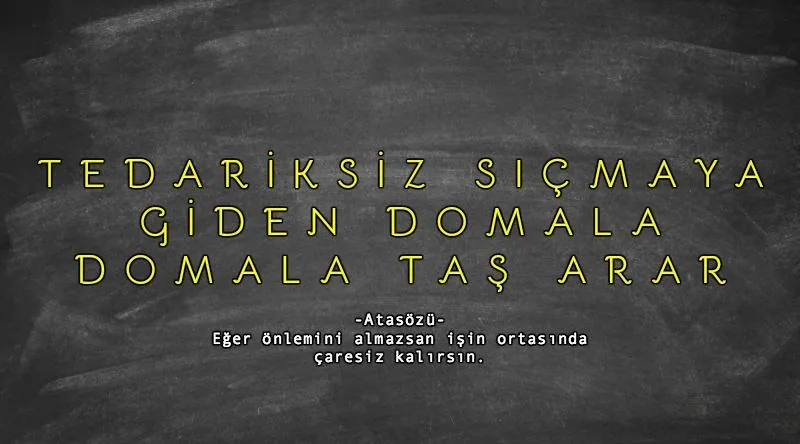
Turkish proverbs are a living part of everyday speech in Turkey, and some of the most memorable ones are also the rudest. These are not polite maxims for a school essay. They are the sayings people actually mutter when a neighbor pushes too far, when a deal goes sour, or when someone needs to be told off without a single insult being spoken aloud. A 2017 list gathered a whole drawer of them, and it struck a nerve with readers who recognized their own grandmothers in its pages.
Turkish proverbs and idioms include a large body of vulgar folk sayings passed down orally for generations. A 2017 list collected many of them in one place. The sayings use crude imagery and humor to deliver blunt lessons about money, marriage, neighbors, and human nature, and many remain in everyday use across Turkey.
- A 2017 list on eksiseyler.com gathered a large batch of vulgar Turkish folk proverbs in one place.
- Many of the sayings had circulated orally in Turkey for generations before appearing in print.
- The proverbs use earthy, often obscene imagery to deliver practical lessons about money, marriage, and neighbors.
- Vulgar Turkish sayings are still used in everyday conversation, often to criticize or tease without direct insult.
- The collection drew attention because it documented speech that had long been considered too coarse for formal publication.
A Folk Archive You Can't Say Out Loud
On 10 November 2017, a page on eksiseyler.com published an alphabetical list, and it went on to collect roughly 1 million reads and 2,330 shares. The list is exactly what its opening line promises: a tour of Turkish proverbs and idioms that exist in the culture but that almost nobody can slip into a polite conversation. The framing sentence says it plainly: even if we can't use all of them in daily life, our culture is packed with some genuinely bizarre sayings. So the piece leaves them here, filed away, in case anyone ever needs one.
What makes the collection strange is its honesty about the split between the two forms. An atasözü is a proverb, a compact piece of folk wisdom meant to be handed down. A deyim is an idiom, a fixed phrase that colors a moment rather than teaching a lesson. The list runs A through Y under the Turkish alphabet, and the compiler labels each entry as one or the other, then explains the situation it was built for. Some are sharp little judgments about luck, greed or laziness. Others are pure verbal mischief, and a fair number are flatly obscene.
This is the raw, unfiltered side of Turkish folk wisdom. The same culture that gave the world polished proverbs about patience and hospitality also kept a shadow catalog of sayings about misfortune, cowardice and bodily function, and those lines survived because they were funny, not because they were printable. The 2017 page is a rare attempt to write them all down in one place, in order, with straight faces.
One entry carries a name attached to it. The line "keller her götü eller," a wry observation about how much attention women supposedly pay to bald men, is credited in the list to Öztürk Serengil, the Yeşilçam actor and comedian (1930 to 1999) remembered as a one-of-a-kind presence in Turkish cinema who lived his life at full volume. Whether that specific line really came from him is, by all appearances, more reputation than documented record, but the attribution fits the man people remember.
Other entries come with origin stories too, and those deserve the same raised eyebrow. The list calls "Beykoz'da siki kalkan burada!" an Istanbul saying, and it floats the idea that "sikimden aşağıya, kasımpaşa" was coined in the Kasımpaşa neighborhood with the place name chosen mainly to make a rhyme. Both explanations are plausible on their face. Neither is backed by anything firmer than the original account, and the compiler even admits the Kasımpaşa line has no known story behind it at all.
Why the Filthiest Turkish Proverbs Are About Bad Luck
Ask a Turkish speaker for the proverb about a truly unlucky man, and you get a cartoon of impossible geography. The line runs roughly: "A luckless Bedouin in the desert gets screwed by a polar bear." A desert has sand, heat and camels. A polar bear lives on ice at the other end of the world. That collision of two places that can never meet is the whole engine of the joke, and it is why this one sticks in the memory long after cleaner sayings fade.
Notice that the animal is not the punchline. The punchline is the odds. A desert wanderer already has luck stacked against him, and the universe answers by sending him the single creature that cannot possibly be there. The list gives a few close cousins of this line: a snake biting the unlucky man while he sits on his camel, and the softer variant "kısmetsiz bedeviyi çölde kutup ayısı kovalarmış," where the polar bear merely chases him across the sand. Same idea, same absurd map, slightly gentler verb.
Turkish proverbs about misfortune rarely stop at one image. They stack them until the picture turns ridiculous. Take the rain of plenty that somehow still lands wrong: if the sky rained the one thing a man could want, a different thing would fall on us instead, bounce off the ground and find its way up where nobody asked. It is a complaint dressed as a joke, the voice of someone convinced the cosmos has a personal grudge and a sense of humor.
Then there is the snapped drawstring. "Göt kısmetten çıkınca uçkur dokuz yerden koparmış" says that once your luck walks out the door, the cord on your trousers gives way in nine separate places. Nine. Not one, not two. The number is the poetry here, a way of saying that bad luck never arrives alone; it brings friends and they all pull at once.
The filth is never the point. The filth is the delivery system for a very old complaint: that fortune is unfair, and that the unfairness is almost funny.
So the next time someone in Turkey shrugs off a run of disasters with a crude one-liner about a polar bear, they are not just swearing. They are reaching for a small, rude philosophy, one that says the worst luck is so unlikely it deserves a laugh.
Donkeys, Ducks and the Wisdom of Incompetence
Some of the funniest Turkish proverbs are not about wisdom at all. They are about people who take a simple instruction and turn it into a disaster. A madman is told to do one small, crude thing, and he overshoots so badly that the whole yard has to be cleaned. That is the spirit behind the line "deliye osur demişler, sıçmış": they told the madman to fart, and he shat. You reach for it when someone botches a task or blows it wildly out of proportion, the guy who was asked to move one chair and rearranged the entire house.
Then the animals take over, and the jokes get even sharper. "Eşeğe gerdan kır demişler, dönmüş osurmuş" tells of a donkey asked to sway its neck gracefully. It turns around and farts instead. The point lands on anyone clumsy, thick-headed or hopeless at the thing they were told to do, and the donkey is perfect casting because nobody expects elegance from it in the first place.
The duck has its own version of the same failure. "Şaşkın ördek götün götün yüzermiş" means the confused duck swims ass-first. When someone panics or loses the thread, their behavior goes strange and backward, and the image of a duck paddling the wrong way with total confidence says it faster than any explanation could.
My favorite of the bunch belongs to the mouse. "Fare sığamadığı deliğe, bir de kıçına kabak bağlayıp girmeyi denermiş": the mouse already could not fit through the hole, so it tied a pumpkin to its rear and tried again. This one is aimed at people who push ahead on a job they know they cannot finish, and who somehow make their own odds worse with every step. The pumpkin is the detail that sells it. You can picture the little creature waddling toward certain failure, hauling its absurd cargo behind it.
Donkeys, ducks and mice keep showing up because the joke is always the same: a creature fails at exactly what it was told to do. That is what makes these sayings stick. They dress up ordinary human incompetence in fur and feathers, and somehow the farmyard version stings less and lands harder.
The last one shifts from the barnyard to the mosque, and it cuts deeper. "İmam osurursa, cemaat sıçar" is an old saying about social psychology: if the imam farts, the congregation shits. A leader's smallest slip gets doubled, then doubled again, by everyone following along. It is a wry warning about how behavior travels downward, from the person at the front to the crowd behind, and how quickly a tiny lapse becomes a whole room's bad habit.
The Istanbul Place-Name Sayings (and What We Can't Confirm)
Two of the roughest expressions in this whole collection lean on Istanbul neighborhoods for their punch, and neither one comes with a paper trail. One is said to describe the person who shows up from the farthest corner on a whim. The other is a shrug dressed up as a place name. Both are colorful, both are quoted as local sayings, and both rest on claims that nobody has actually documented.
Take the first: "Beykoz'da siki kalkan burada!" Beykoz is a real district on the Asian shore of the Bosphorus, and the line is presented as a deyim, an idiom, for someone so taken with a whim that they will travel from the most distant point just to get here. The original account insists the saying is "very clearly of Istanbul origin." That confidence is not backed by anything solid. The neighborhood is real, the expression circulates, but the claim of Istanbul parentage is reported, not confirmed. Treat it as a good line with a murky birth certificate.
The second is "sikimden aşağıya, kasımpaşa," the kind of phrase you mutter when you genuinely do not care, a flat "whatever" with a neighborhood tacked on the end. Kasımpaşa is a working-class quarter on the European side, and according to the original telling the place name is probably there for one reason only: it rhymes. The same account says the phrase is "said to have been coined in Kasımpaşa," then admits outright that there is no known story behind it. So the rhyme explanation is plausible, the birthplace is hearsay, and the missing backstory is the most honest part of the whole entry.
Place-name sayings feel ancient because they borrow the weight of a real map. A district like Beykoz or Kasımpaşa does half the work, lending the line a hometown and a rhythm. Whether anyone actually coined these phrases on those streets is another question, and for both of these, the answer stays open.
The One Line Credited to a Cinema Legend
Öztürk Serengil, the Yeşilçam actor and comedian who lived from 1930 to 1999, gets credit for one of the strangest sayings in the whole collection: "Keller her götü eller." The list presents it as his own invention, born from observations in his own life, and says it captures women's intense interest in bald men. That attribution is colorful and entirely in character, but no documented source confirms Serengil actually coined this specific line, so treat it as a popular claim rather than settled history.
What is not in doubt is the man behind it. Serengil was a singular figure in Turkish cinema, described as a unique master of the craft who lived life to the full, and that phrase fits the ribald, larger-than-life reputation that still follows his name. He was the kind of personality who could plausibly drop a line like this at a dinner table and watch it travel for decades, which is exactly why the attribution has stuck even without a paper trail.
Look closely at the line itself and the joke is doing two things at once. On the surface it is pure absurdity, a sentence that sounds like nonsense until the image clicks. Underneath, it is a small piece of social observation dressed up as a dirty proverb, the kind of thing that works because it says out loud what everyone has quietly noticed. That combination of crudeness and insight is the signature of the best entries in this whole collection of Turkish proverbs and sayings, the ones that survive because they land a truth before you have time to be offended.
Serengil's line sits comfortably beside the rest of the list, where the rude and the wise share the same page. It belongs to the tradition of sayings that got passed around by word of mouth, attributed to whoever said them best, and polished by repetition until the original author blurred into the joke itself. Whether or not he spoke it first, the line carries his fingerprints: a comedian's timing, a street philosopher's eye, and zero interest in being polite.
How These Sayings Actually Work in Conversation
Plenty of the entries on this list are not proverbs at all. They are deyim, idioms, and they live in speech as quick reactions rather than in any book of wisdom. You drop one into a pause, the table laughs, and the moment moves on. That is the whole job.
Take "sikimden aşağıya, kasımpaşa," the shrug in verbal form. Someone asks what you think of a plan, a rumor, a squabble you have no stake in, and this is your answer: couldn't care less. The place name is reportedly there mostly for the rhyme, and the story goes it was coined in Kasımpaşa, though no documented origin survives. There is no known tale behind it, just a sound that lands.
Then there is "siki taşağına denk," for the person sitting pretty. Everything lines up, the money is fine, the mood is fine, and nothing is about to go wrong. The phrase was built for men, but it now gets used for women too. Language does that, it stretches to fit whoever is actually comfortable.
For something that takes real nerve, people reach for "büzük ister." The word is blunt: büzük is the end of the large intestine, the anus. So the phrase means this job demands guts, and if you can't supply them, step aside. It cross-references "göt ister," the same idea with a different word.
Lazy Afternoons and Useless People
"Yat aşağı, dik taşağı" is what you say to someone sprawled out and doing nothing, or to a friend who has clearly decided today is for the couch. There is a detail that makes it real: people sometimes mutter it to themselves while lying down, mid-stretch. The saying becomes a private little joke.
And "yatır sik, kaldır dik!" is the harshest of the bunch. It is aimed at a fool who is good for nothing else, and the punchline is in the mechanics. When the job is done, you put it back. That is the whole verdict on the person: a tool you pick up and set down.
None of these belong in polite company. The list says so plainly, and that is not an accident or an apology. It is the point. These are the sayings you keep for the kitchen table, the tea house, the friends who won't flinch. A language that can be this crude and this precise at once is telling you something about how its speakers actually talk.

Frequently asked questions
What does "bahtsız bedeviyi çölde kutup ayısı siker" literally mean?
Word for word, it says a luckless Bedouin in the desert gets mounted by a polar bear. The image is pure absurdity: a man already stranded in the sand, and the universe sends him an Arctic animal. It is the Turkish proverbs go-to line for spectacular, almost theatrical bad luck, where every possible thing goes wrong at once.
Why are some Turkish proverbs considered vulgar?
Because a whole sub-genre of Turkish folk sayings is built on obscene imagery. The list collects these explicitly as sayings most people cannot use in daily life. They survive as folk wit, passed around in private and in jokes, not in polite conversation. The vulgarity is the point: the coarseness is what makes the punchline land.
Was Öztürk Serengil known for any proverbs?
He is credited with one in particular: "keller her götü eller," a ribald line about women's intense interest in bald men. Serengil (1930 to 1999) was a beloved Yeşilçam actor and comedian, a larger-than-life personality who lived fully, and the line is said to come from his own observations. The attribution, though, is undocumented, so it is best treated as a popular claim rather than confirmed fact.
Did Turkish proverbs originate from oral tradition?
Most of them did. The collection presents these as folk sayings (atasözü and deyim) with no written author, shaped and reshaped by whoever repeated them. The one clear exception in the list is the Serengil line, which carries a named attribution. Everything else floats free of any single originator, which is exactly how oral tradition works.
Why do some Turkish proverbs involve donkeys and bears?
Because animal absurdity carries the joke. In one saying, a donkey is asked to sway its neck gracefully and answers by farting instead, a picture of clumsy refusal. In another, a polar bear turns up in the desert. The animals are not there to teach a lesson; they are there to make the image ridiculous enough to stick in your head. Editorial note: Details that could not be independently confirmed, including the exact number of sayings in the collection and their precise regional origins, are presented as reported rather than as settled fact.
Got a take on this? Add your voice to the conversation below →
No comments yet. Be the first.