Truman Capote: The Literary Icon Who Fled Pain
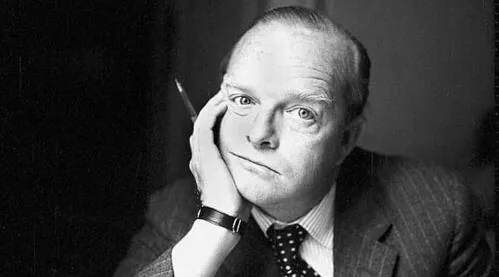
Truman Capote biography reveals a literary genius who transformed American writing, yet his life was a turbulent escape from childhood abandonment, culminating in his death in 1984. He dazzled the world with sharp wit and groundbreaking prose, but the same sensitivity that fueled his art also left him vulnerable to a lifelong struggle with loneliness and addiction.
Truman Capote was a celebrated American author whose life was shaped by a painful childhood. He rose to fame with works like Breakfast at Tiffany's and In Cold Blood, but his final years were marked by scandal and decline, ending with his death in 1984.
- Born in New Orleans in 1924, Capote endured a lonely childhood marked by his parents' divorce and frequent abandonment.
- His early novel Other Voices, Other Rooms, published in 1948, established him as a bold new voice in American literature.
- In Cold Blood chronicled the brutal murders of the Clutter family and introduced the true crime genre, though Capote never fully recovered from the emotional toll of researching the killers.
- His unfinished novel Answered Prayers, which exposed the secrets of his wealthy friends, led to his social exile from high society.
- Capote died in August 1984, leaving behind a legacy of literary innovation and cautionary tales of fame.
The Man Who Walked Past Woody Allen
There is a famous story about Truman Capote appearing in Woody Allen's 1977 film Annie Hall, and it gets told often enough that many people simply accept it as fact. The truth, though, is that Capote never actually appears in that movie at all. The scene people remember, where Alvy Singer and Annie Hall sit on a bench in Central Park and joke about passersby, does exist in the film. But the man in the hat who walks past them is just an extra, not the celebrated author himself.
What the film does contain is a verbal nod to Capote, though even that detail has been embellished over the years. Some retellings claim that Alvy makes a joke about running into Dick Hickock and Perry Smith, the killers from Capote's In Cold Blood, if he ever moved to the countryside. Watch the actual dialogue, however, and you will not find that line anywhere. The connection between the film and Capote's most famous work is a fabrication that has somehow attached itself to the movie's legacy.
The persistence of these stories tells you something real about Capote, who was born in 1924 and died in 1984. By the 1970s, he had become such a recognizable figure in American culture that audiences could easily imagine him strolling through Central Park, turning a simple walk into a moment of celebrity sighting. His high-pitched voice, his distinctive wardrobe, his constant presence in magazines and on television talk shows had made him one of the few writers in America who qualified as a genuine public personality.
That visibility was no accident. Capote understood the machinery of fame better than almost any literary figure of his generation, and he worked it with the same precision he brought to his prose. The man who could command attention simply by walking down a street had spent decades cultivating exactly that kind of presence. For anyone tracing a Truman Capote biography, that moment of mistaken celebrity, the story that never quite happened but feels like it should have, captures something essential about how he moved through the world.
A Lonely Boy Who Started Writing at Eight
Truman Capote entered the world on September 30, 1924, in New Orleans, and he left it on August 25, 1984. But the years in between were shaped by a wound that opened before he could even form memories of it. His mother, a beautiful woman who had won a provincial beauty contest, left him with her aunts when he was a child. That abandonment became the hidden narrative running underneath everything he would ever write. The town where he spent those early years was a forgotten place, wrapped in cotton fields, the kind of dusty Southern settlement that time seemed to pass by. It was also the childhood home of Harper Lee, the girl next door who would grow up to write *To Kill a Mockingbird*. The two of them formed a bond in that small town, a silent understanding between two future literary giants that would last their entire lives. His mother later came back for him and carried him off to other worlds, but the fracture never quite healed. Capote himself said he started writing at the age of eight. He described the compulsion in a way that sticks with you: he felt like an oyster, aware that a pearl was forming inside him, uncomfortable and aching, but utterly unable to stop it. In those early years, he carried a notebook everywhere, scribbling down observations constantly. Later in life, he dropped the notebook habit entirely, reportedly relying on a near-photographic memory that could retain 95 percent of what he heard, word for word, without writing a single note. When he wasn't writing, the young Capote was a creature of motion and sound. He swam, he ice-skated, he devoured *The New Yorker*, and he listened to fast jazz records that matched the tempo of his own restless mind. He told stories in clubs, spinning tales that grew more elaborate with each telling. He was, by his own admission, a natural liar and an incorrigible gossip, habits that would later earn him as much notoriety as his books. That combination of abandonment, talent, and an unstoppable need to shape reality into stories was already fully formed in that forgotten cotton town, waiting for the right moment to explode onto the literary scene.A Scandalous Debut: Other Voices, Other Rooms
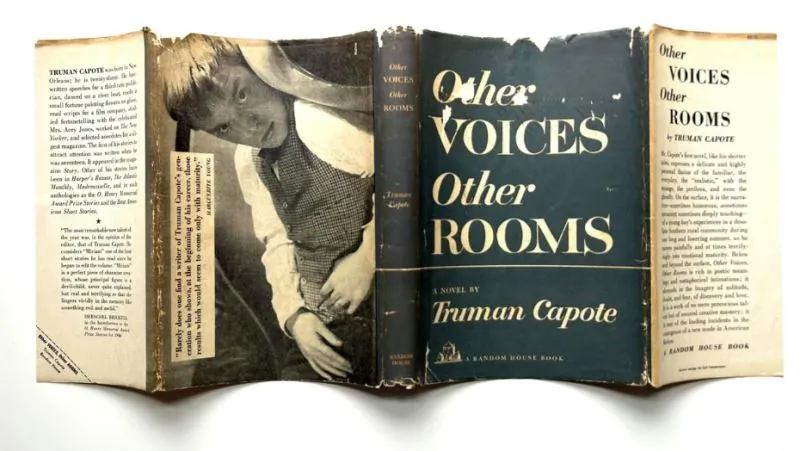
Truman Capote was just twenty-three years old when his first novel, *Other Voices, Other Rooms*, hit bookstores in 1948. The book centers on a thirteen-year-old boy whose mother has died, leaving him to live with a paralyzed father and a foolish stepmother. That setup alone would have been enough to mark him as a young writer worth watching. But it was what happened on the cover that turned his debut into a cultural flashpoint. The back of the book featured a photograph of Capote reclining on a couch, dressed in a vest and bow tie, staring at the camera with a gaze that seemed to say "come here." In 1948 America, that image landed like a grenade. The novel's homosexual themes had already drawn criticism, and the photo seemed to many readers like a deliberate provocation, a visual confirmation of everything they found troubling about the book. People who were already inclined to dislike Capote, who had built a reputation as a boundary-pushing writer willing to break taboos, found fresh ammunition in that single portrait. Looking at that same photograph today, it's hard to see what all the fuss was about. The pose reads as stylized, artistic, even playful. It has since become one of the most famous and celebrated portraits of Capote, a defining image of a writer who understood early on that how you present yourself can be just as important as what you write. The scandal faded, but the picture endured. What was once considered shocking is now simply part of the visual vocabulary of Truman Capote's biography.Rome, a Pet Crow, and a Mother's Suicide
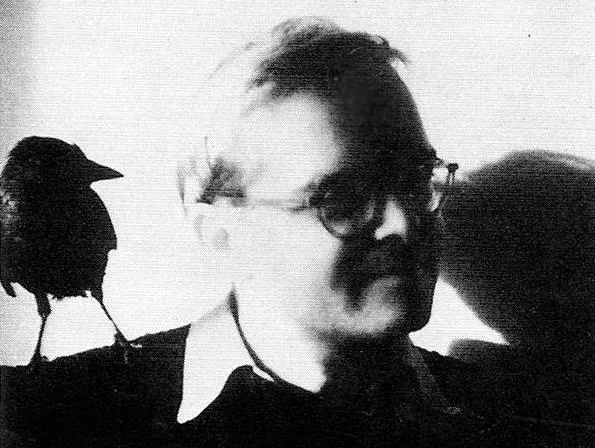
By the early 1950s, Truman Capote had traded New York's literary salons for the sunbaked piazzas of Rome, and he wasn't traveling alone. He had a pet crow named Lola, a glossy black bird with a sharp eye and, by all accounts, an outsized personality to match his own. The sight of the young writer, already famous for his 1948 debut novel Other Voices, Other Rooms, strolling through the Eternal City with a crow perched nearby must have been something to behold, a living tableau of his reputation as literature's most theatrical eccentric.
Lola wasn't just a prop in Capote's colorful life, though. The bird worked her way deep into his affections, and he later turned their strange friendship into a short story simply titled "Lola." The tale traces an arc that starts with reluctance, moves through a surprisingly tender bond, and ends with an unexpected, tragic loss. In writing it, Capote was really writing about himself, about the way he adapted to new places and the grief that followed when something he loved vanished without warning. The story became a mirror for his own struggles with loss and belonging, themes that were about to crash into his life with devastating force.
Rome in those years was also where Capote's restless ambition pulled him toward the movies. He wrote the screenplay for Beat the Devil, a 1953 film directed by John Huston and starring Humphrey Bogart. The picture had all the ingredients for success, but it landed flat. Capote, who had already seen a few of his theatrical efforts fizzle, watched another project slip through his fingers. The failure stung, but it was nothing compared to what came at the end of that same year.
His mother, the beautiful woman who had won a provincial beauty contest and who had abandoned him as a child before sweeping him back into her life, took her own life in late 1953 or early 1954, with accounts differing on the exact date. For Capote, the woman who had shaped so much of his emotional landscape was suddenly gone, by her own hand. The abandonment he had felt as a boy, the complicated love he carried for her, all of it now tangled with the raw shock of her suicide. It was the kind of wound that doesn't heal cleanly, and it marked a turning point in his personal life that he would carry with him for the rest of his days.
Breakfast at Tiffany's and a Marilyn Monroe Dream
In 1958, Truman Capote published the short novel that would make him a household name: Breakfast at Tiffany's. The story of Holly Golightly, a free-spirited New York socialite with a mysterious past, captured something restless in the American imagination. But for Capote, the book's success came with a private disappointment that he carried for years.
When Hollywood came calling for a film adaptation, Capote had one clear vision for the lead role. He wanted his close friend Marilyn Monroe to play Holly Golightly. The two had built a deep friendship in New York, two misfit souls who recognized something kindred in each other. Both had endured difficult childhoods marked by abandonment and instability. Monroe understood the loneliness that lurked beneath Capote's glittering surface, and he understood the same in her.
The studio had other plans. The role went to Audrey Hepburn instead, and her portrayal of Holly Golightly became iconic. The film was a massive success, cementing Hepburn's place in cinema history and introducing Capote's story to millions who would never pick up the book. Capote never fully forgave the casting choice. He later said that Hepburn was wrong for the part, that she lacked the raw, complicated edge that Monroe would have brought to Holly.
His friendship with Monroe endured beyond that casting disappointment. Years later, in his 1980 collection Music for Chameleons, Capote immortalized a spring he spent with Monroe in 1955. The essay, titled "Beautiful Child," captures a season of intimate conversations and quiet moments between two people who understood the weight of their own fame. It stands as one of the most personal pieces he ever wrote about a friendship that mattered deeply to him.
That essay arrived near the end of his life, a tender memory preserved in what would be his last major published work. By then, Monroe had been gone for nearly two decades, and Capote was a different man, hollowed out by years of substance abuse and social betrayals. But the spring of 1955 lived on in those pages, a reminder of a time when two unlikely friends could still find refuge in each other.
In Cold Blood: The Kansas Investigation and a Bond with a Killer
In 1959, Truman Capote and his childhood friend Harper Lee packed their bags and headed to Holcomb, Kansas, a small farming town where a respected family, the Clutters, had been brutally murdered. That trip would consume six years of Capote's life and produce In Cold Blood, the book he called a "nonfiction novel" and the work that would define his legacy. It also forged one of the strangest bonds in American literary history, a connection between a writer and a killer that still fascinates readers today.
The townspeople of Holcomb did not warm to the idea of a flamboyant New York writer poking around their tragedy. Capote's high, lilting voice and tailored suits did not exactly blend in with the wheat fields and farmhouses. What broke the ice, according to those who witnessed it, was Harper Lee. Her warm, unpretentious manner put people at ease, and the bottle of whiskey she carried helped loosen tongues that might otherwise have stayed shut. Between Lee's charm and the bourbon, the two writers gained access to a community that had every reason to close itself off from outsiders.
Capote interviewed the two convicted killers, Dick Hickock and Perry Smith, during their time on death row. Hickock was the talkative one, but it was Smith who captured Capote's imagination. As the story goes, and as the 2005 film Capote dramatizes, the writer saw something of himself in Perry. Both had been abandoned by their mothers as children. Both had grown up poor, hungry for affection, and shaped by neglect. Capote reportedly believed that he and Perry had stood at the same fork in the road, with one choosing the right path and the other the left. That identification ran deep, and it gave In Cold Blood a strange, uncomfortable intimacy that no straightforward true crime account could have achieved.
The book made Capote a literary celebrity, but the cost was steep. He never finished another novel. Years later, the story of that Kansas investigation and the bond with Perry Smith became an Oscar-winning film starring Philip Seymour Hoffman as Capote, cementing the image of the writer haunted by the man he had written about. There is speculation, but no definitive proof, that Capote secretly contributed to Harper Lee's To Kill a Mockingbird. What is certain is that the two writers shared a childhood in Monroeville, Alabama, and a lifelong loyalty that survived even the strange, dark years of the Kansas project.
The Answered Prayers Scandal and a Slow Decline
In 1975, Truman Capote published excerpts from his unfinished novel Answered Prayers in Esquire magazine, and in doing so, he burned every bridge he had spent two decades building. The book was a Proustian roman-à-clef, a thinly veiled portrait of the wealthy, glamorous socialites who had welcomed him into their yachts and châteaus. The characters were his close friends, and the intimate secrets they had whispered to him over the years now stared back at them from the magazine's pages. Friends warned him. They begged him to pull the excerpts. Capote waved them off with a dismissive line: "They won't know who's who." But everyone recognized themselves. The masks came off, and the fallout was immediate and brutal. The society circles that had once adored him slammed their doors shut. He had taken revenge on a life that had, in his view, wounded him, but the cost was his social standing, and it never fully recovered. Norman Mailer, never one to hold back, had already been critical of Capote during the In Cold Blood years. Mailer claimed that Capote became "masculinized" and dictatorial while writing the book, dressing like a banker and growing fat and boring. The criticism stung, but the Answered Prayers betrayal was a different kind of wound, one Capote inflicted on himself. In 1980, his last major work, Music for Chameleons, hit the shelves. It included the essay "Beautiful Child," which immortalized a spring he spent with Marilyn Monroe in 1955. The book was, in a sense, a farewell. The years that followed were spent in the cold glow of television screens, amid studio noise, with drugs flowing through his veins. In 2019, the documentary The Capote Tapes premiered, centering on the Answered Prayers controversy. It featured interviews with Norman Mailer, Jay McInerney, and Colm Tóibín, drawing on previously unseen footage and recordings. Capote died in 1984. His friends saw the end coming and tried to intervene, but he refused them every time. His only wish, he said, was for the pain to end. He had learned lovelessness in the cradle. "Nobody loves me," he once said. "They just find me interesting." He carried his truth, but it crushed him, and he faded out in the haze of his own making.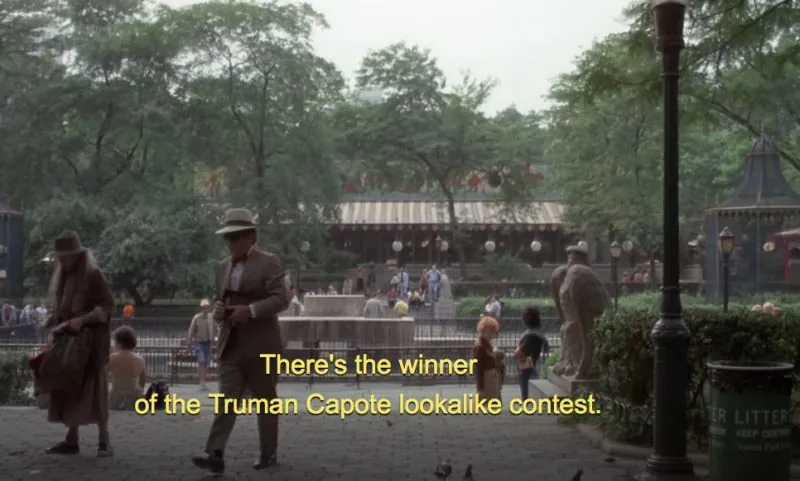
Frequently asked questions
Who was Truman Capote and why is he famous?
Truman Capote (1924-1984) was an American author who became a literary celebrity through works like Breakfast at Tiffany's and In Cold Blood . He pioneered the "nonfiction novel" and cultivated a flamboyant public persona that made him as famous as his writing. His distinctive voice and social connections kept him in the spotlight for decades.
What was Truman Capote's relationship with Harper Lee?
Truman Capote and Harper Lee grew up as childhood friends and next-door neighbors in Alabama. In 1959, Lee accompanied Capote to Holcomb, Kansas, to research the Clutter family murders that became In Cold Blood . There is speculation, but no definitive proof, that Capote secretly contributed to To Kill a Mockingbird .
Why did Truman Capote write In Cold Blood?
Capote wrote In Cold Blood because the 1959 murders of the Clutter family in Holcomb, Kansas, offered him the perfect subject for a "nonfiction novel." He wanted to blend journalism with literary techniques to create a new genre. The case obsessed him for years, and he conducted extensive interviews with the killers.
How did Truman Capote appear in Annie Hall?
Contrary to popular belief, Capote does not actually appear in Woody Allen's 1977 film Annie Hall . The claim that he made an uncredited cameo is a misidentification. Some viewers have confused a lookalike actor with Capote, but the writer never filmed a scene for that movie.
Did Truman Capote want Marilyn Monroe for Breakfast at Tiffany's?
Yes, Capote wanted Marilyn Monroe to play Holly Golightly in the film adaptation of Breakfast at Tiffany's . He and Monroe had formed a deep friendship in New York, bonding over their difficult childhoods. However, the role went to Audrey Hepburn, and the film became a massive success.
How did Truman Capote die?
Truman Capote died on August 25, 1984. Friends noticed his declining health and tried to intervene, but Capote refused their help. His only wish, according to the original account, was for the pain to end.
What is the story behind Truman Capote's pet crow Lola?
During the early 1950s, Capote lived in Rome and kept a pet crow named Lola. This unusual companion became a symbol of his eccentric personality and love for animals. He later wrote a short story called "Lola" inspired by this period, which reflected his themes of loss, connection, and his complicated feelings toward nature. Editorial note: Any facts that remain unconfirmed are presented as such, with appropriate hedging to distinguish verified events from anecdotal accounts.
Got a take on this? Add your voice to the conversation below →
No comments yet. Be the first.