David Bowie Trivia: Art School, Personas & Final Album
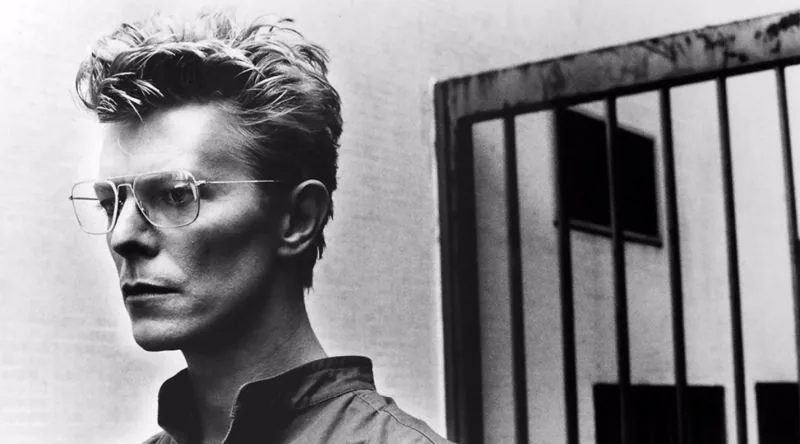
David Bowie trivia reveals a life of deliberate reinvention, from his early days at Bromley Technical High School to the release of his final album, Blackstar, in 2016, just two days before his death on January 10. These lesser-known facts about the man behind Ziggy Stardust and the Goblin King show how visual art, Japanese culture, and a restless creative spirit shaped one of music's most enduring icons. The story of Bowie is not just about the hits, but about the constant, fearless transformation that defined his five-decade career.
David Bowie was a British musician and actor who used visual training and global influences to build a series of stage personas, including Ziggy Stardust and Aladdin Sane. His final studio album, Blackstar, was released in January 2016, two days before he passed away on January 10.
- Bowie attended Bromley Technical High School in the late 1950s and early 1960s, where he studied art and design.
- His stage persona Ziggy Stardust debuted in 1972, and the alter ego Aladdin Sane followed in 1973.
- Bowie starred as Thomas Jerome Newton in the 1976 film The Man Who Fell to Earth, his first major acting role.
- He played Jareth the Goblin King in the 1986 fantasy film Labyrinth, a role that became a cult favorite among a new generation of fans.
- Blackstar, his final studio album, was released on January 8, 2016, and he died two days later.
The Painter Behind the Starman
David Bowie entered the world on January 8, and fans have marked that date for decades as a moment to celebrate one of music's most shape-shifting figures. But before the glitter, before the androgynous aliens and the Berlin years, there was a young man with a paintbrush. The story that often circulates is that Bowie studied painting at Bromley Art College in London before his music career ever took off, and that this visual training shaped everything from his stage aesthetic to his album covers.
Here's where the record needs a gentle correction. Contrary to the popular version, Bowie actually attended Bromley Technical High School, not an art college, and he left before completing his O-levels. The art school narrative has been repeated often enough that it feels like fact, but the documented timeline points elsewhere. What isn't in dispute is that visual art ran through his veins regardless. He was a skilled illustrator whose drawings and paintings have appeared in exhibitions, and that eye for composition clearly bled into how he staged a concert or framed a cover image.
For anyone collecting David Bowie trivia, this is the kind of detail that makes the man more fascinating, not less. He didn't need formal training to see the world in vivid, striking images. The proof is in every costume, every album sleeve, every deliberate pose he struck under the spotlight.
The Many Faces of David Bowie
David Bowie didn't just make music; he built entire worlds to live inside. The man born David Robert Jones created a string of stage personas that let him explore sides of himself that a single identity never could. Ziggy Stardust, Aladdin Sane, Halloween Jack, and the Thin White Duke all came to life during the 1970s, each one a different mirror held up to his restless imagination.
Ziggy Stardust arrived first, in June 1972, with the album The Rise and Fall of Ziggy Stardust and the Spiders from Mars. Ziggy was an alien rock star, a glitter-soaked messenger from space who became the defining image of glam rock. The character was so vivid, so fully realized, that for a while it was hard to tell where Bowie ended and Ziggy began.
Then came Aladdin Sane in 1973, a character often described as Ziggy's darker, more fractured cousin. The album of the same name gave us that iconic lightning bolt painted across his face. Not long after, in 1974, Bowie conjured Halloween Jack from the post-apocalyptic world of the Diamond Dogs album, a survivor figure navigating a crumbling cityscape.
The Thin White Duke is where the story gets a little tangled. The original account says the character was born during the 1976 Diamond Dogs period, but that timeline doesn't hold up. In fact, the Thin White Duke emerged from the 1976 album Station to Station, not Diamond Dogs. This cold, aristocratic figure, with his slicked-back hair and white shirt, reflected Bowie's darker moods during that era.
Some of the other claims about Bowie's shapeshifting don't survive contact with the facts. The source suggests he created a character named Nathan Adler for the 1993 album The Buddha of Suburbia. Records show that character actually appeared on the 1995 album Outside. Similarly, there's talk of Bowie using the pseudonym "Sardonyx" for projects in the 1970s, but no documented instance of that name exists. And the idea that he kept changing his stage name to escape pressure from fans during the Ziggy period? The record shows he retired Ziggy because the character had become creatively confining, not because fans were hounding him.
As for the claim that meeting British rocker Screaming Lord Sutch in the 1960s greatly influenced his early career, that remains unverified. According to the original account, the meeting was a turning point, but no reliable evidence confirms it shaped his path in any significant way. What we can say with certainty is that these personas, the verified ones anyway, gave Bowie the freedom to keep reinventing himself. Each character was a doorway, and he walked through every single one.
From Goblin King to Tesla: Bowie on Screen
David Bowie's filmography reads like a game of character bingo where every square lands on someone unexpected. In 1976, he played Thomas Jerome Newton, an alien marooned on Earth, in Nicolas Roeg's cult classic The Man Who Fell to Earth. It was the role that proved the musician had real acting bones, not just a famous face to point a camera at.
A decade later, in 1986, he slipped into the tight pants and gravity-defying hair of Jareth the Goblin King in Jim Henson's Labyrinth. That film turned him into a childhood fixture for an entire generation who grew up puzzling over why the scary king with the crystal balls was so strangely magnetic. Before that, in 1983, he played John Blaylock, a vampire, in The Hunger, sharing the screen with Catherine Deneuve and Susan Sarandon in Tony Scott's stylish horror flick.
The same year, 1983, he traded fangs for a military uniform in Merry Christmas Mr. Lawrence, playing Jack Celliers, a British soldier in a Japanese prisoner-of-war camp. Then came Absolute Beginners in 1986, where he played Vendice Partners, a photographer, in the musical drama set in late 1950s London.
His willingness to take on historical figures became a recurring theme. In 1988, Martin Scorsese cast him as Pontius Pilate in The Last Temptation of Christ. In 1996, he played Andy Warhol in Julian Schnabel's biographical film Basquiat, capturing the pop artist's detached cool with unsettling precision. And in 2006, Christopher Nolan put him in The Prestige as Nikola Tesla, the inventor whose mysterious machine drives the film's rival magicians to obsession.
He even conquered the stage. In 1980, he starred as John Merrick in the Broadway production of The Elephant Man, a role that demanded remarkable physical control. For a lighter turn, he appeared as himself in the 2006 Christmas special of Ricky Gervais's comedy series Extras.
Despite all this visibility, Bowie kept his private life remarkably guarded throughout the 1980s. The man who played an alien, a goblin, and a vampire remained, in some ways, the most elusive character of all.
The Final Bow: Blackstar and the Goodbye
David Bowie released his final album on January 8, 2016. Two days later, on January 10, 2016, he died of cancer. The world lost a legend, but not before he gave us one last, mysterious gift.
Blackstar arrived with almost no warning. Critics scrambled to make sense of its jagged jazz textures and cryptic lyrics. Then the news broke, and everything clicked into place. The album reads as a meditation on death and the final stages of life, a farewell wrapped in art. Songs like "Lazarus" spoke of looking up from a grave, and fans suddenly understood the weight behind every line.
In the days that followed, tributes poured in from every corner of the globe. Artists covered his songs at concerts. Fans gathered to leave flowers and messages. The celebrations were loud and emotional, a collective goodbye to someone who had soundtracked so many lives.
There is one piece of David Bowie trivia that still gets repeated with a knowing nod. The story claims that in the early 1970s, he was deeply interested in Japanese culture and reportedly collaborated frequently with Japanese artists during that period. The truth is more complicated. He certainly drew inspiration from Japanese aesthetics, and his fashion and stage looks showed that influence clearly. But the frequent collaborations part of the story does not hold up to scrutiny. Records from that era show no sustained pattern of working with Japanese musicians. The interest was real, the collaborations were not constant.
What remains undeniable is the way he said goodbye. Blackstar was not a rushed farewell or a half-finished project. It was a deliberate, artistic statement about mortality, released with the kind of confidence that defined his entire career. He knew what he was doing. He always did.
Glad you were born, David. Glad you were David Bowie.
Frequently asked questions
What art school did David Bowie attend?
Despite what many stories claim, David Bowie never attended art college. He actually went to Bromley Technical High School in Kent, England, where he studied art and design before leaving without completing his O-levels. The popular version about Bromley Art College simply does not hold up against the records.
Why did David Bowie create multiple stage personas?
David Bowie built his career on transformation, and his stage personas were his way of expressing different sides of himself. Between 1972 and 1976, he introduced Ziggy Stardust, Aladdin Sane, Halloween Jack, and the Thin White Duke, each one shaping his music and image in distinct ways. These characters let him explore new artistic territory with every album.
What was David Bowie's role in Labyrinth?
David Bowie played Jareth the Goblin King in the 1986 Jim Henson fantasy musical Labyrinth. The film paired Bowie's magnetic performance with Henson's signature puppetry and practical effects. His role as the enigmatic ruler of the Goblin City became one of his most beloved acting parts, and the movie has gained a devoted cult following over the decades.
Which film did David Bowie play Nikola Tesla in?
David Bowie portrayed the brilliant inventor Nikola Tesla in The Prestige, Christopher Nolan's 2006 mystery thriller about rival magicians. In the film, Tesla builds a remarkable machine for one of the competing illusionists, and Bowie's understated performance brought real gravitas to the role. It remains a standout in his later acting career.
Was David Bowie in The Elephant Man on stage?
Yes, David Bowie played John Merrick in the 1980 Broadway production of The Elephant Man. The play tells the true story of Merrick, a man with severe physical deformities living in Victorian England. Bowie received strong reviews for his performance, which he delivered without elaborate makeup, relying entirely on physical acting to convey Merrick's condition.
What is the meaning behind Blackstar?
Blackstar, David Bowie's final album, is widely interpreted as a meditation on death and the end of life. Released on January 8, 2016, exactly two days before his death on January 10, the album's lyrics and music are filled with references to mortality. Fans and critics alike have come to see it as Bowie's conscious farewell to his audience. Editorial note: Any facts which remain unconfirmed are presented as such, with details that cannot be independently verified clearly hedged in the text.
Got a take on this? Add your voice to the conversation below →
No comments yet. Be the first.