Tom Bombadil: Tolkien's Riddle of the Old Forest
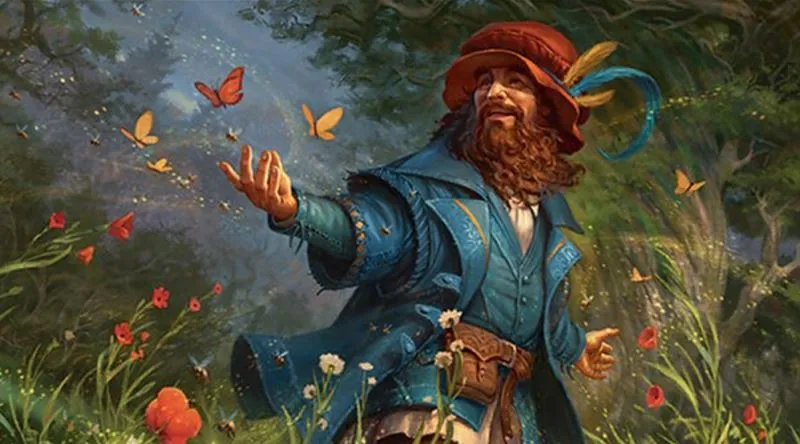
Tom Bombadil appears in J.R.R. Tolkien's The Fellowship of the Ring when he rescues four hobbits from a willow tree in the Old Forest. He is the strangest figure in Middle-earth: a singing, yellow-booted fellow who is utterly unaffected by the One Ring. Readers have argued about him for decades, and he still has no firm answer.
Tom Bombadil is a mysterious character in The Fellowship of the Ring who shelters Frodo and his companions in the Old Forest. He lives with Goldberry and appears immune to the One Ring's power. Tolkien never fully explained his origins, and he was left out of Peter Jackson's films.
- Tom Bombadil first appears in The Fellowship of the Ring, when he rescues the hobbits from Old Man Willow in the Old Forest.
- He lives in a house in the Old Forest with Goldberry, a river-daughter, and hosts the hobbits for a short stay.
- When Frodo offers him the One Ring, Bombadil handles it with no effect at all, an unusual reaction in the story.
- He later rescues the hobbits from a barrow-wight in the Barrow-downs, and a blade from that barrow later matters a great deal.
- Peter Jackson left Bombadil out of his film adaptations, and Tolkien himself described him as an intentional enigma.
The Merry Stranger the Movies Left Out
Tom Bombadil is in the book but not on the screen. He appears in J.R.R. Tolkien's The Fellowship of the Ring, yet Peter Jackson's Lord of the Rings trilogy cut him entirely. Readers who only know the films have never met the strangest, happiest figure in Middle-earth.
Picture him. A short, broad man with a red face, bright blue eyes, and a brown beard. He wears a blue jacket, yellow boots, and a tall, battered hat crowned with a blue feather. That hat is the giveaway. He sings constantly and speaks in rhymes, so he comes across as a nonsense creature, a jolly fellow who wandered out of a nursery rhyme. Then you watch what the Old Forest does around him. The hobbits call him the master of that forest, and nothing evil there is strong enough to touch him.
His wife is Goldberry, the River-daughter. Their house is a warm pocket of song and good food in a wood that otherwise wants to swallow travelers whole.
Other peoples have their own names for him. The Elves call him Iarwain Ben-adar, which means both "old" and "fatherless." The Dwarves know him as Forn, and Men as Orald. As for what he actually is, a popular theory holds that he may be a Maia spirit who came to Middle-earth in the Ages of the Stars. Tolkien never confirmed that. He left Bombadil as a deliberate enigma, which is part of the charm.
One thing needs correcting. He is not simply some forest spirit who minds his own business. He saves the Ring-bearing hobbits twice: first from Old Man Willow in the Old Forest, then from the barrow-wights in the Barrow-downs. That is a real contribution to the quest, and the films gave it to no one.
Iarwain Ben-adar, Forn, Orald: One Man, Many Names
At the Council of Elrond, the Elves give Tom Bombadil the name Iarwain Ben-adar, a title that carries two meanings at once: "old" and "fatherless." It is the clearest hint that this figure predates everyone doing the naming. The Dwarves have their own word for him, Forn, and Men know him as Orald. Three peoples, three tongues, one strange old man who never leaves his corner of the world.
That corner is the Old Forest, and by the book's account he is its master. Picture him as the hobbits first meet him: short and broad, blue-eyed, with a red face and a brown beard, dressed in a blue jacket, yellow boots, and a tall battered hat topped with a blue feather. He sings constantly, or answers in rhymes, so he can come across as a harmless oddity. Then you notice that nothing evil in that wood can touch him.
He shares his house with his wife, Goldberry, the River-daughter. Their life together is quiet, domestic, almost outside the story's clock. That is part of the puzzle of him.
What people assume about his origins
Here is where the guessing starts. A popular reading holds that Tom Bombadil is a Maia spirit who came to Middle-earth during the Ages of the Stars, one of the timeless beings who existed before the Elves woke. It is an elegant theory, and it fits the "oldest and fatherless" label neatly. But Tolkien never confirmed it. His letters treat Bombadil as a deliberate enigma, a character meant to stay unexplained. So the Maia answer is a fan's satisfying guess, not a fact you can pin on the author.
What the text does give you, plainly, is a man with three names, a river-daughter for a wife, and a forest that answers to him. Everything past that is speculation, and Tolkien seems to have liked it that way.
Twice a Rescuer in the Ring's Journey
Tom Bombadil pulls the Ring-bearing hobbits out of mortal danger not once but twice, and both rescues happen before the Company of the Ring ever forms. First he saves them from Old Man Willow in the Old Forest; later he saves them from the barrow-wights in the Barrow-downs. Those two interventions give him a genuine, load-bearing role in the quest, even though his share of the book is famously thin.
Picture the first one. Frodo, Sam, Merry and Pippin have barely left the Shire when the Old Forest turns on them. The trees seem to lean and crowd, the paths twist wrong, and the hobbits stumble deeper than they mean to. Then the willow does its work: drowsiness, a heavy pull, and suddenly the youngest hobbits are swallowed into the wood itself. Frodo and Sam are desperate. And then comes a voice singing nonsense rhymes, and Tom Bombadil walks out of the trees and simply tells the tree to let go. No battle, no blade. Just a word from the master of that forest, and the grip loosens.
The second rescue is darker. In the Barrow-downs, fog rolls in and the hobbits lose their way among the burial mounds. Frodo wakes to find his friends lying cold and pale in a barrow, with a grasping presence reaching for them. He panics, he calls out, and again the answer is a song. Bombadil arrives, drives the barrow-wight off, and pulls the hobbits back into the light. Out of that barrow comes a small blade, and it is worth noticing what it later becomes.
So why does it matter that a character with so little page time gets two saves? Because the Ring quest nearly ends in a forest before it ever truly begins. Bombadil is not the hero of the story and never claims to be. He is something stranger: a figure so untouched by the Ring's pull that he can walk into the dark, sing, and walk back out with the bearers intact. Two rescues, one small share of the narrative, and a real place in the journey all the same.
The Ring Means Nothing to Him
Watch what happens when Frodo hands over the Ring in Tom Bombadil's house. Bombadil slips it on his finger, and nothing changes. He doesn't vanish. He doesn't feel the pull of power. He simply looks at Frodo, still fully visible to him, and the whole scene lands like a shrug.
That is the strange, quiet proof of his strength. The Ring does not work on him. It cannot tempt him because it has nothing to grab onto. And the contrast here is the real point. Even seeing the Ring, before you ever touch it, throws most characters into an inner struggle. Its mere presence sows discord, whispering to the proud and the hungry alike. Bombadil picks it up like a trinket, turns it over, and sets it aside. No tremor. No shadow on his face.
So the reviewer behind the original piece imagines the obvious question Frodo might have asked, half in frustration and half in hope: if you are this strong, why not destroy it yourself? Why not take this weight off all of us? It's the question any reader wants to shout. Bombadil answers it only by being what he is. He is, as the source puts it, "the one who is what he is." He has no ambition the Ring could feed, and no fear it could sharpen. It simply isn't his fight, and he doesn't pretend otherwise.
That is why the puzzle never quite closes. Tolkien's Letters treat Bombadil as a deliberate enigma, a figure the author chose to leave unexplained, and that choice is exactly why readers keep arguing about what he really is. Is he a Maia spirit? An older power? Something that predates the categories? The text refuses to say, and the refusal is the design. He doesn't fit the story's machinery of power and corruption. He sits outside it, singing, and the Ring means nothing to him.
"He Is": Why Tom Bombadil Matters to the Story
In the chapter "In the House of Tom Bombadil," Goldberry answers a question about her husband with two plain words: "He is." That small line is the key one reader uses to unlock the whole character. The fuller phrasing, "he is what he is" or "he is as he is," works as a paraphrase of the idea rather than a word-for-word quotation, but the sense holds either way.
Here is the argument. Tom Bombadil has watched the bright, celebrated figures of history pass through, and he has seen the gap between the glorious self they put on display and what they actually are underneath. They patch over their weaknesses with other things: titles, lineage, force. Bombadil sees straight through all of it.
Frodo stands apart from that pattern. He is the humblest of the bunch, the one who cares least about worldly goods, padding barefoot over hill and valley. Yet the Ring grows into a weight beyond what he can bear, and he knows it, and he shoulders the task with courage anyway. That is why the meeting between the two reads as no accident.
Set Bombadil beside the rest and the grand conflicts shrink. The wars of Melkor, of Sauron, the long feuds of the great Elven lineages, all of it goes quiet next to him. His share of the book is genuinely small, and the reviewer's phrase for it, "a drop in the ocean," is a paraphrase rather than a confirmed quotation. Small or not, we still walk away from him carrying something.
The closing reading is interpretive, not settled fact: at the end, the reviewer suggests, it is not the most powerful who prevail but those who are as they appear.
Frequently asked questions
Who is Tom Bombadil in The Lord of the Rings?
Tom Bombadil is the eccentric master of the Old Forest, the strange, song-happy figure the hobbits meet in The Fellowship of the Ring. He goes by many names: the Elves call him Iarwain Ben-adar, meaning both "old" and "fatherless," while the Dwarves know him as Forn and Men as Orald.
Did Tom Bombadil appear in the books but not the films?
Yes. Tom Bombadil appears in J.R.R. Tolkien's novel The Fellowship of the Ring but is entirely absent from Peter Jackson's film trilogy. Readers who only know the movies have never met him on screen.
How does Tom Bombadil rescue the hobbits in the Old Forest?
Twice. First he pulls Frodo and his companions from the grip of Old Man Willow in the Old Forest, then he saves them again from the barrow-wights in the Barrow-downs. Both rescues are in The Fellowship of the Ring, and both put him squarely inside the hobbits' journey.
What is Tom Bombadil's relationship to the One Ring?
He handles it casually, as if it were a cheap trinket, and the Ring has no power over him at all. That immunity marks him as something far outside the Ring's reach, and it is the clearest sign of just how strange he is.
Was Tom Bombadil a Maia or something else?
That is a common theory, not a confirmed fact. Tolkien never settled the question, and according to his letters he deliberately presented Bombadil as an intentional enigma. The Maia label, and any idea that he arrived during the Ages of the Stars, remains speculation the author left open.
Who is Goldberry?
Goldberry is the River-daughter, and she is Tom Bombadil's wife. The couple share a house in the Old Forest where the hobbits rest, and she is named explicitly as the River-daughter in the chapter "In the House of Tom Bombadil."
What does Tom Bombadil represent in Tolkien's themes?
One reading, offered by a reviewer of the novel, casts him as the argument for authenticity over power: the contrast between simply being and merely appearing. In that light, the ones who prevail at the end of the book are not the most powerful but those who are as they appear. Editorial note: Details about Tom Bombadil's true nature remain unconfirmed and are presented as speculation, since Tolkien deliberately left his origins unexplained.
Got a take on this? Add your voice to the conversation below →
No comments yet. Be the first.