The Marvels Review: Why the MCU Film Failed
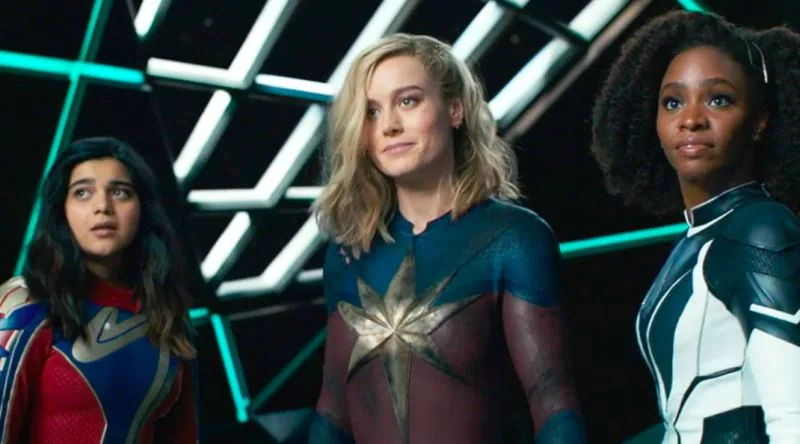
This The Marvels review examines the 2023 MCU film starring Brie Larson, Teyonah Parris, and Iman Vellani, released in November 2023 and directed by Nia DaCosta. The movie was positioned as a team-up adventure, yet it arrived with a fraction of the momentum behind its predecessor. What should have been a victory lap for Captain Marvel instead became a cautionary tale about how quickly audience goodwill can evaporate. The film's struggles were not simply about superhero fatigue. They were about a story that never gave its characters room to breathe.
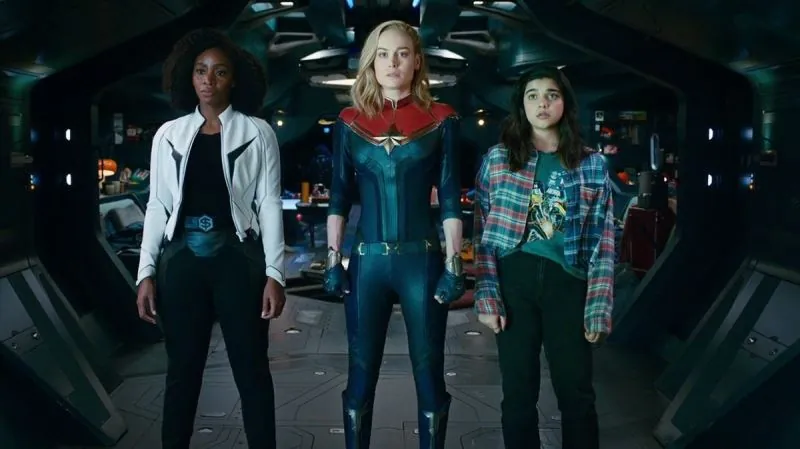
The Marvels is a 2023 MCU film directed by Nia DaCosta, starring Brie Larson, Teyonah Parris, and Iman Vellani. It follows three heroes whose powers become entangled, forcing them to fight the Kree villain Dar-Benn. It is widely considered one of the weakest entries in the franchise, though exact box office figures vary by reporting.
- The Marvels was released in theaters in November 2023 as a direct sequel to 2019's Captain Marvel.
- The film stars Brie Larson as Carol Danvers, Teyonah Parris as Monica Rambeau, and Iman Vellani as Kamala Khan.
- Nia DaCosta directed the film, making her the first Black woman to direct an MCU feature.
- The plot centers on the three heroes' light-based powers becoming intertwined whenever they use them.
- The film underperformed at the box office relative to its reported production budget.
The Marvels Review: The MCU's Lowest Point
A 2023 review of The Marvels by a self-described Marvel expert landed like a hammer: this is one of the worst films the Marvel Cinematic Universe has ever produced. The numbers back him up. The Marvels pulled in roughly $206 million worldwide against a reported production budget of around $270 million, making it the lowest-grossing entry in the entire MCU. That budget figure is widely reported but has never been officially confirmed by Disney, so treat it as an estimate rather than a studio number.
What makes that gap so brutal is where the franchise started. Captain Marvel (2019) grossed approximately $1.1 billion worldwide. An original film and its sequel, separated by just four years, now sit on opposite ends of a billion-dollar canyon. You rarely see a fall like that in franchise history.
He opens his piece with a confession that a lot of longtime fans will recognize. Writing about recent MCU output, he says, has become genuinely difficult for him. He used to enjoy it. Breaking down new films, spinning theories, getting excited about what came next, that was the fun part. Lately the volume of weak material makes it hard to even sit down at the keyboard. He is, by his own account, a person who likes to talk about things he enjoys. Writing long takedowns is not his natural mode. He mentions that this is exactly why he never bothered writing about the DCEU.
And yet here he is, because The Marvels needs to be discussed. The film was not just poorly received by critics. It became the worst-performing MCU movie at the box office. For a franchise whose future depends on audience trust, that is the conversation that matters.
His core argument is structural rather than emotional. He lays out what the MCU has always done well: character work, the feeling of a living universe, a modern read on old comic books, standalone films that still connect to a larger picture. Then he lists what it keeps getting wrong: questionable directorial choices, scripts rushed into production before they were ready, jokes that misread their own tone, a fading sense of a shared world. The Marvels, in his view, inherited every weakness on that second list and almost none of the strengths on the first. That combination is what sinks it.
He is not alone in that read. Nia DaCosta directed the film, and her direction drew criticism from many reviewers, though the overall reception was mixed rather than universally hostile. Still, the box office told its own story, and it was not a flattering one.
A Weak Story Concept: Power-Swapping and a Forgettable Villain
Strip the film down to its engine and you find one idea: when Carol Danvers, Kamala Khan and Monica Rambeau use their light-based powers at the same moment, the Quantum Bands yank them across space and swap their positions. That is the whole premise, and it is far too thin to carry a feature film. The Bands themselves are the mechanism, one held by Kamala and one by Dar-Benn, and they tangle the trio together whether anyone likes it or not.
Here is the frustrating part. The Captain Marvel comics are sitting right there, full of stories that would have put these characters into conflicts we actually care about. A genuine Kree-Skrull War. The Korvac Saga, which fits a second Captain Marvel film almost perfectly. Annihilation. A loose War of Kings that could have folded the Inhumans into the universe. Instead, the filmmakers reached for the weakest option on the shelf.
Dar-Benn Is Not a Character
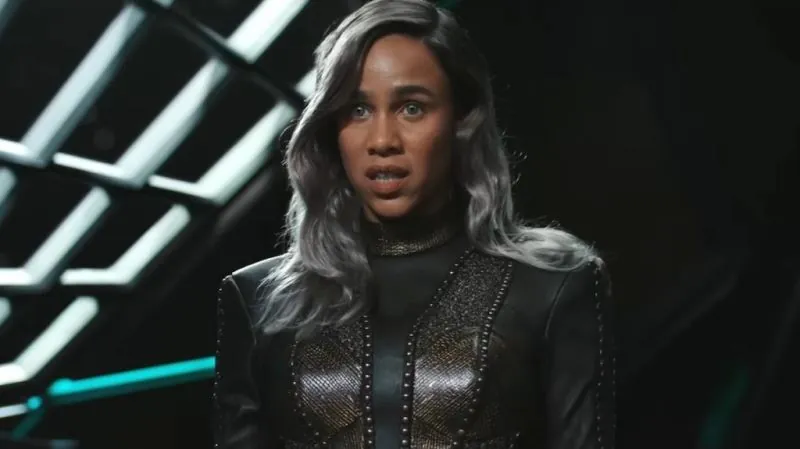
The villain is the real wound. Dar-Benn, played by Zawe Ashton, exists the way a non-player character exists in a video game. She shouts, she fires energy blasts, and she has almost nothing else going on. She is there to be the bad guy and nothing more.
Her motivation is at least coherent on paper. After the first Captain Marvel film, Carol destroyed the Kree Supreme Intelligence, and that act plunged the Kree homeworld of Hala into civil war and climate collapse. Dar-Benn wants revenge on Carol Danvers, and she wants to restore Hala using the Quantum Bands. Good bones. Terrible execution.
I used to hand the worst-MCU-villain crown to Malekith in Thor: The Dark World. Not anymore. Dar-Benn now sits at the top of that list.
Four Productions, One Film: The Continuity Homework Problem
Here is the thing that should have set off alarms at Marvel Studios long before release day: The Marvels is not really a sequel to one movie. It is a sequel to four separate productions. The 2023 film continues the story of Carol Danvers from Captain Marvel (2019), Kamala Khan from Ms. Marvel, Monica Rambeau from WandaVision, and the Kree-Skrull conflict that ran through Secret Invasion. Four threads, four different release windows, one two-hour movie.
For anyone counting on their fingers, that means three Disney+ shows standing between a viewer and a film that follows up a movie which grossed roughly $1.1 billion worldwide. The reviewer behind this The Marvels review puts the frustration bluntly: you are being told to go home, subscribe to Disney+, work through Ms. Marvel, then WandaVision, and whatever you do, do not skip Secret Invasion, because there will be a test.
It used to be simpler. When the MCU moved from Iron Man 2 to Iron Man 3, the only homework in between was a single Avengers film. Between the two Avengers movies, you only needed Captain America: Civil War. One film. One night. Now the assignment has ballooned into multiple seasons of television, and the reviewer notes that many people skipped The Marvels precisely because they had not watched those shows. That self-inflicted wound, the argument goes, fed directly into the film's box office collapse.
The reviewer's core complaint is not that continuity exists. It is that the price of admission quietly changed from one movie ticket to a streaming subscription plus hours of required viewing, and the general audience never signed up for that deal.
One number in the original account needs care, because it has been repeated often enough to sound true. The review claims viewers needed to sit through a large block of episodes spread across three different shows. The shows are real, the required viewing is real, and the burden on casual viewers is real, but the episode tally as the story goes is not something the record supports cleanly. Three series, each with its own season, still adds up to a serious time commitment for anyone who just wanted to see a movie.
What makes the complaint land is the contrast with how the earlier phases worked. The Infinity Saga kept its continuity tight enough that you could still enjoy a single film on its own terms. You never had to feel like you were missing a semester of coursework to follow a hero's next chapter. That balance is exactly what the reviewer says The Marvels lost, and it is hard to argue with the result sitting on the balance sheet.
The Marvels Runs 105 Minutes, and the Story Feels Even Shorter
The Marvels clocks in at about 105 minutes, which makes it one of the shortest films in the entire Marvel Cinematic Universe. Strip out the credits, and you are left with roughly 90 minutes of actual story. In a franchise where audiences had grown used to two-hour-plus epics, that gap is not a small detail. It is the whole problem in miniature.
Let us be fair about runtime for a second. Length has never been the first rule of quality. A tight 105-minute film can absolutely work if the storyteller found the right cut without fighting the edit. But nobody walks into The Marvels expecting an art film. They walk in expecting the thirty-third entry in a connected universe, one that has to carry emotional weight from earlier movies and television. Ninety minutes cannot hold all of that. A large chunk of the running time goes to action, and almost none is left for characters to connect, grow, or work through a conflict with any real cause and effect. With a reported production budget in the hundreds of millions, the material on screen should not feel this thin.
Two Rich Dynamics, Both Left on the Table
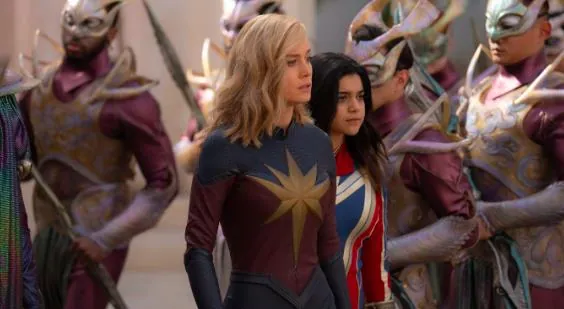
The film actually sets up the most interesting relationship material the franchise has offered in years. Monica Rambeau, last seen as an adult in WandaVision, carries genuine heartbreak over Carol Danvers abandoning her as a child. Kamala Khan, the young hero from Ms. Marvel, shows up with full-blown hero worship for Carol. Those two dynamics could power an entire film on their own.
And the movie keeps touching them, then pulling back. During the attack on the Skrull refugee planet, Kamala tries to save everyone while Carol insists they cannot save everyone even if they want to. That is a real conflict, planted right there. The next logical step would be Kamala questioning her blind childhood admiration and growing as a person. It never happens, because the film would rather spend its time on jokes about the body-swapping gimmick. Monica and Carol finally meet, and one scene later they talk it out and make peace. A rift built across two separate productions resolves without any earned cause and effect. The same thing happens in the scene where Carol destroys the Supreme Intelligence. You can feel the better movie hiding inside that moment, and the film deliberately refuses to be it.
What Happened to Aladna
Aladna, the musical planet where the inhabitants communicate through song, was reportedly a much longer sequence in an earlier cut. According to the original account, test screenings went badly, and the sequence was cut down hard. That matters more than it sounds. The trip to Aladna was supposed to be a major story beat, and the scenes there were doing character work. When you trim that, you also trim the connective tissue around it. Because the film had to hit a set length and the budget was already swollen, there was no room to shoot replacement scenes. So the middle of the movie simply shows the action and skips the reasons for it. That is why the editing feels so broken right in the center of the film.
The Same Truncated Pattern, Three Films Running
The runtime trouble is not unique to The Marvels. Doctor Strange in the Multiverse of Madness, Thor: Love and Thunder, and Ant-Man and the Wasp: Quantumania all arrived feeling clipped, their stories built for more than the final cut allowed. Their actual runtimes land around 126, 119, and 125 minutes respectively, none of them the clean two hours they are sometimes described as. All three were productions that ran into serious behind-the-scenes problems. Their scripts were reportedly stronger than what reached theaters, but films pushed toward a fixed release date cannot afford a longer post-production edit. They get cut to a length that fits the schedule, not the story. The Marvels inherited that same habit, and with a musical sequence already on the floor, there was nothing left to fill the space.
Female Characters Deserve Better Writing
Here is the argument that gets buried under all the noise: the trouble with female-led superhero movies is not that the leads are women. It is that the characters are built badly. A hero earns our attention through weakness, struggle and growth, and the review contends that Carol Danvers, played by Brie Larson, has been handed none of those things across three films. She has never faced a genuine struggle, never been physically wounded, and never suffered an emotional defeat.
Think about why we follow any blockbuster protagonist at all. They have flaws. They have the will to fight those flaws. They lose, sometimes physically, sometimes in their own heads, and they claw their way back until the win feels deserved. That template has nothing to do with gender. Luke Skywalker fits it. Ellen Ripley fits it. Aragorn, Sarah Connor, Rocky Balboa and The Bride all fit it. The job is to build a person first, then let that person earn the cape.
Now look at Carol. She arrives already at full strength and stays there, like a drawing that never changes line. Meanwhile the MCU's strongest women do walk the full road. Scarlet Witch, Gamora, Nebula and Black Widow all get knocked down and get back up. Put Wanda's arc beside Carol's and the gap stops being about who is a woman and starts being about who was actually written.
The review's sharpest point lands here: too many female-led films imply that simply being a woman is qualification enough for power. If Tony Stark has to innovate, fall and fight a psychological war to hold his place, Carol has to do the same. She has not.
One related claim needs care. The assertion that Brie Larson is "not widely liked by audiences" is contested, and it reflects online backlash more than any measurable fact. Larson does play Captain Marvel, and that part is not in dispute.
Why The Marvels Failed at the Box Office, and Why It's Not Superhero Fatigue
When The Marvels collapsed at the box office, a familiar explanation spread fast: audiences are simply tired of superhero movies. That explanation falls apart the moment you look at the 2023 numbers. Guardians of the Galaxy Vol. 3 pulled in roughly $845 million worldwide, and Spider-Man: Across the Spider-Verse grossed about $690 million. Two superhero films, two big hits, in the same year that The Marvels became the lowest-grossing entry in the Marvel Cinematic Universe. People did not stop showing up for capes. They stopped showing up for this.
Look at the other side of the ledger and the pattern sharpens. Shazam! Fury of the Gods, The Flash, and Blue Beetle all underperformed, each one losing money or falling short of expectations. None of those failures had anything to do with the calendar running out of room for superheroes. They had everything to do with the films themselves. The divide in 2023 was not superhero versus non-superhero. It was good versus bad, and audiences sorted them cleanly.
No Avengers Film to Carry the Hype
Compare The Marvels to the film it follows. Captain Marvel grossed about $1.1 billion in 2019, and that number did not come out of nowhere. It landed in the sweet spot between Avengers: Infinity War and Avengers: Endgame, when MCU hype was at its absolute peak. Carol Danvers was marketed hard as the bridge between those two Avengers films, and that momentum carried straight into her solo movie's box office. The Marvels had no such scaffolding. No Avengers film in front of it to build anticipation, none behind it to catch the wave.
A Cast of Characters Most Moviegoers Never Met
Then there is the supporting cast problem. Kamala Khan and Monica Rambeau are not unknowns to people who watch the Disney+ shows, but they are complete strangers to the audience that only buys a theater ticket. The film asks viewers to care about characters they have never been introduced to, played by actors most of them could not name. The villain, Dar-Benn, is even more obscure, a character so deep in Marvel lore that even longtime fans reportedly had to look her up. And the one familiar face anchoring the whole thing, Nick Fury, has now appeared in so many MCU projects that his presence no longer generates the excitement it once did.
As for Brie Larson, she does play Captain Marvel, but whether audiences broadly dislike her is a contested claim that reflects online backlash more than any measurable reality. What is not contested is that the film simply was not good.
The Steve Rogers Standard
Here is the sharpest contrast the review draws. Think about Steve Rogers. In Captain America: The First Avenger, he was a skinny kid from Brooklyn who could not win a fight. By Captain America: The Winter Soldier, he had become something else entirely, and the journey between those two films felt earned because we watched him struggle, fail, and grow. That is the kind of character development the MCU once delivered routinely. Carol Danvers has now appeared in three films without ever really struggling. She was powerful from her first scene and stayed powerful throughout, never physically wounded, never emotionally broken, never forced to fight for the strength she already had. The gap between what Steve Rogers got and what Carol Danvers got is the gap between a character and a mascot.
The Verdict the Box Office Delivered
The reviewer's conclusion is blunt: The Marvels failed because it was not a good film, not because audiences abandoned the genre. The reasons stack up cleanly. No Avengers film to build hype. A lead whose popularity is genuinely contested. Supporting characters unknown to anyone who skipped the streaming shows. An obscure villain. And a film that simply did not work. If Guardians of the Galaxy Vol. 3 and Spider-Man: Across the Spider-Verse had also flopped, the fatigue argument would hold water. They did not flop. They thrived. Audiences in 2023 proved they can tell the difference between a good superhero film and a bad one, and they spent their money accordingly.
Frequently asked questions
What is The Marvels about, and why did it fail?
The Marvels follows Carol Danvers, Kamala Khan, and Monica Rambeau, whose light-based powers become entangled through the Quantum Bands, causing them to swap places whenever they use them. It failed because of a weak story, a forgettable villain, forced continuity, and low overall quality, not because audiences had grown tired of superheroes.
Who is the villain in The Marvels, and why is she criticized?
Dar-Benn, a Kree warrior played by Zawe Ashton, is the film's antagonist. She blames Carol Danvers for the devastation of the Kree homeworld of Hala and seeks both revenge and restoration. Critics describe the character as empty and NPC-like, with little beyond shouting and firing energy blasts.
Why did The Marvels require watching Disney+ shows?
The film continues threads from Captain Marvel (2019), Ms. Marvel, WandaVision, and Secret Invasion, so viewers needed Disney+ subscriptions and multiple series under their belts to follow the plot. Forcing that homework on audiences is one reason many stayed home instead of buying a ticket.
Was The Marvels a box office flop compared to other MCU films?
Yes. The Marvels grossed about $206 million worldwide against a reported budget of roughly $270 million, making it the lowest-grossing MCU film. For comparison, Captain Marvel (2019) earned approximately $1.1 billion, the sharpest drop between a Marvel sequel and its predecessor.
How does The Marvels handle its female characters?
The reviewer argues the film never gives Carol Danvers a proper hero's journey. She never struggles, never loses, and never earns her power. By contrast, the MCU's strongest women, Scarlet Witch, Gamora, Nebula, and Black Widow, all fight, fall, and grow into their strength.
Did superhero fatigue cause The Marvels to fail?
No. Guardians of the Galaxy Vol. 3 and Spider-Man: Across the Spider-Verse both succeeded in 2023, proving audiences still want good superhero films. The problem was quality, not genre exhaustion, and the box office numbers for both hits made that plain.
What makes The Marvels one of the worst MCU films?
Several things stack up: a weak power-swapping concept, a forgettable villain, forced continuity, wasted character dynamics, and a truncated 105-minute runtime. The film also continues threads from four separate MCU productions, which buries its own story under setup and homework.
How does The Marvels compare to Guardians of the Galaxy Vol. 3?
Guardians of the Galaxy Vol. 3 grossed roughly $845 million and was both a critical and commercial success. The Marvels managed about $206 million and satisfied neither critics nor audiences. That gap is the clearest measure of how far the two 2023 Marvel releases sat apart. Editorial note: Any details that remain unconfirmed or vary across reports are presented here as such, with hedging where the record is unclear.
Got a take on this? Add your voice to the conversation below →
No comments yet. Be the first.