The Graduate: How Dustin Hoffman Changed Hollywood Casting
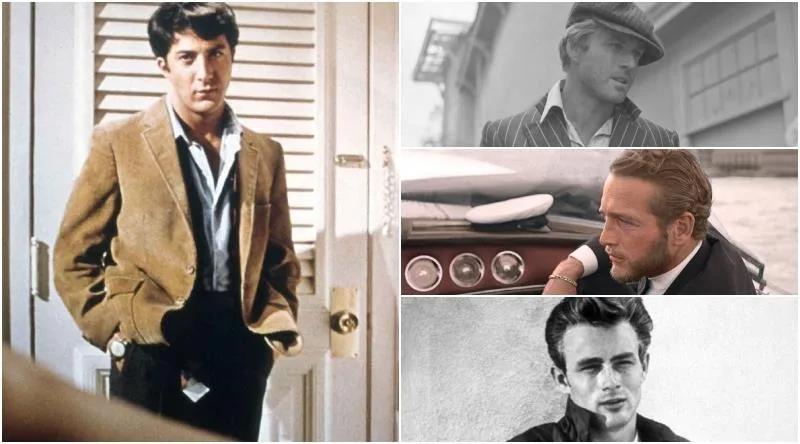
In 1967, Dustin Hoffman's performance in "The Graduate" redefined what a Hollywood leading man could look like, proving that an unconventional, neurotic everyman could anchor a massive box office hit. The film's casting, driven by director Mike Nichols, shattered the era's polished matinee idol template and opened the door for a generation of character actors. Watching Hoffman stumble through Benjamin Braddock's existential crisis, audiences witnessed a seismic shift in American cinema, one that made the awkward and the authentic suddenly bankable.
Dustin Hoffman's casting in The Graduate, released in 1967, broke the traditional leading man mold. Director Mike Nichols chose an unknown character actor over established stars, and the film's success proved that unconventional actors could carry major productions. This decision helped launch the New Hollywood era and influenced future casting choices like Al Pacino in The Godfather.
- The Graduate premiered in December 1967, with Dustin Hoffman making his major film debut at age 30.
- Director Mike Nichols famously cast Hoffman against the studio's wishes, which preferred a more conventional Hollywood star.
- The film became the highest-grossing movie of 1968 and earned Hoffman an Academy Award nomination for Best Actor.
- Hoffman's success paved the way for other unconventional leading men, including Al Pacino's casting in The Godfather in 1972.
- The Graduate is widely credited with helping to usher in the New Hollywood era of the late 1960s and 1970s.
The Unexpected Face of The Graduate
Dustin Hoffman was not the kind of actor Hollywood typically put on a movie poster when he landed the role of Benjamin Braddock in the 1967 film The Graduate. Standing about 5'6" and known mostly to theater audiences, Hoffman looked nothing like the suave leading men of his era. Director Mike Nichols saw something else in him, something that the polished alternatives simply could not offer.
Robert Redford was the natural first choice for the part. With his striking good looks and easy confidence, he seemed tailor-made for the role of a young man drifting through post-college confusion. But Nichols hesitated. Benjamin Braddock needed neuroses, insecurities, and a palpable awkwardness that Redford, for all his talents, could not quite project. The character was supposed to feel out of place at his own parents' country club party, overwhelmed by the aggressive attentions of Mrs. Robinson, and paralyzed by indecision. Nichols realized he needed someone who could embody that discomfort physically, not just perform it.
Hoffman himself had doubts about the fit. He worried he looked too Jewish for a character written as a clean-cut, WASP-ish California golden boy. Nichols reportedly convinced him otherwise, telling Hoffman the character had an inner Jewishness that mattered more than surface appearances. It was a strange pitch, but it worked.
The actor's own family had not been encouraging about his chosen path. His aunt Pearl reportedly told him he was too ugly to make it as an actor, an anecdote that has followed Hoffman through the decades, though its exact provenance is unverified. Whatever she said, Hoffman proved her wrong in spectacular fashion.
What made this casting so unusual was how thoroughly it broke with convention. American cinema had certainly featured troubled protagonists before, but actors like Marlon Brando and James Dean still looked the part of matinee idols while playing their tormented roles. Hoffman offered something different: a face and body that did not fit the leading man mold at all, yet somehow made Benjamin Braddock more real, more recognizable, more human. The Graduate became a sensation, and Hoffman's role in the film changed what Hollywood thought audiences would accept from a leading man.
A New Kind of Leading Man
When The Graduate premiered in 1967, it didn't just launch a career. It cracked open a door that Hollywood didn't even know was locked. The film arrived at the exact moment the "New Hollywood" era was beginning, a period typically dated from 1967 to the early 1980s when directors like Robert Altman, Roman Polanski, and Martin Scorsese made personal, auteur-driven films that pushed against the old studio system.
Before 1967, American cinema had a type. Troubled protagonists existed, sure, but they were played by men like Marlon Brando or James Dean, actors whose brooding intensity still fit the mold of tall, dark, and magnetic. The camera loved them. The posters sold them. And casting directors kept reaching for the same handsome faces, over and over.
Then came Benjamin Braddock. Mike Nichols, the director, had originally considered Robert Redford for the role, and on paper it made sense. Redford was the natural candidate, with his golden hair and confident grin. But Nichols saw something else in the character. Benjamin needed neuroses. He needed insecurities. He needed to feel like an outsider in his own life. So Nichols chose Hoffman instead, a little-known theater actor standing about 1.68 meters tall, who worried he looked too Jewish for the WASP-ish character he was about to play.
The shift was seismic. After 1967, leading men could be Hoffman, not just Redford. The faces on screen began to look more like the faces in the audience, complicated and uncertain and real. Hoffman's success coincided with a shift that benefited actors like Gene Hackman and Robert Duvall, his contemporaries from the same period, though direct causation is hard to prove. Critics have also observed that actors like Jesse Eisenberg, Jonah Hill, and Jason Schwartzman continue in a path that Hoffman is often credited with paving, playing smart, awkward, distinctly un-Hollywood leads. That lineage is a critical observation rather than a documented chain, but it speaks to how thoroughly the old rules were rewritten.
For a generation of actors who didn't look like matinee idols, that shift was everything. The Graduate didn't just change one career. It changed the definition of who got to be a star at all.
The Godfather Connection
About five years after The Graduate changed everything, Robert Redford lost another role, this time to a short, unknown Sicilian-American stage actor named Al Pacino. The year was 1972, and director Francis Ford Coppola was fighting to cast Pacino, who stood about 5'7" (1.70 m), as Michael Corleone in The Godfather. The irony is delicious: the movie industry had spent decades insisting leading men look like Redford, and now the same handsome actor was being passed over for the same reasons Hoffman had been chosen.
There is a persistent story that Paramount producer Bob Evans pushed hard for Redford in the gangster epic, but the timeline is off and Evans actually supported Pacino. The real resistance came from studio executives who worried the young actor lacked star power. Coppola held his ground, insisting on Pacino despite the pressure. The gamble paid off, and the rest is cinema history.
The parallel between Hoffman and Pacino is striking. Both were theater-trained, both were considered physically wrong for Hollywood's idea of a leading man, and both proved that audiences would follow talent over looks. The original article raises a tantalizing question: if Hoffman had not succeeded in The Graduate, could Pacino have become the Godfather? It is a speculative connection, not a documented fact, but it speaks to how one unconventional choice can loosen the grip of convention for everyone who follows.
What is certain is that Hoffman's performance as Benjamin Braddock in 1967 cracked something open. Before that film, troubled protagonists were played by magnetic figures like Marlon Brando or James Dean, men whose pain still looked glamorous. Hoffman was different. He was neurotic, insecure, and visibly uncomfortable in his own skin, and he made that discomfort riveting. The effect rippled outward, and by the early 1970s, actors who would never have been considered for leading roles were getting their shots.
Pacino's casting in The Godfather became one of the defining decisions of New Hollywood, the era running from 1967 into the early 1980s when directors like Robert Altman, Roman Polanski, and Martin Scorsese made personal, distinctive films. Coppola's stubbornness paid off, and Pacino's Michael Corleone became iconic. Whether or not Hoffman's success directly caused that casting, the two moments belong to the same shift, a time when Hollywood finally started to see that a leading man did not have to look like one.
Legacy and the Tootsie Poll
According to an unverified account, a recent list of the greatest films ever made, voted by actors rather than critics, ranks Tootsie first and The Godfather second. No credible actor poll with that specific ranking is known to exist, so take that with a grain of salt. What matters is what the claim points to: Dustin Hoffman's enduring pull on the people who actually work in this business.
The story goes that Hoffman's breakthrough in The Graduate in 1967 cracked something open in Hollywood. Before that, troubled protagonists existed, sure. But they were played by Marlon Brando or James Dean, men who fit a certain mold even when they were breaking it. After 1967, the leading man could look like Hoffman: short, anxious, visibly uncomfortable in his own skin. The camera suddenly had room for a different kind of face.
That shift coincided with a new path for actors like Gene Hackman and Robert Duvall, Hoffman's contemporaries from the same era. Whether Hoffman directly caused their success is hard to prove, but the timing is striking. And the path stayed open long enough for Jesse Eisenberg, Jonah Hill, and Jason Schwartzman to walk it, playing smart, nervous, complicated men who never would have gotten near a studio lead in the 1950s.
One final note on that poll, since it deserves a closer look. The claim places Tootsie, in which Hoffman plays an actor who dresses as a woman to land a role, above The Godfather. It is a fun thought, that Hoffman's most beloved performance might be the one where he is literally playing someone pretending to be someone else. But since the poll itself cannot be verified, treat it as a rumor from the industry, not a fact. The real point stands on its own: before Hoffman, the neurotic outsider was a supporting character. After him, he could carry the whole picture.
Frequently asked questions
Who played Benjamin Braddock in The Graduate?
Dustin Hoffman played Benjamin Braddock in The Graduate, which was released in 1967. The film, directed by Mike Nichols, became one of the most iconic movies of its decade and turned the relatively unknown stage actor into a household name almost overnight.
Why was Dustin Hoffman cast in The Graduate?
Director Mike Nichols chose Hoffman specifically because the character needed neuroses and insecurities, not just conventional handsomeness. Robert Redford was originally considered for the role, but Nichols felt Redford was too handsome and confident. Hoffman's nervous energy and outsider quality made him the perfect fit for Benjamin Braddock.
How did The Graduate change Hollywood casting?
Before 1967, troubled protagonists were typically played by actors like Marlon Brando or James Dean, who fit the traditional leading man mold. The Graduate opened the door for unconventional leading men, coinciding with the New Hollywood era when directors gained more creative control over their projects.
Did The Graduate influence Al Pacino's casting in The Godfather?
The source suggests a connection, but it is speculative and not confirmed. What is known is that Al Pacino was about 1.70 meters tall and was a little-known Sicilian-American actor at the time of The Godfather. The idea that Hoffman's success paved the way for Pacino remains an intriguing possibility rather than a documented fact.
What is the New Hollywood era?
The New Hollywood era is a period from 1967 to the early 1980s when directors had more creative control. During this time, filmmakers like Robert Altman, Roman Polanski, and Martin Scorsese made personal, distinctive films that pushed against the old studio system. The Graduate is often cited as the movement's starting point. Editorial note: Some details regarding studio negotiations and casting alternatives are presented as reported accounts, and any facts that remain unconfirmed are presented as such.
Got a take on this? Add your voice to the conversation below →
No comments yet. Be the first.