Seinfeld's The Opposite: 1994 Life Lessons That Still Work
The Seinfeld episode "The Opposite," which aired in 1994, is the sitcom's sharpest lesson in practical psychology, proving that George Costanza's reverse-every-instinct strategy can beat self-help books. It is the story of a miserable man who decides to do the exact opposite of his natural impulses, and in doing so, he briefly wins at life. Watching George stumble into success by trusting his gut to do the wrong thing is both hilarious and eerily relatable, especially when you realize how many of us are stuck in the same self-defeating loops that trapped him.
In the 1994 Seinfeld episode "The Opposite," George Costanza, frustrated with his failures, decides to do the opposite of what his instincts tell him. His gamble lands him a job and a new girlfriend, while Elaine faces setbacks, proving that sometimes the wrong choice is the right one.
- The episode originally aired on May 19, 1994, as the season five finale.
- George Costanza's opposite strategy begins at the coffee shop after he declares his life is the complete opposite of everything he wants it to be.
- By acting on his reverse instincts, George impresses an executive, lands a job, and gets a girlfriend.
- Elaine, in a parallel turn, makes a thoughtless comment to her boss and her situation unravels, while George's fortunes rise.
The Episode That Flipped George Costanza's Life
On May 19, 1994, a 20-minute sitcom episode taught more about turning a life around than most full-length self-help books ever will. "The Opposite," the season 5 finale of Seinfeld, aired that night and introduced a deceptively simple idea: if everything you do is wrong, then doing the opposite should be right. Three decades later, that premise still lands with surprising force.
George Costanza, the show's perpetually downtrodden schemer, had hit rock bottom in every measurable category. His job prospects were bleak, his romantic life was a graveyard of bad decisions, and his default response to any challenge was to fold or fabricate. He had spent so long lying and covering his failures that he had essentially lost track of who he actually was. The character's famous alter ego, Art Vandelay, was just one of those invented identities, a fictional architect he trotted out whenever reality got too uncomfortable.
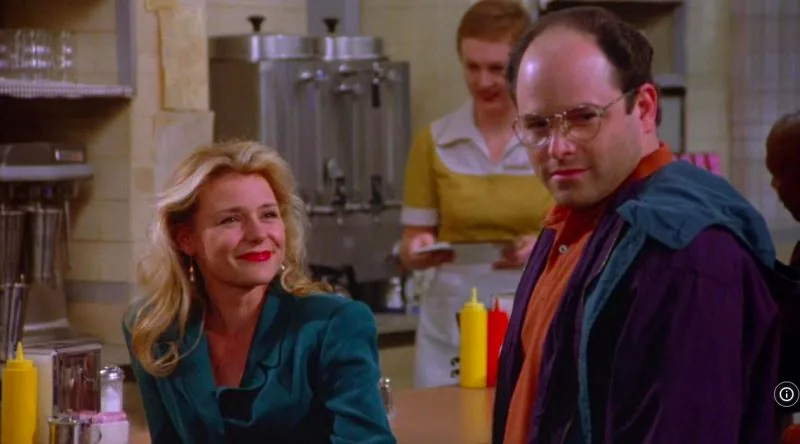
Then came the flip. With nothing left to lose, George walked into a coffee shop and made a radical choice. He ordered something he had never tried before. When a woman noticed him, he introduced himself plainly: "I'm George. I'm unemployed, and I live with my parents." The raw honesty, delivered without a hint of apology, worked. She was drawn to the confidence of a man who had stopped pretending.
The pattern repeated everywhere. At a movie theater, someone kicked the back of his seat. Normally he would have sat in silence, stewing. Instead he stood up and shouted. The whole audience applauded. At a job interview, he skipped the groveling and started criticizing the boss's decisions the moment he walked in. The executive was so impressed by the audacity that he hired George on the spot.
The episode's sharpest touch was the contrast with Elaine. While George's fortunes soared, hers crumbled in perfect symmetry. The show seemed to suggest there was a fixed amount of success in the universe, and someone else's gain had to come from someone else's loss. It was dark, ironic, and deeply funny.
What makes "The Opposite" endure is how it frames a genuine psychological insight inside a comedy. The rigid mental scripts we carry, the identities we assemble from borrowed expectations, those are what keep us stuck. George broke his script by accident, out of desperation, and discovered that the other side felt like freedom. That lesson, wrapped in a laugh track and a New York diner, has aged better than any number of motivational seminars.
George's Opposite Strategy: From Failure to Instant Wins
On May 19, 1994, the Seinfeld episode "The Opposite" aired as the season five finale, and it handed George Costanza a bizarre formula that actually worked: do the exact reverse of every instinct you have. The logic was simple, almost childlike. If everything he had ever tried led to failure, then the opposite of everything he had ever tried had to lead to success. George, a man with nothing left to lose, decided to test it in real time.
The results came fast. At the coffee shop, he skipped his usual order and picked something completely different. When a woman noticed him, he walked over and delivered a line that would have made the old George shrivel up: "I'm George, I'm unemployed, and I live with my parents." Instead of running away, she was drawn to the raw honesty. His usual instinct would have been to invent a glamorous cover story, a habit that led him to create the persona Art Vandelay for lying and covering failures. But the truth, delivered without apology, worked better than any fiction.
At the movie theater, someone kicked the back of his seat. The old George would have sat there seething in silence. The new George stood up and yelled at the top of his lungs, and the entire crowd burst into applause. Strangers were cheering for him. That had never happened before in his life.
The most dramatic turn came during a job interview. Instead of buttering up the boss with sycophantic praise, George started criticizing the man's decisions the moment the interview began. He tore into the company's strategy with genuine passion. The boss, stunned by the audacity, turned to his assistant and said, "Hire this man." Just like that. No follow-up questions, no references, no negotiation.
George's life turned around within hours, while Elaine's situation unraveled in the same episode. It was a strange cosmic balance, as if the show's universe had a fixed amount of success to distribute and George was suddenly hoarding all of it. The contrast made the whole thing funnier and a little unsettling. Watching George finally win felt great, but watching Elaine lose everything at the same moment reminded you that this was Seinfeld, where nobody gets a happy ending without someone else paying for it.
Elaine's Parallel Downfall: The Ironic Curse
While George Costanza is busy winning the lottery of life in the Seinfeld episode "The Opposite," Elaine Benes is quietly losing everything. The same night George lands a job and a date with a woman who actually likes him, Elaine's world starts to crumble in real time. It is a brutal, hilarious symmetry that the show never bothers to explain.
Elaine's mistakes are small at first. She makes a thoughtless comment to her boss, and suddenly her position is in jeopardy. She tries to fix things, but every attempt makes it worse. The more George succeeds by doing the opposite of his instincts, the more Elaine fails by trusting hers. It plays out like the universe has a strict quota on good fortune, and George is burning through Elaine's share.
This dark coincidence is not a one-off gag. Seinfeld returns to this kind of synchronicity again and again, threading a quiet, almost supernatural current through its seemingly random plots. The show famously billed itself as being about nothing, but that emptiness gives it room to be about everything, including the uncomfortable idea that one person's win is another person's loss. The group's fortunes seem to exist in a closed system, a fixed amount of success that cannot be increased, only redistributed.
The episode aired on May 19, 1994, as the season five finale, and it cemented this pattern as a signature move. Watching Elaine spiral while George ascends is not just funny. It is a little unsettling, because it suggests that the four friends are bound together by more than just a favorite coffee shop booth. They are bound by an invisible ledger, and someone is always paying.
Why "The Opposite" Beats 50 Self-Help Books
The message of the Seinfeld episode "The Opposite," which first aired on May 19, 1994, cuts through the noise better than an entire bookshelf of advice manuals. It targets the rigid social scripts we all follow without thinking, the ones that tell us wine must be poured into a specific glass or that men and women each have a prescribed way to behave. These arbitrary rules and the fake identities we build around them quietly sabotage our lives and drain the joy out of everyday moments.
Think about how many times you've done something a certain way simply because that's how it's supposed to be done, not because it made you happier. The episode's genius is in pointing out that sometimes drinking wine straight from the bottle is perfectly fine. The show exaggerates this idea for comedy, of course, but people have actually applied the concept in moderation and found real success by breaking their own patterns. The point isn't to become reckless; it's to question whether the rules you're following actually serve you or just hold you back.
What makes the episode stick with you is how it plays out. George Costanza, stuck in his usual failures, decides to flip everything. He orders something different at the coffee shop, tells a woman the unfiltered truth about being unemployed and living with his parents, and she finds his honesty attractive. When someone kicks his seat at the movie theater, he stands up and yells instead of quietly enduring it, and the crowd applauds. At a job interview, he abandons the groveling approach and criticizes the boss's decisions, which lands him the job on the spot.
Meanwhile, Elaine's life takes the opposite turn, getting worse as George improves. It's a darkly funny touch, as if there's a fixed amount of success to go around and someone has to lose it. The contrast makes the lesson land harder. You don't need fifty self-help books when one twenty-minute sitcom episode can show you that your instincts might be exactly backward, and that the thing you're afraid to try could be the thing that changes everything.
Frequently asked questions
What is the Seinfeld episode The Opposite about?
The Seinfeld episode "The Opposite," which aired May 19, 1994 as the season 5 finale, follows George Costanza as he decides to reverse every instinct he has. His life improves dramatically, while Elaine Benes experiences a string of setbacks. It is one of the most beloved installments of the sitcom's nine-season run.
Why does George decide to do the opposite?
George reaches a point where he has nothing left to lose. His career, relationships, and self-respect have all bottomed out, so he chooses to invert his usual behavior. He starts ordering different food at the coffee shop, speaks boldly to women, and yells at a movie theater heckler. The gamble pays off almost immediately.
When did 'The Opposite' first air?
The episode first aired on May 19, 1994, serving as the finale for Seinfeld's fifth season. It capped off a year that had already established the show as a cultural phenomenon on NBC. The original broadcast drew millions of viewers and cemented the episode's reputation among fans.
What life lessons can be learned?
The episode critiques rigid social rules about how people should behave. It suggests that breaking familiar patterns can lead to positive change, a message many argue beats dozens of self-help books. George's success comes not from skill but from abandoning the false identities he had built. His invented persona Art Vandelay, used for lying, gets replaced by honest self-presentation. Editorial note: Any facts which remain unconfirmed are presented as such, hedged for clarity.
Got a take on this? Add your voice to the conversation below →
No comments yet. Be the first.