Tesla Model Y Juniper: 300 km Real Range, No Spare Tire
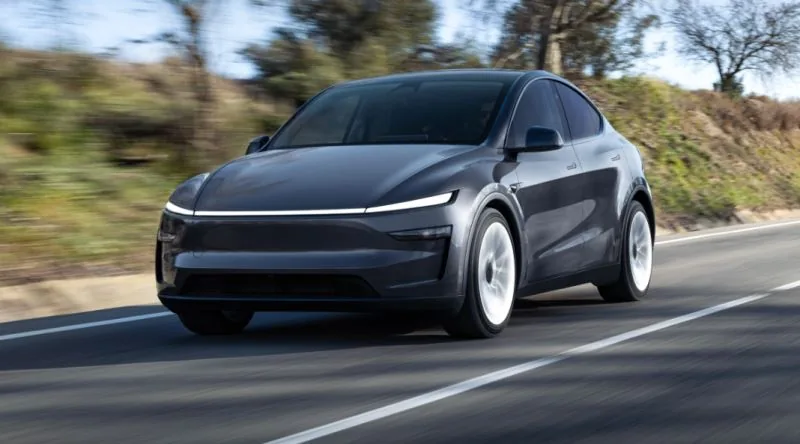
This Tesla Model Y Juniper review shares one owner's real-world experience in early 2025, covering the roughly 300 km between charges they report, the car's quirky Wi-Fi update requirement, and the notable absence of a spare tire. The owner, who traded in a Skoda Superb after nine years, now lives with the Juniper's strengths and frustrations, offering a candid look that goes far beyond the spec sheet. It is a story of adaptation, from learning to trust the battery meter to discovering hidden cargo nooks, and it will resonate with anyone weighing an EV purchase without home charging.
A Tesla Model Y Juniper owner reports needing to charge roughly every 300 km in daily use. The car requires a Wi-Fi connection for software updates, ships without a spare tire, and its autopilot handles stop-and-go traffic competently. The owner finds it comfortable and spacious compared to a Skoda Superb, but notes the practical challenges of EV ownership without a home charger.
- The owner reports a real-world range of roughly 300 km between charges in mixed driving conditions in early 2025.
- Software updates for the Juniper require a Wi-Fi connection, which the owner found inconvenient when relying on public charging networks.
- The Model Y Juniper does not include a spare tire, a fact the owner notes with concern.
- Autopilot in the Juniper performed well in dense traffic, reducing driver fatigue during the owner's daily commute.
- The owner switched from a Skoda Superb to the Model Y Juniper, citing superior comfort and more versatile cargo space with hidden compartments.
A Tesla Model Y Juniper review from a first-time EV owner
In late April, a longtime driver who says he has over 500,000 km behind the wheel finally made the switch to electric, picking up the new Tesla Model Y Long Range. After nine years of driving a Skoda Superb, a period he reports, this user came to the table with fresh eyes and a skeptic's patience, and the result is a genuinely mixed first impression. The overall verdict leans positive, but the quirks are real, and they are worth knowing about before you commit.
The author of this Tesla Model Y Juniper review is quick to admit they are not a car expert. But half a million kilometers of driving experience, as they describe it, earns a person some credibility, and their observations feel grounded in daily reality rather than spec sheet enthusiasm. This is someone who knows what a comfortable ride should feel like, and they found the Model Y's suspension surprisingly pleasant, especially given how much the previous generation got criticized for it.
What stands out immediately is how quickly they adapted to the lack of a gear shift lever. Within two or three days, the muscle memory kicked in. Buckle up, press the brake twice, and the car figures out the direction for you. Even during tight parking maneuvers, the vehicle handles the forward and reverse switching on its own, which means you rarely need to touch the screen for something as basic as changing direction.
The acceleration gets praise too, though it is not aggressive unless you want it to be. In standard mode, the car behaves itself, and after a week of driving the Tesla, the old Skoda felt like a horse-drawn carriage by comparison. The early warning systems also impressed, catching sudden obstacles and approaching stopped cars without bombarding the driver with unnecessary alerts.
But this is not a love letter. The same user who praises the ride has a list of frustrations, and the biggest one involves something as simple as software updates. Even with premium connectivity active, the car insists on a Wi-Fi connection to download updates. For someone who cannot connect to home internet, this means sitting in the car for one or two hours, tethered to a mobile hotspot, waiting for the download to finish. The car will not download while moving, only when parked, which makes the whole process feel unnecessarily difficult. As of their writing, they had not even managed to get the first update installed.
There is also the matter of the missing spare tire. The trunk space is generous, with plenty of hidden compartments underneath, but no stepney means a flat tire becomes a genuine question mark. The author notes this is not unique to Tesla, but it does not make the thought any more comforting.
Perhaps the most practical warning comes down to range expectations. The user assumed the Long Range model would deliver 400 to 450 km on a full charge, a figure he reports, which is a reasonable guess on paper. But Tesla recommends keeping daily charging between 20% and 80% for battery health, which effectively means you only get to use about 60% of the total range. In practice, the owner says that translates to charging roughly every 300 km. For someone with a short daily commute, that is manageable. For anyone driving more than 50 km a day without reliable home charging, the author's advice is blunt: think twice before going electric.
What the Model Y Juniper gets right: comfort, acceleration, and hidden storage
The first thing that surprises you about the refreshed Tesla Model Y Juniper is how settled it feels over broken pavement. The old Model Y earned a reputation for a stiff, busy ride, and the new suspension tuning directly answers that complaint. After a week behind the wheel, the owner climbed back into his previous car, a Skoda Superb he had driven for nine years, and the familiar sedan suddenly felt like a horse-drawn cart by comparison.
Acceleration gets plenty of attention in reviews, but the more interesting detail is how controllable it is. In standard mode, the Juniper launches with authority when you want it, yet it never feels snappy or harsh during everyday driving. You can be assertive at a green light without startling your passengers. That balance matters more than raw numbers for most people.
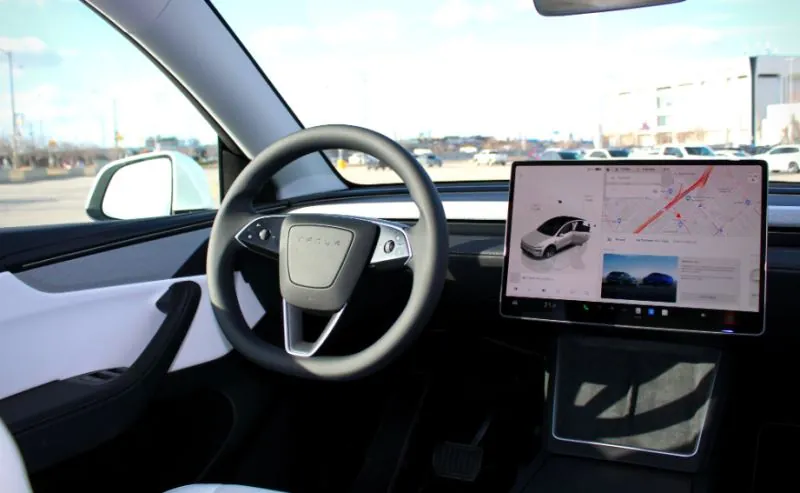
The missing gear selector takes about two or three days to get used to. There is no stalk on the steering column anymore. Instead, you buckle your seatbelt and press the brake pedal twice, and the car shifts into Drive on its own. During tight parking maneuvers, the vehicle automatically toggles between forward and reverse without you touching the screen at all. When you do need to switch manually, the on-screen controls work fine, just different from what you know.
Cargo space was already a strong suit of the Model Y, and the Juniper keeps that advantage while adding clever organization. The trunk has deep hidden subfloor compartments that swallow smaller items and keep them out of sight. Instead of a messy pile of bags and cables rolling around, everything tucks away neatly. It is the kind of detail you appreciate more with each passing week.
The early warning systems also earn praise. If a car cuts in front of you or you approach a stopped vehicle too quickly, the Juniper alerts you immediately. The warnings are timely without being naggy, which is a delicate balance many automakers get wrong. Seatbelt reminders and parking sensors chime in at reasonable moments, not constantly. For a first-time EV owner coming from a conventional sedan, these systems build confidence rather than annoyance.
The Wi-Fi update quirk and the 300-km real-world range reality
Here is the catch with the Tesla Model Y Juniper that nobody mentions in the showroom: you cannot download a software update using the car's own premium connectivity, even though you are paying for it. The car insists on a Wi-Fi connection, and it will only download while parked. For anyone without home internet, this becomes a genuine headache.
The owner in question has been trying to grab that first update since taking delivery. With no home Wi-Fi available, the workaround involves tethering from a mobile phone, which is painfully slow. Sitting in the parked car for one to two hours just to let an update download is not a realistic routine, so the first update remains undelivered. Tesla's official documentation does confirm this behavior: software updates default to Wi-Fi downloads, regardless of premium connectivity status.
The range math deserves equal scrutiny. The owner went in expecting roughly 400-450 km of total range from the Long Range model, a figure he reports. That assumption gets a reality check once you factor in Tesla's recommended charging window of 20% to 80%. Following that guidance for battery longevity leaves you with only about 60% of the total range actually usable in daily driving. In practice, the owner says that translates to plugging in roughly every 300 km.
That 300-km cadence, as reported by the owner, is fine for low-mileage daily drivers, but it changes the calculus for others. If your daily commute exceeds 50 km and you lack a reliable home or building charger, the recommendation is blunt: think twice before going electric. The convenience of a gasoline car, where a three-minute fill-up at a station every 5-10 km delivers 1,000 km of travel, does not translate directly to the EV experience. Even the best-case charging scenario takes around 30 minutes, and rural access to fast chargers remains spotty.
More gripes: no spare tire, autopilot in traffic, and minor annoyances
The new Tesla Model Y Juniper doesn't come with a spare tire, and that fact alone keeps its owner up at night. Tesla's official documentation confirms the vehicle ships with a tire repair kit instead of a spare, which is becoming common across many new cars these days. Still, when you're standing on a roadside with a flat, a can of sealant feels like a flimsy backup plan. The owner's worry is simple: what exactly do you do when the rubber meets the road?
Autopilot brings its own set of frustrations, especially in Turkish traffic. The system doesn't slow down for speed bumps, so you feel every single one. In congested city driving, the adaptive cruise control leaves a generous gap to the car ahead, and local drivers treat that gap as an invitation. Someone cuts in, the car brakes to re-establish distance, and the driver behind you lays on the horn. It's a cycle that repeats every few minutes, and it makes highway cruising the only place where autopilot actually feels useful.
The smaller complaints pile up like loose change in a cupholder. There's no app grid on the main screen, so switching between applications feels clunky and unintuitive. Netflix and YouTube shut down the moment you open a door, which is maddening when a kid is watching something on the rear display and you just want to grab a bag from the trunk. The cargo area has no tie-downs or hooks for securing loose items, and there's no 12V outlet back there either. The owner also noticed the turning radius feels worse than his longer Skoda Superb, making tight parking lot maneuvers more stressful than they should be. The radio app lags when switching channels and has weak reception, and the estimated remaining range isn't shown on the main display. You have to dig into the energy app just to see how far you can go, which feels like an unnecessary extra step for such a basic piece of information.
Final verdict: happy but cautious about EV adoption
After weeks behind the wheel, the owner's bottom line is refreshingly honest: zero regret, genuine joy, and a warning for anyone thinking about making the leap. "I have no regrets at this stage," they say, even after listing plenty of frustrations. "Even though I wrote a lot of negative things, I drive the car happily, with the feeling of riding in a premium vehicle."
That happiness, though, comes with a crucial condition. "If I didn't have a second fossil-fuel car, I wouldn't have bought an electric-only vehicle," they admit. The reason is simple: EVs create a kind of dependency that's hard to shake. There's always that nagging pressure in the back of your mind, the worry about getting stranded when the battery runs low.
The math is stark when you lay it out. With gasoline, they could fill up in about 3 minutes at a station every 5 to 10 kilometers and drive 1,000 kilometers on a full tank. With the Tesla, even in the best case, charging takes at least 30 minutes, and the car covers only about a third of that distance. Head into rural areas, and charging stations become increasingly rare. That's a trade-off that only makes sense if your daily driving is modest.
For anyone considering an EV, the owner has pointed advice. If you drive more than 50 kilometers a day and don't have reliable home or building charging, think twice. The 20% to 80% recommended charging range means you're only really using about 60% of the total range, so recharging roughly every 300 kilometers, as the owner reports, becomes part of the routine. The owner's own daily usage is low, so it's manageable. But they're clear: "I wouldn't recommend an electric car to people who drive a lot at this stage."
Still, there's optimism in their voice. In a few years, they predict, charging will be more widespread, more efficient, and faster. For now, the car is a joy to drive, a premium experience that puts a smile on their face every time they get in. They just wouldn't want to rely on it alone.
Frequently asked questions
Does the Tesla Model Y Juniper require Wi-Fi for software updates?
Yes, confirmed. Even with premium connectivity active, the vehicle will not download software updates over its own cellular connection. Tesla's official documentation states the car needs a Wi-Fi network to pull updates, so you either park near your home router or create a mobile hotspot. The owner noted this was one of the most frustrating aspects of ownership, especially since the car only downloads while parked.
Does the Tesla Model Y Juniper come with a spare tire?
No, it does not. Tesla ships the Model Y Juniper with a tire repair kit instead of a spare, which is consistent with many modern vehicles. The owner in this account admitted he has no idea what he would do if he got a flat tire on the road. It is worth planning ahead for this scenario if you are considering the car.
How does Autopilot behave in heavy traffic?
According to the owner, Autopilot leaves generous following distances in traffic, and that gap invites other drivers to cut in. When someone dives into the space, the car behind often honks at the Tesla driver. The owner found Autopilot only really useful on long highway stretches, not for daily stop-and-go commuting.
Is the Tesla Model Y Juniper comfortable compared to older versions?
Yes, the owner specifically praised the suspension, which was a common complaint on the previous Model Y generation. He said he has ridden in better suspensions, but the Juniper version fixed the harshness that critics used to highlight. Overall ride comfort was one of the first things he listed as a genuine positive.
What hidden storage does the Tesla Model Y Juniper have?
The trunk has subfloor compartments that let you tuck away items out of sight. The owner noted that while his previous car had similar total cargo volume, the Tesla keeps everything organized underneath. He can hide all his gear in those lower sections and keep the main trunk area looking clean.
Should you buy an EV if you cannot charge at home?
The owner advises against it. He says if you drive more than 50 km per day and lack reliable home or building charging, you should think twice about going electric. He personally has low daily mileage so it works for him, but he would not recommend an EV for anyone who cannot plug in at home and drives substantial distances.
How does the Tesla Model Y Juniper compare to a Skoda Superb?
The owner came from a Skoda Superb he drove for nine years, and the Tesla wins clearly on acceleration. However, the Model Y has a worse turning radius, so he finds himself struggling in parking lots where the longer Superb used to turn around easily. The Superb felt like a slow wagon once he got used to the Tesla's instant response. Editorial note: Any facts which remain unconfirmed are presented as such, hedged accordingly to reflect the owner's firsthand account rather than verified specifications.
Got a take on this? Add your voice to the conversation below →
No comments yet. Be the first.