Sneezing Reflex Neurons: How the Brain Decides
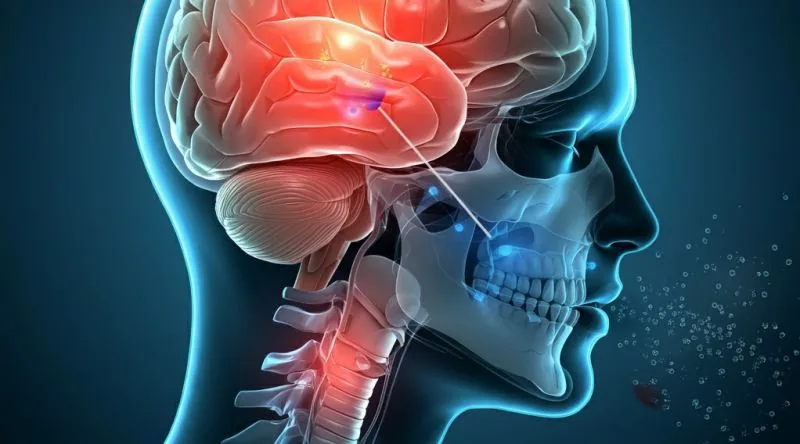
Scientists have identified the specific neurons in mice that control both sneezing and coughing, a discovery published in 2021 that reveals how the brain triggers these protective reflexes. The finding opens the door to new treatments for conditions that cause uncontrollable sneezing or coughing, which affects millions of people worldwide.
Researchers identified a specific set of neurons in mice that control both sneezing and coughing reflexes. These neurons respond to chemical triggers like the compound BAM 8-22, and when silenced, the mice stopped sneezing entirely. This discovery points toward potential new treatments for humans with chronic or uncontrollable sneezing and coughing.
- The sneezing reflex neurons were identified in the nasal passages of mice.
- Researchers used the compound BAM 8-22 to activate these neurons and trigger sneezing in mice.
- The neurons rely on the MrgprC11 receptor to detect the chemical trigger that initiates a sneeze.
- A separate set of neurons in the trachea, which produce somatostatin, were found to control coughing as a distinct reflex.
- Silencing the sneezing reflex neurons completely stopped sneezing in mice, confirming their essential role.
The Body's Built-In Alarm System
Your nose tickles, your chest tightens, and in a split second your brain picks one: sneeze or cough. Scientists have long puzzled over how the brain makes that call, and in 2021, researchers publishing in the journal Cell finally found the answer by studying mice. The secret lies in two completely separate sets of neurons, one stationed in the nasal passages and the other in the trachea.
Think of it as a security system with two distinct alarm wires. The sneeze-controlling neurons live in the nasal epithelium, the tissue lining your nose. The cough-controlling neurons, by contrast, are positioned in the trachea, the tube that carries air to your lungs. Each set of neurons responds to its own local disturbance, and that local signal tells the brain exactly which reflex to fire.
The researchers identified the sneeze neurons by applying various compounds to mice and watching what triggered a response. They found that a compound called BAM 8-22 reliably provoked sneezing, and it did so by activating a receptor known as MrgprC11. When the scientists eliminated the neurons carrying MrgprC11, the mice stopped sneezing entirely, even when they were infected with the flu.
The cough neurons tell a similar story from a different location. In the trachea, the researchers found neurons carrying a signaling molecule called somatostatin, and these proved essential for cough-like reflexes. Remove those neurons, and the cough response disappears, just as the sneeze response vanished when its own neurons were removed.
Why would the body need two separate systems when one alarm might do? Some have suggested that the rapid evolution of viruses may hold a clue, though this explanation remains speculative rather than confirmed by the study. What the researchers do know is that current cough treatments are often inadequate, and they hope that mapping these specific sneezing reflex neurons will point toward better therapies. The next step is understanding how these neurons signal the brain once triggered, and whether humans possess the same distinct neuron clusters that the mice do.
What's Next: From Mice to Medicine
The next big question is whether humans carry the same sneezing reflex neurons that researchers found in mice, and the answer could reshape how we treat coughs and colds. The team behind the 2021 Cell study isn't stopping at identifying these nerve cells. They want to trace the full journey: how do these neurons send signals to the brain once triggered, and how do those signals interact with the respiratory control center that keeps us breathing? Mapping that conversation between nose, trachea, and brainstem could reveal exactly where a new therapy might intervene.
There's also the matter of translation. Mice are useful stand-ins, but human airways differ in subtle ways. The researchers acknowledge that more work is needed to confirm whether similar neuron clusters exist in our own nasal passages and windpipes. If they do, the implications stretch beyond simple annoyance. Current cough treatments are often blunt instruments, suppressing symptoms without addressing the underlying neural trigger. The study's authors are candid that existing therapies are insufficient, which is precisely why targeted approaches matter. A drug designed to quiet the specific neurons that spark a cough, rather than dulling the whole reflex arc, could offer relief without the grogginess or side effects of today's options.
Interestingly, the same compound that lit up sneeze neurons in the lab, BAM 8-22, works through a receptor called MrgprC11. What's verified is the dramatic result: when mice had their MrgprC11-carrying neurons eliminated, they stopped sneezing even while infected with the flu. That kind of specificity gives researchers a clear target. The hope is that future medicines might dial down these sneezing reflex neurons on demand, turning a disruptive symptom into a manageable one. For anyone who has spent a sleepless night coughing or endured a sneezing fit that just won't end, that future can't come soon enough.
Frequently asked questions
What neurons control the sneezing reflex?
Researchers identified specific neurons in mice that control the sneezing reflex. These specialized nerve cells live in the nasal passages and carry a receptor called MrgprC11 on their surface. When activated, these sneezing reflex neurons send a signal to the brain that triggers the sudden, forceful expulsion of air we know as a sneeze.
How does the brain decide between sneezing and coughing?
The brain relies on two completely separate neuron systems to make that call. Neurons in the nasal passages handle sneezing, while a distinct set of neurons in the trachea, the tube that carries air to the lungs, manages coughing. Each system is wired independently, so the brain knows exactly which reflex to trigger based on where the irritation occurs in the respiratory tract.
What is the role of MrgprC11 in sneezing?
MrgprC11 acts as a molecular switch for the sneeze reflex in mice. A compound called BAM 8-22 activates this receptor, which sets off the sneezing response. When researchers removed the neurons carrying MrgprC11, the mice stopped sneezing entirely, even when infected with the flu. This receptor is essential for the whole sneeze pathway to work.
Why do mice stop sneezing when these neurons are removed?
Because those MrgprC11-positive neurons are the only route the body uses to trigger a sneeze. In the study, scientists eliminated these specific cells in mice and then exposed them to flu infection. The mice got sick, but they never sneezed. That result proved these neurons are not optional extras; they are the essential link between irritation in the nose and the sneeze response.
What is BAM 8-22 and how does it trigger sneezing?
BAM 8-22 is a peptide compound that researchers applied to mice to test the sneeze reflex. It works by binding to the MrgprC11 receptor on sensory neurons in the nasal passages. Once activated, these neurons fire and produce a sneeze. The compound gave scientists a reliable way to turn the reflex on and off in the lab, which helped them map the entire neural pathway.
Are there similar neurons in humans?
Not yet confirmed. The findings came from mouse models, and researchers have not verified whether humans possess the same MrgprC11-positive neurons in their nasal passages. More work is needed to determine if this exact mechanism exists in people. If it does, it could open up entirely new approaches to treating sneezing and coughing disorders.
How do these findings help develop new cough treatments?
By pinpointing the exact neurons responsible for each reflex, scientists now have specific molecular targets to aim at. Current cough medications are often ineffective because they work broadly rather than precisely. The tracheal neurons that control coughing carry a signaling molecule called somatostatin, which gives drug developers a concrete target for designing more effective therapies that could finally address the root of the problem. Editorial note: Any facts that remain unconfirmed in the ongoing research are presented as such, with the understanding that further studies will clarify these findings.
Got a take on this? Add your voice to the conversation below →
No comments yet. Be the first.