Saul Goodman Quotes: TV's Sharpest Metaphors
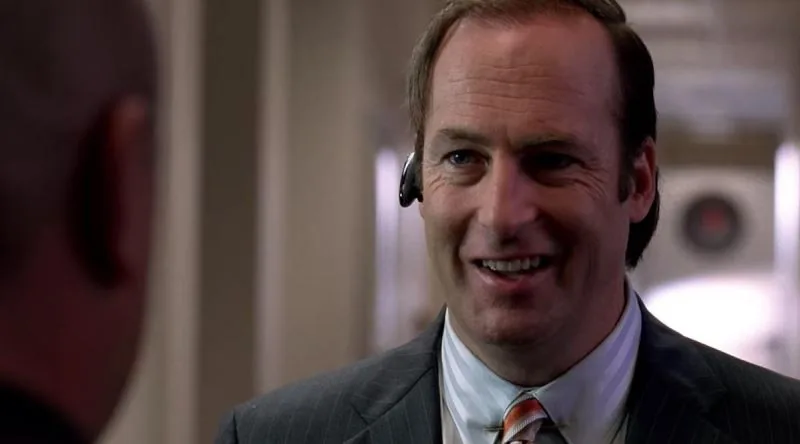
Saul Goodman quotes from Breaking Bad and Better Call Saul remain TV's sharpest metaphors because they blend legal cynicism with gutter-level wisdom, delivered by Jimmy McGill in Albuquerque, New Mexico, across two acclaimed series. His one-liners do more than make you laugh; they strip away pretense and reveal the ugly mechanics of power, greed, and self-deception. Watching him talk is like watching a magician explain the trick mid-performance, and that honesty disguised as sleaze is exactly why audiences can't look away.
Saul Goodman, the criminal lawyer alter ego of Jimmy McGill, delivers some of the most quoted dialogue in modern television. His metaphors compare legal battles to boxing matches, con games, and fast food, using humor to expose uncomfortable truths. His lines appear across Breaking Bad and Better Call Saul, set in Albuquerque, and remain fan favorites for their wit and insight.
- Saul Goodman is a central character in Breaking Bad, appearing as a flamboyant criminal defense attorney in Albuquerque.
- The character's backstory unfolds in Better Call Saul, a prequel series that explores how Jimmy McGill became Saul Goodman.
- Saul's signature metaphors often compare the legal system to street-level hustles, reflecting his background as a former con artist.
- His analogies frequently draw on pop culture, biblical stories, and everyday experiences to make sharp points about power and justice.
- Saul Goodman quotes have entered pop culture as shorthand for clever, morally flexible problem-solving.
The Man Behind TV's Sharpest Metaphors
Bob Odenkirk's Saul Goodman didn't just talk fast. He talked smart, pulling comparisons from ancient law codes, classic cartoons, and pop culture with a speed that left both courtroom opponents and viewers scrambling to keep up. The character first appeared in Breaking Bad before earning his own origin story in Better Call Saul.
A compilation celebrating his best lines made the rounds online in May 2023, and reading through it, you understand why fans call him television history's finest metaphor-maker. His wit never felt rehearsed. One moment he's comparing himself to a lemonade stand kid taking on Walmart, the next he's invoking Hammurabi's Code and asking about an eye for an eye. The man had range.
What makes his Saul Goodman quotes so memorable isn't just the references themselves. It's the self-awareness underneath. He knew he was selling something, whether it was legal defense or a version of himself, and his analogies always carried that wink of recognition. Pop culture, history, and a healthy dose of self-deprecating humor blended into every pitch, every threat, every desperate plea.
Take his take on lawyers and health insurance. Most attorneys would never admit their services feel like a necessary evil. Saul did it in one breath, acknowledging you hope you never need either but wouldn't dare go without them. That honesty, wrapped in cynicism, became his signature.
The Underdog Lawyer Who Quoted Goliath, Walmart, and Erin Brockovich
Saul Goodman, the criminal lawyer played by Bob Odenkirk who first appeared in Breaking Bad before getting his own prequel series Better Call Saul, built his entire persona on one simple promise: he fights for the little guy. Not the powerful, not the connected, not the wealthy. The person getting steamrolled. That self-image shaped nearly every analogy he reached for, and it made for some of the sharpest, funniest lines in modern television.
In Better Call Saul, Jimmy McGill (the man who would eventually become Saul) laid out his situation with a comparison that stuck. He described his small practice going up against the prestigious firm HHM, where his own brother worked, as being like a kid selling lemonade against Walmart. The image was absurd and completely accurate at the same time. HHM had the polish, the resources, the name recognition. Jimmy had a strip mall office and a stubborn belief that he could outwork everyone.
That David versus Goliath framing came up again and again. Jimmy referenced the story of David and Goliath when talking about his legal battles, casting himself as the underdog facing an unstoppable giant. He used the comparison so often that it became shorthand for how he saw the entire profession. The big firms had their armies of associates and their marble conference rooms. He had wit, hustle, and a willingness to get his hands dirty.
He even reached for the Erin Brockovich comparison when discussing a case, putting himself in the same category as the real-life legal clerk who took on a massive utility company and won. The exact phrasing in the show is not verified, but the spirit of the reference fits with how Jimmy viewed his role: the outsider who beats the establishment through sheer determination.
Perhaps his most practical analogy came when he described lawyers themselves. "We lawyers are like health insurance," he said. "You hope you never need it, but not having insurance? No way." It was a salesman's pitch wrapped in a universal truth. Nobody wants to need a lawyer. Everybody wants to know one is there if disaster strikes. Jimmy understood that fear, and he knew exactly how to turn it into a client relationship.
These comparisons worked because they came from a place of genuine identification. Jimmy McGill really was the underdog. He had spent years as a con artist before earning his law degree from a correspondence school, and he carried that scrappy energy into every courtroom and negotiation. When he compared himself to a lemonade stand competing against a corporate giant, he was not reaching for a clever metaphor. He was describing his actual life.
Pop Culture as a Weapon: Bugs Bunny, Lord Vader, and Ansel Adams
Saul Goodman never just argues a point. He loads it with a cultural reference and fires it like a slingshot, which makes the insult land twice as hard. In Breaking Bad and its prequel Better Call Saul, he turns cartoons, movie villains, and fine-art photographers into legal ammunition.
Take his take on Albuquerque, New Mexico, the city where he sets up shop. He jokes that the only two things he knows about the place are that Bugs Bunny should have turned left there and that he could try a hundred times and never spell the name correctly. It is a throwaway line, but it tells you everything about how he sees his own hometown: as a punchline he happens to live in.
His rival Howard Hamlin, the polished partner at the prestigious Hamlin, Hamlin & McGill firm, gets the Star Wars treatment. Saul asks where "Lord Vader" is when referring to Howard. It fits perfectly. Howard is tall, immaculate, and intimidating, the kind of guy who walks into a room and expects the temperature to drop. The nickname strips away the corporate polish and turns him into a cartoon villain, which is exactly how Saul wants to see him.
When he needs a private investigator to dig up dirt, he hands out the highest compliment he can muster. He tells the guy he is the "Ansel Adams of secret photography." For anyone who knows the work of Ansel Adams, the 20th-century photographer famous for his dramatic black-and-white landscapes of the American West, the comparison is absurd and perfect at the same time. Surveillance photos are not exactly fine art, but in Saul's world, they might as well be.
Even Mike Ehrmantraut, the stoic former cop who becomes his fixer, does not escape the treatment. Saul tells him he is like a "mischievous dwarf under the bridge," which is funny because Mike is the opposite of playful. He is quiet, methodical, and deadly serious. But the image fits in its own way. Mike guards his territory, collects his toll, and does not let anyone cross without paying. The reference makes him sound like a guardian of a hidden passage, which is exactly how Saul sees him: as a force he can hire but never quite control.
The Darkest Jokes: When Humor Gets Uncomfortable
Saul Goodman, the criminal lawyer at the heart of Breaking Bad and Better Call Saul, never let the gravity of a situation ruin a good punchline. Even when discussing murder, prison, or his own moral failings, he reached for the most inappropriate analogy he could find. That is exactly what made him so compelling to watch, and so unsettling to listen to.
Consider the time he bragged about his legal prowess to Walter White and Jesse Pinkman. He claimed he convinced a judge to reduce a client's charge from the death penalty down to "dying in prison." That is not a victory in any normal sense, but Saul presented it as a triumph, a testament to his negotiating skills. The joke lands because it reveals how he measures success: not by justice, but by the smallest possible margin of failure.
His euphemisms were equally grim. When discussing what happens to people who become inconvenient, Saul used Belize as a code word. It is a beautiful place, he admitted, one he would love to visit. But as the joke goes, none of them would ever leave that desert alive. The humor comes from the casual way he equated a tropical paradise with a permanent disappearance, a dark fantasy that never quite stops being funny.
Then there was the crude analogy he used with Mr. Acker, the man being evicted from his home to make way for Mesa Verde's development. Saul handed him a photograph of a man having sex with a horse and said, "Suppose I am that man. Mesa Verde is the horse." It was deliberately offensive, designed to shock Acker into understanding his helpless position. The image was vulgar, but the point was precise: Saul saw himself as the instrument of a force far larger and more indifferent than himself.
His arrogance reached biblical proportions when he declared himself a "god in human clothing" during a moment of frustration. It was a boast that sounded ridiculous coming from a man in a cheap suit, but Saul leaned into it, even if the line dripped with sarcasm. He had entered worlds beyond his brother Chuck's imagination, he claimed, and that made him something more than ordinary.
When he first met Walter White, the chemistry teacher who would become his most dangerous client, Saul felt the need to clarify his role. "I am not a gigolo, if that is what you are implying," he insisted. The line was a deflection, a way to control the narrative before Walter could form his own assumptions about the flashy lawyer with the gaudy office.
His relationship with his brother Chuck produced one of his strangest inside jokes. Saul used "1933" as a code for Howard, telling someone to write to Howard using that number. The source material connects the code to the year Hitler came to power, but the exact significance in the show remains a point of debate. Regardless, it was a private shorthand that only made sense in the context of their fractured relationships.
Why Saul Goodman's Words Still Matter
Saul Goodman quotes have outlived the final credits of both Breaking Bad and Better Call Saul, and that staying power says something real about how we connect with television. Fans still trade his lines in comment sections, on social media, and in group chats years after the episodes first aired. The man has become a cultural touchstone, and his words carry weight because they capture something true about modern life.
Part of the appeal is how Saul blends quick wit with genuine desperation. He can crack a joke about health insurance one minute and stare down a cartel threat the next. That combination makes him feel human rather than cartoonish. He is not a slick superhero lawyer. He is someone constantly scrambling, and his humor reads like a survival instinct. When Jimmy McGill compares his small practice to a kid selling lemonade against Walmart, you hear the frustration underneath the punchline.
The quotes also travel across two different shows while keeping the same voice. Jimmy McGill in Better Call Saul and Saul Goodman in Breaking Bad do not always act the same way, but their way with words stays consistent. The man who tells a private investigator he is the Ansel Adams of secret photography in one series is the same guy who jokes about Bugs Bunny turning left at Albuquerque in the other. That continuity gives fans a sense that these are not just random lines. They belong to one person, even as his circumstances shift.
There is also something deeply human about using humor as armor. Saul reaches for a joke when he is in over his head, which happens more often than he would like to admit. When he tells a potential client that lawyers are like health insurance, you hope you never need them but you cannot go without them, he is really talking about his own role in people's lives. He shows up when things go wrong, and he knows it.
The David and Goliath references, the Hammurabi's Code callback, the self-deprecating cracks about being a gigolo, they all point to a character who understands power dynamics and refuses to bow quietly. His comparisons stick because they are specific and visual. You can picture the lemonade stand. You can picture the slingshot. You can picture the man in the cheap suit trying to outmaneuver everyone in the room.
That specificity is why Saul Goodman quotes keep circulating. They are quotable, yes, but they also reveal a character who never stops fighting, even when the odds are stacked against him. And in a world where so much television fades from memory quickly, a voice that honest and that sharp tends to linger.
Frequently asked questions
What makes Saul Goodman's metaphors so distinctive?
Saul Goodman's metaphors stand out because he mixes high and low culture in a single breath. He might compare a legal battle to the biblical story of David and Goliath, then turn around and liken himself to a kid selling lemonade against Walmart. His self-deprecating humor makes even the most complicated legal and moral situations feel instantly relatable.
Who is Saul Goodman and why is he famous?
Saul Goodman is a criminal lawyer played by Bob Odenkirk. He first appeared in the AMC series Breaking Bad and later became the star of his own prequel series, Better Call Saul. Fans love him for his sharp wit, flashy suits, and willingness to bend the rules.
How does Saul Goodman use pop culture references in his dialogue?
Saul uses pop culture as a kind of shorthand. When he wants to mock a rival lawyer, he asks where Lord Vader is, a nod to Star Wars. When praising a private investigator's photography skills, he calls the man the Ansel Adams of secret photography. When he wants to make fun of his own situation in Albuquerque, he brings up Bugs Bunny.
What are some of Saul Goodman's most memorable quotes?
One fan favorite is his health insurance analogy, where he explains that lawyers are like health insurance, you hope you never need them but you cannot afford to go without them. Another beloved line is his joke about Bugs Bunny, where he says the cartoon rabbit should have taken a left turn at Albuquerque, a reference to the classic Looney Tunes gag.
Why is Saul Goodman considered one of TV's best characters?
Saul Goodman earns that reputation through his moral complexity and sharp wit. Across two series, viewers watch him transform from a struggling public defender named Jimmy McGill into the flashy criminal lawyer Saul Goodman. His humor stays cynical and pop-culture-savvy, but underneath it all, viewers see a man wrestling with his own conscience.
Did Saul Goodman appear in both Breaking Bad and Better Call Saul?
Yes, Saul Goodman is a central character in both shows. In Breaking Bad, he serves as the slick lawyer for Walter White and Jesse Pinkman. In Better Call Saul, the prequel series, viewers see how Jimmy McGill became Saul Goodman in the first place.
How does Saul Goodman's humor differ from other TV lawyers?
Saul's humor is more cynical and self-deprecating than what you find on typical legal dramas. He knows his clients are shady and his methods are questionable, and he leans into that reality. Where other TV lawyers might deliver noble speeches about justice, Saul cracks jokes about Hammurabi's Code and clarifies that he is not a gigolo. Editorial note: Any facts that remain unconfirmed are presented as such, hedged for accuracy.
Got a take on this? Add your voice to the conversation below →
No comments yet. Be the first.