Random Access Memories Review: Daft Punk's 2013 Masterpiece
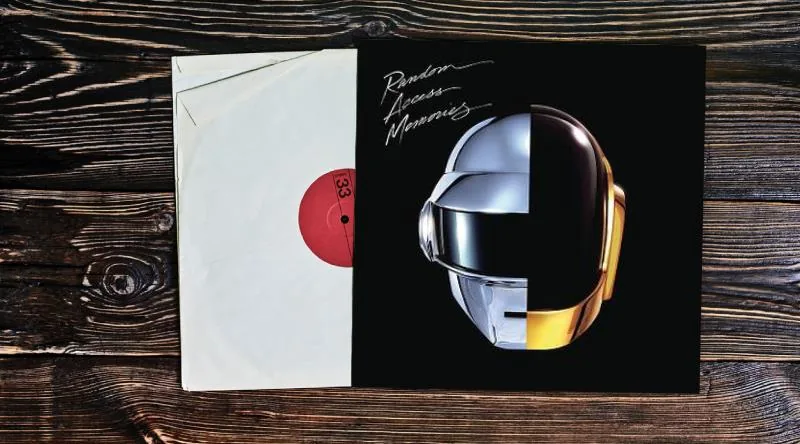
The Random Access Memories album review that follows examines Daft Punk's 2013 Grammy-winning masterpiece, a lavish tribute to late-70s and early-80s disco, soft rock, and electronic music that became the French duo's crowning achievement. It's a record that dared to abandon the robotic futurism of their earlier work for live instrumentation and human warmth, and in doing so, it rewrote the rules of what a dance album could be. The result is a nostalgic yet forward-looking journey that still feels vital over a decade later.
Daft Punk's Random Access Memories, released in May 2013, is a meticulously crafted homage to the analog era of music production. It features live session musicians, a sweeping narrative from Giorgio Moroder, and the global smash hit "Get Lucky," all wrapped in a warm, luxurious sonic palette that redefined the duo's legacy as their final studio album.
- The album was recorded primarily in Paris and Los Angeles between 2008 and 2012, with a focus on live, analog instrumentation rather than drum machines.
- Released on May 17, 2013, it debuted at number one in several countries and has since been certified multi-platinum worldwide.
- "Get Lucky," featuring Pharrell Williams and Nile Rodgers, became the group's biggest commercial single, topping charts in over a dozen nations.
- The album won five Grammy Awards in 2014, including Album of the Year and Best Dance/Electronica Album.
- It stands as Daft Punk's final studio album, as the duo announced their split in 2021.
Why This Album Deserves a Perfect Score
I have a confession to make: I spend most of my listening time with rock music, and before this record, I had never once sat down and played a Daft Punk album from start to finish. Yet here I am, giving Random Access Memories a 5/5, and I have never been more certain about a rating in my life.
The question I kept asking myself was simple: what does a perfect album even look like? For me, it comes down to four things. The concept has to hold together. The album needs historical weight. There cannot be a single boring song. And the recording quality has to be something you can feel in your bones. Most records I love fail at least one of those tests. This one clears all four.
When Daft Punk announced in February 2023 that a 10th anniversary edition of the album would arrive that May, it gave longtime fans a reason to revisit the work. For me, it was a chance to finally put my feelings into words. The announcement landed just as I was wrestling with what makes a record truly great, and the timing felt almost deliberate.
What struck me first was the sound itself. The production here belongs in a category with the finest Pink Floyd recordings I have ever heard, and that is not a comparison I make lightly. Every instrument sits in its own space. You can isolate the bass, follow the drums, trace the guitar lines, even on a cheap turntable with mediocre speakers. I remember being floored the first time I heard it on a proper pair of headphones, picking out details I had missed entirely before.
The concept behind the album is just as strong as the engineering. It boils down to two themes: music and love. Nearly every track touches one or the other. The opening song, "Give Life Back to Music," sets the tone immediately, a statement about rescuing music from the era of fast, disposable consumption. Even younger listeners who grew up on streaming admit that music has become something to swipe past rather than sit with. Daft Punk made a record that demands you stop and listen, and they backed up that manifesto with live instruments played by real masters.
At the end of the day, I keep coming back to the same conclusion. This is a record that rewards patience, that reveals new layers with every listen, and that never once loses its grip on your attention. That is why it earns the perfect score. That is why I have given it 5/5 and never looked back.
The Recording Quality That Sets a New Standard
If there is one thing that separates Random Access Memories from nearly everything else in the modern pop canon, it is the sheer fidelity of the recording. I first heard this album on a cheap turntable with a worn-out needle, and even through that muddy setup, the sound stopped me cold. The clarity was unmistakable, the kind of depth that makes you lean in closer to the speakers.
Daft Punk are famously obsessive in the studio, the kind of artists who will spend an entire day tweaking a single snare hit. That perfectionism is all over this record. In fact, the production quality here is, in my personal opinion, right up there with the best of Pink Floyd's catalog, which is about the highest compliment I can give any recording. What makes it even more impressive is that you do not need a golden ear to hear it. Even casual listeners, people who have never thought twice about how a record was mixed, can pick out every single instrument in the mix. The bass sits in its own pocket, the guitars breathe, the drums crack with a live, physical presence that most digital recordings simply cannot replicate.
For anyone who wants to understand what I am talking about, I always point them to one track: "Giorgio by Moroder." It is the definitive showcase for what this album can do sonically. The track opens with the legendary Italian producer Giorgio Moroder speaking about his life in music, and as his monologue unfolds, the production builds around him with a warmth and precision that is genuinely breathtaking. You can hear the room, the space between the notes, the way each layer was placed with intention. It is the kind of recording that makes you want to upgrade your entire audio setup just to hear it properly.
The Album's Two Great Themes: Music and Love
Strip away the glossy production and the star-studded guest list, and Random Access Memories reveals itself as an album built on just two pillars: music and love. Nearly every track touches one of these themes, and often both at once. The French duo, known for their robot helmets and four-on-the-floor dance tracks, used their 2013 comeback to make a statement about what music means and what love can do.
"Give Life Back to Music" opens the record as a manifesto, and it lands with the force of a mission statement. The track argues against fast-consumed, disposable music, the kind that gets streamed once and forgotten. Daft Punk's answer to the streaming era was to record with live instruments, real musicians, and painstaking attention to detail. The title track sets the tone perfectly: music should be felt, not just heard. It's a bold position for an electronic duo to take, but they back it up with every note that follows.
The most striking exploration of the music theme arrives in "Giorgio by Moroder," a track that features the legendary Italian producer Giorgio Moroder himself speaking over a slowly building instrumental. Moroder, the man behind disco classics and a pioneer of electronic music in the 1970s, reflects on a life devoted to his craft. His spoken-word monologue carries real weight, especially when he talks about breaking rules. Moroder insists there is no right or wrong in music, only the constant need to push beyond boundaries. For anyone who has ever dreamed of dedicating their life to making music, his words hit like a revelation. The track builds from a quiet spoken intro into a soaring, orchestral celebration of what happens when someone gives everything to their art.
Love appears in many forms throughout the album. "The Game of Love" and "Instant Crush" deal with enduring love, the kind that lingers even after a relationship ends. "Get Lucky," the album's massive hit featuring Pharrell Williams, captures the thrill of new love, the electric possibility of something about to begin. Then there's "Fragments of Time," which steps away from romantic love entirely to celebrate friendship and nostalgia, a warm tribute to good days spent with people who mattered. The album's most daring statements about love come in "Touch" and "Beyond," where the lyrics grow bold and philosophical. "If love is the answer you're home," sings the narrator in "Touch." "Remember, love is our only mission," echoes "Beyond." In an era when pop music often treated love as something casual or fleeting, Daft Punk dared to make it the whole point.
A Genre-Hopping Masterclass
Calling Random Access Memories an electronic album is technically accurate, but it undersells the journey. Under that one umbrella, Daft Punk visits funk, disco, rock, jazz, new age, and orchestral pop, often within the same track, and somehow makes it all cohere into a single, seamless statement.
The most unapologetically electronic moment arrives with "Doin' It Right," featuring Panda Bear. It is the closest thing on the record to Daft Punk's older, repetition-obsessed style. Notably, it is the only track without a session musician guest, a small detail that reveals its stripped-back intent. For fans who came for the classic robot sound, this is the anchor.
"Beyond" takes the opposite route. It opens with full orchestration, layers in violins and slide guitar, and builds into something deeply groovy. The electronic backbone stays present, but the arrangement keeps swerving into unexpected terrain. The track defies easy categorization, which is precisely the point.
The album's closer, "Contact," plays like a short film. It samples a real conversation from an Apollo 17 astronaut, then builds tension the way a rocket countdown does. Omar Hakim's drums push harder and harder until the whole thing erupts, dissolves into distorted radio frequencies, and fades out. It is a theatrical, cinematic ending that leaves you breathless.
"Motherboard" drifts into new age territory, with violins and flute-like keyboards that evoke nature documentaries. It is a lovely piece, though it does slightly stick out from the album's overall mood. A minor quibble in an otherwise meticulously sequenced record.
Then there are the funk singles. Nile Rodgers, the legendary guitarist from Chic, plays on "Give Life Back to Music," "Lose Yourself to Dance," and "Get Lucky." His rhythmic technique transforms simple parts into something iconic. "Get Lucky," featuring Pharrell Williams on vocals, is built on just four simple chords, yet Rodgers plays them with such feel that the song became a global phenomenon. The blend of funk rock with Daft Punk's electronic tricks is seamless.
"Fragments of Time," with Todd Edwards, is the most pop-oriented cut. Greg Leisz adds slide guitar, giving it a warm, almost tropical feel. It is a sympathetic, nostalgic tune about good times with friends.
Omar Hakim plays drums on most of the album, and his work is a standout throughout. His precision gives every track a rock-solid foundation. Julian Casablancas brings indie rock energy to "Instant Crush," with palm-muted guitar and synthesizers that keep it from being pure rock. The electronic touches in his vocal and the synths in the chorus make it a hybrid, but the general vibe is unmistakably rock-leaning.
Paul Jackson Jr.'s guitar solo at the end of "Giorgio by Moroder" is monstrous, riding over Hakim's incredible drumming. That track also incorporates hip hop turntable effects and jazz lounge sections, all while telling the story of how Moroder navigated a changing music world.
"The Game of Love" features Nathan East on bass and Chris Caswell on keyboards, creating a dreamy atmosphere. "Within" pairs pianist Chilly Gonzales with a melancholy melody, possibly the most emotional work Daft Punk has ever released. The irony? Both tracks use Daft Punk's robotic vocals, creating a fascinating tension between raw emotion and machine delivery. The robots feel more human than ever.
Touch: The Album's Emotional Centerpiece
Daft Punk called "Touch" their "Bohemian Rhapsody," and the comparison sticks the moment the track unfolds. It's the rare song on Random Access Memories that refuses to sit still, shape-shifting through a big band section, a full orchestra, and a quiet, aching beginning before it ever reaches its epic finale. The track follows a character stumbling through emptiness, searching for the feeling of human contact, and everything changes the instant that search ends with a kiss.
The opening feels hollow on purpose. Sparse effects and a gentle arrangement paint the void the character is trapped in, a loneliness that echoes the mood of "Within" elsewhere on the album. Then the kiss lands, and the whole piece snaps awake. The arrangement widens, the tempo picks up, and suddenly you're in the middle of a jazzy big band passage that swings like a 1940s ballroom. It's a gut-level shift, the kind of moment that makes you check what track you're actually listening to.
From there, the chorus hammers home the album's central thesis: "If love is the answer, you're home." The line arrives with a choir behind it, repeated until it feels less like a lyric and more like a mantra. And as the song barrels toward its close, the orchestra swells into something genuinely cinematic. The strings stack, the brass pushes forward, and the whole arrangement climbs until it feels less like a pop song and more like a finale. For a duo known for robotic voices and dancefloor precision, it's a startlingly human moment, and easily one of the most ambitious pieces they ever committed to tape.
The Verdict: A Masterpiece That Pushes Boundaries
Daft Punk, the French electronic duo I had always filed away as fun but a little repetitive and emotionally flat, did something unexpected with Random Access Memories: they made a masterpiece by refusing to stay in their lane. The album that earned a perfect 5/5 rating from me works because it explores confusion and emptiness, then resolves those feelings through love and music. It is a bold, sprawling statement from a band that had nothing left to prove.
The duo had spent years as studio perfectionists, obsessing over tiny details, and that care shows in every second of this record. The recording quality ranks among the best I have ever heard, comparable to certain Pink Floyd albums in its clarity and warmth. Even on a cheap turntable, the vinyl version impressed me; through good headphones, every instrument separates beautifully. You can pick out each guitar line, each drum hit, each keyboard texture without straining.
What strikes me most is how the album holds together despite pulling in so many directions. Different musicians and songwriters from wildly different backgrounds contributed, yet the result feels like one coherent vision rather than a patchwork. The funk tracks sit comfortably next to the orchestral pieces, the rock-infused moments flow into the electronic ones, and nothing feels bolted on.
The themes weave through everything: music as salvation, love as the answer. Songs like "Touch" and "Beyond" make bold declarations about love being our only mission, while "The Game of Love" and "Instant Crush" explore love that lingers after relationships end. It is a surprisingly romantic record for two guys in robot helmets.
My one real criticism is minor: "Motherboard" sticks out slightly from the overall mood of the album. It has a nature-documentary feel with its strings and flute-like keyboards, a bit of new age energy that does not quite match its neighbors. But that small quibble does not cost the album any points. A perfect score stands.
If I had to pick the tracks that best capture what this album is about, I would name three: "Get Lucky" with its deceptively simple four-chord groove and Pharrell Williams on vocals, "Giorgio by Moroder" with its legendary spoken-word monologue about breaking musical rules, and "Beyond" with its orchestral opening and groovy confidence. Together, they show the range and the ambition that make this record a genuine masterpiece. Daft Punk pushed boundaries, explored styles they had never touched, and delivered something that rewards every listen. I gave it 5/5, and I stand by that.
Frequently asked questions
What makes Random Access Memories so highly regarded?
Random Access Memories earns its reputation through immaculate recording quality, cohesive themes exploring music and love, and a masterful blend of genres performed by legendary session musicians. The 2013 album by Daft Punk stands apart because every instrument breathes with clarity, every transition feels intentional, and the whole record hangs together as one unified statement rather than a collection of singles.
Who are the notable musicians featured on Random Access Memories?
The guest list reads like a who's who of modern music: Nile Rodgers on guitar, Pharrell Williams on vocals, disco pioneer Giorgio Moroder, Julian Casablancas of The Strokes, Panda Bear, Todd Edwards, drummer Omar Hakim, bassist Nathan East, pianist Chilly Gonzales, and guitarist Paul Jackson Jr. Each brought their signature style while adapting to Daft Punk's meticulous studio vision.
Why is 'Giorgio by Moroder' considered a highlight?
The track features the legendary disco producer Giorgio Moroder delivering a spoken-word monologue about his life and creative philosophy, set against a genre-blending instrumental that showcases the album's extraordinary production quality. Moroder reflects on how there are no rules in music and how breaking boundaries matters more than following formulas, making it essential listening for anyone chasing a creative path.
How did Daft Punk create the sound of Random Access Memories?
Rather than relying purely on electronic production, Daft Punk hired live session musicians and recorded them playing real instruments in actual studios. This approach gave the album a warm, organic texture where you can hear every guitar string, drum hit, and bass note individually. The French duo obsessed over tiny details, crafting a layered sound that rewards repeated listening.
What is the main theme of Random Access Memories?
The album explores two central themes that often intertwine: a deep love for music itself and romantic love between people. Opening track "Give Life Back to Music" sets the tone as a manifesto for appreciating music in an era of fast consumption, while songs like "The Game of Love" and "Get Lucky" approach matters of the heart from different angles.
Did Random Access Memories win any major awards?
Yes, the album swept multiple Grammy Awards at the 2014 ceremony, including the prestigious Album of the Year and Best Dance/Electronica Album. These wins cemented Daft Punk's place in music history and validated their bold decision to step away from their signature electronic sound toward something more organic and collaborative.
What is the significance of 'Touch' on the album?
"Touch" is a multi-part epic that blends big band, orchestra, and electronic elements into a single sweeping narrative. The song follows a character searching for connection, starting in emptiness before building through a jazzy big band section and swelling orchestration, ultimately delivering the message that love provides the answer and a place to call home.
Got a take on this? Add your voice to the conversation below →
No comments yet. Be the first.