Pulp Fiction Apartment Scene: Tarantino's Tension Trick
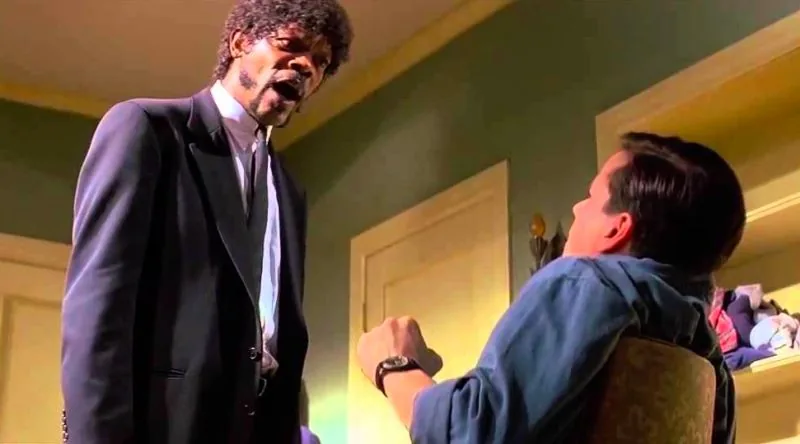
You know that scene in Pulp Fiction where Jules Winnfield and Vincent Vega walk into an apartment and everything goes sideways? The Pulp Fiction apartment scene is one of the most talked-about moments in modern cinema. Before a single shot is fired, Quentin Tarantino spends minutes on casual conversation about hamburgers and what a quarter pounder with cheese is called in France. That calm is the trick. When the violence finally erupts, it lands harder because the film has made you comfortable, and the sudden shift is what keeps this scene lodged in viewers' minds decades later.
In the 1994 film Pulp Fiction, Jules Winnfield and Vincent Vega enter an apartment to retrieve a briefcase for their boss, Marsellus Wallace. Tarantino stretches out mundane small talk before an abrupt, shocking shooting, using that contrast to control the audience's tension and expectations.
- The scene takes place in an apartment in the 1994 film Pulp Fiction, written and directed by Quentin Tarantino.
- Jules Winnfield, played by Samuel L. Jackson, and Vincent Vega, played by John Travolta, arrive to collect a briefcase for their employer, Marsellus Wallace.
- The sequence opens with extended small talk, including Jules and Vincent's discussion about hamburgers in Europe, before any violence occurs.
- The confrontation escalates when Jules shoots Brett in a sudden burst of violence.
- The scene is widely discussed for the mystery of the briefcase's contents, which the film never explicitly reveals.
The Pulp Fiction Apartment Scene: Where Tarantino Traps You
Quentin Tarantino's Pulp Fiction hit theaters in 1994, and years later, one sequence still holds viewers hostage: the apartment. It is the scene where a man named Jules Winnfield and his partner Vincent Vega walk into a cheap apartment to collect a debt, and it is the clearest example of how Tarantino controls an audience without ever raising his voice.
The trap is set before the door even opens. In the sequence just before, Jules and Vincent pop the trunk of their car and pull out their guns. Jules grumbles that they should have brought rifles for a job like this. That single line plants a very specific expectation in your head: something loud is coming. A shootout. A standoff. A mess.
None of it arrives.
Inside the apartment, nobody does anything overtly threatening. Jules and Vincent stand there. A young man named Brett sits on a couch, cornered, barely breathing. And yet the room is thick with dread from the second they cross the threshold. The audience feels exactly what the characters feel, that low hum of something about to go wrong, even though nothing on screen justifies it. That gap between what you expect and what you get is the whole trick.
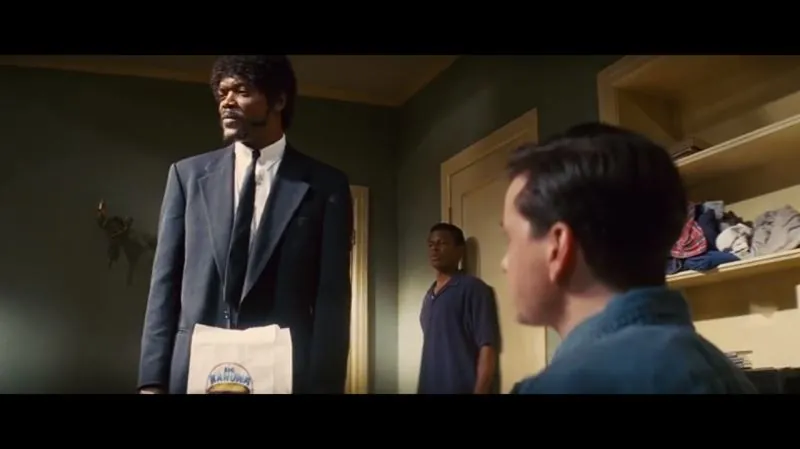
What fills the space instead is talk. Jules chats about hamburgers for breakfast, about tasting a Sprite, about his girlfriend being a vegetarian, about what they call a quarter pounder with cheese in France. You laugh. The humor loosens your shoulders. But the unease never leaves the room, and that is the point: Tarantino lets you relax right up until he doesn't.
Then the briefcase comes up. It is the real reason they are there, and it gets almost no screen time at all, tucked away mid-scene like an afterthought. Jules raises his voice for the first time. We glimpse the case. That's it.
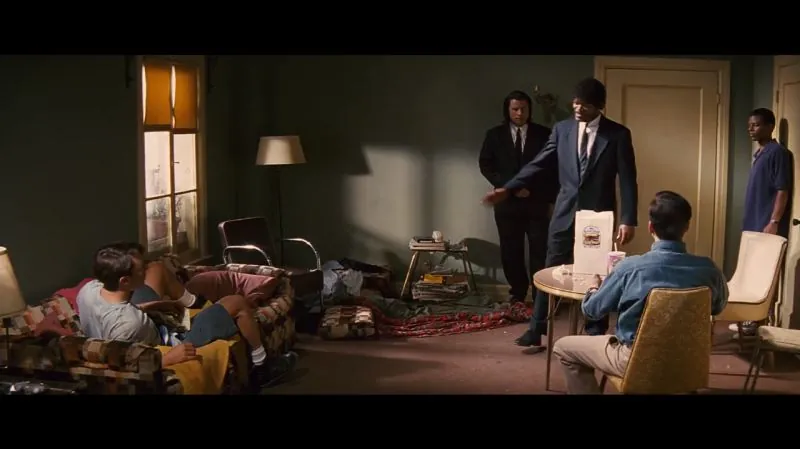
And still the scene keeps going, because Jules keeps talking. When Brett tries to stand, Jules doesn't say a word. He just lifts a hand, palm down, and signals sit. It is the same gesture he used on Brett the moment he walked in, and it lands the same way now: nobody in that apartment moves a muscle for the entire scene. Jules runs the room, and everyone in it, including you, knows it.
The payoff finally comes when Jules suddenly shoots Brett on the couch. It is a genuine shock, even though the film spent the whole scene promising violence was coming. Tarantino delivers the thing you were braced for, then delivers it harder and colder than you were braced for. That is the signature. Not the gunfire. The waiting.
Mundane Talk, Mounting Unease: The Royale with Cheese Conversation
Quentin Tarantino's Pulp Fiction (1994) turns a chat about fast food into a masterclass in suspense. Inside the apartment, Jules Winnfield keeps the small talk from the car rolling, but now he aims it at Brett, the man on the couch. And a correction here: the character is Brett, not Brad. Small detail, big difference.
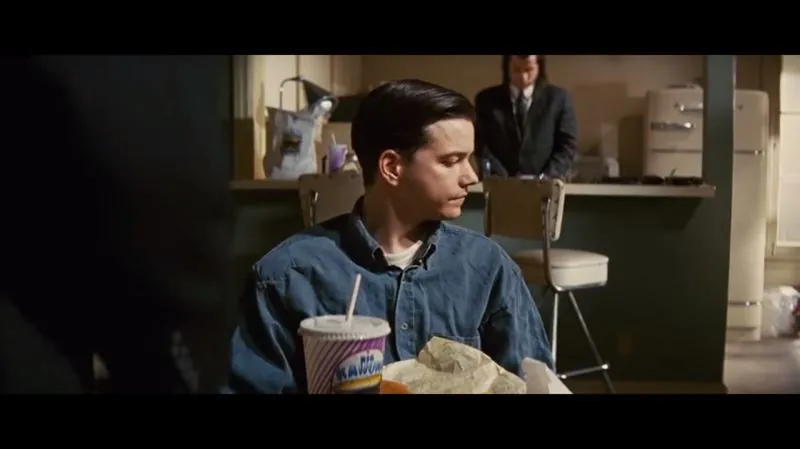
So what do they actually talk about? Eating hamburgers at breakfast. Tasting hamburgers and Sprite. A girlfriend who is vegetarian. And the question that gives the whole exchange its name, what a quarter pounder with cheese is called in France. None of it touches the scene. None of it touches the other topics. That is exactly the point.
Jules delivers every stray thought with the same flat, dead-serious face. We laugh. We are supposed to laugh. Yet the unease never lifts, because the man cracking jokes about French McDonald's is the same man holding the room.
Watch how Tarantino frames it. In one setup, Brett sits in close-up, another character crouches in the corner, and Jules occupies the center. Then the reverse angle flips everything: Jules in close-up, Vincent in long shot, Brett centered. Everyone else drops out of frame entirely. The camera keeps tightening the vise while the dialogue keeps wandering.
The Briefcase: A MacGuffin Handled in a Flash
Quentin Tarantino's Pulp Fiction (1994) builds its apartment scene around a briefcase, and then barely lets you look at it. That is the trick. The case is the reason Jules and Vincent are standing in that room at all, yet the camera gives it almost no time. It surfaces late, gets its moment, and is shoved aside mid-sequence as if it were never the point.
Watch the order of events. Jules and Brett talk, and talk, and talk. Then the man on the couch speaks again, and the question of the briefcase finally gets asked. Jules raises his voice for the first time. We see the case. And that is all we get.
As the story goes, and this depends on how you frame the scene, the briefcase is central to what is happening but only briefly shown. The time carved out for it is tiny. Everything surrounding it is talk.
What actually holds the room is Jules's body. Brett starts to rise, and Jules says nothing at all. He simply lifts a hand and gestures sit down. It is the same gesture he made when he first walked in and pointed the man on the couch back into his seat. Same hand, same silence, same result.
Count the movement across the whole sequence and you get almost none. None of the three characters in the room shift from their positions. At the end of the scene they are standing and sitting exactly where they started, which is how Tarantino shows you who owns the space without a single line of dialogue about it.
The Sudden Shot: Tarantino's Expectation Trick
Jules Winnfield shoots Brett on the couch, and it lands like a slap even though Quentin Tarantino has been pointing at it for minutes. That is the trick of the Pulp Fiction apartment scene: the film delivers violence, but it lands as a shock because nothing in the room called for it right then.
Go back to the setup. Jules and Vincent Vega pull their guns from the trunk of the car, and Jules grumbles that they should have brought a rifle for a job like this. A small expectation of resistance gets planted. Then the two men walk in and nothing happens. No fight, no standoff. And yet the apartment feels tense from the second the door opens. The characters carry that unease, and the audience absorbs it with them.
What makes the wait unbearable is the chatter. Before the shooting, Jules keeps talking about things that have nothing to do with anything: hamburgers at breakfast, tasting a Sprite, a girlfriend who is a vegetarian, what the French call a quarter pounder with cheese. We laugh at him. A certain comedy takes over. The tension never leaves the room, though.
Then Brett comes back into the scene, Jules finally raises his voice and asks about the briefcase, we glimpse it, and that is all. The object everyone came for gets a sliver of screen time. It is dropped into the middle of the sequence like an errand.
Jules keeps going after that. When Brett starts to stand, Jules says nothing and calmly waves him back down with one hand, the same gesture he used on Brett the moment he walked in. None of the three men in the room move from their spots for the whole scene. That stillness is where Jules's control lives, and it is why the room feels like a held breath.
The dialogue is the other half of the trap. Jules never asks Brett straight out why he tried to sleep with Marsellus Wallace. Instead he asks what Wallace looks like, says he has never heard of a country called "What," asks whether they speak English there, asks whether Wallace looks like a bitch, and then, if he does not, asks why Brett tried to sleep with him. He does all of it with a face that is terrifyingly serious and angry. It is a masterclass in keeping an audience pinned to a couch of its own.
So the shot fulfills the expectation. It just arrives at a pitch nobody saw coming, and that gap between what we expected and how hard it hit is the whole signature.
Why the Pulp Fiction Apartment Scene Rewards Rewatching
The Pulp Fiction apartment scene is the kind of sequence that keeps paying off every time you sit down with it again. Quentin Tarantino wrote and directed Pulp Fiction in 1994, and this single stretch of film, where Jules and Vincent walk into an apartment to collect a briefcase, captures everything he does well in one tight package.
Here is the trick of it. In the sequence just before, Jules and Vincent pull their guns from the trunk of their car and one of them says they should have brought a rifle for a job like this. You brace yourself. A shootout feels inevitable. Then they walk through the door and nothing happens the way you expected. No raised voices, no sudden threat. Yet the room feels tense from the second they step inside, and the audience carries that unease right alongside the two men standing in it.
What fills the space instead is chatter. Jules talks about hamburgers at breakfast, about tasting a hamburger and a Sprite, about his girlfriend being a vegetarian, and about what a quarter pounder with cheese is called in France. None of it connects to the scene or to itself. You laugh. A thread of comedy settles in. And the dread never leaves.
Then the man on the couch speaks again. The briefcase, the real subject of the whole visit, finally comes up. Jules raises his voice for the first time. We glimpse the case, and that is all we get. The object everyone came for is tucked away mid-sequence like it barely matters.
Jules keeps talking. When the man tries to rise, Jules says nothing and simply waves him back down. He made the same gesture to the man on the couch the moment he entered. All three men in that room stay planted in place from start to finish.
That control is the point. Jules runs the room, and the quiet pressure you felt earlier suddenly makes sense. The expectation Tarantino built pays off when Jules shoots the man on the couch without warning, and it still lands as a shock, because nothing on screen demanded it. Tarantino hands you the thing you were waiting for, then delivers it harder than you were braced for.
Watch how Jules questions him too. Instead of asking straight out why he tried to sleep with Marsellus Wallace, Jules asks what Marsellus Wallace looks like, says he never heard of a country called "what," asks whether they speak English there, asks whether Wallace looks like a bitch, and if not, why he tried to sleep with him. He does all of it with a flat, furious face.
Over the years it gets easy to forget how well certain films, sequences and scenes were written and shot. Watching them again at least once a year seems like the right way to remember. The original account also mentions a possible nod to Kill Bill buried in Pulp Fiction, but that particular reference is hard to confirm. The 9-year gap between the two films is well documented.
Frequently asked questions
What happens in the Pulp Fiction apartment scene?
In Quentin Tarantino's 1994 film Pulp Fiction, Jules and Vincent enter an apartment to collect a briefcase for Marsellus Wallace. They trade small talk about hamburgers and France, then Jules abruptly shoots Brett, the man on the couch, during his indirect questioning about Wallace.
Why is the scene so tense?
The tension comes from contrast. Jules and Vincent retrieve their guns from the car trunk beforehand, which creates an expectation of violence, yet the two men settle into idle chatter about hamburgers, Sprite and vegetarian girlfriends. That mundane calm never releases, and the sudden shooting lands harder because nothing in the room provoked it.
What is in the briefcase?
The film never reveals the briefcase's contents. It functions as a classic MacGuffin, an object that drives the plot and the characters' urgency without ever being explained. Even the moment it opens on screen is brief, tucked into the middle of the sequence as if it barely matters.
Why does Jules shoot Brett?
Jules's questioning centers on why Brett crossed Marsellus Wallace. Rather than asking Brett directly, Jules circles the point with indirect questions, including whether Wallace looks like a bitch. According to the original account, that indirect interrogation culminates in the shooting.
Was the shooting expected?
Jules and Vincent retrieved their guns in the earlier sequence, which creates the possibility of a confrontation. Still, the timing and suddenness of the shot shock viewers. Tarantino delivers the violence they anticipated, but at a higher pitch than they braced for.
How does the scene reflect Tarantino's style?
It shows his signature mix of dialogue-driven suspense, manipulation of expectations and sudden bursts of violence. The scene's power comes from Tarantino directing expectations and leaving the audience constantly wrong-footed, along with his extraordinary dialogue writing and a shock that arrives without warning. Editorial note: Details that remain unconfirmed, including the exact contents of the briefcase, are presented here as open questions rather than settled facts.
Got a take on this? Add your voice to the conversation below →
No comments yet. Be the first.