Priapus: The Cursed Greek God of Fertility
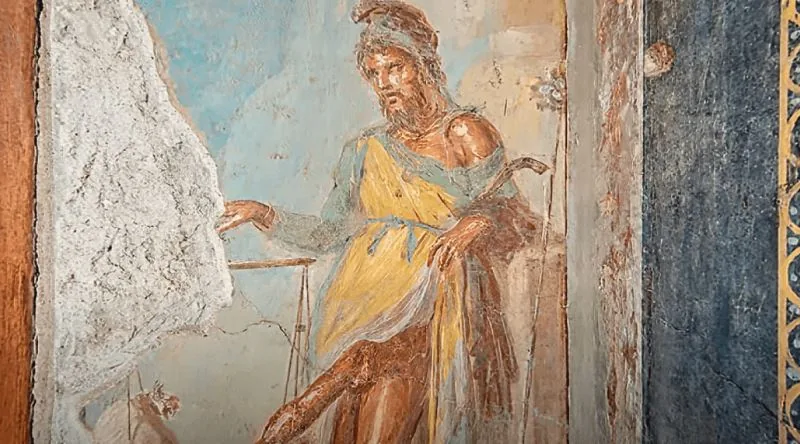
Priapus is the Greek god of fertility whose name became a medical term, and his story revolves around a curse from Hera that left him with a giant phallus and permanent impotence. Born to Aphrodite and Dionysus in ancient Greece, this rustic deity's tale is one of rejection, humiliation, and a surprising legacy that persists in modern medicine and art. His myth is a poignant mix of comedy and tragedy, showing how even the gods could be cruelly punished.
Priapus, the Greek god of fertility, was cursed by Hera with ugliness and a permanent erection that brought him no pleasure. As the son of Aphrodite and Dionysus, he was rejected by his mother and became a minor rural deity, later lending his name to the medical condition priapism.
- Priapus was the son of Aphrodite and Dionysus, born in ancient Greek mythology.
- Hera cursed Priapus with a grotesque appearance and a giant, permanent phallus that left him impotent.
- His mother Aphrodite abandoned him because of his ugliness, and he was raised by shepherds.
- Priapus served as a guardian god of gardens, vineyards, and livestock in rural Greek cults.
- The modern medical term priapism derives directly from his name.
Meet Priapus: The God Nobody Asked For
Priapus is the Greek god of gardens, vineyards, and fertility, and he is the son of Aphrodite, the goddess of love and beauty, and Dionysus, the god of wine. But unlike his glamorous parents, Priapus was born into a cruel joke that would define his entire existence. He is a figure of tragicomedy, a deity cursed before he even took his first breath.
According to some versions of the story, the trouble began while Aphrodite was still pregnant. Hera, the queen of the gods, was furious about Aphrodite's infidelity, and she decided to take her revenge out on the unborn child. The curse she cast was a strange and bitter one: Priapus would be born ugly, with an enormous phallus, and yet he would be utterly impotent. It sounds almost like a punchline, but for Priapus, it was a life sentence of humiliation.
The curse was designed to mock Aphrodite, a goddess whose entire identity revolved around beauty and desire. Her son would be the opposite of everything she represented, a walking embarrassment with a permanent erection that could never fulfill its purpose. The irony is almost too perfect, and it set the stage for a god whose every attempt at love or lust would end in disaster.
A Curse That Backfired: Hera's Spiteful Gift
According to the story that has come down to us, Hera's fury had a very specific target: the unborn child of Aphrodite, the goddess of love and beauty, and Dionysus, the god of wine. The queen of the gods was reportedly disgusted by Aphrodite's infidelity while pregnant, and her resentment crystallized into a curse that would define the boy's entire existence. The curse had three parts: ugliness, a giant penis, and impotence.
At first glance, that middle component might sound like a strange punishment. But the cruel genius of Hera's spite lay in the combination. Priapus would be cursed with an endless, burning lust, yet his body would refuse to cooperate when it mattered most. A giant phallus that could never achieve or maintain an erection, paired with an insatiable desire, is not a gift. It is a torment designed to humiliate. The boy would carry this burden from birth, and the curse would follow him into every attempt at intimacy, making each failure more public and more painful than the last.
It is worth noting that this particular version of Priapus's origin is a variant, one thread in a tangled mythological tapestry. Not every ancient source agrees on how he came to be this way, and some accounts skip the curse entirely. But the version that sticks, the one that has echoed through the centuries, is the image of a god doomed by divine jealousy before he ever drew his first breath. As the story goes, this was the foundation upon which his entire tragic reputation was built, setting the stage for the humiliations that would follow.
The Assault That Failed: Hestia and the Lost Erection
One version claims that Priapus once tried to force himself on the goddess Hestia, the virgin guardian of the hearth, but the attempt collapsed before it truly began: he reportedly lost his erection mid-assault and became a laughingstock among the gods. That humiliation is often repeated as the god's defining low point, though the classical sources tell a different story. The canonical account actually names Lotis, a nymph and daughter of Poseidon, as the target of Priapus's failed rape attempt, not Hestia. The confusion likely crept in because both were virgin goddesses, and the tale of the lost erection got reassigned over time. What matters for the reputation of Priapus is that the pattern holds: his lust never leads to conquest, only to ridicule. He creeps toward a sleeping woman, and the moment she stirs, everything falls apart for him, literally. The failed assault on Hestia, as the story goes, cemented his image as the god whose desires outrun his body's cooperation, a figure of comedy rather than terror on Olympus.
Lotis and the Lotus: The Escape That Made a Flower
Priapus's most famous failure came with the nymph Lotis, and it ended with her becoming a flower. The story, preserved in Ovid's Fasti, written around 8 CE, shows the god of gardens at his most frustrated. Lotis, the daughter of Poseidon, was sleeping when Priapus crept toward her, but she woke at just the right moment and escaped by transforming into a lotus flower.
That transformation gave the world the lotus, but it gave Priapus something else: a permanent reputation as a laughingstock. Every attempt he made, every approach he tried, seemed to end the same way, with him exposed and humiliated. The failed encounter with Lotis became so well known that it cemented his image as the god who could never quite finish what he started.
Contrary to what some later tellings claim, the donkeys sacrificed to Priapus had nothing to do with the size of his anatomy. The real reason was lechery. Donkeys were seen as lustful creatures, and their sacrifice connected directly to the Lotis myth, where the animal's braying reportedly woke the nymph and spoiled Priapus's advance. The god's failed attempts made him a figure of mockery, and the donkey, once his unwitting saboteur, became his sacrificial animal.
From God to Medical Term: The Legacy of Priapism
If you have ever heard a doctor mention "priapism," you have heard the name of an ancient god. The medical term derives directly from Priapus, the Greek deity of gardens, vineyards, and fertility, and it has been a standard entry in medical dictionaries for generations. It describes a painful, involuntary, and prolonged erection, one that can last for hours and requires urgent attention.
Consider the irony for a moment. Here is a god whose entire identity revolved around virility and abundance, a figure whose statues dotted orchards to guarantee a good harvest. And how does modern medicine remember him? By naming a condition that is the opposite of fertility, a malfunction where desire and function go nowhere. The connection is direct and well documented: open any medical dictionary, and you will find Priapus listed as the etymological root of priapism.
The twist is almost cruel. Priapus, the son of Aphrodite and Dionysus, was cursed before birth by a jealous Hera, according to the story. He was marked with ugliness, a massive phallus, and impotence, a combination that left him perpetually frustrated. His failed attempts with the goddess Lotis, who escaped by turning into a lotus flower, only cemented his reputation as a figure of ridicule. He could never actually use what he was famous for.
So when physicians in the modern era needed a word for a stubborn, painful erection that would not subside, they reached back into mythology and grabbed the name of the god who could never finish what he started. A fertility deity, remembered not for abundance but for blockage. That is the legacy of Priapus in the twenty-first century: a god of growth, reduced to a medical emergency.
Frequently asked questions
Who was Priapus in Greek mythology?
Priapus was the Greek god of gardens, vineyards, and fertility, born to Aphrodite, the goddess of love and beauty, and Dionysus, the god of wine. He was a minor but widely recognized deity in the ancient world, particularly in the regions around the Hellespont, where his worship was most prominent.
Why was Priapus cursed by Hera?
According to some versions of the myth, Hera, the queen of the gods, cursed Priapus while he was still in his mother's womb. She was angry at Aphrodite's infidelity and punished the unborn child with ugliness, an enormous phallus, and impotence. As the story goes, this combination meant Priapus was consumed by endless lust he could never satisfy.
What happened when Priapus tried to assault Hestia?
Contrary to the popular version, records suggest the attempted assault was not against Hestia, the goddess of the hearth, but against the nymph Lotis. The story involving Hestia appears to be a later confusion or misattribution that does not match the classical sources.
How did Lotis escape Priapus?
Priapus once crept up on the sleeping nymph Lotis, daughter of Poseidon, intending to assault her. She woke just in time and cried out, then transformed herself into a lotus flower to escape him. This myth, recorded in Ovid's Fasti, explains how the lotus flower came to be.
What is priapism and why is it named after Priapus?
Priapism is a painful, involuntary, and prolonged erection lasting four hours or more. The medical term comes directly from the god's name, referencing his constant state of arousal and his inability to ever satisfy his desires. It is a serious condition requiring urgent medical attention.
Got a take on this? Add your voice to the conversation below →
No comments yet. Be the first.