World's Shortest Border: Spain-Morocco's 80m Marvel
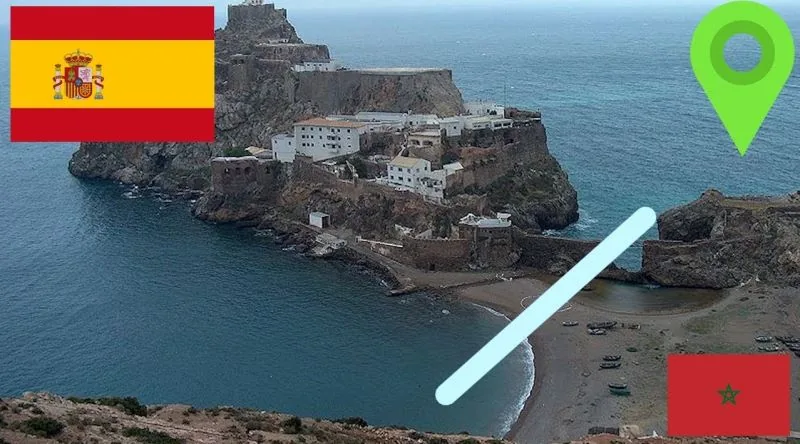
The shortest international border in the world is the 80-meter land boundary between Spain and Morocco at Peñón de Vélez de la Gomera, a rocky islet that became a peninsula after a 1930 storm. This tiny sliver of land, occupied by a small Spanish military garrison, packs centuries of history into a space shorter than a city block. It is a place where geography, politics, and a single violent storm conspired to create a boundary line that you could stroll across in under a minute, yet crossing it remains strictly forbidden.
The shortest international border in the world is the 80-meter strip linking Spain's Peñón de Vélez de la Gomera to Morocco. A 1930 storm deposited a sandbar that turned the former island into a peninsula, creating this tiny land boundary. Spain maintains a small military presence there, and the border remains closed to casual crossing.
- The border between Spain and Morocco at Peñón de Vélez de la Gomera measures approximately 80 meters, making it the shortest international land boundary on Earth.
- A powerful storm in 1930 deposited sand and sediment that connected the former island to the Moroccan mainland, permanently changing its geography.
- The rocky outpost has been under Spanish control since 1564, when it was captured from the Ottoman-backed forces that had held it.
- Peñón de Vélez de la Gomera is inhabited only by a small contingent of Spanish military personnel; there is no civilian population.
- The border is heavily fortified and monitored, and unauthorized crossings are not permitted in either direction.
The World's Shortest International Border Is a Beach You Could Cross in a Minute
The shortest international border in the world is the roughly 80-meter stretch of sand between Spain and Morocco at Peñón de Vélez de la Gomera. This tiny land boundary is so compact that it shows up in a single photograph, unlike the thousands of kilometers of mountain ranges and rivers that typically separate nations. You could stroll across it in about a minute, if you were allowed to.
Peñón de Vélez de la Gomera sits on Morocco's Mediterranean coast, a rocky outcrop that Spain has held since 1508, with control re-established in 1564. For centuries, this was an island, completely surrounded by water. Then in 1930, nature reshaped the map. A powerful storm, heavy rains, or possibly an earthquake, depending on which account you read, sent tons of sand, silt, and mud pouring into the narrow channel that separated the rock from the mainland. The sediment filled the gap completely, fusing the island to Moroccan territory and turning it into a peninsula overnight.
The result was a brand-new land border where none had existed before, a rare moment when geography itself rewrote political lines. Today, a small Spanish military garrison lives on this sun-baked rock. The soldiers have their hands full with curious visitors, as the story goes, Moroccan locals have been known to cross the border informally, posing for photos in front of the military post and staging playful protests, shouting that the land belongs to them. In one notable incident in 2012, four Moroccans caught the garrison off guard, and Spanish troops reportedly chased them off while still in their pajamas.
How a Storm Turned an Island Into a Peninsula Overnight
In 1930, nature rewrote the map in a single night. Peñón de Vélez de la Gomera, a rocky outpost off Morocco's Mediterranean coast, had been an island for centuries, ringed by water on every side. Then a violent storm, possibly accompanied by heavy rains or even an earthquake, shoved tons of sand, sediment, and mud into the narrow channel separating it from the mainland. By morning, the island was no longer an island.
The channel had been shallow enough that a single dramatic weather event could fill it completely. As the story goes, the exact trigger remains uncertain, but the result was unmistakable: the rock became a peninsula, physically fused to Moroccan territory. This accident of geology created a brand new international land border, the shortest one on Earth, stretching roughly 80 meters between Spain and Morocco. That makes it the world's shortest international border, a distinction it still holds today.
For centuries before that storm, the islet had stood alone in the water, a speck of Spanish-controlled ground visible from the Moroccan shore. Spanish control there dates back to 1508, when forces first seized the rock, and was firmly re-established in 1564. So when the channel filled in 1930, Spain suddenly found itself sharing a land frontier with Morocco, a border that had never existed until nature decided to build it.
Walking that border takes about a minute. One side belongs to Spain, the other to Morocco, and the line cuts straight through what used to be open sea. A small Spanish military unit is stationed on the peninsula to guard this peculiar frontier. The soldiers have their hands full in unexpected ways, as the border is porous enough that Moroccan visitors sometimes cross it, reportedly posing for photos in front of the Spanish garrison and even staging picnics while declaring the land theirs.
In one memorable incident in 2012, four Moroccans slipped across the line and caught the Spanish troops completely off guard. According to reports, the soldiers chased them off while still in their pajamas, a scene that made international headlines and cemented the border's reputation as the world's most unusual frontier. It may be tiny, but it has never been dull.
A Spanish Military Outpost With a Surprising History
Walk up to the fence at Peñón de Vélez de la Gomera and you will see a small Spanish military unit stationed on the peninsula, a permanent garrison that keeps watch over this tiny scrap of land. The soldiers live and work in close quarters on a rock that is barely more than a football field in size. Their presence marks the southern edge of the European Union, planted firmly in the Mediterranean just off Morocco's northern coast.
The garrison is small, but its job is real. Spain has maintained a military foothold here for centuries, though exactly how long is a matter of some confusion. Popular accounts often claim Spanish control began in the 17th century, but historical records tell a different story. The Spanish first seized the island in 1508, then lost it, then re-established their hold in 1564. Both dates fall in the 16th century, making the outpost considerably older than many people assume.
Life on the peninsula is quiet, isolated, and occasionally absurd. Moroccan civilians sometimes cross the border without much ceremony, strolling up to the military post to take photographs and spread out picnics. They do it playfully, declaring that the island belongs to them, then packing up and heading back. The soldiers have learned to take it in stride.
In 2012, four Moroccans caught the garrison off guard entirely. According to reports from Spanish media, the soldiers chased the intruders away while still wearing their pajamas, a scene that made international headlines and cemented the outpost's reputation as one of the strangest military installations on Earth.
The Day Four Moroccans Caught Spanish Soldiers in Their Pajamas
In 2012, four Moroccan civilians crossed the shortest international border without permission and found the Spanish garrison completely off guard. The soldiers, caught in their nightwear, sprinted after the intruders still in their pajamas. Spanish newspaper El Mundo reported the incident, and The Guardian picked it up for international readers.
The episode unfolded on the tiny peninsula of Peñón de Vélez de la Gomera, where the world's shortest international border stretches just 80 meters between Spanish territory and Morocco. For the handful of Spanish troops stationed there, mornings were usually quiet. That day, the quiet shattered when the four Moroccans walked across the line, apparently keen to snap photos and stage a small protest on the disputed ground.
According to the original account, the Moroccans made their move while the soldiers were still in bed. The Spanish chased them back across the border, but the image of uniformed men running in pajamas became the story that circled the globe. It was a brief, almost comical clash on a border so small you can see both ends from a single spot.
That 80-meter strip of sand is all that separates two nations, and it exists only because of a natural event in 1930. Before that, Peñón de Vélez de la Gomera was an island, surrounded by water on every side. A powerful storm, heavy rains, or possibly an earthquake shifted tons of sand, mud, and sediment into the channel, fusing the rock to the Moroccan mainland. Overnight, an island became a peninsula, and a brand-new land border was born.
Spain had held the islet since 1508, with control re-established in 1564 after a brief loss. When the sand bridged the gap in 1930, the Spanish military presence suddenly faced a land boundary where none had existed. Today, a small permanent garrison watches over the outpost, and the border remains the shortest international land frontier on Earth.
Frequently asked questions
What is the shortest international land border in the world?
The shortest international land border in the world runs between Spain and Morocco at Peñón de Vélez de la Gomera, a tiny rocky outpost on Morocco's Mediterranean coast. The border stretches roughly 80 meters across a narrow sandbar. It is so short that you can see it clearly in a single photograph.
How did Peñón de Vélez de la Gomera become connected to Morocco?
In 1930, a powerful natural event reshaped the coastline. A storm or heavy rains, possibly even an earthquake, swept tons of sand, silt, and mud into the small channel that separated the island from the Moroccan mainland. The sediment filled the gap completely, joining the former island to the continent and creating a brand-new land border where none had existed before.
Who controls Peñón de Vélez de la Gomera?
Spain controls Peñón de Vélez de la Gomera. The Spanish Armed Forces maintain a small permanent military garrison on the peninsula. This tiny outpost sits just a stone's throw from Moroccan territory, making it one of the most unusual military postings in the world. Spanish control over the rock dates back centuries, long before the land connection existed.
Why is the Spain-Morocco border at Peñón de Vélez so short?
The border at Peñón de Vélez is so short because it was only created in 1930. For centuries before that, the rock was an island surrounded entirely by water. When the natural event filled the channel and connected it to Morocco, a land border suddenly appeared. Nature literally drew a new boundary overnight, something that almost never happens in the modern world.
Can civilians visit Peñón de Vélez de la Gomera?
The source does not mention civilian access to Peñón de Vélez de la Gomera. What is clear is that the site functions as a military outpost. The garrison stationed there is small and permanent. Given its strategic position and restricted military status, the peninsula is not a place for casual sightseeing or tourism.
What happened in 1930 to change the island into a peninsula?
In 1930, a storm or heavy rains, possibly accompanied by an earthquake, drove massive amounts of sand and sediment into the channel between Peñón de Vélez de la Gomera and the Moroccan coast. The accumulated material completely filled the water gap, physically fusing the island to the mainland. The former island became a peninsula, and a new international boundary was born.
Are there other Spanish territories near Morocco?
The source does not mention other Spanish territories near Morocco, though it implies Spain maintains a regional presence. It is worth noting that the incident involving Moroccan visitors crossing the border in 2012 shows the peninsula is not entirely isolated. The Spanish soldiers stationed there reportedly chased the intruders, and one detail from the account stands out: the soldiers were still in their pajamas when they gave chase.
Got a take on this? Add your voice to the conversation below →
No comments yet. Be the first.