Orhan Pamuk's Museum of Innocence: The Happiest Line
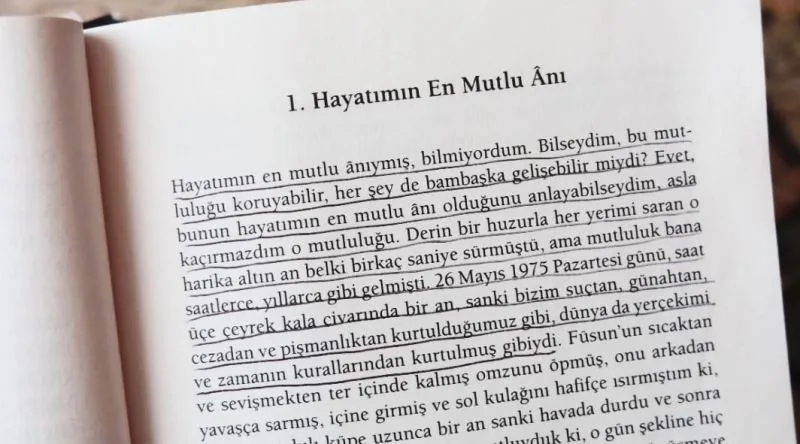
Orhan Pamuk published The Museum of Innocence in 2008, and its opening line, "It was the happiest moment of my life, though I didn't know it," has become one of the most discussed sentences in modern Turkish fiction. Kemal, the novel's wealthy Istanbul narrator, speaks these words about a moment with Füsun, the distant relative he loves and loses. The sentence lands softly, then keeps working on you. It tells you that happiness has already happened, and that the person living it was the last to notice. That quiet gap between experience and awareness is the whole book in miniature.
Orhan Pamuk's novel The Museum of Innocence, published in 2008, opens with Kemal recalling a moment of happiness he failed to recognize as it happened. The line introduces the novel's central themes of memory, longing, and loss in Istanbul.
- Orhan Pamuk published The Museum of Innocence in 2008.
- The novel is narrated by Kemal, a wealthy Istanbul man whose love for Füsun shapes decades of his life.
- The opening line states that the happiest moment of Kemal's life passed without him recognizing it at the time.
- The book is widely read as a study of memory, obsession, and the distance between living a moment and understanding it.
The Line That Stops You Cold
In 2008, Orhan Pamuk published Masumiyet Müzesi (The Museum of Innocence) with İletişim Yayınları, and its first sentence does something almost unfair to the reader: "Hayatımın en mutlu anıymış, bilmiyordum." In English, "It was the happiest moment of my life, though I didn't know it." One line, and you are already inside the ache.
This is the opening sentence of The Museum of Innocence, and it works because it arrives as a memory, not an event. The narrator, Kemal Basmacı, is telling us about a happiness he only recognized after it was gone. The grammar itself is the trick: the Turkish -mış marks something heard or remembered rather than lived in the present, so the very first verb puts the reader at a distance from the moment being described. You are not at the party. You are years later, looking back at it.
Critics and readers have often praised this sentence, with some calling it one of the finest openings in Turkish literature. That ranking is a critical judgment rather than a settled consensus, but the admiration is real and widespread. What makes it land is simple: it greets you with emotional weight and lays out the novel's whole thematic frame in a single breath. Happiness experienced without awareness. Meaning that only shows up on the return trip.
The line has traveled. A piece dated December 2, 2024, reportedly drew 21,600 reads and 424 shares, which tells you something about how many people keep returning to those six words. It is the kind of sentence that makes you put the book down before you have finished the first page, just to sit with it.
What follows in this story is a small conversation about that sentence, and about the company it keeps. Some readers hear echoes of Proust in it, and of Hemingway's plain, unbreakable statements. Others reach for Nazım Hikmet instead, for a voice that looks forward rather than back. The opening line is the door. The argument about what it means is the room.
Why One Sentence Can Hold a Whole Novel
In 2008, Orhan Pamuk opened The Museum of Innocence with a line that does something a first sentence is not supposed to be able to do: it closes a life before the story has even started. "Hayatımın en mutlu anıymış, bilmiyordum." The trick is the tense. The narrator is not living the happiest moment of his life. He is looking back at it, from far away, and admitting he missed it while it was happening.
That is why the sentence lands so hard. It greets you with emotional intensity in the very first breath, and it lays out the novel's whole thematic frame before you have turned a page. You are not being asked to follow a plot. You are being asked to sit with a man who failed to notice his own happiness, who did not grasp its value while he was living it. Kemal, the protagonist of The Museum of Innocence, is exactly that figure. And the sentence is not merely an opening. It is an existential inquiry into how humans perceive time and feeling, how we only recognize the golden hour after it has already darkened.
Critics have called it one of the best opening lines in Turkish literature. That is a matter of taste rather than settled fact, but the praise is easy to understand. Five words, and the whole novel is already breathing inside them.
Dostoevsky, Proust, Hemingway, Kafka: The Company It Keeps
Readers love to seat Orhan Pamuk at a table with the giants. The argument usually runs like this: Pamuk's opening line carries the same weight as a sentence from Dostoevsky, Proust, Hemingway or Kafka, so the four of them must be talking about the same thing. Some of that company is real. Some of it is a quote that got attached to the wrong name and never let go.
Start with the shaky one. The source attributes the line "Happiness depends on how you feel pain" to Dostoevsky's Crime and Punishment. That sentence does not appear in the novel, and the wording cannot be traced to Dostoevsky at all. It is a false attribution, not a quotation, and it should be handled that way. The idea behind it, that happiness requires awareness of what it costs, still maps neatly onto Kemal, the narrator of The Museum of Innocence, who lives through his happiest moment without noticing it. The borrowed sentence is doing real interpretive work. It just is not Dostoevsky's.
Proust is a different case entirely. In Search of Lost Time genuinely contains the line "The real paradise is a lost paradise," and it is one of the most quoted sentences in the whole cycle. That is the exact nerve Pamuk touches. Kemal only appraises his happiness after it has slipped into the past, which is Proust's territory down to the paving stones.
Hemingway earns his seat honestly too. The Old Man and the Sea, published in 1952, gives us "A man can be destroyed but not defeated," a line as plain and load-bearing as a keel. The source draws a parallel between the simplicity of Pamuk's sentence and Hemingway's plain style, and the comparison holds up. A short declarative sentence can carry an entire novel's worth of pressure without raising its voice.
Then there is Kafka. The source attributes "There is a meaning but we cannot reach it" to him. That one cannot be reliably confirmed as a genuine Kafka quotation, though it certainly sounds like the neighborhood he lived in. Treat it as an unverified attribution, the kind of line that feels true enough that nobody checks.
So the company is mixed. Two confirmed guests, two who arrived on hearsay. That may be the most honest way to read the whole comparison: Pamuk's opening line really does keep the best company, and it also attracts the kind of borrowed wisdom that great first sentences always seem to collect.
A Reader Pushes Back: Nazım Hikmet's Other Road
Not every reader walked away from Kemal's sentence feeling lifted. One commenter, posting under the handle "filin solculugu," called it flatly "a dangerous sentence," the kind you can get stuck inside. The moment itself may feel sharp and clear, they wrote, but the roads leading there are foggy and littered with broken glass, and walking toward it stripped of every shield is not a pleasant trip. They understand the melancholy it carries. They respect it. They can even see why someone would enjoy it. They just prefer the Nazım Hikmet school of thought.
Then they quoted him. The poem opens with a claim about absence: the most beautiful sea is the one not yet traveled. It keeps going in the same direction, stacking what has not happened yet against what has. The most beautiful child is the one not yet grown. The most beautiful days are the ones not yet lived. And the most beautiful thing the speaker has to say to you is the word not yet spoken. The poem is often dated September 24, 1945, though that specific date cannot be verified; the line itself is genuinely Nazım Hikmet's.
Set the two side by side and the disagreement sharpens. Pamuk's narrator looks backward, at a happiness already spent and only recognized in hindsight. Nazım Hikmet points the other way, at a sea still untraveled, a word still unspoken, a day still ahead. One sentence mourns what was missed. The other refuses to believe the best is behind you.
Page 84: Pamuk's Own Answer
Kemal Basmacı spends most of Orhan Pamuk's 2008 novel circling a single regret, and near the end the book hands him, and us, a passage the source cites as appearing on page 84, though page numbers vary by edition and translation. Treat "84" as a marker rather than a fixed coordinate.
The passage makes a quiet, devastating claim. Nobody, while actually living it, knows that they are inside the happiest moment of their life. Even the people who sincerely believe they are standing in their golden hour, and say so out loud, keep one corner of the soul convinced that something even better is still ahead. And in youth especially, no one can keep going while believing everything from here on gets worse. If you are happy enough to imagine this is your peak, you are optimistic enough to believe the future will be good too.
That is the central mechanism of the sentence that opens the novel. The narrator of The Museum of Innocence looks back and admits he did not know, at the time, that he was living his happiest moment. The book does not scold him for it. It just lets the not-knowing sit there, which is why the line lands the way it does.
No one knows, while living it, that they are living the happiest moment of their life.
Pamuk's answer, if the passage is an answer, is not a consolation. It is closer to a description of how memory works: the value of a moment arrives late, usually after the moment is gone, and by then it can only be remembered, not returned to. Kemal builds an entire museum out of that lateness.
Frequently asked questions
What is the opening line of Orhan Pamuk's The Museum of Innocence?
The novel opens with the Turkish sentence "Hayatımın en mutlu anıymış, bilmiyordum." Orhan Pamuk published The Museum of Innocence, or Masumiyet Müzesi, in 2008, and the line belongs to its narrator, Kemal. In English it is usually rendered along the lines of "It was the happiest moment of my life, though I didn't know it."
Why is the opening line of The Museum of Innocence considered one of the best in Turkish literature?
That reputation is a matter of critical taste rather than settled consensus, and readers and critics have praised it for years on those terms. What makes it land is its structure: the sentence hands the reader a finished happiness and a confession of blindness in the same breath, and it announces the novel's whole subject before the story properly begins. Kemal is a man who lived through his happiest moment without recognizing it.
How does Orhan Pamuk's opening line compare to Dostoevsky's and Proust's themes?
Pamuk's line sits comfortably beside Proust. In In Search of Lost Time, Marcel Proust writes that the real paradise is a lost paradise, and Kemal's happiness, like Proust's, only becomes visible once it has slipped into the past. The Dostoevsky comparison is weaker than it looks. Contrary to the popular version, the sentence about happiness depending on how you feel pain does not appear in Crime and Punishment, and its wording cannot be traced to Dostoevsky's text. Hemingway is a cleaner parallel: in The Old Man and the Sea (1952) he writes that a man can be destroyed but not defeated, and Pamuk's plain, short opening carries a similar weight in very few words. As for the line often attributed to Kafka, that there is a meaning but we cannot reach it, it echoes Kafkaesque themes but cannot be reliably confirmed as a genuine Kafka quotation.
Did Nazım Hikmet's poetry offer a different view on happiness than Pamuk?
Yes, and the contrast is sharp. The Turkish poet Nazım Hikmet wrote that the most beautiful sea is the one not yet sailed and the most beautiful days are the ones not yet lived, which places happiness ahead of us rather than behind. Pamuk's Kemal looks backward at a joy he failed to notice. The poem is usually dated September 24, 1945, though that specific date cannot be verified.
What does the opening line of The Museum of Innocence reveal about memory and happiness?
It says that happiness is not felt while it happens. Kemal only names his happiest moment in retrospect, which means memory is doing the work that the present moment could not. In the passage that follows, Pamuk adds that no one, especially while young, can live believing everything afterward will be worse, and that anyone happy enough to imagine they have peaked will be optimistic enough to expect the future to be good too. The line is quoted from page 84 in the edition the original account cites, though page numbers shift between editions and translations. Editorial note: Details that remain unconfirmed, including any claims about Pamuk's private intentions or influences, are presented here as interpretation rather than settled fact.
Got a take on this? Add your voice to the conversation below →
No comments yet. Be the first.