Breaking Bad Pilot: How Episode 1 Foreshadows Heisenberg
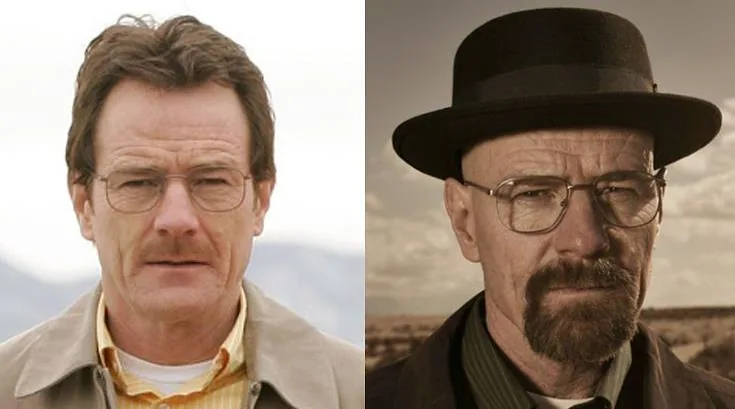
The Breaking Bad pilot episode foreshadowing begins in 2008, when AMC aired "Pilot," the first hour of Vince Gilligan's series about Walter White, a high school chemistry teacher in Albuquerque, New Mexico. Before he ever cooks meth, the episode shows us a man already being erased. He works a second job at a car wash where a teenager mocks him. His wife Skyler handles him like a chore. His brother-in-law Hank dominates every room. Then a terminal diagnosis lands, and the chemistry teacher we met in the cold open is suddenly unrecognizable.
The Breaking Bad pilot introduces Walter White, a chemistry teacher in Albuquerque in 2008, as a man humiliated at work, at home, and at his own birthday party. A terminal cancer diagnosis pushes him toward cooking meth, and the episode quietly plants the traits that later define Heisenberg.
- "Pilot" premiered on AMC in 2008, introducing Walter White as a high school chemistry teacher in Albuquerque, New Mexico.
- In the pilot, Walter works a second job at a car wash, where he is mocked by a customer and endures the humiliation quietly.
- His brother-in-law Hank Schrader, a DEA agent, dominates Walter's birthday party, and Hank's presence makes Walter's own status feel diminished.
- Walter receives a terminal lung cancer diagnosis in the pilot, the event that triggers his decision to cook methamphetamine.
- The episode's cold open shows Walter in his underwear in the desert with a gun, a flash-forward that frames the transformation to come.
A Third Rewatch, and the Pilot Still Stings
On 5 August 2025, a writer posting under the name "gedik ahmet pasha" sat down to start Breaking Bad for the third time. The show premiered on AMC in 2008, so this was not a discovery. It was a return visit. And the thing that hit hardest was not the RV in the desert or the chemistry. It was the first episode, the pilot, and how thoroughly it humiliates its own main character before the opening credits even settle.
Here is the argument, and it is a good one: the Breaking Bad pilot episode foreshadowing is not really about barrels or bullets. It is about a man whose pride gets stepped on so many times in forty-some minutes that you almost understand what comes later. The writer puts it plainly. Walter's ego takes such a beating in that first hour that words fail.
Watch the order of operations. Walter White teaches high school chemistry, and in the classroom he is the one in charge, the man with the rules and the periodic table. That much is exactly as the show plays it. From there the story as the writer tells it moves to Bogdan, the car wash boss, who reportedly reminds Walter he is not an employee and sends him off to wipe down cars. Then, as the account goes, a student from class turns up in that parking lot with a girlfriend who is not kind about it, and the humiliation travels back to school with him.
Home is no refuge. There is a surprise birthday party for Walter at his own house, and Hank Schrader, his brother-in-law, holds court. According to the original account, Hank waves his gun around and lets Walter know the weapon is heavy, the kind of thing only real men carry. Later, in bed, Skyler initiates something and then hands him a chore list, the house needs painting, and she is distracted by an online auction the whole time. It is his birthday, supposedly.
Then the collapse at the car wash. Then the diagnosis: lung adenocarcinoma, with insurance that will not stretch far enough.
Every one of those beats is a small cut. Stack enough of them and you get a man who has nothing left to protect except the one thing nobody has touched yet, his pride. The writer's closing thought lands hard: treat a person like they are that small, at home or out in the world, and sooner or later something explodes. Not everyone turns into Walter White. Most people never become Heisenberg. But the pilot shows you the pressure building, and that is the whole trick of it.
Wounded at School, Then Wounded at the Car Wash
In the 2008 AMC pilot, Walter White stands at the front of a high school chemistry classroom and runs it like a lab bench: rules, order, no talking out of turn. He is not a tyrant, exactly, but he is a man who needs the room to obey him. Watch him correct a student and you see someone clinging to the one place where he still gets to be in charge.
That authority costs him nothing until it costs him everything. As the writer's account of the episode goes, Walter reportedly orders a student back to his seat. It is a small, ordinary teacher move. It is also the last time in the hour that anyone does what Walter says without being paid to.
Then the second setting arrives, and it is the same scene wearing different clothes. At the car wash, Bogdan reportedly tells Walter he is not an employee and sends him out to wipe down cars. Not fired, not hired, just useful. The man who commanded a classroom of teenagers now takes orders from a boss who will not even grant him the dignity of a job title.
And the classroom follows him there. According to the original account, a student from his class turns up at the car wash, and he is not alone. His girlfriend is with him, and she is the kind of mean that loves an audience. The threat, as the story goes, is that she will make sure every kid at school hears that Mr. White washed the boy's car. Humiliation does not stay in one room here. It travels, it finds a second stage, and it doubles its audience.
That repetition is the whole point. A man can survive being small at work. He can survive being small at school. What he cannot survive, apparently, is being small in both places on the same day, in front of the same kid, while his boss watches. This is where the Breaking Bad pilot episode foreshadowing starts to feel less like a hint and more like a warning shot.
Walter does not explode yet. He goes home. But the pressure has already built twice, and the pilot is only getting started.
The Birthday Party, the Gun, and the Bedroom
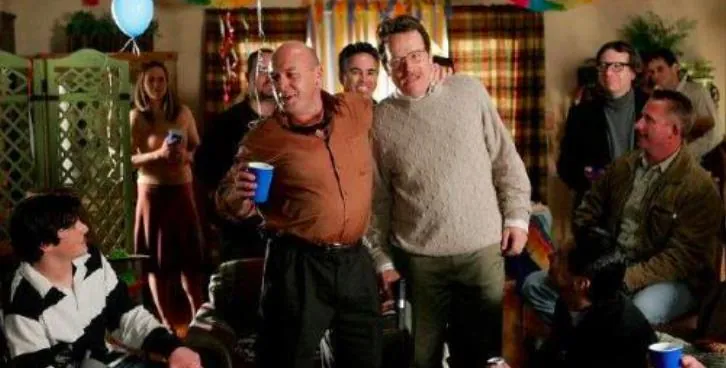
Walter White's fiftieth birthday party happens in his own living room, and it is one of the most quietly brutal scenes in the 2008 "Breaking Bad" pilot. Family fills the house, Hank Schrader works the room like a one-man show, and the guest of honor stands at the edge of it all holding a plate he never gets to eat from. It is a celebration on paper and a humiliation in practice, and that gap is exactly where the Breaking Bad pilot episode foreshadowing does its heaviest lifting.
Hank is the loudest thing in the house. He dominates every conversation, tells his stories with his hands, and at some point brings out his gun. As the original account of the episode describes it, Hank's jab lands on Walter like a verdict: the weapon is heavy, and only real men carry one. That specific wording is the writer's recollection rather than something nailed down in the transcript, but the dynamic it captures is unmistakable. Hank plays the man's man, Walter plays the bystander, and the birthday cake sits there getting warm.
Then the party ends and the night gets stranger. In the bedroom, Skyler initiates intimacy, and according to the account of the scene, she also tells Walter to paint the house. An instruction, not a suggestion, delivered on the one evening that was supposed to be about him. The detail that stings most is where her attention actually lives: she is half-there, half-glued to an online auction on the computer. It is supposedly Walter's birthday. She had promised him anything he wanted. What he gets is a distracted gesture and a chore list, and the man who will one day run a drug empire can't even hold his wife's full attention for a single night.
Stack those three moments together and the pattern is hard to miss. A brother-in-law who treats him as the punchline. A wife who treats him as a to-do list. A house full of people who came to celebrate a man nobody is really looking at. The pilot never announces what Walter is becoming. It just keeps showing you a man being ground down in small, ordinary ways, in rooms where he is supposed to be safe.
The Collapse, the Diagnosis, and the Eyebrow Speech
Walter White collapses at the car wash early in the pilot, and the Breaking Bad pilot episode foreshadowing turns physical right there. The man who lectures teenagers about chemistry is suddenly face down on the concrete of Bogdan's car wash, and the show never lets him stand back up the same way.
What follows is the diagnosis: lung adenocarcinoma. Walter is a high school chemistry teacher in Albuquerque with a pregnant wife and a teenage son, and the pilot makes clear that his insurance is thin and the family's finances are thinner. The collapse and the diagnosis arrive in the same stretch of story, as if the show wanted to stack the humiliation and the sentence on top of each other before Walter has a chance to breathe.
According to the writer's account, Walter then confronts Bogdan and reportedly leaves the job, cursing his boss's eyebrows on the way out. The exact wording of that exit line and the framing as a formal resignation are hard to pin down, but the image of Walter walking away from the car wash with his dignity half intact is the one the story keeps returning to.
Here is the closing claim from the original account, and it is a plain one: if you belittle a person inside their family or their social life, explosions will follow. Not everyone becomes a Heisenberg, the writer admits. Most people just absorb it. But the pilot is built on the idea that the pressure has to go somewhere, and Walter White is the version of that idea who finds a place to put it.


Frequently asked questions
What are the key moments in the pilot that foreshadow Heisenberg?
The original account points to a chain of five beats: Walter asserting control as a teacher, his dismissal at the car wash, the surprise birthday party at his home, his collapse at Bogdan's car wash, and finally his lung adenocarcinoma diagnosis. Each one chips at his pride, and the writer argues that stacked together they already signal who he becomes.
Who humiliates Walter in the pilot and how?
According to the original account, the wounds come from several directions: a student in his classroom, his car wash boss Bogdan, his brother-in-law Hank Schrader at the birthday party, and his wife Skyler. The writer frames each as a separate small cut rather than one big blow, which is exactly why they accumulate.
Was the transformation already hinted at in episode 1?
The writer argues yes. The pilot shows Walter as a rule-bound high school chemistry teacher who gets talked down to at work and at home, and the account reads those ego wounds as the raw material for Heisenberg. Nothing supernatural is needed, just a man whose pride keeps taking hits.
What does the cancer diagnosis symbolize in the context of his ego?
In the pilot, the lung adenocarcinoma diagnosis lands alongside real financial and insurance strain on the White family. The writer links the two: it is not only a health crisis but a money crisis, and that combination is what pushes a proud, underpaid man toward a decision he would never otherwise make.
How does Hank's behavior at the party affect Walter's self-esteem?
Hank dominates the surprise birthday gathering at Walter's home, and the writer frames his gun display as a humiliation aimed squarely at Walter's manhood. As the story goes, Hank makes a remark about the weapon's weight and who really carries it, a small jab that lands hard on a man already feeling small. Editorial note: Details that remain unconfirmed or open to interpretation are presented as such, and no claim here should be read as a verified fact beyond what the episode itself shows.
Got a take on this? Add your voice to the conversation below →
No comments yet. Be the first.