Nurullah Ataç: The Critic Who Reshaped Turkish
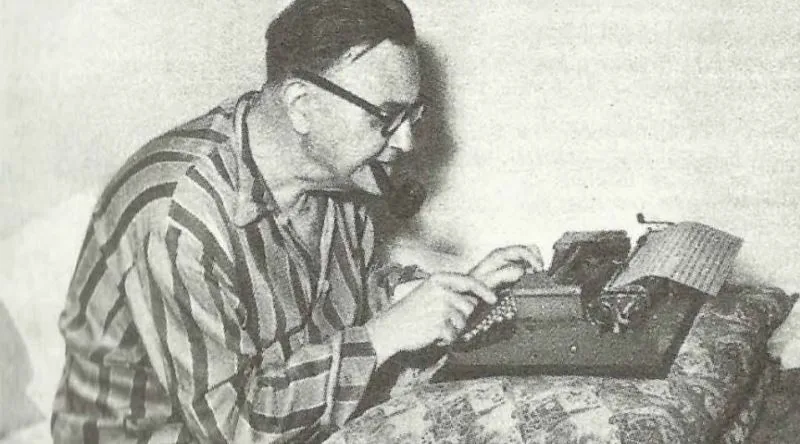
Nurullah Ataç was a Turkish literary critic and essayist who, from the 1930s until his death in 1957, reshaped how Turkish prose could sound, think, and argue. He wrote with a boldness few critics dared, championing young poets before anyone else would and making a plain page of commentary feel alive. He believed the language was still being built in his lifetime, and he wanted a hand in the building. That confidence made him beloved to some readers and infuriating to others, often the same ones.
Nurullah Ataç was a Turkish critic, essayist, and translator active from the 1930s until his death in 1957. He championed a freer, speech-shaped Turkish prose, was associated with the 1940 Translation Bureau that brought hundreds of world classics into Turkish, and is commonly credited with coining the word "günce" for a diary.
- Nurullah Ataç lived from 1898 to 1957.
- He became one of the most influential literary critics in Turkey during the 1930s and 1940s.
- He was associated with the Translation Bureau, founded in 1940 under the Ministry of Education, which produced Turkish translations of hundreds of classical works.
- He advocated the "inverted sentence" (devrik cümle), a word order closer to speech, as a legitimate form in written Turkish.
- He is commonly credited with coining or popularizing the Turkish word "günce" as a substitute for the older term for a diary.
Who Was Nurullah Ataç, the Man Who Taught Turkey to Read Differently?
Nurullah Ataç lived from 1898 to 1957, and in those years he worked as a critic, essayist, writer and poet. He is widely credited as the first master of the inverted sentence in Turkish, the devrik cümle construction that broke the verb out of its traditional place at the end of the line and pushed it forward. That single habit changed how Turkish prose could sound.
If you have ever read a Turkish sentence that ends somewhere other than where your schoolteacher told you it should, you have felt his fingerprints. Ataç wrote, thought, and worried over words the way other people worry over money. He treated language as something you could argue with, and he argued constantly.
Aydın Boysan, the architect and writer, called him an "Istanbul gentleman." Some accounts say Ataç taught French at Pertevniyal High School, where Boysan was a student around the same period, though the exact teacher-student pairing between the two men is not fully confirmed. What is certain is the impression he left: a man of manners and sharp edges, equally at home in a classroom and in a newspaper column.
Being first in any field is a lonely business. You stand out, you make people uncomfortable, and eventually the very thing you pioneered gets absorbed into the culture until nobody remembers who started it. Ataç is a case study in that forgetting. The inverted sentence is now everywhere in Turkish writing, from novels to newspaper headlines, and most readers have no idea it once had to be fought for.
He was also a translator and an early champion of a plainer, more Turkish Turkish. Some of the words he proposed took root and some did not, and he seems to have accepted that with good humor. A language, after all, is not a committee. It takes what it wants, gives life to some inventions and quietly lets others die, and grows either way.
What remains is a body of essays that taught a generation the difference between looking and truly seeing. That distinction, more than any single word, may be his real legacy.
The Words He Gave Us: "Günce," "Makina," and the Fight Over Turkish
Nurullah Ataç did not just write essays. He went after the furniture of the language itself, word by word, insisting that Turkish deserved a vocabulary of its own. The diary genre had entered Turkish literature only after the Tanzimat era, the nineteenth-century reform period that pulled Ottoman letters toward Western forms. When writers needed a name for it, they reached for French first.
Then the argument started. Ataç proposed günce as an equivalent for günlük, and the word is still in use today, though günlük never lost its lead. Falih Rıfkı Atay, some say, floated gündem and gündelik instead, and gündelik reportedly drifted over time into günlük. The writer Hulki Aktunç is said to have drawn a fine line between the two: günlük tutulur, günce ise yazılır, roughly "a diary is kept, a günce is written." The phrasing is attributed to him in some accounts, though the exact wording cannot be confirmed.
Ataç pulled the same trick with machinery. He insisted on makina over makine, and for years the two spellings stood side by side with no referee. The debate continues, and no single authority has settled it. What happened instead is quieter: the general drift over the decades moved toward makine.
Not every coin lands. That is how a living language works. You see something new, you give it a name, and whether the name sticks is its own separate adventure. Once the dust settled, the Öztürkçe (Pure Turkish) movement, which sought to bring more Turkish roots into the written language, had done something larger than win individual fights. It enriched the language, adding new words alongside the existing ones rather than simply replacing them, and left Turkish clearer and fuller than it found it.
The Critic Who Didn't Care What Anyone Thought
Nurullah Ataç treated criticism as an art form in its own right, not a service job for writers. He believed subjectivity belonged in the work, that a critic's own convictions mattered more than false balance. That stance cost him friends and made him enemies, but it also made him impossible to ignore.
His active years as a critic ran from the early 1940s until his death in 1957, a stretch that happened to overlap with the self-creation of the 1950 generation of Turkish poets, a group of young writers who emerged in that decade and reshaped Turkish poetry. Ataç stood apart from that group. He was not in one-to-one relationship with the 1950 generation, nor with any other circle or outlook. He simply occupied his own position and defended it.
One line attributed to him holds that understanding poetry begins with understanding that Mehmet Akif is not a poet. The exact quotation cannot be confirmed, but Ataç was famously critical of Akif's verse, and the line has stuck to him for decades. It captures something real about his temperament: he said what he thought, consequences be damned.
According to a citation attributed to S. Gümüş in Radikal Kitap dated 13 March 2009, Ataç was a "pure modernist" who placed himself ahead of his era like a locomotive. That citation cannot be independently verified, but the image fits. He was a pioneer who affirmed the value of subjectivity in literature while remaining one of his era's most radical modernists.
Asım Bezirci published a study book on Ataç, a fact that confirms the critic's lasting weight in Turkish letters. Whatever friction he generated during his lifetime, the scholarship kept coming.
The Translation Bureau and the Classics That Changed Turkish Intellectual Life
Hasan Âli Yücel became Minister of Education in 1938, and the translation movement he launched that same year reshaped what Turkish readers could hold in their hands. Out of that push came the Translation Bureau, founded in 1940, an institution whose output did more to change the country's intellectual climate than any single writer of the era. And here the popular version needs a correction: contrary to what circulates widely, Nurullah Ataç did not direct the bureau. Its directorship is associated with other names, and the claim that Ataç ran it should be treated as contested rather than settled.
What is not in doubt is the scale of the ambition. According to the original account, the bureau drew in a remarkable roster of the period's respected thinkers and literary figures. Adnan Adıvar, Saffet Pala, Sabahattin Eyüboğlu, Sabahattin Ali, Bedrettin Tuncel, Enver Ziya Karal and Nusret Hızır are all named as active participants in its work. That list is reported rather than fully documented, so treat the individual names with a little caution even as the broader picture holds.
What the Bureau Reportedly Delivered
As the story goes, the numbers were extraordinary for the time:
- Reported 496 works from world literature classics translated into Turkish
- Reported all of it within a span of six years
- Source attributed to Notos magazine, January 2011
The exact figure of 496 and the six-year window come from that single citation, and neither can be independently confirmed. What can be said with confidence is that hundreds of world classics entered Turkish in a compressed period, and that this flood of translated literature altered the reading habits of an entire generation. For a young republic still assembling its intellectual furniture, the bureau acted less like a publisher and more like a conduit for new ideas. It did not simply import books. It imported whole traditions of thought, and it did so in a language that was itself being rebuilt word by word at the same moment.
That last detail matters, because the critic most often associated with the bureau's spirit spent his career arguing about words. Nurullah Ataç, born in 1898 and died in 1957, insisted Turkish could carry philosophy, poetry and argument without leaning on borrowed scaffolding. The bureau's translation project and Ataç's linguistic crusade were two faces of the same impulse. One brought the world's books in. The other made sure the language receiving them was strong enough to hold the weight.
The Dictionary, the Daughter's Memoir, and the Cost of Speaking Plainly
Meral Ataç, the daughter of Nurullah Ataç, wrote a memoir called Babam Nurullah Ataç (My Father Nurullah Ataç), and in it she describes a man who paid for his honesty. According to her account, her father suffered because of his bluntness. She also tells of an episode in which Melih Cevdet Anday, the poet and writer, beat him for criticizing his work. That specific episode comes from the memoir and cannot be independently confirmed, but it fits the image of a critic who never softened a sentence to keep a friend.
He also left behind a reference work. Some accounts say Ataç prepared a "French-Turkish Illustrated Great Language Guide" together with Reşat Nuri Güntekin, Ali Süha Delilbaşı and İsmail Hami Danişmend, though neither the exact title nor the co-authorship is fully confirmed. The claim points to something real about how he worked: language was never a solo project for him, it was a shared craft.
What is certain is the fate of the dictionary itself. Once it appeared, it became a fundamental reference work, and its value never diminished. Generations of readers reached for it the way later readers would reach for a good dictionary app, without thinking about the person who argued over every entry.
In the end, two images remain. On one side, a man beaten for saying what he thought. On the other, a book that outlasted every argument it started. Nurullah Ataç did not get to choose which one history would keep, but he got both.
Frequently asked questions
Who was Nurullah Ataç and why is he important in Turkish literature?
Nurullah Ataç lived from 1898 to 1957 and worked as a critic, essayist, writer and poet. Turkish literary history credits him as the first master of the inverted sentence, and his essays taught a generation the difference between looking and truly seeing. He is remembered as a pioneer who put subjectivity at the center of criticism.
What was the Translation Bureau founded in 1940 and what did it achieve?
Hasan Âli Yücel became Minister of National Education in 1938 and launched a translation movement that led to the founding of the Translation Bureau in 1940. The bureau brought world classics into Turkish, and according to the original account, hundreds of works were translated within a short span of years, reshaping the country's intellectual life.
How did Nurullah Ataç contribute to the Turkish language reform?
Ataç proposed the word "günce" as an equivalent for "günlük," championed "makina" over "makine," and popularized inverted sentences that writers still use. He also worked as a translator, helping carry foreign classics into Turkish and enriching the language with new words and new ways of building a sentence.
What is the inverted sentence style that Ataç pioneered?
The inverted sentence, or devrik cümle, places the predicate before the other elements of a sentence rather than at the end. Ataç is credited as its first master in Turkish, and the style he championed in his essays went on to influence generations of writers who followed him.
Did Nurullah Ataç really say Mehmet Akif was not a poet?
The line "understanding poetry begins with understanding that Mehmet Akif is not a poet" is attributed to Ataç, but the exact quotation is unverified. What is certain is that Ataç was famously critical of Mehmet Akif's poetry, and the remark fits the fearless tone of his criticism.
What words did Nurullah Ataç coin that are still used today?
"Günce" is the clearest example. Ataç proposed it for "günlük," and the word is still in use, though "günlük" remained the more popular choice. Some of his other suggestions never caught on, which is simply how a living language sorts what it keeps. Editorial note: Details that remain unconfirmed, including the exact count of works the Translation Bureau produced and the precise origins of certain word coinages, are presented here as hedged and open to further verification.
Got a take on this? Add your voice to the conversation below →
No comments yet. Be the first.