Multiverse Theory: 4 Models of Parallel Universes in 2024
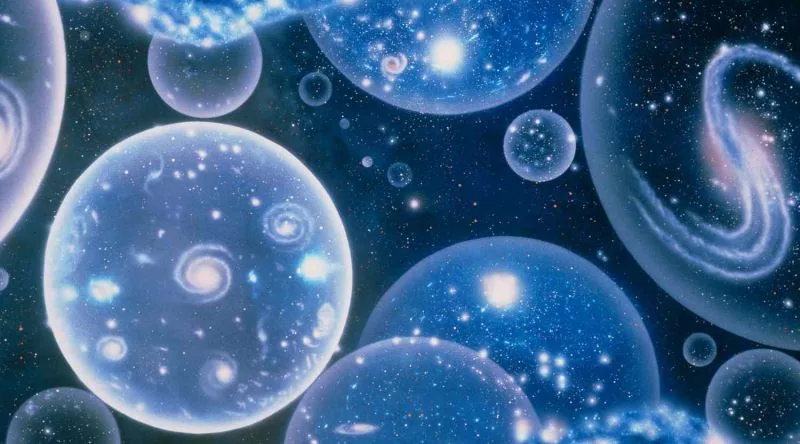
The multiverse theory proposes that our universe is just one of many, possibly infinite, parallel universes, with four major scientific models, from cosmic inflation's bubble universes to quantum superposition's many-worlds interpretation, as explored by physicist Brian Greene and others. This mind-bending idea, long confined to science fiction, now sits at the frontier of theoretical physics, inviting us to question the very nature of reality and our place within it.
The multiverse theory suggests that multiple, separate universes may exist beyond our own. Four primary models are studied: cosmic inflation bubble universes, M-theory brane collisions, quantum superposition parallel worlds, and infinite repetition model. These remain unproven concepts in theoretical physics.
- Cosmic inflation theory, developed in the 1980s, suggests bubble universes form during rapid expansion of space-time.
- M-theory, an extension of string theory, proposes parallel universes exist on separate "branes" in higher-dimensional space.
- Quantum superposition, as in the many-worlds interpretation, suggests every quantum event creates a branching parallel universe.
- The infinite repetition model proposes that an infinite universe would eventually repeat atomic arrangements, creating copies of our solar system and ourselves.
- No empirical evidence for any multiverse model has been confirmed.
What Is the Multiverse Theory, Really?
The multiverse theory is a scientific hypothesis proposing that universes other than our own may exist. It is not science fiction, it emerges from serious physics, but because none of these other universes have ever interacted with ours, the idea remains entirely theoretical, impossible to prove or disprove through observation.
Imagine looking up at the night sky and wondering if somewhere out there, beyond the reach of any telescope, another version of you is doing the same thing. That is the kind of question the multiverse theory tries to answer, not with fantasy but with mathematics. The core idea is simple: our universe might not be alone. Physicists have developed several distinct models to explore this possibility, each built on different foundations in cosmology, quantum mechanics, and string theory.
One model proposes that an infinite universe would eventually repeat itself. Atoms arrange into planets, people, and galaxies in a finite number of ways. In an infinite space, those same arrangements could occur again, meaning a copy of our solar system, Earth, and every person could exist somewhere else. Another model grows out of cosmic inflation, the rapid expansion that followed the Big Bang around 13.8 billion years ago. Inflation may not have ended everywhere at once; patches where it stopped could have become separate bubble universes, each isolated from the others.
String theory contributes a third model. For its equations to work, the theory requires extra dimensions beyond the familiar three. M-theory, a unified version of string theory, demands 11 dimensions. In this picture, our universe is a kind of membrane, a "brane", floating in a higher-dimensional space. Other branes could represent different universes, and collisions between them might generate the energy that creates new ones.
According to the original account, a fourth model draws on quantum superposition. It suggests that when a particle is measured and its property, like spin, appears as "up" in our universe, the "down" possibility could exist in another universe. This is the origin of the parallel universes seen in science fiction. But contrary to the popular version, this model does not involve the collapse of superposition, that would contradict the Copenhagen interpretation, which says measurement forces a single outcome. The many-worlds interpretation instead proposes that all possibilities branch off without any collapse.
As the story goes, researchers once spotted an unusually large void between galaxy clusters that might have been caused by a collision between our universe and another. That finding generated excitement, but no specific recent study has confirmed it, and far more work is needed before anyone can call it evidence.
Model 1: The Infinite Repeater, Are You Living a Copycat Life?
Yes, this model suggests you might be, literally. It starts with a simple, mind-bending assumption: the universe is infinite. If that's true, then the finite number of ways atoms can arrange themselves must eventually repeat somewhere out there. The result? An exact copy of our solar system, your street, the coffee mug on your desk, and even you, reading this very sentence on another Earth.
Picture it: somewhere beyond the edge of our observable cosmos, a doppelgänger version of you exists. They share your memories, your morning routine, and maybe even the same stray thought you had five minutes ago. The source calls this the most fantastic version of the multiverse theory, and also the least convincing one. It's a dizzying thought, sure, but it relies entirely on the universe being infinite, a claim we can't yet prove. Still, the logic is cold and clean: finite pieces, infinite space, inevitable repetition. It's less science fiction and more a mathematical shrug from the cosmos itself.
Model 2: Cosmic Inflation and the Birth of Bubble Universes
Cosmic inflation theory explains that the Big Bang left puzzles unsolved, and this theory naturally suggests that our universe might be just one bubble in a vast cosmic foam. Observations confirm that the universe is expanding, rewind the clock far enough, and you arrive at the Big Bang roughly 13.8 billion years ago, when everything was crushed into a single point. But the Big Bang left gaps: why is the cosmos so uniform, and why is it so flat? Cosmic inflation, proposed in the early 1980s, fills those gaps by describing a split-second of explosive expansion right after the Big Bang, stretching space faster than light.
Here is where the multiverse theory gets its most vivid image. Inflation did not end everywhere at the same time. Picture a pot of water coming to a boil, bubbles form in different spots at different moments. In the same way, inflation ended in some patches of space while continuing in others. The patches where inflation stopped became separate "bubble universes," each isolated from the next by the still-inflating space around them. These bubbles cannot interact; no signal, no light, no matter passes between them. Our entire observable universe, every galaxy, every star, every living thing, sits inside one such bubble, unaware of the others floating in the endless, inflating foam of spacetime. This is not science fiction; it is a direct, logical consequence of the equations that describe inflation, and it remains one of the most compelling arguments for the multiverse.
Model 3: M-Theory and the Brane Multiverse
M-theory, the unified framework that emerged from string theory in the 1990s, demands 11 dimensions and envisions our universe as a three-dimensional "brane" floating in that higher-dimensional space, with other branes forming separate universes. This is the strangest model of the multiverse theory yet, one that turns reality into a kind of cosmic layer cake.
String theory, as it was originally developed in the 1980s, came in five different versions. Each required six extra spatial dimensions beyond our familiar three, curled up so small we never notice them. In 1995, physicist Edward Witten showed these five versions were actually facets of a single, deeper theory: M-theory, which added a seventh extra dimension, bringing the total to 11.
Here is where it gets truly mind-bending. In M-theory, those extra dimensions can unfold into sheet-like structures called branes (short for membranes). Our entire observable universe, every galaxy, every star, every atom, is confined to one such three-dimensional brane. Other branes, each a separate universe with its own physics, float nearby in the higher-dimensional space, like pages in a book we can never flip.
According to the model, collisions between these branes generate enormous energy, and that energy is what creates new universes. Some cosmologists have even proposed that our own Big Bang was not a singular event but the result of two branes slamming together. The energy released in that collision, in this view, became the matter and radiation we see today.
Unlike the infinite repetition model, which feels like a cosmic copy machine, the brane multiverse offers a genuinely different kind of plurality: universes that are not copies but entirely separate realms, possibly with different laws of physics. It is the most speculative of the multiverse theory proposals, relying on dimensions we cannot detect and branes we cannot observe, yet it remains mathematically coherent, and for many physicists, irresistibly elegant.
Model 4: Quantum Superposition and the Many-Worlds Interpretation
This is the model you have probably seen in every sci-fi movie, but the version that has become pop culture shorthand actually jumbles together two incompatible quantum theories. In the standard telling, subatomic particles like electrons exist in a "superposition" of states, say, spinning both up and down at once, until someone measures them. At the moment of measurement, the story goes, the superposition "collapses" into a single outcome, and the alternate possibility supposedly spins off into a separate universe.
Here is the fact-check problem: that description mashes up the Copenhagen interpretation, which says the superposition genuinely collapses into one reality, with the Many-Worlds interpretation, which says there is no collapse at all, both outcomes simply continue to exist in parallel branches of reality. Those two interpretations are mutually exclusive. You cannot have both a collapse and a branching universe from the same measurement.
What the model actually proposes, when described correctly, is this: before you measure a particle's spin, its wave function contains all possibilities. In the Many-Worlds view, every possible outcome of every quantum event really does happen, just in different, non-communicating branches of reality. Make one observation, and the universe splits. That is the idea that inspired the "parallel universe" trope in everything from Star Trek to Everything Everywhere All at Once.
As for the grandfather paradox, the classic time-travel problem where you kill your own ancestor, the Many-Worlds interpretation reportedly offers a tidy solution: go back in time and change the past, and you simply create a new branch where that change happened, while the original timeline continues undisturbed. But that resolution remains contested among physicists, and it is not settled science.
Is There Any Evidence? The Curious Case of the Cosmic Void
No direct observational evidence exists for any multiverse model, including the multiverse theory described here. These ideas remain mathematically possible but unproven, and scientists have not yet found a single physical clue that confirms another universe beyond our own.
But there is one tantalizing hint that keeps researchers talking. A few years ago, astronomers scanning the cosmic microwave background, the faint afterglow of the Big Bang from about 13.8 billion years ago, spotted something odd: a vast, unusually cold patch of sky called the Cold Spot. When they looked deeper, they found an enormous void between galaxy clusters, a region far emptier than expected. According to the original account, some scientists speculated that this void could be a scar left behind by a collision between our universe and another universe. It is a wild idea, and it made headlines. But the source itself is careful to note that much more research is needed, and this void may prove nothing at all. It could simply be a statistical fluke or a normal fluctuation in the density of matter.
So where does that leave us? The honest conclusion is humble. Every model we have discussed, the infinite repetition of atoms, the bubble universes from inflation, the branes in M-theory, the branching realities from quantum measurement, rests on elegant mathematics, not on a single confirmed observation. No telescope has caught a glimpse of another universe. No particle collider has detected a signal from beyond our cosmic horizon. These are beautiful, logically consistent possibilities, but they remain exactly that: possibilities. The multiverse theory is a framework for asking questions, not a set of verified facts. And that is okay. Science thrives on the tension between what we can imagine and what we can prove. For now, the evidence points to one thing: we live in this universe, and we have not yet found a way to knock on the door of another. But the search continues, because the void, that curious, unexplained emptiness, reminds us that the universe still holds secrets.
Frequently asked questions
What is the multiverse theory?
The multiverse theory proposes that other universes beyond our own may exist, each potentially with different physical laws and properties. This is not a single hypothesis but a family of models in theoretical physics, including the infinite repetition model, cosmic inflation's bubble universes, M-theory's brane cosmology, and quantum superposition interpretations. No direct observational evidence confirms any multiverse model, keeping them firmly in the realm of theory.
How does cosmic inflation lead to bubble universes?
Cosmic inflation theory, which explains the Big Bang's rapid early expansion, suggests that inflation did not end simultaneously everywhere. According to the eternal inflation model, patches where inflation stopped became separate "bubble universes," while regions where inflation continued pushed these bubbles apart. This process, rooted in quantum mechanics and the inflationary field, could create countless causally disconnected universes that never interact.
What is M-theory's role in the multiverse?
M-theory, a unified framework for string theory, requires 11 dimensions and proposes that our universe is a "brane" (a membrane-like structure) within a higher-dimensional space. Multiple branes can exist in this hyper-space, each representing a different universe. Collisions between these branes may generate the energy that births new universes. This brane multiverse model is a mathematically consistent extension of string theory, though it remains untestable with current technology.
Why do quantum superposition models suggest parallel universes?
Contrary to the popular version that mixes incompatible interpretations, quantum superposition does not collapse into parallel universes. The Many-Worlds interpretation, distinct from the Copenhagen collapse view, holds that all possible outcomes of a quantum measurement coexist in separate branches of reality. For example, a particle measured with spin up in our universe exists with spin down in another. Each observation thus creates a branching timeline, generating countless parallel universes.
Was there any evidence for the multiverse?
No direct observational evidence confirms any multiverse model. The speculative Cold Spot in the cosmic microwave background, a large void between galaxy clusters, has been tentatively interpreted by some researchers as a possible collision signature between our universe and another. However, according to the original account, this interpretation requires far more study and may prove to be unrelated. All multiverse models remain mathematically possible but empirically unverified.
Could we ever interact with another universe?
The source states that universes likely cannot interact because they are causally disconnected, separated by regions of space or higher dimensions that prevent any signal or matter exchange. Models such as bubble universes from cosmic inflation or branes in M-theory inherently predict no physical contact. Even if other universes exist, their isolation means we may never detect them, making the multiverse a purely theoretical construct for now.
Got a take on this? Add your voice to the conversation below →
No comments yet. Be the first.