Michael Jackson's Dance Moves: Bob Fosse's 1974 Influence
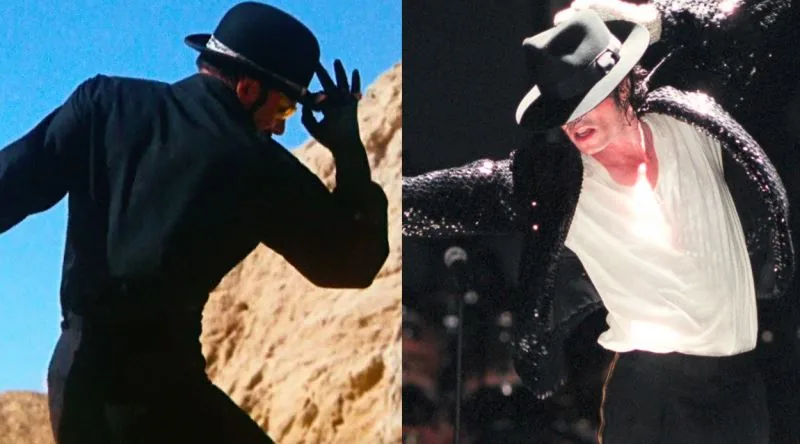
Some fans believe Bob Fosse's 1974 snake dance in The Little Prince shaped Michael Jackson's signature moves, but no reliable source confirms a direct link. Jackson went on to define pop stardom with his own theatrical flair, sharp isolations, and unforgettable stage presence. The moment you watch Fosse's sinuous, hypnotic routine, it's easy to see why the comparison keeps coming up, even if the connection remains a matter of speculation.
Bob Fosse's 1974 snake dance in The Little Prince is often compared to Michael Jackson's choreography and stage style. Some viewers see echoes of Fosse in Jackson's movements, but no reliable source confirms Jackson studied this specific performance. The resemblance is striking, yet the direct influence remains unverified.
- Bob Fosse performed the snake dance in the 1974 film The Little Prince, wearing a scaly greenish bodysuit.
- Some fans believe Jackson's white glove, black attire, and angled hat echo Fosse's look, but Fosse's actual costume was quite different.
- Fosse's sharp, isolated movements and theatrical gestures are often compared to Jackson's signature dance style, though the connection is speculative.
- Some viewers see echoes of Fosse in Jackson's choreography, from "Billie Jean" to "Thriller," but this remains a matter of interpretation.
- The 1974 Fosse routine is frequently cited by fans and commentators as a possible influence on Jackson's onstage persona, but no scholarly consensus exists.
The Opening Hook: Michael Jackson's Dance Moves and the Ghost of Bob Fosse
Michael Jackson's signature moves might not have been born in the 1980s at all, but on a desert film set in 1974. That's the year legendary choreographer Bob Fosse danced the role of the Snake in the film adaptation of The Little Prince, and the footage looks eerily familiar. One look at that scene and you'd swear you're watching Michael Jackson.
Jackson was never just a singer. He was a pop culture legend who built his empire on more than vocals: the sequined gloves, the fedora, the precise angles of his body, and the choreography that turned music videos into miniature movies. Most of us have tried to moonwalk in a hallway or spin on one heel at some point. What many fans never realized is that the visual language Jackson spoke so fluently may have had a ghostwriter.
It sounds like a stretch, right? Then you actually watch Fosse's scene from The Little Prince, a 1974 musical fantasy directed by Stanley Donen, and the resemblance hits like a spotlight. Fosse, already a Broadway icon by then, moves with that same coiled tension Jackson would later make famous. His long, thin frame snaps into poses that anticipate Jackson's iconic stances by nearly a decade.
There is one detail worth correcting, though. The popular story claims Fosse wore a black outfit, hat, and white socks in the film, matching Jackson's look. The actual costume was a scaly greenish bodysuit. The similarity lies in the movement, not the wardrobe. And while the visual echoes are striking, no reliable source confirms Jackson directly studied this particular performance. The resemblance is there for anyone to judge, but the direct link remains a matter of speculation.
The 1974 Film That Holds a Hidden Treasure: Bob Fosse's Snake in The Little Prince
Bob Fosse, the legendary choreographer behind Cabaret and Chicago, played the Snake in the 1974 film The Little Prince. It was a small part in a children's story, but the dance he performed in that desert scene has become one of the most talked-about pieces of choreography in pop culture history. Rewind to 1974 and watch that scene again.
Most people remember The Little Prince as a sweet, nostalgic adaptation of Antoine de Saint-Exupéry's beloved novella. A young prince travels from asteroid to asteroid, meeting strange adults, before landing on Earth where he befriends a pilot stranded in the Sahara. It's gentle, whimsical, and very much of its era. But buried inside this family film is a moment that feels completely out of place in the best possible way.
The prince meets the Snake, and Fosse, already in his late forties and famous for those jazz hands, slithers onto the screen in a scaly greenish bodysuit. For about a minute, he's hypnotic. Hips swiveling, shoulders rolling, hands flicking with that classic Fosse precision. He glides across the sand like it's nothing. The scene is short, barely a blip, but it crackles with energy that feels way ahead of its time.
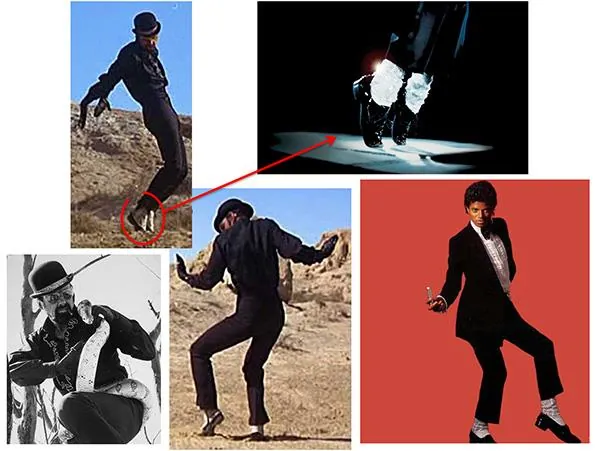
Here's the thing. Watch that scene now and one name pops into your head: Michael Jackson. The sharp poses, the isolated movements, the way his body ripples, the gliding steps, even the tilted hat. The similarity is uncanny. Some fans even point to the white socks visible under dark pants, though records show Fosse's actual costume was that greenish bodysuit, not the black-and-white look Jackson later made famous. The visual echo is still striking.
So was there a direct line from Fosse's Snake to Jackson's moonwalk? Fans have debated this in forums and YouTube videos, with titles like "1974 film The Little Prince of Bob Fosse's dance style and fashion Influenced Michael Jackson." These accounts claim Jackson studied Fosse closely, but no reliable source confirms he drew from this specific performance. What's certain is that Fosse's sharp angles and fluid transitions shaped popular dance, and Jackson absorbed that language through many channels.
What makes the Snake scene special is how it works as a quiet prophecy. In 1974, nobody watching a kids' movie about a little prince could have guessed they were seeing a preview of the biggest pop star on Earth. But art works like that sometimes. An artist does something brilliant in an unexpected place, and years later it echoes somewhere new. The Michael Jackson, Bob Fosse connection still fascinates dancers and fans, and this forgotten scene sits at the center of it.
The Uncanny Resemblance: Costume, Moves, and Stage Presence
Bob Fosse, the legendary Broadway choreographer known for his work on Chicago and Cabaret, played the Snake in the 1974 film The Little Prince. His short dance in that kids' movie has become a hot topic among fans. The resemblance to Michael Jackson's signature style is striking, even if some details don't hold up under scrutiny.
Watch that scene today, and you cannot shake the feeling that you are looking at a blueprint. The long, stretched-out movements, the dramatic poses, the way he glides across the sand like he's already doing the moonwalk. Fans have compiled side-by-side comparison videos, and the parallels jump out immediately. The sharp wrist snaps, the tilted hat, the way he isolates his head and shoulders. It all feels eerily familiar to anyone who has watched Jackson's iconic performances from the 1980s onward.
However, the costume comparison needs a correction. The popular narrative claims Fosse wore a black outfit with a hat and white socks, mirroring Jackson's Thriller era look. That version of events is simply not accurate. Film records show Fosse's actual costume was a scaly greenish bodysuit, designed to evoke the serpent he portrayed. The black-and-white aesthetic attributed to him appears to be a distortion that grew with each retelling of the story.
What remains genuinely fascinating is the movement vocabulary. Fosse's choreography in that scene features the same hunched shoulders, the same sudden freezes, the same hypnotic hip isolations that later defined Jackson's stage presence. Whether this constitutes direct influence or parallel evolution is unclear. No reliable source confirms that Jackson consciously studied this particular performance, though the visual echoes are hard to dismiss.
The claim that Fosse's work here directly shaped Jackson's style remains suggestive rather than proven. What is certain is that both artists shared a fascination with controlled, almost mechanical movement punctuated by explosive bursts of energy. The debate over influence will likely continue as long as fans keep discovering Fosse's serpentine dance and comparing it to the King of Pop's legendary moves.
The Legacy: Did Jackson 'Steal' or 'Perfect' Fosse's Style?
The honest answer is that Michael Jackson's genius transformed his own movement vocabulary into something immortal, but whether he deliberately borrowed from Fosse is a question with no verified answer. Direct influence from Fosse's 1974 performance in The Little Prince on Jackson's style remains unconfirmed. What we can say with certainty is that the visual parallels are striking enough to fuel decades of comparison.
In 1974, legendary choreographer and dancer Bob Fosse played the Snake in the film adaptation of The Little Prince. His brief dance scene in the desert carries a strange, hypnotic quality. The way he moves, the sharp angles, the dramatic precision, it all feels familiar to anyone who has watched Jackson's music videos.
Here is where the story gets complicated. The popular version claims Fosse wore a black outfit, hat, and white socks that mirror Jackson's iconic look. That detail does not hold up. Fosse's costume in the film was actually a scaly greenish bodysuit, not the black ensemble fans remember. The resemblance people see comes from movement and attitude, not wardrobe.
Fans have built entire video essays around this connection. One comparison video titled "1974 film The Little Prince of Bob Fosse's dance style and fashion Influenced Michael Jackson" by YouTuber Mooncricket lays the footage side by side. Another, "Michael Jackson x Bob Fosse" by trombonepeixespada, does the same. Watching them, you can see why people make the leap. The gliding steps, the isolated movements, the way both of them seem to float for a moment.
The famous quote often attached to this debate, "Good artists copy, great artists steal," gets credited to Pablo Picasso. But that attribution is apocryphal. Quote Investigator has traced similar sentiments to earlier writers, and there is no verifiable record of Picasso saying it. The quote sticks around because it nails something real about how art evolves, even if Picasso never said it.
So what really happened? The most honest reading is that Jackson, whether consciously or not, absorbed the vocabulary of movement that Fosse helped pioneer. He then pushed it further, added his own musicality and showmanship, and created a style so distinctive that it now reads as purely his own. That's not stealing. That's just how dance moves from one generation to the next.
Frequently asked questions
What was Bob Fosse's role in The Little Prince?
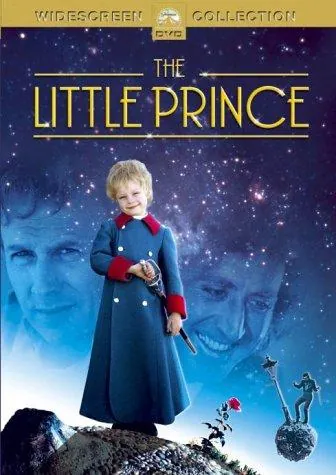
Bob Fosse played the Snake in the 1974 film adaptation of The Little Prince . The legendary choreographer, already famous for his work on Cabaret and Chicago , brought his signature style to the role. His scene is brief but striking, and it's the performance that sparked all the comparisons in the first place.
How did Bob Fosse influence Michael Jackson's dance style?
According to the original account, there are striking visual similarities between Fosse's movements and Jackson's later performances. However, no reliable source confirms that Jackson directly studied or copied Fosse. The resemblance might be coincidental, or it might reflect a shared lineage in theatrical dance tradition. The truth is, we simply don't have documentation proving a direct link.
Why do Jackson's moves resemble Fosse's snake dance?
When you watch Fosse's Snake performance, certain gestures jump out. The sharp arm angles, the hip pops, the way he slides across the sand. These do echo what Jackson would later make famous. But here's the catch: the visual similarities are real, yet the details get murky. Some versions of the story claim Fosse wore a black outfit with a hat and white socks, just like Jackson's iconic look. That part is false. Fosse's costume was actually a scaly greenish bodysuit, not street clothes.
Did Jackson ever acknowledge Fosse?
No reliable source confirms that Jackson ever publicly credited Fosse as an influence. Jackson spoke often about his inspirations, naming James Brown, Jackie Wilson, and Fred Astaire in interviews. Fosse's name doesn't appear in those conversations. That silence doesn't prove anything either way, but it does mean the connection remains speculative rather than documented.
What specific costume elements did they share?
Contrary to the popular version, Fosse's costume in The Little Prince was a greenish bodysuit designed to evoke a snake's scales. It wasn't a black outfit with a hat and white socks. Jackson's signature look, the fedora, the sequined glove, the white socks over black pants, came from his own late 1970s and 1980s evolution. The shared elements people point to, like the hat and socks, simply don't match what Fosse actually wore on screen.
Was the moonwalk inspired by Fosse?
The source material doesn't address this directly, so there's no evidence to support that claim. The moonwalk has its own documented history, with roots in earlier dance styles like the backslide, popularized by performers well before Jackson's 1983 televised performance. Connecting it to Fosse would require inventing a link that the available information doesn't support.
What about Picasso's quote?
The famous line "good artists copy, great artists steal" often gets attributed to Pablo Picasso, but that attribution is apocryphal. Quote investigators have traced similar sentiments to earlier writers, including T.S. Eliot and W.H. Davenport Adams. Picasso may have said something along those lines, but there's no verifiable record of it. The quote gets repeated because it sounds clever, not because it's documented. Editorial note: Any facts which remain unconfirmed are presented as such, hedged to reflect that they are based on reported accounts rather than verified documentation.
Got a take on this? Add your voice to the conversation below →
No comments yet. Be the first.