Medicinal Leeches: The 2004 FDA-Approved Microsurgeons
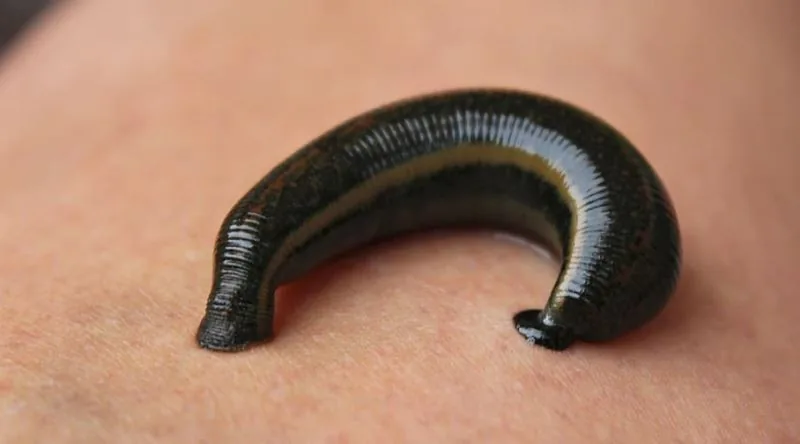
Most of us cross the street to avoid a leech. In an operating room, though, a small dark worm with a taste for blood can be the thing that saves a fingertip. Medicinal leeches became FDA-approved medical devices in 2004, when the agency cleared them for use in microsurgery. That decision turned a creature most people dread into a legitimate surgical tool. Doctors now reach for them when a reattached finger, ear or lip starts to turn blue, because the leech keeps blood moving through tissue that has no working veins to drain it.
In 2004 the US Food and Drug Administration cleared medicinal leeches for use in medicine, mainly to relieve dangerous blood pooling after reconstructive surgery. The leeches attach to congested tissue, draw out trapped blood and release hirudin, a potent anticoagulant in their saliva that keeps the wound bleeding gently and the graft alive.
- The FDA cleared medicinal leeches as a medical device in June 2004.
- Leech saliva contains hirudin, an anticoagulant that prevents blood from clotting while the leech feeds.
- Surgeons use leeches most often after reattaching fingers, ears and lips, when venous blood cannot drain and the tissue risks dying.
- A leech draws off the pooled blood and leaves hirudin behind, so the area keeps draining for hours rather than minutes.
- Medicinal leech therapy is also studied for varicose veins and other circulation problems, though evidence there remains more limited.
The Leech That Went to Medical School
Picture a leech and your skin crawls before your brain catches up. Slimy, dark, wriggling out of a pond or a swamp. Now meet Hirudo medicinalis, the classic medicinal leech, a creature about 5 to 10 centimeters long that has quietly earned a place in modern operating rooms. Same animal. Completely different job description.
Because this is not folk medicine dressed up in a lab coat. Medicinal leeches are living surgical instruments, and the reason has everything to do with what they leave behind when they bite.
Hirudin: the drop of spit that stops a clot
A leech's real weapon sits in its saliva: a substance called hirudin. It is one of the strongest natural anticoagulants we know of, and it works with brutal precision, blocking the thrombin enzyme so that blood cannot clot the way it normally would. Where hirudin lands, blood keeps flowing. Oxygen keeps reaching tissue that would otherwise be starved and dying.
That single mechanism turns a swamp creature into a rescue tool. A surgeon can sew a severed fingertip, ear or lip back into place, but stitching the tissue is only half the battle. Blood has to keep moving through it, and hirudin buys the tissue the hours it needs.
So yes, when you next feel that shiver of disgust, remember what the leech is actually doing: not draining life, but keeping it circulating.
Hirudin: The Saliva That Won't Let Blood Clot
Hirudin is the substance in leech saliva that does the heavy lifting, and it ranks among the strongest natural anticoagulants science has ever catalogued. It works by blocking thrombin, the enzyme that drives clotting, so blood keeps flowing and tissue keeps receiving oxygen. That single biochemical trick is the whole reason medicinal leeches still earn a place in modern surgery.
Consider the moment the leech latches on. Its salivary glands release hirudin into the wound, and the molecule goes straight for thrombin. Thrombin is the switch that normally converts fibrinogen into fibrin, the mesh that turns liquid blood into a clot. Hirudin jams that switch shut, specifically and directly. No fibrin mesh forms. No clot seals the wound. The result is a slow, sustained trickle of blood that can last for hours rather than minutes, and with that continued flow comes continued oxygen delivery to the tissue underneath.
What makes hirudin remarkable is its potency. Researchers describe it as one of the most powerful natural thrombin inhibitors known, and a small leech carries a chemical weapon that a pharmacy would struggle to improve on.
This is the mechanism that turns a swamp dweller into a surgical tool. The leech is not simply draining fluid. It is actively rewriting the local chemistry of a wound, holding the clotting cascade at bay long enough for fragile tissue to breathe.
Why a Reattached Finger Needs a Leech
Picture the surgeon's table: a severed fingertip, or a torn ear, or a lip, waiting to be sewn back into place. The stitching is the easy part to imagine. The hard part is plumbing. Microsurgery can reconnect the tiny arteries feeding a flap of tissue, but the small veins that should carry blood back out are far harder to repair, because their walls are thin and they collapse easily. When the outflow fails, blood pools in the tissue, the flap swells, darkens, and eventually dies.
This is where the medicinal leech earns its strange reputation. Set a Hirudo medicinalis on the congested tissue and it does two jobs at once. It draws off the excess blood that the broken veins cannot move, and with the same bite it releases a compound called hirudin into the wound. Hirudin is one of the most potent natural anticoagulants known, a molecule that blocks the thrombin enzyme so fibrinogen never converts to fibrin. Clotting stalls, and blood keeps flowing through the tissue for hours rather than minutes. Oxygen keeps arriving. The flap has a chance.
A leech is not a folk remedy that wandered into the operating room. It is a regulated tool. The US Food and Drug Administration cleared medicinal leeches as a medical device in June 2004, specifically for use in reattachment surgery.
Across the Atlantic the practice is often described as "biotherapy," a living treatment rather than a drug or an instrument. That framing is common in European accounts, though it is not a single uniform regulatory label across the continent. The distinction matters less than the result: a wet, dark creature that makes most people recoil, quietly doing what a room full of expensive machinery cannot.
So the next time a leech turns up in a pond and sends you scrambling, remember what it is doing in a hospital. It is not there to frighten anyone. It is there to keep a fingertip alive.
From Grandmother's Remedy to Turkish University Hospitals
For generations in Turkey, some families kept a jar of leeches in the kitchen as readily as others kept iodine. The older generation pinned them to knees and sore backs, convinced the little creatures "cleaned the blood." That belief traveled a long way. Today, medicinal leeches are documented as a professional tool in Turkish plastic and reconstructive surgery, used especially when a reattached flap or graft becomes congested with pooled blood.
The shift is not a small one. A practice once dismissed as a grandmother's habit now sits inside hospital walls, handled by surgeons who understand exactly why a hungry leech works where a suture sometimes cannot. The animal drains the congested area and, at the same time, its saliva delivers hirudin into the tissue, keeping blood moving. Same creature, entirely different setting.
Where the folklore meets the institution is where the story gets murkier. According to the original account, major medical schools, including Hacettepe University, Istanbul University-Cerrahpaşa and Ege University, reportedly run leech applications on a scientific footing. The same account describes Health Ministry-approved "medical leech application centers," ostensibly producing leeches under sterile conditions and using each one a single time. Treat those specifics with care: the existence of leech therapy units under Turkish complementary medicine regulation is plausible, but the exact approved-center designation and the sterile single-use production claim could not be reliably verified.
What is solid is the classification. Leech therapy is now grouped as complementary medicine, not alternative medicine. That word choice matters. Complementary means it works alongside conventional care, not in place of it. The leech is not asked to replace the surgeon. It is asked to help the tissue survive.
The evidence is strongest for flap salvage. For varicose veins, migraine and osteoarthritis, leech therapy has been studied, but the science is thinner and much more contested. So the grandmother was not entirely wrong, and the university hospital is not entirely right about everything. The truth is somewhere in between, and it is still wriggling.
Where the Evidence Gets Thinner
Leech therapy shows up in discussions of varicose veins, migraine and osteoarthritis, but the scientific case there is far shakier than it is for flap salvage. That distinction matters. The surgical use rests on a clear mechanical problem with a clear biological fix, while the wider claims lean on much thinner ground.
Consider the two ends of this story side by side. In one operating room, a surgeon works with equipment worth billions of dollars, monitors, microscopes, sterile lighting, and still reaches for a jar of live animals when a reattached finger turns dusky and congested. In the other corner sits the leech itself, all of 5 to 10 cm long, doing with a single drop of saliva what the hardware cannot. That contrast is the reason medicinal leeches keep showing up in serious surgical journals instead of folk-medicine footnotes.
But the same creature that rescues a failing flap has been pressed into service for a much longer list of complaints, and this is where honest reporting has to slow down. Varicose veins, migraine, osteoarthritis: all three appear in the literature, and all three sit on noticeably weaker evidence than reconstructive surgery does. The mechanism that makes a leech brilliant at relieving venous congestion in a small, freshly sewn piece of tissue does not automatically translate into relief for a throbbing knee or a migraine.
The proven use is narrow and surgical. The contested uses are broad and chronic. Keeping those two categories apart is the whole game.
That gap is also why leech therapy is now generally filed under complementary medicine rather than alternative medicine. It works alongside conventional care, not in place of it. The framing sounds like a small bureaucratic detail. In practice it is a useful guardrail, one that keeps a genuinely effective surgical tool from being stretched into a cure-all for everything that aches.
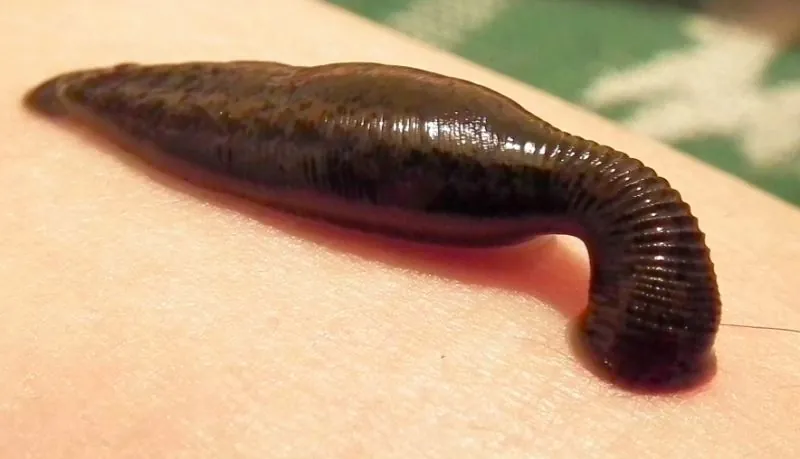
Frequently asked questions
What is hirudin, and how does it stop clotting?
Hirudin is a substance in the leech's saliva, and it ranks among the most powerful natural anticoagulants known. It works by blocking thrombin, the enzyme that converts fibrinogen into fibrin, the scaffolding of a clot. Notice the precision here: hirudin inhibits the enzyme. It is not a stand-in for thrombin. With thrombin out of commission, blood keeps flowing instead of stiffening, and oxygen keeps reaching tissue that would otherwise suffocate.
Why do surgeons use leeches after reattaching a finger or ear?
In microsurgery, arteries are generally easier to stitch back together than small veins. Those thin, collapsible vein walls are stubborn, and when venous blood pools instead of draining, the tissue swells, turns dark, and can die. A leech solves both halves of that problem at once. It draws off the excess blood, and its saliva leaves hirudin behind so the area keeps draining for hours rather than minutes. The tissue gets a second chance.
Is leech therapy used in Turkey?
Yes, and professionally. Medicinal leech application is documented in Turkish plastic and reconstructive surgery, particularly for congested flaps. Beyond that, the record gets murky. Claims about dedicated scientific leech programs at Hacettepe University, Istanbul University-Cerrahpaşa and Ege University are reported but unconfirmed, and so is the existence of Health Ministry-approved "medical leech application centers." Single-use leeches are described in these accounts, though the sterile production claim is not verified.
Is leech therapy alternative or complementary medicine?
Complementary. Leech therapy is classified as complementary medicine, meaning it is used alongside conventional care rather than in place of it, which matches how the World Health Organization frames the term. In Europe it is often described as "biotherapy," though that is a loose label rather than a formal regulatory category.
Does leech therapy work for varicose veins or migraine?
That is where the evidence thins out. Leech therapy has been studied for varicose veins, migraine and osteoarthritis, but its effectiveness in those conditions is scientifically more contested than in reconstructive flap salvage, where the case is far stronger. Editorial note: Details that remain unconfirmed, including specific clinical outcomes and the strength of evidence for some applications, are presented as such and hedged accordingly.
Got a take on this? Add your voice to the conversation below →
No comments yet. Be the first.