Mathematical Platonism: Do We Discover or Invent Numbers?
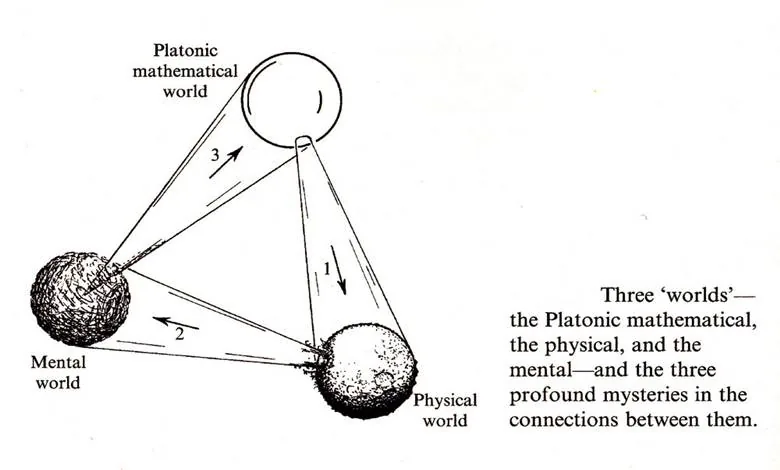
Mathematical Platonism is the view that numbers exist as abstract objects independently of human minds, a position Gottlob Frege argued for in his work on the foundations of arithmetic. If Frege is right, then 17 was not waiting to be invented on the day someone first counted to it. It was already there. That single claim turns a quiet question about arithmetic into one of the strangest disputes in philosophy: when mathematicians prove a theorem, are they discovering a fact about reality, or inventing a rule for a game?
Mathematical Platonism holds that numbers are abstract objects that exist independently of anyone thinking about them. Frege argued that numbers must be objects because mathematical statements behave like statements about things. Paul Benacerraf objected that we cannot explain how we could ever come to know such objects.
- Gottlob Frege set out the classic case for numbers as objects in his work on the foundations of arithmetic.
- Frege's argument turns on the idea that a number word functions as a name rather than a predicate, so a number must be the sort of thing a name can refer to.
- Paul Benacerraf raised the best-known objection, asking how physical beings could ever gain knowledge of non-physical objects.
- W. V. O. Quine later defended a naturalistic version of Platonism, arguing that we should accept the entities our best scientific theories quantify over.
- Nominalists, by contrast, deny that numbers exist as objects at all and try to explain mathematics without them.
Was the Pythagorean Theorem True Before Pythagoras?
Seventeen would be prime even if no one had ever counted to it. The Pythagorean theorem would hold for right triangles even before Pythagoras drew breath, and it would hold in an empty universe with no minds to notice. So here is the question that has kept philosophers awake since antiquity: do we invent mathematical truths, or do we discover them?
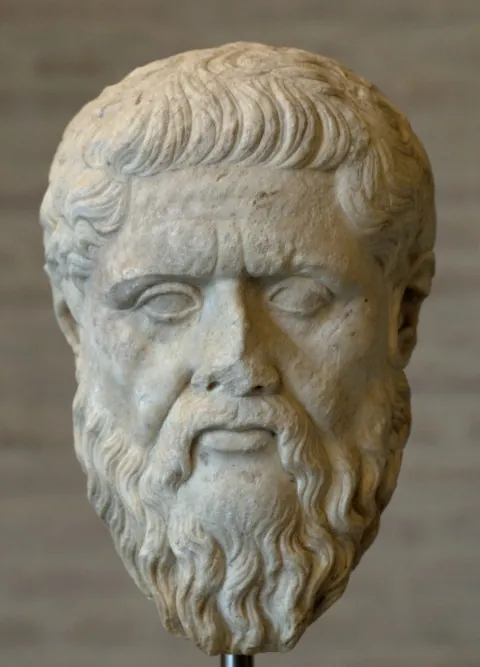
Mathematical Platonism answers that second way. The name comes from Plato, whose thinking about abstract objects gave the position its shape. On this view, numbers, geometric shapes, sets and other mathematical objects exist independently of the human mind. Mathematicians do not manufacture them. They find them.
Notice how natural this feels at first. Nobody ever sat down and decided that 17 is prime. Its primality follows from which numbers divide it, and that is that. No committee voted on it, no culture negotiated it. Yet push the thought one step further and it snags. If numbers really do exist apart from us, where exactly are they? And how could we ever come to know anything about them? That is where the real trouble starts for mathematical Platonism.
The stakes are easy to miss until you try to imagine the alternative. A valid proof does not depend on personal preference. Results do not bend to taste or tradition. If that objectivity is not grounded in something mind-independent, it needs another explanation, and the search for one has driven the debate for well over a century.
What Mathematical Platonism Actually Claims
Was 17 prime before anyone was around to say so? Was the Pythagorean theorem already true in the centuries before Pythagoras ever drew a triangle? Mathematical Platonism answers both questions with a flat yes. The view holds that numbers, geometric shapes, sets, and other mathematical objects exist independently of the human mind. Mathematicians do not invent them. They discover them.
We talk about numbers, sets, functions, and geometric structures constantly, yet none of them is a physical object like a table or a stone. You cannot trip over the number 2. Still, we build statements about these things that come out true or false, and we back them with rigorous proofs that hold up under scrutiny. Mathematical Platonism says that is no accident: the objects really are there, as abstract entities, whether or not any of us ever thinks about them.
Nobody decided that 17 is prime. Its primality falls out of which numbers divide it, not out of anyone's preference, and that is exactly the kind of fact the Platonist has in mind. A theorem's truth does not depend on who proved it or which symbols we happen to use. Two mathematicians working in different centuries, in different notations, land on the same result. The objectivity of mathematics, on this reading, is not a mystery to be explained away. It is simply what you would expect if the objects were mind-independent all along.
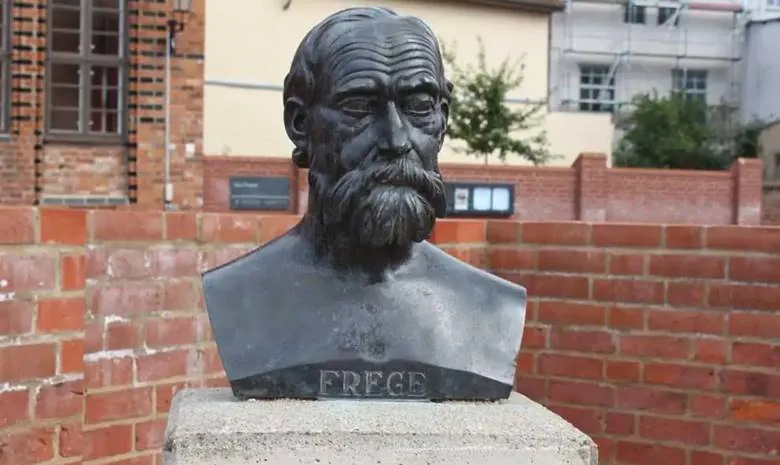
Gottlob Frege, one of the most important and influential philosophers of the last 200 years, pushed the argument further. When we say "2 is prime," we are saying something about 2, and if the sentence is genuinely true, then according to Frege the term "2" has to refer to something. Treating number words as mere marks on a page will not carry the weight. So the numbers have to be admitted as mathematical objects.
Then comes the hard turn. If mathematical objects sit outside space and time, how do we ever have knowledge of them? We can see a tree, hold a stone, point a telescope at a distant star. There is no comparable contact with the number 2. Paul Benacerraf formulated this problem clearly, and it remains one of the most important challenges the Platonist has to face.
Frege's Argument: Numbers Are Objects, Not Just Symbols
Gottlob Frege is one of the most important and influential philosophers of the last 200 years. He is widely regarded as a founder of modern logic. And buried inside his work on the foundations of arithmetic sits one of the sharpest arguments ever made for mathematical Platonism.
Frege's move is disarmingly simple. Take the sentence "2 is prime." We are not just pushing symbols around. We are saying something about 2, namely that it has the property of being prime. Now ask yourself: if that sentence is genuinely true, what has to be the case? For Frege, the term "2" has to refer to something. A statement can only be true about an object if there is an object there to be talked about.
Follow that thought to its end. Numbers cannot be dismissed as mere signs that the human mind cooked up. They have to be accepted as mathematical objects, things that exist in their own right. Nobody decided that 17 is prime. It simply is, and it would have been prime even if no one had ever existed to notice.
So far, so tidy. But Frege's argument opens a door onto a much darker room.
If numbers are not physical, and they are not located anywhere in space, then how do we know them? You can see a tree, pick up a stone, point a telescope at a distant star. With numbers there is no such contact. You cannot see 2, touch it, or measure it anywhere. This is the knowledge problem that Frege's referential argument creates, and it is the crack that opponents of mathematical Platonism have been widening ever since.
Benacerraf's Objection: How Can We Know Abstract Objects?
You can see a tree. You can pick up a stone and feel its weight. You can point a telescope at a distant star and catch its light. In each case, knowing something means standing in some relation to it, direct or indirect. Now try the same move with the number 2. You cannot see it, touch it, or measure it anywhere.
Paul Benacerraf put this problem in its sharpest form. If mathematical objects really sit outside space and time, how do we ever get reliable knowledge of them? Benacerraf's point was that mathematical Platonism cannot simply assert that numbers exist. It also owes us an account of how we reach them. A picture of what there is, with no story about how we know it, is only half a theory.
The asymmetry is easy to feel. Physics hands us a causal path: light bounces off a star, enters the eye, and something gets known. Abstract objects offer no such path. They cannot push, reflect, or emit anything. So the Platonist seems stuck with a strange situation: objects that are utterly real, and utterly out of reach.
Responses have come from several directions. Some philosophers argue that mathematical knowledge simply does not travel through the senses at all. It comes from reasoning. We do not perceive that 17 is prime; we prove it. On this view the absence of a causal link is not a gap, because the senses were never the intended route.
W. V. O. Quine takes a different road. Quine does not separate mathematics from science, treating the two as one continuous enterprise. His argument runs roughly this way: our best scientific theories use mathematical structures at every turn, and those theories work. If we accept the theories, we should take the mathematical objects they invoke seriously too.
That move does not settle the matter. Mathematics being indispensable to science is not by itself proof that numbers enjoy a reality independent of us. Nominalists, who reject abstract objects outright, press exactly here: mathematical language can be powerful and useful without any numbers or sets actually existing.
Which leaves the debate turning in a circle, and a good one. Platonism explains why mathematics feels objective but struggles to explain our access to it. Nominalism denies the objects but then must explain why mathematical truths look so objective and necessary in the first place. A valid proof does not bend to personal taste. Two people working the same problem arrive at the same result.
So the question of whether we discover mathematics or invent it remains one of the fundamental debates in the philosophy of mathematics.
The Nominalist Counterargument and the Open Debate
Mathematical Platonism has a rival, and it is not a timid one. Nominalists deny that abstract objects exist at all. Numbers, sets, functions: for them these are not invisible residents of some timeless realm. And yet nominalism inherits a burden the moment it says no, because mathematical truths do not behave like opinions.
Here is the pressure point. Mathematics being indispensable to science does not by itself prove that numbers have a reality independent of us. That is the nominalist's opening move. Mathematical language can be extraordinarily powerful and useful without implying that numbers or sets really exist. We talk about the average family and the center of gravity too, and nobody thinks those are floating somewhere waiting to be found. So why should "17" be different?
Fair question. But then comes the reply that keeps the debate alive. If mathematical objects really do not exist, why do mathematical truths seem so objective and necessary? The truth of a proof does not depend on personal preference. Set two people on the same problem, and if the proof is valid, they land in the same place. Nobody negotiates the result. That stubborn agreement is exactly what nominalism has to account for, and it cannot simply wave it away as a habit of speech.
So the standoff is symmetrical, and that is what makes it interesting. Platonism is strong at explaining objectivity but struggles to explain how we know abstract objects. Nominalism rejects abstract objects but must explain why mathematical truths seem so robust. Each side wins the point it cares about and loses the other.
Which leaves the question where it has always been: do we discover or invent mathematics? That is still one of the fundamental debates in the philosophy of mathematics. It has not been settled, and anyone who tells you it has is selling something. The argument simply keeps its balance, one objection answering another, and that balance may be the most honest thing about it.
Frequently asked questions
What is mathematical Platonism in simple terms?
Mathematical Platonism is the view that numbers, sets, and geometric shapes exist independently of the human mind. On this account, mathematicians do not invent these objects; they discover them. The number 17 would be prime even if no human being had ever existed to notice it, because its primality follows from its divisors alone.
Do mathematicians discover or invent mathematics?
Platonists say mathematicians discover mathematical truths, while nominalists argue that mathematical language can be enormously useful without any abstract objects actually existing. This discovery-versus-invention question remains one of the fundamental debates in the philosophy of mathematics, and neither side has settled it.
What was Frege's argument for mathematical Platonism?
Gottlob Frege, one of the most influential philosophers of the last 200 years, argued that number terms are not mere symbols. When we say "2 is prime," Frege held that "2" must refer to something for the statement to be true, which means numbers should be treated as genuine mathematical objects.
What is Benacerraf's objection to mathematical Platonism?
Paul Benacerraf clearly formulated the problem: if mathematical objects exist outside space and time, we cannot see them, touch them, or measure them anywhere. Platonism therefore owes an explanation of how we come to know these abstract objects at all, and that explanatory burden has driven much of the debate since.
How does Quine defend mathematical Platonism?
W. V. O. Quine does not separate mathematics from science. Because successful scientific theories lean constantly on mathematical structures, Quine argues that if we accept those theories, we should take their mathematical objects seriously too.
What do nominalists say about mathematical objects?
Nominalists reject the existence of abstract objects altogether. Their burden is the mirror image of the Platonist's: they must explain why mathematical truths appear so objective and necessary if there are no numbers or sets standing behind them.
Was the Pythagorean theorem true before Pythagoras?
Yes. The truth of the Pythagorean theorem in Euclidean geometry does not depend on when it was discovered or who proved it first. Its validity was settled by the structure of the geometry itself, long before anyone wrote it down.
Why does mathematics seem so objective if humans invented it?
Because a valid proof compels agreement. Work through the same problem correctly and you reach the same conclusion as anyone else, regardless of personal preference. That shared, repeatable outcome is exactly what makes mathematics feel discovered rather than made up. Editorial note: Points of interpretation that scholars still contest, such as the precise scope of Frege's argument or the force of Benacerraf's objection, are presented here as contested rather than settled.
Got a take on this? Add your voice to the conversation below →
No comments yet. Be the first.