John von Neumann: The Genius in Eisenhower's Wheelchair
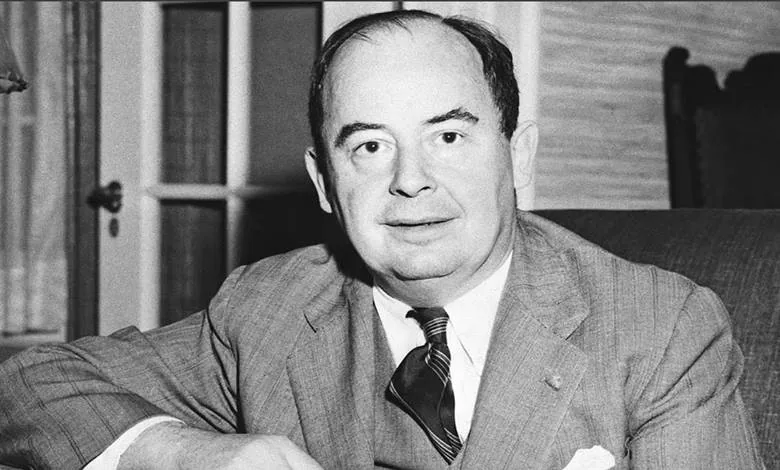
John von Neumann, the Hungarian-American mathematician born in Budapest in 1903, became one of the most influential scientists of the twentieth century, shaping game theory, computer architecture, and Cold War strategy before his death in 1957. He could divide large numbers in his head as a small child and later worked on the atomic bomb at Los Alamos. By the final years of his life, cancer confined him to a wheelchair, yet he still attended meetings with President Dwight D. Eisenhower. His mind stayed sharp even as his body failed, and the contrast between the two remains one of the most striking stories in modern science.
John von Neumann was a Budapest-born mathematician who moved to the United States and became a central figure in game theory, nuclear strategy, and early computing. In his last years, cancer confined him to a wheelchair, yet he continued advising President Eisenhower. He died in 1957 at age 53.
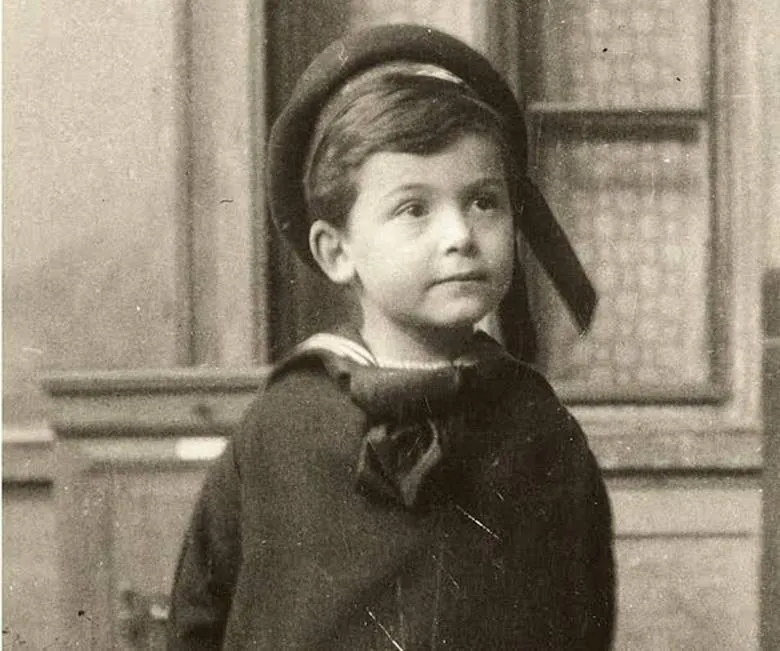
- John von Neumann was born in Budapest, Hungary, in 1903 and showed extraordinary mathematical talent from early childhood.
- He published "Theory of Games and Economic Behavior" with Oskar Morgenstern in 1944, establishing game theory as a formal discipline.
- His 1945 report on the EDVAC described the stored-program computer architecture that still bears his name.
- He consulted for the RAND Corporation and contributed to Cold War strategic thinking, though the exact dates and nature of his role are not firmly documented.
- Diagnosed with cancer, he spent his final months in a wheelchair but continued attending high-level government meetings until his death in 1957.
The Budapest Prodigy Who Read the Phone Book
John von Neumann was born on December 28, 1903, in Budapest, into a prosperous upper-middle-class Jewish family. His father, Max, was a banker, and the household sat comfortably inside the assimilated, cultured stratum of Austro-Hungarian society. That world was already cracking. As the empire came apart in the early twentieth century, Budapest still held a lively academic culture, much like Vienna's, and it produced a remarkable crop of scientists. Then the political instability of the 1920s pushed nearly all of them out of the country.
Von Neumann was arguably the brightest of that group. Stories about his memory start early. The most repeated one has him reciting whole pages of the Budapest telephone directory as a child, though the specific age of six attached to that feat varies from telling to telling and cannot be confirmed. What is documented is that the extraordinary recall lasted his entire life, along with a habit of reading a long book once and then quoting it line by line.
His father Max enrolled him at the Lutheran Gymnasium in Budapest at age ten and arranged private mathematics lessons on the side. One class ahead of him at the same school was Eugene Wigner, who later won the 1963 Nobel Prize in Physics. By Wigner's account, the younger boy was constantly generating new ideas, especially in set theory and number theory, and the sheer volume of them was enough to make Wigner doubt his own prospects in pure mathematics.
Von Neumann finished high school around 1921. The standard version of the story says he then enrolled as a graduate student at the University of Budapest while spending most of his time at the University of Berlin, but that framing is imprecise. His studies in this period were spread across Budapest, Berlin and Zurich rather than centered on one city. What is solid is that he worked with David Hilbert at Göttingen in the mid-1920s, and Hilbert was widely regarded as the preeminent mathematician of the era.
Accounts sometimes bundle everything into 1926: a chemical engineering diploma from Zurich, a mathematics doctorate from Budapest, a mathematics teaching license from Berlin, and a place inside Hilbert's group at Göttingen, all by that one date. The Zurich diploma and the Budapest doctorate are documented, and he was in Göttingen around 1926 to 1927, but the Berlin license came later, more likely around 1927 to 1928. The clean by-1926 summary is probably off by a year somewhere.
However the dates fall, the result was the same. Every door in the academic world stood open in front of him, and his work in the 1920s had already made his name internationally. Princeton University was recruiting Europe's best mathematicians and scientists for its newly established Institute for Advanced Study, and he seized the opportunity. He arrived in the United States around 1930, and later joined the Institute for Advanced Study in 1933. The age and the institution are often muddled together in retellings.
Princeton, Parties, and a Mathematician Who Broke the Mold
Picture the mathematician of popular imagination: rumpled, distracted, lost in a world of chalk dust. John von Neumann showed up in Princeton around 1930 at roughly twenty-seven years old and quietly demolished that image. His appointment to the newly established Institute for Advanced Study specifically came in 1933, so the exact pairing of his age with that institution is muddled. What nobody disputes is the impression he made.
He arrived with expensive suits, servants, elegant manners, and English wrapped in a heavy accent. He told jokes at parties, recited witty poems, drove recklessly, and had accidents with a regularity that alarmed his friends. The man who could recite a book line by line after a single reading also loved nothing more than a loud room and a good drink.
None of it slowed the mathematics. His seminar notes from the 1930s spread rapidly across America, and the reason was simple: they carried the newest European developments to American mathematicians who had not yet seen them up close. He was a one-man pipeline.
During that same decade he pulled his colleagues and his family out of Europe and settled them safely in the United States. Then came the war. Von Neumann joined the Los Alamos team that developed the atomic bomb, and with an engineering doctorate to his name he served as the fixer between the scientific and technical crews.
Poker, Rock-Paper-Scissors, and the Minimax Theorem
John von Neumann loved a good party, and he loved a good game even more. Cards, jokes, clever poems recited from memory after a few drinks: this was the same man who could reconstruct an entire book line by line. But of all the parlour games he obsessed over, poker sat at the top. Bluffing, hidden information, an opponent across the table trying to read your face. Poker was not a puzzle you could solve with a neat formula, and that is exactly what made it irresistible to him.
In 1928 he published Zur Theorie der Gesellschaftsspiele, a paper usually rendered in English as A Theory of Parlour Games. The title sounds like a curiosity, a mathematician's side project. It was anything but. In it, von Neumann worked out how zero-sum games should be played, and the paper stands as the founding document of game theory.
Why rock-paper-scissors is the cleanest example
Take the simplest game imaginable. Two players choose at the same instant: rock, paper, or scissors. Same move twice, and the round is a draw. Otherwise rock crushes scissors, scissors cut paper, and paper wraps rock. The winner collects a payment from the loser, and that payment equals the loser's cost. Gains and losses cancel out. Add them together and you always land on zero. That is what "zero-sum" means: one player's win is precisely the other's loss.
The best way to play is obvious enough. Never favor rock over paper over scissors. Pick at random, so your opponent cannot predict you. Most people stop there, satisfied with the intuition. Von Neumann did not. He wanted proof, the kind that holds no matter who is sitting across from you.
So he did what mathematicians do. He first established results in pure mathematics, building the scaffolding before he could climb it. Only then did he develop a general principle for how players should decide. His answer: maximize your minimum payoff. Assume your opponent will do their worst to you, then choose the move that leaves you as well off as possible under that assumption. He gave the principle a name, minimax, and it became the beating heart of game theory.
It is worth pausing on how strange this was. A man who spent his evenings at parties and his afternoons behind a steering wheel, crashing cars with alarming regularity, had just turned the bluff at a poker table into a theorem.
The Book That Turned Game Theory Into a Science
In 1944, John von Neumann and the Princeton economist Oskar Morgenstern published Theory of Games and Economic Behavior through Princeton University Press. It is the book that pulled a narrow branch of pure mathematics out of the seminar room and pointed it at the complexities of human interaction.
Von Neumann had already laid the groundwork years earlier, with his 1928 paper on zero-sum games. But a single paper can only reach so far. What the 1944 book did was build an entire framework, one that treated economic behavior the way a physicist treats particles: as something with rules you could write down, analyze, and predict. Two players, each weighing what the other might do, each trying to maximize the worst outcome they could face. That was the minimax idea, and suddenly it applied to markets, to bargaining, to anything where one person's gain was another's loss.
The reception was remarkable. Reviewers did not treat it as a curiosity from the mathematics department. They treated it as something new. And in a real sense it was: game theory stopped being a specialist's puzzle and became a science of social interaction, one that economists, military planners, and eventually biologists and political scientists would all reach for.
There is one detail that gets repeated often, and it deserves a note of caution. The story goes that the New York Times put the book on its front page in March 1946. That specific front-page feature cannot be reliably confirmed. There was certainly notable press coverage of game theory around that period, and the book did reach a wide general audience, but the exact placement and date are contested. Treat the front-page claim as part of the legend rather than the record.
What is not in doubt is the shift the book caused. Before 1944, if you wanted to study strategic decision-making, you were largely on your own, borrowing bits of probability and logic as you went. After it, you had a vocabulary. You had equilibrium, you had payoffs, you had a way to ask what a rational player should do when everyone else is also being rational. That vocabulary is now so standard that it is easy to forget someone had to invent it first.
RAND, the Unthinkable, and the Wheelchair in the White House
By the late 1940s, a think tank called RAND was paying mathematicians and scientists to game out a nuclear war with the Soviet Union that had not yet happened. The name was a contraction of Research ANd Development. Among the strategists there, Herman Kahn became the man most associated with a phrase that has stuck ever since: "thinking about the unthinkable." He is often described as a leading nuclear physicist, though that label overstates his actual role, which was more strategist than scientist.
John von Neumann was drawn into that orbit. He was hired as a RAND consultant in the late 1940s, though the precise year is uncertain. His views fit the house style. He is often quoted as saying, about nuclear conflict: "The issue is not whether it will happen, but when." The exact wording cannot be verified, but the fatalism behind it matches what he argued elsewhere.
His logic ran like this. Once the United States built the hydrogen bomb, the only way to hold the advantage was to move before the Soviets built their own. Secretary of State John Foster Dulles found the argument persuasive. President Eisenhower did not.
Von Neumann had already left his fingerprints on the machinery that made such simulations possible. He authored the computer architecture of the EDVAC machine, the stored-program design that became the basis of modern computers. He also designed a famous expanding economic model showing how investment could drive dynamic growth.
Then came the strangest chapter. In 1956, as the story goes, President Eisenhower held secret meetings with a Hungarian mathematician who was confined to a wheelchair. The man was reportedly transported by limousine from Walter Reed Hospital in Washington to the White House, then returned to his bed. He was guarded around the clock by armed soldiers, because there was fear that during bouts of mental confusion he might let military secrets slip. That entire account cannot be independently confirmed. The patient in that wheelchair was John von Neumann, in the final year of his life.
He was diagnosed with cancer in 1955, and by early 1956 he was confined to a wheelchair. He died on February 8, 1957, at age 53. His last work was an unfinished book titled The Computer and the Brain, published after his death.
EDVAC, Economic Growth, and the Final Unfinished Book
In 1945, John von Neumann wrote the First Draft of a Report on the EDVAC, and that document became the blueprint for nearly every computer built since. He set out the stored-program architecture: instructions and data living together in the same memory, a design that let a machine run simulations of nuclear and economic "games" rather than just crunch single sums.
That same instinct for modeling systems over time showed up in his economics. His growth model described how an economy expands through investment, a picture of balanced, dynamic growth that became a foundation stone of mathematical economics.
By the mid-1950s, though, his health was failing. In 1955 he was diagnosed with cancer, and by the following year he was confined to a wheelchair. What is certain is the end: John von Neumann died on February 8, 1957, at the age of 53.
He left behind an unfinished manuscript titled The Computer and the Brain. He never got to finish the argument, but the title alone says where his mind had traveled. From the telephone directory of Budapest to the inner workings of thought itself, he kept reaching for the next frontier.
Frequently asked questions
Who was John von Neumann and what was he famous for?
John von Neumann was a Hungarian-born mathematician, born in Budapest in 1903, who became one of the most influential thinkers of the twentieth century. His work reshaped quantum physics, computer science, economics, weather forecasting and game theory, and he helped build the atomic bomb at Los Alamos during World War II. He died in 1957 at age 53.
What is the minimax theorem and why did von Neumann prove it?
In 1928, von Neumann published a paper known in English as A Theory of Parlour Games, analyzing how zero-sum games should be played. In these games one player's gain equals the other's loss, as in rock, paper, scissors. Von Neumann proved that a player should always act to maximize their lowest possible payoff, a principle he called minimax.
How did John von Neumann contribute to modern computer architecture?
Von Neumann developed the computer architecture of the EDVAC machine, which made it possible to simulate both nuclear and economic "games." His design, described in his 1945 First Draft of a Report on the EDVAC, introduced the stored-program concept that became the foundation of virtually every modern computer built since.
Why did John von Neumann work with the RAND Corporation during the Cold War?
RAND, short for Research ANd Development, employed mathematicians and scientists to design military strategies for a possible nuclear war with the Soviet Union. Von Neumann consulted for the organization, and his views fit its thinking: he argued that once the United States built the hydrogen bomb, the only way to keep its advantage was to act before the Soviets built their own.
Was John von Neumann the inspiration for Dr. Strangelove?
Stanley Kubrick's 1964 film Dr. Strangelove satirized the Cold War through a deranged American general who launches a nuclear attack on the Soviet Union. The wheelchair-bound title character, played by Peter Sellers, echoes the real von Neumann of his final years, though the film is a satire rather than a literal portrait of him.
How did John von Neumann end up meeting secretly with President Eisenhower?
As the story goes, President Eisenhower held secret meetings in 1956 with a wheelchair-bound Hungarian mathematician who was transported by limousine from Walter Reed Hospital in Washington to the White House and back to his bed. Armed guards watched him around the clock, reportedly because his mental confusion raised fears he might let military secrets slip. That account cannot be independently confirmed, and the patient was John von Neumann.
What was John von Neumann's final unfinished book about?
Von Neumann's last work was an unfinished book titled The Computer and the Brain, left incomplete at his death on February 8, 1957 and published posthumously in 1958. It explored the parallels between computing machines and the human nervous system, a question that still drives research into brain-inspired computing today. Editorial note: Details that remain unconfirmed by primary sources are presented here as tentative, and readers should treat them accordingly.
Got a take on this? Add your voice to the conversation below →
No comments yet. Be the first.