Inverted Question Mark: Why Spanish Uses ¿
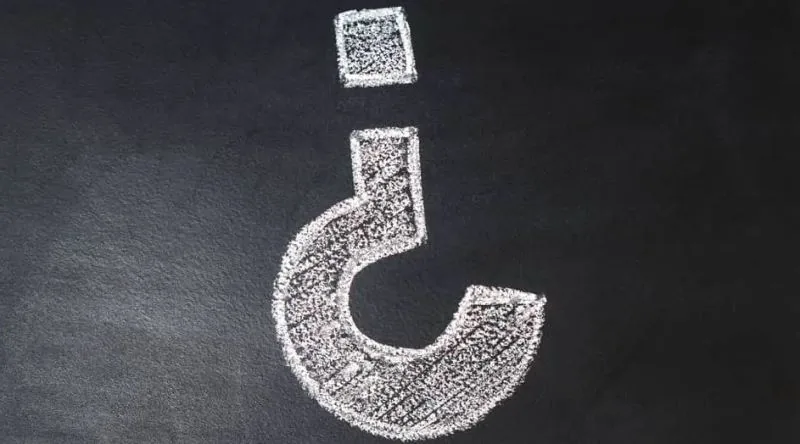
The inverted question mark (¿) is a Spanish punctuation mark that appears at the start of a question. The Spanish Royal Academy officially adopted it in 1754 to help readers identify questions before they reach the final punctuation, though the idea had been proposed even earlier. This clever system, unique to Spanish among major world languages, gives you a heads-up about the sentence's intent from the very first word, making reading more intuitive and less ambiguous. Whether you are a language learner or a curious traveler, understanding this distinctive mark opens a small but fascinating window into how Spanish speakers have shaped their written language for over two centuries.
Spanish uses the inverted question mark (¿) at the beginning of every question to signal its interrogative nature early on. The Spanish Royal Academy made this rule official in the 18th century, and it remains a mandatory part of Spanish punctuation today, setting the language apart from English and most other written languages.
- The Spanish Royal Academy officially adopted the inverted question mark in the 18th century, specifically in its 1754 edition of the Ortografía, though earlier proposals existed.
- Spanish is the only major world language that uses opening and closing question marks, making it unique in modern written communication.
- The inverted question mark appears at the start of a question, while the standard question mark closes it, creating a clear visual boundary for the reader.
- The rule also applies to exclamation marks in Spanish, which use an inverted mark (¡) at the beginning of exclamatory sentences.
- For short questions, Spanish speakers may omit the opening mark in informal writing, but formal and academic Spanish requires it without exception.
The Upside-Down Mark You Keep Seeing in Spanish
That strange upside-down question mark, the ¿, is one of the first things anyone notices when reading Spanish. It sits at the very start of a question, dangling upside down like a hook waiting to catch your attention before you even reach the first word. This article unpacks what it means, why it exists, and how it quietly shapes the way Spanish speakers read every single day.
The inverted question mark is not a decorative quirk. It is a deliberate signal planted in the text, telling you right from the first character that a question is on its way. Spanish sentences can run long, and the Royal Spanish Academy, the institution that governs the language, decided in the 18th century that readers should not have to wait until the final word to discover they were reading a question all along. The mark was turned upside down for a practical reason: if it sat upright at the beginning of a sentence, it could be mistaken for the end of the previous one.
Think about how different that feels from English. In English, you glide through a sentence and only at the very end do you hit the question mark, like a door closing behind you. Spanish flips that experience. The moment you see the ¿, your inner voice adjusts its pitch before you have even sounded out the first syllable. It is a small twist, but it changes the rhythm of reading entirely.
Here is where the mark earns its keep. In some Spanish sentences, intonation alone can turn a statement into a question. Take "te cansarás de las mentiras," which means "you will get tired of the lies." Say it with a rising tone, and it becomes "will you get tired of the lies?" The words stay identical. There is no auxiliary verb shift, nothing to tip you off except the tone of voice. The inverted question mark bridges that gap on paper. It tells you instantly which way the sentence bends, so you never have to read it twice to catch the meaning.
So the next time you spot that upside-down mark, you will know exactly what it is doing there. It is not a typo or a flourish. It is a quiet little warning system, making sure you hear the question in your head before your eyes even reach the first word.
Why Spanish Uses ¿: A Warning to the Reader
The inverted question mark exists for one simple reason: it tells you, right from the first word, that a question is on its way. Spanish readers don't have to wait until the final period to adjust their tone. The upside-down symbol at the front of the sentence is a heads-up, a small courtesy that saves you from re-reading a long passage you just realized was actually a question.
The tradition became official in 1754, when the Spanish Royal Academy formally adopted the practice. The logic was straightforward and a little impatient. Why force someone to read an entire long sentence, only to discover at the very end that they should have been reading it with a rising, questioning tone? That felt like a waste of effort, especially in a language where word order alone doesn't always tell you what's coming.
There's a clever detail in how the mark is drawn. It's not just placed at the start of the question. It's flipped upside down, literally inverted. The reasoning: if it were written the normal way, pointing right, a reader might mistake it for the punctuation ending the previous sentence. By turning it upside down, pointing left, it clearly belongs to the sentence ahead, not the one behind.
What makes this mark so essential in Spanish is that questions and statements can share the exact same words. Take the sentence "te cansarás de las mentiras." On its own, it's a statement: "you will get tired of the lies." But say it with a questioning tone, and it becomes "will you get tired of the lies?" Nothing changes grammatically. No auxiliary verb shifts places. No new word appears. The intonation alone carries the meaning. The inverted question mark captures that spoken cue on paper, so you know from the first syllable how to hear the sentence in your head.
The contrast is sharpest in short exchanges. The difference between "¿vienes?" and "vienes" is the difference between asking "are you coming?" and stating "you're coming." One little mark at the front makes all the difference.
The Grammar Behind the Mark: Same Words, Different Meaning
Here is the thing that makes Spanish different from English: sometimes the same exact string of words can be a calm statement or a curious question, with nothing in the spelling changing except one symbol at the front. Take "te cansarás de las mentiras." Written flat, it means "you will get tired of lies." Say it with a rising tone at the end, and suddenly it becomes "will you get tired of lies?" Same words, same order, same letters. The only clue telling you which way to read it is that little upside-down mark sitting at the beginning.
The inverted question mark exists precisely to save you from the guessing game. Without it, you would have to read a whole sentence to the very last word before realizing it was a question all along. The Royal Spanish Academy decided that was tedious, so they placed the mark at the start of interrogative sentences to give readers the intonation cue immediately, from the very first syllable. And it is inverted, not upright, so that it cannot be mistaken for the end of the previous sentence when you are scanning a page.
Now, the popular explanation says Spanish has no grammatical difference between questions and statements at all, that intonation does all the work. That is not quite accurate. Real Spanish questions often shuffle their word order or bring in question words. "¿Te cansarás?" versus "Te cansarás" works as a spoken distinction, but many genuine interrogatives rely on inversion or pronouns like "qué" or "dónde." The intonation story is true for some cases, just not all of them. The inverted question mark, though, remains your faithful guide either way, telling you from the first letter that a question is on its way.
¿Vienes? vs. Vienes: A Simple Contrast
Think of the inverted question mark as a tiny signpost planted at the very start of a sentence, whispering "a question is on its way." It is the difference between reading "vienes" as a flat statement meaning "you are coming" and encountering "¿Vienes?" which instantly tells you, before you read another word, that someone is asking "are you coming?" That single flipped mark changes the entire reading of an otherwise identical string of letters.
This is exactly what makes the mark so practical. In Spanish, the written form of a statement and a question can look precisely the same on the page. The only thing separating them is the tone of voice a speaker would use aloud. The inverted question mark, placed at the beginning, hands that vocal cue to the reader in advance. You never have to stumble through a long sentence wondering if it is a question until you reach the final period. The mark does the work for you, right from the opening syllable, so you can hear the intended intonation in your head before you even reach the first verb.
Frequently asked questions
What is the inverted question mark in Spanish?
The inverted question mark (¿) is a punctuation mark placed at the very beginning of a question in Spanish to signal its interrogative nature before you even start reading. You will see it paired with a standard question mark at the end, working as a pair to frame the entire question clearly for the reader.
Why does Spanish use an upside down question mark?
Spanish uses the upside down question mark to alert the reader early that a question is coming, rather than making them wait until the end of the sentence to discover the intent. This prevents confusion with the previous sentence and prepares you for the rising intonation from the very first word, making long questions much easier to read aloud.
Who created the inverted question mark?
The Spanish Royal Academy officially adopted the inverted question mark in 1754, though the idea had been proposed even earlier by various writers and grammarians. The Academy formalized its use as part of a broader effort to standardize Spanish orthography, and it has remained a distinctive feature of the language ever since.
When was the inverted question mark introduced?
The inverted question mark was officially introduced in 1754 when the Spanish Royal Academy published its orthographic rules. This decision came during the 18th century as part of a systematic push to make written Spanish clearer and more precise for readers across the Spanish-speaking world.
How do you type the inverted question mark?
On most keyboards, you can type the inverted question mark using Alt+0191 on Windows or Option+Shift+? on Mac. On Spanish-language keyboards, there is usually a dedicated key for it, and on mobile devices you can typically find it by holding down the regular question mark key.
Does Spanish have other inverted punctuation?
Yes, Spanish also uses the inverted exclamation mark (¡) in exactly the same way, placed at the start of exclamatory sentences. Both marks work together as a system, so you will see ¡ at the beginning and ! at the end of exclamations, just as ¿ and ? frame questions.
Why is the inverted question mark placed at the start?
The inverted question mark is placed at the start to prepare the reader for the question's intonation from the very beginning, so you know how to voice the sentence immediately. This is especially helpful in Spanish because the same words can sometimes form either a statement or a question depending purely on tone and emphasis. Editorial note: Any facts which remain unconfirmed are presented as such, and readers are encouraged to verify specific historical details with primary sources.
Got a take on this? Add your voice to the conversation below →
No comments yet. Be the first.